 EN — English
 TR — Türkçe
 DE — Deutsch
 RU — Русский
 FR — Français
 ES — Español
 AR — العربية
 SR — Српски
Knowledge Center
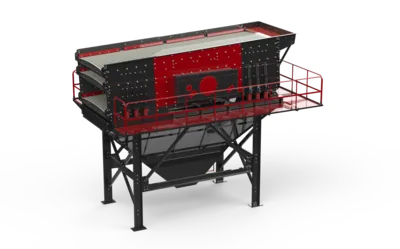
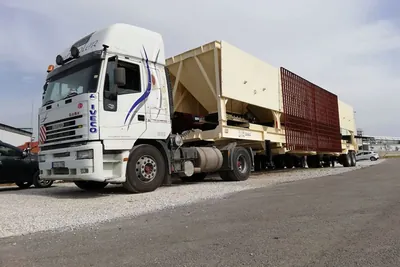
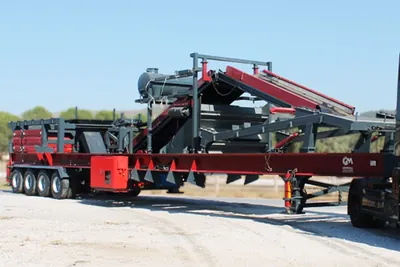
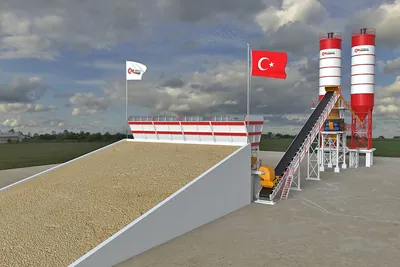
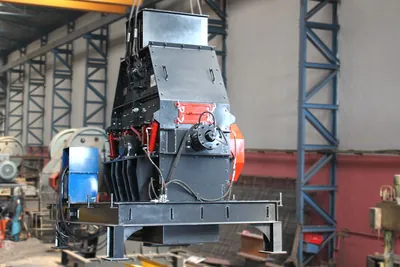
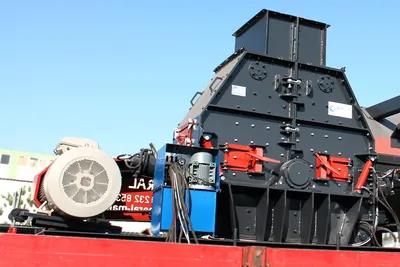
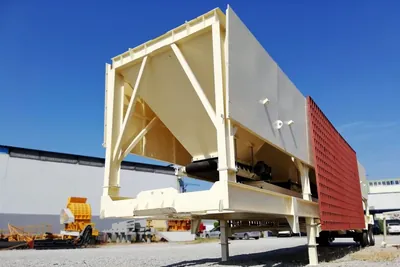
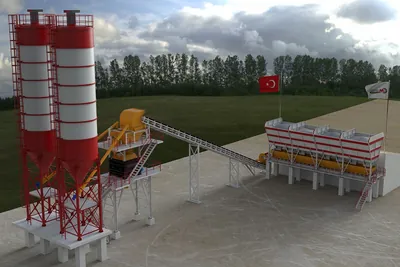
A crushing and screening plant is a chain, not a shopping list
An aggregate operation is never the sum of the machines parked on its pad. It is an uninterrupted chain that begins with the character of the rock in the quarry face and ends when the last graded fraction lands on the stockpile. A poor decision taken in one link rarely announces itself where it was made. An abrasiveness figure nobody measured turns into an unbudgeted wear-part invoice two seasons later. A conveyor sized too tightly during layout quietly caps shift tonnage for the working life of the plant. A calibration skipped at commissioning settles in as years of lost screening efficiency. The Knowledge Center is therefore organised around the lifecycle of the investment rather than around machine families.
The six stages below describe the decision points that genuinely follow one another on site. Each stage has its own questions, its own measurable quantities and its own specialist. The eight subject areas lie across this cycle. None of them explains the plant on its own, yet read together they cover most of the choices an owner faces over the economic life of the investment.
1. Quarry and feed definition
Everything starts with knowing what the rock is. Basalt and limestone can pass through the same feed opening, yet they do not deserve the same flowsheet. Hardness, abrasiveness, clay and moisture content, muckpile fragmentation after the blast and top block size directly determine the primary crusher type, the feeder selection, the number of screen decks and whether washing is needed at all. If the data produced at this stage is wrong, every later calculation rests on unstable ground. Sampling discipline, how laboratory results should be read and the places where field observation contradicts the laboratory all belong under this heading.
2. Plant layout and flowsheet
Once the feed is characterised the question changes: which crushing stages, in which order, balanced at which capacity? Whether the primary stage should use a jaw crusher or an impact solution, how the choice between a cone crusher and an impactor in the secondary stage shifts particle shape and wear cost, the ratio of screening area to throughput, and the logic behind stockpile placement are all settled here. The most expensive layout mistake is imbalance: when one stage runs faster than the next, total plant output locks onto the slowest link.
3. Installation and commissioning
Foundations, chassis levels, conveyor angles, the electrical room and the dust extraction connections are fixed at this stage in ways nobody revisits for years. Commissioning is not merely starting the machine. It means logging no-load current values, writing down setting ranges as a reference and taking the first gradation measurement. Without those baseline records you will hold no evidence, two years later, of whether the plant has genuinely slowed down or whether expectations alone have risen.
4. Operation and production management
The moment the plant produces, the questions become economic: how many tonnes per shift, how many kilowatt-hours per tonne, which fraction is overproduced and which one cannot be sold? Feed continuity, crushing chamber level, screen blinding and stockpile balance turn into daily decisions. The production manager's strongest tool is consistent recording of the measured quantities; in a plant run on instinct the bottleneck appears to move every shift.
5. Maintenance and wear management
A wear part is a planning instrument, not a cost line. Knowing in advance when the jaw plate, the blow bar or the mantle and concave will reach the end of their service life means placing the stoppage inside a planned maintenance window. Unplanned downtime always costs more than the component itself: lost production, an idle crew and a late delivery meet on the same invoice. Lubrication schedules, vibration monitoring and honest part-life records form the backbone of this area.
6. Compliance, safety and environment
The final link is the plant's permission to keep working. Machine guarding, energy isolation and lockout practice, the reachability of emergency stop lines, whether dust suppression truly performs under load, and the management of noise and water together protect both worker health and the operating licence. In most projects this area is left until last, although it is the cheapest one to handle while the layout is still on paper.
The eight subject areas and where they sit in the cycle
The table below summarises the question each area begins with, the decision point at which it becomes relevant and the quantity it measures. Follow a heading to reach every article filed under that area.
| Subject area | Typical question | Decision point | Quantity measured |
|---|---|---|---|
| Mining Engineering | What flowsheet does this rock deserve? | Quarry planning and feed definition | Hardness, abrasiveness, block size, gradation |
| Plant Efficiency | Where is the bottleneck really? | Operation and shift management | Tonnes per hour, utilisation, kWh per tonne |
| Maintenance and Wear | How much longer will this part last? | Planning the maintenance window | Part life, unplanned downtime, oil and vibration readings |
| Jobsite and Mobile Plant | Move the plant or fix it in place? | Site setup and works programme | Setup time, number of relocations, footprint |
| Procurement and Supply | Are these quotations genuinely comparable? | Order and contract | Lead time, spare part access, warranty scope |
| Investment and Cost | How does this plant pay for itself? | Investment decision and budgeting | Total cost per tonne, capital against operating balance |
| Occupational Safety | How is this task carried out safely? | Procedure writing and site audit | Guard integrity, lockout compliance, incident records |
| Environment and Dust Control | Do the permit conditions match site reality? | Permit application and routine inspection | Dust emission, noise, water use and recovery |
Capacity decisions begin with concrete figures
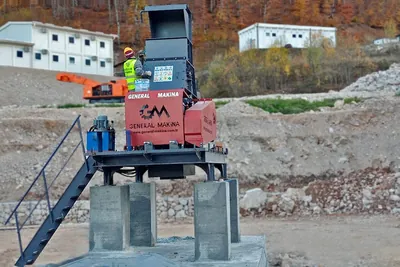
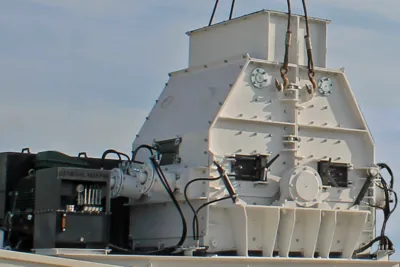
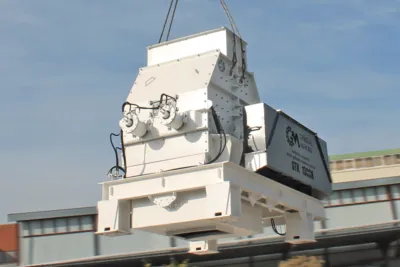
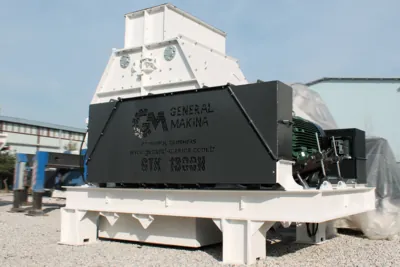
So that the second and third links of the cycle do not stay abstract, the catalogue values of our mobile plant family are set side by side. The table shows which model corresponds to which feed size and which capacity band; the largest block leaving the face meets the target shift tonnage where these two columns intersect.
| Model | Maximum feed size | Capacity | Output size setting | Optional generator |
|---|---|---|---|---|
| General 640 | 500 mm | 40-70 t/h | 0-100 mm | 300 kVA |
| General 800 | 600 mm | 80-120 t/h | 0-100 mm | 450 kVA |
| General 01 | 700 mm | 120-180 t/h | 0-100 mm | 550 kVA |
| General 950 | 800 mm | 120-180 t/h | 0-100 mm | 600 kVA |
| GNR-MC110 | 900 mm | 200-300 t/h | 0-100 mm | 750 kVA |
The product sizes listed belong to the standard configuration and can be changed on request. As feed size grows, so do the primary opening and the drive power; the capacity band, however, depends not only on the machine but on how steady the feed is and how readily the material breaks. The same model works at the upper end of its band in an easily crushed limestone and at the lower end in hard, abrasive rock.
How to use this centre
Identify the stage your investment has reached and start from the subject area that governs it. If no machine has been chosen yet, narrow the field by rock type and target capacity with the product selection wizard, then test the economics with the operating cost calculator. Any term met in these articles can be checked quickly in the technical glossary.
Every article here is drawn from field practice; these are decision-support notes rather than textbook chapters. After reading one, compare it against your own plant data, note the point where the two diverge and send that note to our engineering team. If your quarry conditions call for a dedicated flowsheet, reach us with your rock analysis and target fractions so the assessment rests on a concrete capacity balance table instead of assumptions.
Frequently Asked Questions
Who is this centre written for?
It is written for the people who actually sign off decisions on an aggregate plant: quarry and process engineers, production managers, maintenance leads, buyers and owners. Each subject area speaks to one of those roles without assuming the others have already explained the context.
How does this differ from the product pages?
A product page describes what one machine does and the specification it works to. The centre deals with the choice between machines and the consequences of that choice further down the chain, which is a different question with different evidence behind it.
Do the capacity figures apply to my material?
The feed opening and the setting range are fixed limits of the machine. The capacity band is not fixed: it moves towards the upper figure in easily crushed material and towards the lower figure in hard, abrasive rock. Where your material sits inside that band is decided by analysis.
The plant is already running. Where should I start?
Start with Plant Efficiency to locate the bottleneck with measured numbers rather than impressions, then move to Maintenance and Wear if the losses turn out to be stoppage-driven. Reading them in that order avoids replacing a component that was never the constraint.
Can our existing flowsheet be reviewed?
Yes. Send the rock analysis, the current stage arrangement and the fractions you need to sell. The review is returned as a capacity balance across the stages, which shows where the chain is unbalanced before any equipment change is proposed.