 EN — English
 TR — Türkçe
 DE — Deutsch
 RU — Русский
 FR — Français
 ES — Español
 AR — العربية
 SR — Српски
Procurement and Supply
What a buyer actually purchases when ordering a crushing plant
An order for a crushing and screening plant is a bundle of five commitments that live or die together: the technical specification, the delivery term, the inspection regime before shipment, continuity of wear part supply, and the exact boundary of the warranty. Price is only the visible surface of that bundle. When one of the five is left vague the cost does not disappear; it reappears later as downtime, as an unbudgeted crane, or as a dispute nobody can win because nothing was written down.
Procurement and supply, in the context of mineral processing equipment, is the practice of converting a production requirement into contract language that a third party can verify. Every promise needs a document, every document needs an acceptance criterion, and every criterion needs a named owner. This page follows that chain from the request for quotation to the first spare part order.
Writing a request for quotation that can be compared
Quotations become incomparable for one recurring reason: the request did not fix the boundary conditions. Throughput in tonnes per hour is meaningless on its own, because it depends on rock hardness, moisture, feed size and the product curve you need. Always state three things together: the material to be fed, the maximum feed size, and the fractions you must produce.
The table below shows verified specification values for three mobile plant classes. Copying these row headings into your own enquiry is the fastest way to see where competing offers really differ.
| Specification item | General 640 | General 800 | General 950 |
|---|---|---|---|
| Maximum feed size | 500 mm | 600 mm | 800 mm |
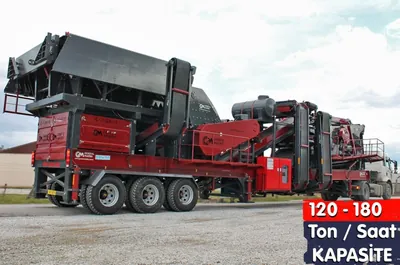
| Capacity | 40-70 t/h | 80-120 t/h | 120-180 t/h |
| Output size setting | 0-100 mm | 0-100 mm | 0-100 mm |
| Standard fractions | 0-5, 5-12, 12-19 mm | 0-5, 5-12, 12-19, 19-40 mm | 0-5, 5-12, 12-19 mm |
| Optional generator | 300 kVA | 450 kVA | 600 kVA |
Read the generator row as a procurement warning rather than a technical detail. On a site with no grid connection the generator is not an option but a precondition of operation, and if it is not inside the quoted scope it will be outside the approved budget. If you are still choosing between capacity classes, start from the General 640, 800 and 950 capacity comparison and then tighten the specification with the product selection wizard.
The inclusions list is where money hides
Beyond the chassis and the machines, state explicitly whether each of the following is included or excluded: the control panel and cabling, conveyor belts and belt type, the grizzly bars of the feeder, dust suppression nozzles, first fill of oil and grease, consumables used during erection, the number of operator training days, the language of the technical documentation, and a recommended first-year spare part kit. The offer that looks cheapest before this list is written is very often the most expensive one after commissioning. The workflow described on the how we work page is a practical frame for agreeing those boundaries early.
Choosing the delivery term under Incoterms 2020
The Incoterms 2020 rules published by the International Chamber of Commerce took effect on 1 January 2020 and consist of eleven rules in two families: seven that suit any mode of transport (EXW, FCA, CPT, CIP, DAP, DPU, DDP) and four written for sea and inland waterway transport only (FAS, FOB, CFR, CIF). The classic mistake in heavy equipment trade is applying a sea-only rule to a plant that will actually travel on a lowbed trailer.
| Rule | Family | Where risk passes | Insurance duty in the rule |
|---|---|---|---|
| EXW | Any mode | Goods placed at the buyer's disposal at the seller's premises | None |
| FCA | Any mode | Handover to the carrier nominated by the buyer | None |
| CPT | Any mode | Handover to the first carrier | None |
| CIP | Any mode | Handover to the first carrier | Seller, at Institute Cargo Clauses (A) level |
| DAP | Any mode | At the named place, ready for unloading | None |
| DPU | Any mode | At the named place, unloaded | None |
| DDP | Any mode | At the named place, import cleared by the seller | None |
| FOB | Sea and inland waterway | When the goods are placed on board | None |
| CIF | Sea and inland waterway | When the goods are placed on board | Seller, minimum Institute Cargo Clauses (C) |
Two changes in the 2020 edition matter directly to a buyer of processing equipment. First, DAT from the 2010 edition became DPU: delivery is no longer confined to a terminal, it can be any named place, and the seller carries the cost and risk of unloading. Where a plant must be set down inside a quarry yard, that distinction ends the argument about who provides the crane. Second, CIP now obliges the seller to insure at Institute Cargo Clauses (A) level, while CIF keeps the minimum Institute Cargo Clauses (C) cover that commodity trading has always used. Assuming CIF cover is adequate for a high-value plant means paying the gap yourself after a damage event.
EXW versus a delivered term
EXW shows the lowest invoice value and transfers loading, export clearance, freight, insurance, import clearance and inland haulage to the buyer. A distributor with its own forwarder and customs broker is usually better off there. A first-time importer is usually better off with DAP, because the landed cost becomes predictable. The deciding question is operational rather than commercial: whichever party manages lowbed permits and route clearances better on that corridor should own the transport. Model the consequences with the operating cost calculator before committing.
Pre-shipment inspection and factory acceptance testing
Pre-shipment inspection verifies conformity before the machine leaves the works. A factory acceptance test runs the machine at the manufacturer's site under conditions as close as possible to service. If neither appears in the contract, non-conformities are discovered at the destination port, where correcting them costs several times more.
A workable protocol covers main dimensions and feed opening against the drawing, visual weld inspection, surface preparation and paint thickness, labelling and protection class of the control panel, motor ratings and serial numbers checked against certificates, vibration and temperature behaviour during no-load running, function of emergency stops and guards, and packing suitable for the intended voyage. Each heading needs a pass criterion; "found acceptable" is not a criterion.
On the compliance side, machinery placed on the European Union market currently falls under Machinery Directive 2006/42/EC, which will be replaced by Regulation (EU) 2023/1230, applicable from 20 January 2027. Common safety requirements for machines used in the mechanical processing of minerals and similar solid materials are collected in EN 1009-1:2020, while safety requirements and verification specific to mobile crushers sit in ISO 21873-2:2019. Agree in the quotation which of these documents travel with the shipment, and in which language.
Wear parts, lead time and the genuine-versus-aftermarket decision
The economics of a crushing circuit are decided in wear part supply. Jaw plates, blow bars, mantles and concaves, screen media and conveyor belts are consumed on a schedule; their absence on site produces more lost hours than machine breakdowns do. So the contract needs a critical parts list, a delivery undertaking and a price validity period as separate clauses. The spare parts catalogue shows which items are held as standard, and KONKASORspare parts groups them by plant type.
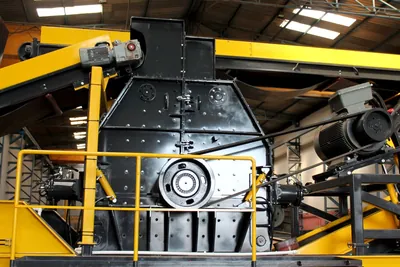
Material selection precedes the aftermarket debate. Jaw plates are cast in high-manganese steel: under impact and compression the surface work-hardens through strain-induced transformation while the core stays tough. Mn13 is the versatile general grade; Mn18, with its higher manganese content, is preferred for high-tonnage duty on hard abrasive rock such as granite and basalt. For impact crushers the trade-off is toughness against abrasion resistance. Martensitic bars survive large feed and tramp metal, which is why they suit concrete recycling; high-chromium bars last longer on clean abrasive natural stone in secondary and tertiary duty but are brittle and should be kept away from feed containing uncrushable metal. Ceramic-inlaid bars are the attempt to combine both properties.
Where aftermarket supply is reasonable
Decide by the function of the part, not by its price. Where geometry drives performance, meaning mantle and concave sets, jaw plate profiles, rotor and bar seats, leaving the genuine part changes product shape and throughput in ways you cannot measure afterwards, and it makes the warranty arguable. Fasteners, filters and general-purpose bearings can reasonably be sourced elsewhere, provided the documented class matches the machine manual. Ask for the casting hardness value, the material certificate and the lead time in the same enquiry; comparing wear behaviour between the jaw crusher and the cone crusher makes the difference concrete. On a line producing manufactured sand, the consumption rate of tertiary crusher parts is planned separately.
Warranty scope and its boundaries
A warranty clause is worth what its scope definition says, not what its duration promises. Manufacturing and material defects are covered; normal consumption of wear parts is not. Validity usually depends on following the maintenance plan, using the specified lubricants, and never feeding material outside the agreed size and type. Those conditions are reasonable, which means the buyer's job is to make compliance provable: without maintenance records, hour readings and part replacement dates, even a justified claim cannot be evidenced.
Fix the event that starts the clock: invoice date, shipment date, completion of erection, or signature of the commissioning protocol. On a remote site where erection slips, a warranty running from the invoice date has already been shortened. Response time after a fault notification, part dispatch time, and who pays travel when an intervention on site is unavoidable all belong in separate lines.
Distribution rights and the service network
From an importer's chair the purchase is a market commitment rather than a single machine. Weigh the territory definition and exclusivity, minimum order undertaking, demo machine terms, technical training and field support, spare part discount structure and consignment stock, language support for marketing material, and how the manufacturer's team participates in erection and commissioning. A service network is not a map; it is a response time, and it should be measurable in the agreement.
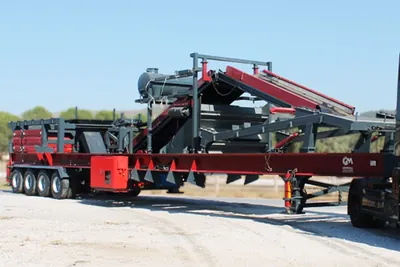
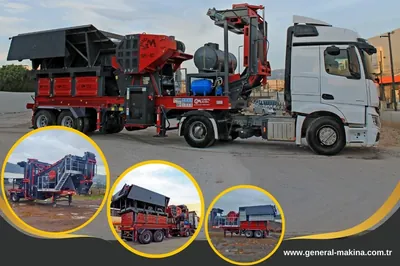
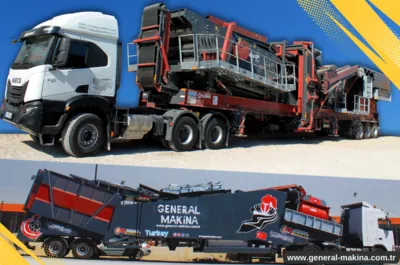
After-sales load differs by configuration. Mobile stone crusher units move between sites, which brings undercarriage or trailer maintenance and transport permits into scope, while a stationary crushing plant installation pulls stockpile area, feed ramp and electrical infrastructure into the contract. Keeping a shared vocabulary through the technical glossary removes a surprising share of quotation disputes.
A checklist you can turn into a contract
Ten items need written counterparts before an offer becomes an order: the feed material for which capacity and product curve are guaranteed, the inclusion and exclusion list, the delivery rule with the named place, the inspection and acceptance test protocol, packing and loading method, documentation language and timing, erection and commissioning responsibilities, training duration and content, warranty scope with its start event, and the critical spare part list with delivery undertakings. Once all ten exist, comparing prices finally means something.
Send us your specification arranged under these headings, with capacity class, delivery rule and first-year spare kit in one document, and you will receive an offer built on exactly those lines, so that comparison stays possible.
Frequently Asked Questions
How should throughput be stated in a request for quotation?
Never on its own. Give the feed material, the maximum feed size and the fractions you must produce in the same sentence as the tonnes per hour. Without those boundary conditions each bidder silently assumes a different duty and the offers cannot be compared.
Why has DAT disappeared from delivery terms?
Incoterms 2020 replaced DAT with DPU. Delivery is no longer restricted to a terminal and may be any named place, with the seller bearing the cost and risk of unloading. For a plant that must be set down inside a working yard this removes the usual crane argument.
Is CIF insurance cover enough for a high-value plant?
CIF requires only minimum Institute Cargo Clauses (C) cover, which is narrow. CIP obliges the seller to insure at Institute Cargo Clauses (A) level instead, and any wider protection can also be agreed as an express contract term.
What is the difference between pre-shipment inspection and a factory acceptance test?
Inspection checks dimensions, workmanship, labelling and packing against the specification while the machine stands still. The acceptance test runs it at the works to observe behaviour. Both belong in the protocol with their own pass criteria.
Which spare parts should be on site before commissioning?
The items consumed on a schedule: jaw plates or blow bars for the duty being run, screen media in the mesh sizes in use, conveyor belt splicing material, filters and the specified lubricants. Agree that list, its price validity and its delivery undertaking as a contract clause.
Does using aftermarket wear parts void the warranty?
It depends on the part. Substituting components whose geometry drives crushing performance changes product shape and capacity and makes any claim arguable. Fasteners, filters and general-purpose bearings are usually acceptable if their documented class matches the machine manual.