EN — English
 TR — Türkçe
 DE — Deutsch
 RU — Русский
 FR — Français
 ES — Español
 AR — العربية
 SR — Српски

Mobile Screening Plant or a Crushing and Screening Combination?
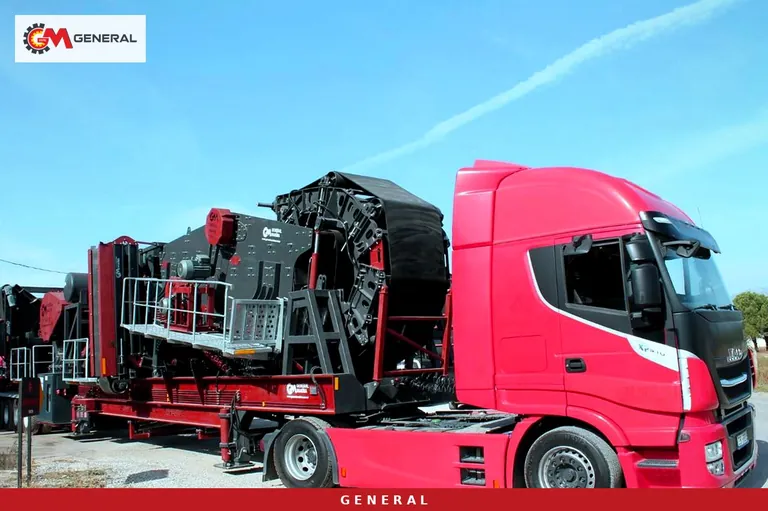
If your material already comes out of the ground in small pieces, a screening plant may be all you need; if you blast the face or rip out large blocks, screening alone will not give you a saleable product. On paper the distinction looks simple, yet on site the choice is often made by looking only at hourly capacity, while the factor that really decides it, feed size, is overlooked. This article compares a mobile screening plant with a crushing and screening combination through feed size, oversize share, power supply, transport and wear. Using the data published on our product pages, we show which option suits which site, and when you need both.
Feed size, not capacity, draws the line
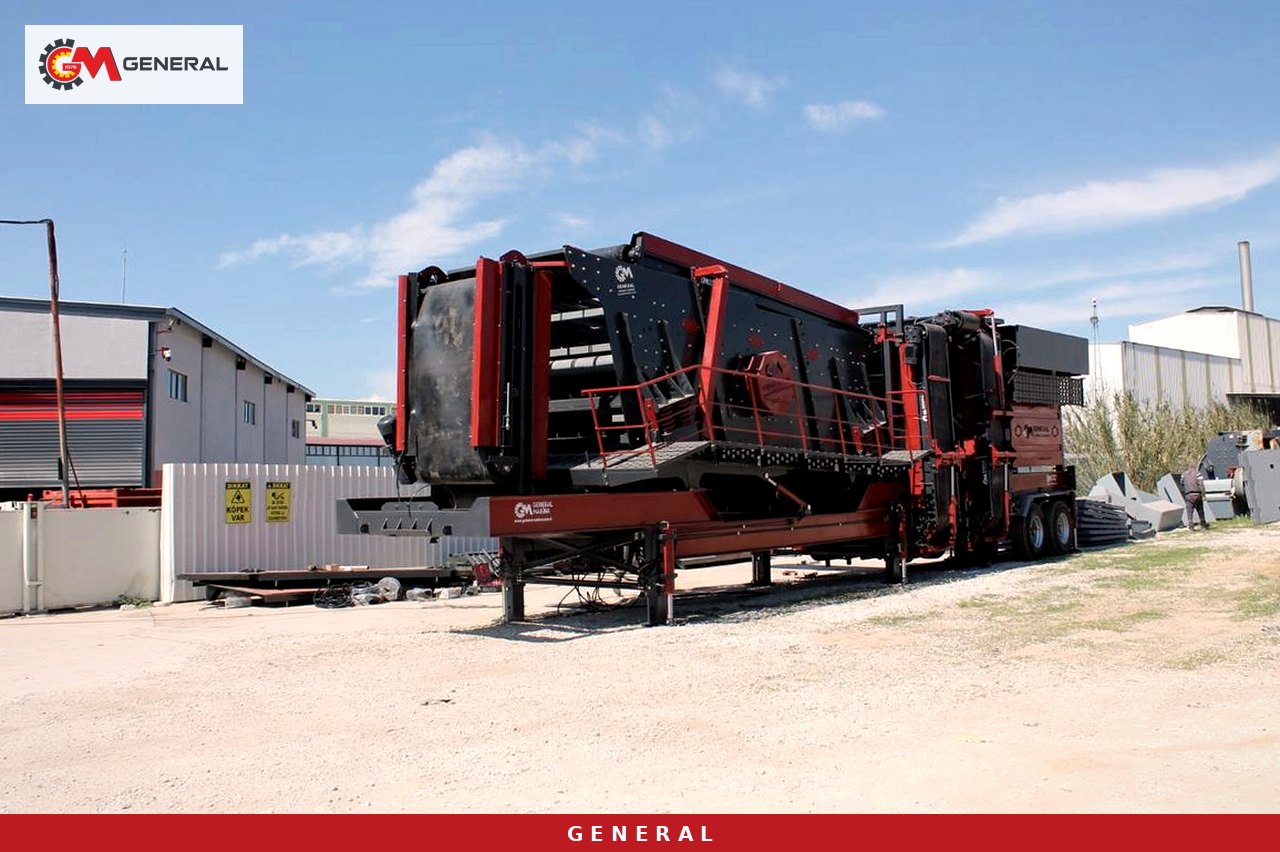
A mobile screening plant does not reduce material; it only separates it by particle size. General Makina's two mobile dry screening models, the GNR ME1650 mobile dry screening plant and the GNR ME2060, are designed for 0-100 mm feed. In practice this means the screen cannot turn anything above 100 mm into product; it can only set it aside. On the ME2060, the 100 mm grizzly over the hopper bypasses that oversize before it reaches the screen deck. The screen is protected, but the oversize leaves the plant unprocessed.
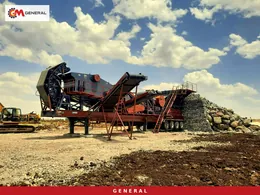
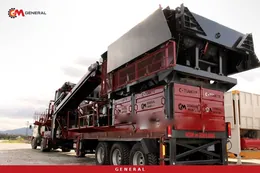
A crushing and screening combination has a much larger inlet. The General 640 accepts run-of-mine feed up to 500 mm, the General 800 up to 600 mm and the General 944 up to 800 mm. The vibrating screen on the same chassis splits the crusher discharge into fractions, and anything still above the target size returns to the crusher in closed circuit. In short, the combination both reduces and classifies large rock; the screening plant does only the second of those two jobs.
So the first question should not be "how many tonnes per hour?" but "how much of the material coming from the face or the deposit is above 100 mm?" A choice made without knowing that share ends either in an unnecessary crusher investment or in a pile of oversize that grows on site every single day.
Technical limits of both routes: model data side by side
The table below places the technical values from the product pages next to each other. For the screening plants the crusher row deliberately reads "none"; cells whose value is not published on the product page are marked "—".
| Model | Type | Capacity | Max. feed | Crusher | Screen | Power | Weight |
|---|---|---|---|---|---|---|---|
| GNR ME1650 | Dry screening | 120-180 t/h | 0-100 mm | None | ~1600×5000 mm | Mains or generator | 18,000 kg |
| GNR ME2060 | Dry screening, fully automatic | 200-350 t/h | 0-100 mm (100 mm grizzly) | None | 2000×6000 mm, 3-deck | Mains or generator; screen motor 22 kW | — |
| General 640 | Jaw + impact | 60-100 t/h | 500 mm | GPJ 60 + GNR 50 | 1200×4000 mm, 3-deck | 300 kVA generator (optional) | 38,000 kg |
| General 800 | Primary impact | 80-150 t/h | 600 mm | PDK 1280 | 1300×4000 mm, 3-deck | 450 kVA generator | 35,000 kg |
| General 944 | Jaw + cone | 120-180 t/h | 800 mm | GPJ 90 + GM430 | 1600×5000 mm, 3-deck | 550 kVA generator | 70,000 kg |
Three conclusions follow from the table. First, in the same tonnage band the screening plant is far lighter: in the 120-180 t/h band the ME1650 weighs 18,000 kg, the General 944 70,000 kg. That gap feeds straight into transport, positioning on site and ground preparation. Second, the ME2060 reaches 200-350 t/h without a crusher; if the material is already fine, the crusherless route gives higher throughput. Third, the product range of single-chassis crushing and screening plants is limited: the General 640 and 944 deliver 0-5 / 5-12 / 12-19 mm, and the General 800 adds a 19-40 mm fraction. If you need more separate products, plan for an additional screen.
Four site types, four different answers
River bed and natural sand and gravel pit
When nature has already rounded and reduced the material and most of it is below 100 mm, a mobile screening plant on its own is the right answer. The typical applications listed on the ME1650 product page are river beds, sand and gravel pits and aggregate supply for concrete batching plants. With no crusher on board, there are no jaw plates or blow bars to change; wear concentrates on screen media, belts and transfer points. If the material contains clay or high moisture, dry screening is not enough and you should look at mobile washing and screening plants.
Blasted rock quarry
After blasting, run-of-mine feed usually contains blocks of several hundred millimetres, and most of it will not pass a 100 mm grizzly. A screening plant cannot work alone here; the right answer is a combination chosen from our mobile crushing and screening plants to suit the rock. In low-abrasive rock such as limestone, the primary impact General 800 is the natural fit; in hard, abrasive basalt and granite, the jaw + cone General 944 stands out. For small and medium jobs, the General 640 with 500 mm feed is the entry step.
An operation that already owns a crusher
Where a primary crusher is already working, the bottleneck is often screen area or the number of fractions. Instead of buying a second crushing and screening plant, connecting a mobile screening plant behind the existing crusher can solve the problem with less weight and a smaller investment. The ME1650 is designed to be fed by conveyor from an existing crushing and screening line and to act as pre-screen or final screen. The only condition is that the crusher discharge stays within 0-100 mm.
Mixed deposits: account for the oversize share
Natural deposits also throw up large stones from time to time. On these sites the decision depends on the oversize share, and a simple mass balance makes it visible. Let r be the share of material above 100 mm in the feed:
Saleable product (per hour) = Feed × (1 − r) · Oversize accumulated (per hour) = Feed × r
Hypothetical example, not a real value: with 100 units of feed per hour and r = 0.25, 75 units become product and 25 units pile up next to the grizzly. Over an eight-hour shift that is 200 units of unprocessed material. If r is small, the occasional oversize can be sent to another crusher or used as fill. As r grows, the oversize turns into both lost production and a stockyard problem, and the crushing and screening combination proves its worth.
Three ways to build the combination
"Crushing and screening" does not have to mean a single machine. Depending on the site, three layouts are possible:
- Crushing and screening on one chassis: The General 640, 800 and 944 carry the crusher, vibrating screen and return conveyor on the same chassis. Transport and set-up revolve around one unit; the number of fractions, however, is limited by the decks of that screen.
- Mobile crusher + separate mobile screening plant: The crusher discharge is conveyed to the screening plant. Crushing and screening capacity are sized separately, and the screening unit can be moved to another site independently of the crusher when needed.
- Pre-screening ahead of the crusher: One of the applications listed for the GNR ME2060 is pre-screening in front of a primary jaw or impact crusher. Material that is already fine never enters the crusher, which then deals only with rock that actually needs reducing.
In the second and third layouts, conveyor transfer heights, stockpile conveyor lengths and the power supply of both units must be drawn on the same site plan. One unit fitting the site while the other does not is a frequent planning mistake with these layouts.
Where they differ in investment and operating cost
Price depends on the chosen model, generator scope, screen mesh apertures and any additional conveyors, so we do not quote figures here. Knowing which items create the difference, however, helps you read quotations correctly:
- Weight and transport: A chassis carrying a crusher is heavier; transport, crane or positioning needs and ground preparation grow accordingly.
- Power: For the crushing and screening plants, generator size is stated on the model page: 300 kVA (optional) for the General 640, 450 kVA for the General 800, 550 kVA for the General 944. The screening plants run on mains or generator; the ME2060 screen motor is 22 kW. Generator sizing should be settled at the quotation stage.
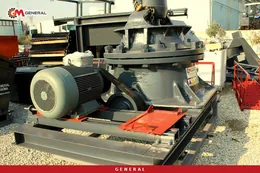
- Wear: On a screening plant, wear concentrates on screen media, belts and transfer points. A combination adds jaw plates, blow bars or cone mantle and concave; in abrasive rock this item drives the cost per tonne.
- Utilisation: A screening plant can find work on other sites when there is no rock to crush; a crusher line only creates value while there is rock to reduce.
Compare on a per-tonne basis: Cost per tonne = (Depreciation + Energy + Wear parts + Labour + Transport and set-up) ÷ Saleable tonnes. Saleable tonnes include the (1 − r) factor from the formula above. That is why a screening plant with a low purchase price can turn out expensive per tonne on a site with a high oversize share.
Checklist before you decide
- Take representative samples from different points of the site and measure the share above 100 mm (r).
- Check clay and moisture: the ME series screens dry, and clayey or wet material blinds the screen apertures.
- Write down the fractions you need and check whether the chosen model delivers them in one pass (the ME2060 separates 4 fractions in a single pass).
- Decide the crusher type from rock hardness and abrasiveness: impact or cone?
- Confirm whether mains power is available on site; if not, settle the generator size.
- List how many different sites the coming jobs involve and whether the transport weight suits the road conditions.
- If you already own a crusher, measure whether its discharge stays within 0-100 mm.
You can also enter these answers into the product selection wizard for an initial model shortlist.
Frequently asked questions
Does a mobile screening plant crush rock?
No. The GNR ME1650 and GNR ME2060 only screen; they split 0-100 mm feed into fractions. Reducing large rock requires a crusher.
Can the screen on a crushing and screening plant replace a separate screening plant?
Yes, if the fractions listed on the product page cover your needs; the General 800, for example, delivers 0-5 / 5-12 / 12-19 / 19-40 mm. If you need more fractions or a larger screen area, a separate mobile screening plant can be added behind the crusher.
Does it make sense to buy the screening plant first and add a crusher later?
If the deposit gives natural sand and gravel today and will give blasted rock later, that sequence is possible. When choosing the screening plant, factor in the flow that will later come from the crusher; the 200-350 t/h ME2060, for instance, can work both behind a crusher and in front of one as a pre-screen.
How do I find out price and delivery time?
Send us the material type, sample information, target tonnage and the fractions you need. Price and delivery time are set out in a tailored quotation once the model and scope are defined.
Conclusion
If the material is largely below 100 mm and clean, a mobile screening plant is the lighter, simpler and often cheaper-per-tonne solution. In a blasted quarry or a deposit with a high oversize share, a crushing and screening combination is essential, and the crusher type should follow the abrasiveness of the rock. On sites in between, planning both units together is usually the most balanced route. Share your sample data and tonnage target through our contact page, and we will define the right layout and quotation for your site together.
Definitions of technical terms: Glossary