 EN — English
 TR — Türkçe
 DE — Deutsch
 RU — Русский
 FR — Français
 ES — Español
 AR — العربية
 SR — Српски
Track Mounted Mobile Crushers
No matching products. Contact us for a quote.
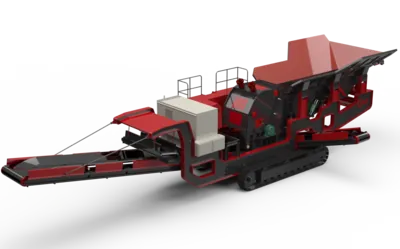
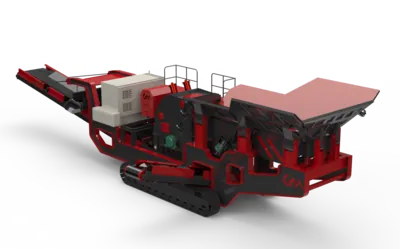
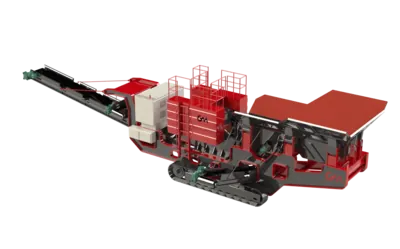
Tracked mobile crushers are crushing units on a crawler (track) undercarriage that move under their own power on site. Versus wheeled mobile, they give superior manoeuvring and positioning on rough ground; versus stationary, greater flexibility.
Model family
The family covers three main models: the GM 90JP tracked jaw crusher (primary, 70–180 tph) runs the first stage on large ROM feed; the GM 100 (100–180 tph) and GM 125 (150–250 tph) tracked impact crushers give high reduction and cubical product.
When tracked?
Tracked plants suit jobs that reposition often in the pit, work on rough or sloped ground, and want to follow the face without waiting for a tow. For abrasive material (granite, basalt) the 90JP jaw is used as primary; for soft limestone the 100/125 impact is preferred for cubical product in a single pass.
Full-plant bridge
A tracked crusher runs standalone or with tracked screens and conveyors as a complete tracked line. If long-distance road transport is frequent, see wheeled mobile plants; for high tonnage on one site, see stationary plants. Contact us for a quote by model and capacity.
Frequently Asked Questions
Tracked vs wheeled mobile — the difference?
A tracked unit moves under its own power in the pit and excels on rough ground; wheeled mobile is more economical for long-distance road transport.
Which tracked models exist?
GM 90JP tracked jaw (70–180 tph), GM 100 (100–180 tph) and GM 125 (150–250 tph) tracked impact crushers.
Which suits my material?
Jaw 90JP as primary for abrasive granite/basalt; impact 100/125 for cubical product from soft limestone. Share your material analysis.
How is a tracked plant transported?
Short distances on its own tracks; long distances by lowbed. Setup is fast.
How do I get a quote?
Send capacity (tph), material and product fractions; we prepare the right tracked model and price.