EN — English
 TR — Türkçe
 DE — Deutsch
 RU — Русский
 FR — Français
 ES — Español
 AR — العربية
 SR — Српски

100 TPH Mobile Crushing Plant Price and Investment Payback (ROI) Period
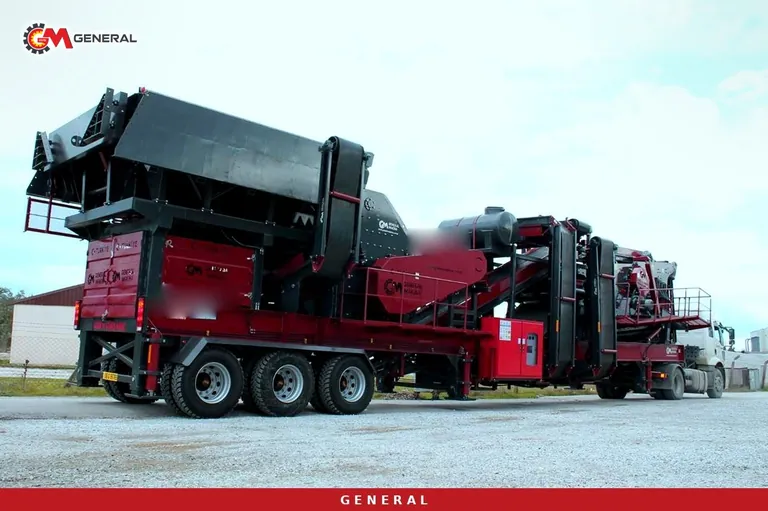
When someone asks what a mobile plant producing 100 tonnes of aggregate per hour costs, the honest answer is a breakdown, not a single figure. The same "100 t/h" label can describe a compact jaw-plus-impactor plant, a single primary impactor line or a tracked impact crusher, and these three solutions differ in quotation scope, landed cost on site and the speed at which they pay back. This article compares the General Makina models that fit a 100 t/h target using their published technical data, lists the items that shape the quoted price, and shows with a hypothetical example how to calculate the payback period from your own numbers. One point up front: turning to a used machine to cut the budget looks attractive on paper, but for an operation that will produce continuously, buying a new machine is always the most sensible and correct choice; we explain why below through risk items rather than prices.
Which models match a 100 t/h target?
Catalogue capacity is given as a range, not a single value. The top of the range is reached on easy-to-break, clean material with a coarse product mix; on hard rock and fine product specifications the machine moves towards the bottom. A net output target of 100 t/h therefore lands at three different points on three different models. A machine running at the top of its range is pushed to the limit every shift, while one running at the bottom ties up money in capacity you do not use.
| Criterion | General 640 | General 800 | GM 100 |
|---|---|---|---|
| Capacity | 60-100 t/h | 80-150 t/h | 100-180 t/h |
| Max. feed size | 500 mm | 600 mm | 600 mm |
| Crusher layout | GPJ 60 jaw + GNR 50 impactor | PDK 1280 primary impactor | GNR-01 impactor, 160 kW |
| Screen | 1200×4000 mm, triple-deck | 1300×4000 mm, triple-deck | 1500×5500 mm, triple-deck |
| Generator / power | 300 kVA (optional) | 450 kVA | 450 kVA |
| Weight | 38,000 kg | 35,000 kg | 42,000 kg |
| Undercarriage | Wheeled | Wheeled | Tracked |
| Position at 100 t/h | Top of range, at the limit | Middle of range | Bottom of range, spare capacity |
| Suitable material (per product page) | Hard and abrasive rock, basalt included | Limestone, low-abrasive rock | Limestone, low-abrasive rock, concrete/asphalt recycling |
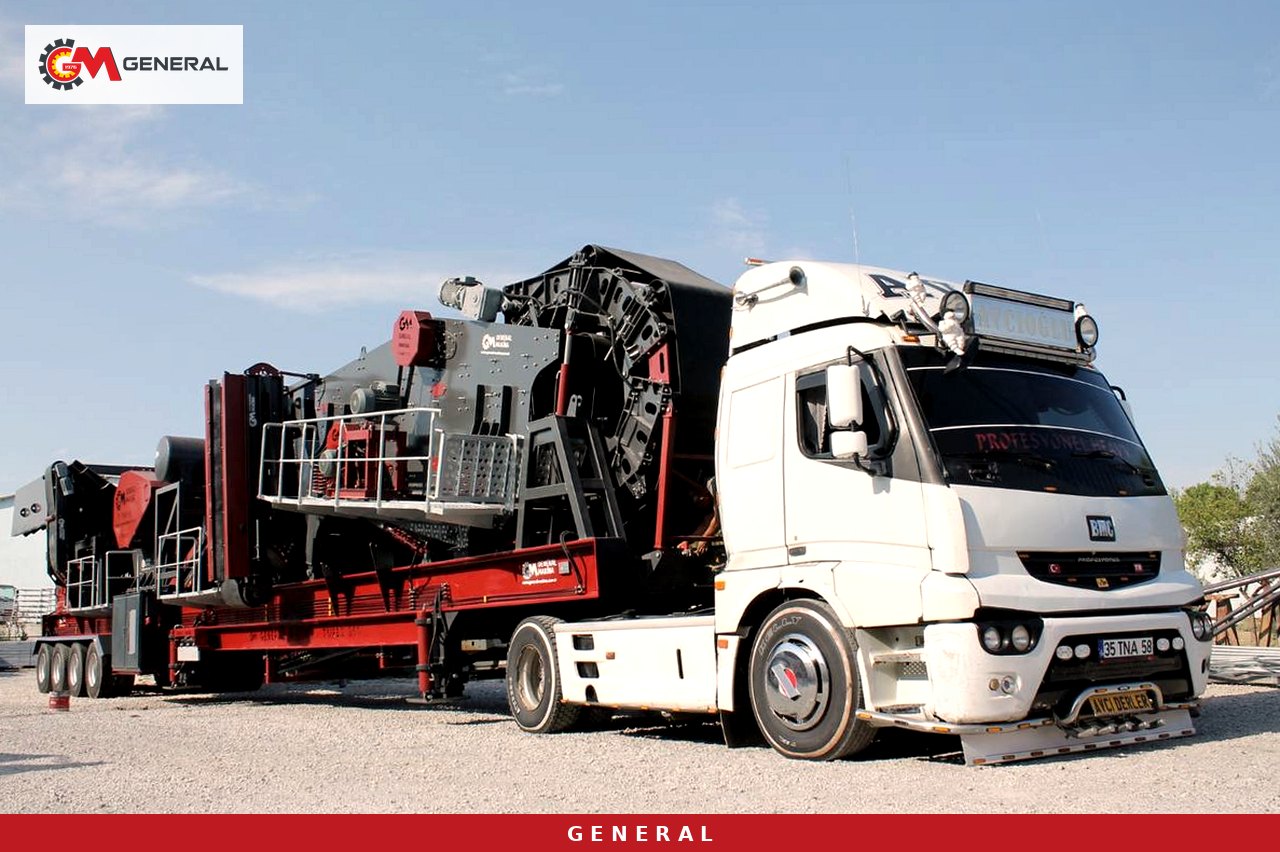
The table is a matching tool, not a ranking. For an operator crushing basalt, the jaw stage of the General 640 keeps liner costs under control compared with a single impactor; but if you need 100 t/h every day, you must account for what running the machine at the top of its range means. On limestone, the General 800 primary impact plant covers 100 t/h in the middle of its range. If you will relocate often and also process recycled material, the GM 100 from the track-mounted mobile crushers range comes into play; 100 t/h is its lower end and leaves room to grow. All wheeled options are listed in the mobile crushing and screening plant category.
What drives the quotation at the 100 t/h scale?
We do not give price figures here, because even the same model is quoted differently depending on scope. When comparing offers, checking whether two quotations cover the same items saves more money than comparing headline prices. At the 100 t/h class the main items are:
- Crusher architecture: a two-crusher layout (jaw + impactor on the General 640) and a single primary impactor (General 800) contain different steel and drive content. The number of crushers also sets the number of liner sets and the spare-parts stock.
- Undercarriage: a wheeled chassis is moved by a tractor unit; a tracked machine such as the GM 100 moves itself. Tracks shorten set-up and relocation time on site, but they are a separate equipment item in the quote.
- Screen size and number of decks: 1200×4000, 1300×4000 and 1500×5500 mm screens offer different screening areas; the number of fractions and the recirculating load depend on that area.
- Power scope: on the General 640 the 300 kVA generator is optional; on a site with grid power this item may stay out of the quote. Make sure the offer shows line by line whether the generator is included.
- Automation and control: PLC-based start-up sequencing, feeder speed adjusted to crusher current and shift reporting widen the scope; in return they cut losses from stoppages and overloads.
- Freight and delivery point: the difference between ex-works and on-site delivery noticeably changes the total, especially for export. Transport dimensions are on the product pages: 3500×17000×4500 mm for the General 640 and 3600×15500×4500 mm for the General 800.
The impact of each item on cost is covered in detail in our article on the factors that set mobile crushing plant prices, which works well as a checklist when reading a quotation.
Calculate the payback period with your own figures
Build the numerator completely
The most common mistake in a payback calculation is equating total investment with the machine price. For a 100 t/h mobile line the numerator should be built as follows:
Total investment (I) = Machine price (M) + Freight and installation (N) + Site preparation (S) + Initial spare and wear parts set (Y) + Generator or grid connection (E)
On a mobile plant S is small: the General 800 is secured on hydraulic legs without excavation or a concrete foundation, and the GM 100 positions itself on its tracks. E, on the other hand, varies widely by site. A quarry without power adds a generator; a site near the grid adds a transformer and panel connection.
Derive the denominator from production hours
Annual net cash flow (C) = (Average saleable output t/h × Annual net crushing hours × Contribution margin per tonne) − Annual fixed costs
Contribution margin per tonne = Selling price per tonne − Variable cost per tonne (fuel or electricity, wear parts, oil and filters, operator, loader and on-site haulage)
Simple payback (years) = I ÷ C and annual ROI = C ÷ I
To break down the energy and wear part of variable cost per tonne, use the energy and wear cost calculator and carry the result straight into this formula.
Hypothetical example (not real values)
The figures below only illustrate how the calculation works; "units" are used instead of a currency, and none of them is a real value for any model or market.
- Total investment: M = 850,000 units, N = 50,000 units, S = 40,000 units, Y = 60,000 units, E = 0 (grid available) → I = 1,000,000 units.
- Average saleable output 85 t/h, annual net crushing hours 1,600 → annual output 136,000 tonnes.
- Selling price 12 units per tonne, variable cost 7 units → contribution 5 units/tonne → annual contribution 680,000 units.
- Annual fixed costs (insurance, site, administration) 180,000 units → C = 500,000 units.
- Payback = 1,000,000 ÷ 500,000 = 2.0 years; annual ROI ratio = 500,000 ÷ 1,000,000 = 0.5.
In the same hypothetical example, if only the contribution falls from 5 to 4 units, annual contribution becomes 544,000 and C 364,000 units, stretching payback to about 2.75 years. If the contribution stays the same but net crushing hours drop from 1,600 to 1,200, annual output is 102,000 tonnes, C is 330,000 units and payback rises to about 3.03 years. These two lines show that in the 100 t/h class ROI depends more on site discipline than on the machine price: every idle hour and every unit of lost margin shrinks the denominator, not the numerator.
Technical decisions that shorten payback
The two levers in the calculation, net crushing hours and contribution per tonne, are directly tied to machine choice. The decisions below promise no percentage; they show which mechanism affects which item.
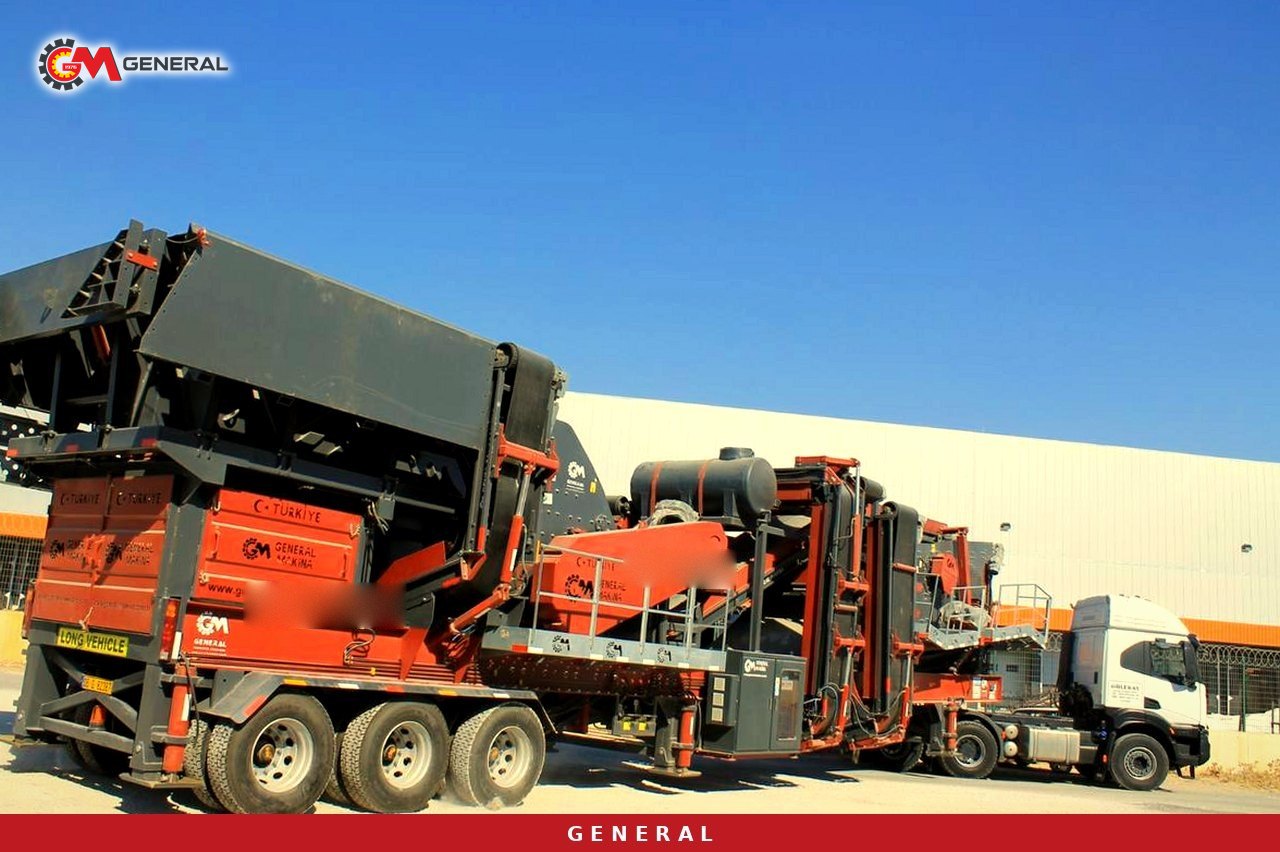
Pre-screening and by-pass: the by-pass grizzly feeder on the General 640 and the 1000×1500 mm grizzly pre-screen on the GM 100 separate material that is already fine before it reaches the crusher. The crusher only sees rock that needs breaking, which benefits liner life and crusher throughput.
Closed circuit: the General 640, General 800 and GM 100 all work in closed circuit; oversize that cannot pass the screen returns to the crusher. This prevents unsaleable coarse material from piling up in the stockyard and raises the share of saleable tonnes, protecting the contribution margin.
Matching crusher type to rock: on limestone an impactor gives a high reduction ratio and cubical product, which supports the sales value of concrete and asphalt aggregate. On abrasive rock impact elements wear quickly; the General 640 layout, which starts with a jaw stage, is the way to keep variable cost under control in that case.
Automation and records: the PLC lowering feeder speed when crusher current approaches its threshold reduces overload stoppages. Shift reports produced by the panel record tonnage and downtime, so you update the payback calculation with real hours instead of estimates.
New or used: the items the formula does not show
The lower purchase price of a used machine reduces I and shortens payback on paper. But the other two inputs of the formula, net crushing hours and variable cost per tonne, become uncertain with a used machine. A fatigued chassis, worn bearings, a crusher body with unknown history and parts mismatches all show up in the denominator as unplanned downtime. A used machine also has no manufacturer warranty; General Makina supplies new machines with a 1-year warranty (wear parts excluded) and ISO 9001 and CE certification. The conclusion of this comparison is therefore clear: for continuous production, buying a new machine is always the most sensible and correct choice. General Makina does not sell used machines, and our recommendation follows the same line.
Renting carries a similar misconception. It may look reasonable for a short one-off job, but in continuous production spread over years the rent keeps being paid while no ownership is built. General Makina does not offer rental; for continuous work, purchasing a new machine is the right choice.
Checklist to prepare before requesting a quotation
Whether the offer contains the right model and the right scope depends on giving the following information in your first message:
- Type of rock to be processed (limestone, basalt, river gravel, concrete/asphalt waste) and, if possible, hardness or abrasiveness data
- Largest block size coming from the face: the limit is 500 mm for the General 640 and 600 mm for the General 800 and GM 100
- Target net output and daily net operating hours
- Required fractions and their shares (for example 0-5 / 5-12 / 12-19 mm)
- Whether grid power is available on site, and if not, the generator requirement
- How many times a year the plant will relocate and the ground conditions (for the tracks-or-wheels decision)
- Delivery point: ex-works or on site
- Whether the initial spare and wear parts set should be included in the quote
Frequently asked questions
Why is the price of a 100 t/h mobile plant not given as a single figure?
Because crusher architecture, undercarriage, screen size, generator scope, automation and delivery point set the price together. Once you send your rock type and tonnage target, a project-specific configuration and price are prepared as a quotation.
How many years will payback take?
The period comes from your selling price, your variable cost and your net crushing hours, not from the machine. Put your own data into the formula above to get the real result; the 2.0 years in the hypothetical example only shows how the calculation is set up.
Is the General 640 enough for 100 t/h, or should I move to the General 800?
The General 640 is rated at 60-100 t/h, so 100 t/h is the top of its range. If your target is a permanent 100 t/h and your rock is limestone, the General 800 with 80-150 t/h covers that tonnage in the middle of its range. On hard and abrasive rock, weigh the advantage of a layout with a jaw stage together with the tonnage target.
When does investing in the tracked GM 100 make sense?
If you relocate frequently inside the quarry, do not want to spend time on ground preparation, or recycle concrete and asphalt, the GM 100 stands out. Its 100-180 t/h range leaves growth headroom above today's 100 t/h target.
Conclusion
How fast a 100 t/h mobile plant pays back is not set by the machine price alone; it is set by matching the right model to your rock and tonnage, counting total investment in full and protecting net crushing hours. To keep that calculation intact, starting with a new machine rather than a used one is always the right choice: warranty, certified manufacturing and a known parts supply chain reduce the uncertainty in the formula. Share your rock type, feed size and tonnage target through our contact page, and we will work out the right configuration and price quotation with you.
Definitions of technical terms: Glossary