 EN — English
 TR — Türkçe
 DE — Deutsch
 RU — Русский
 FR — Français
 ES — Español
 AR — العربية
 SR — Српски
Occupational Safety
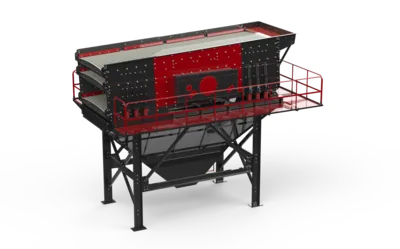
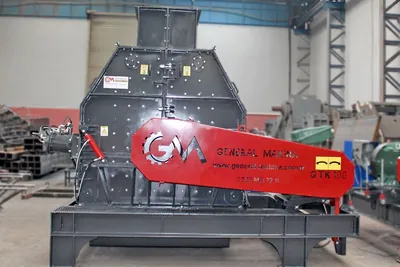
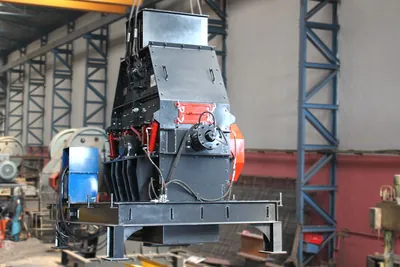
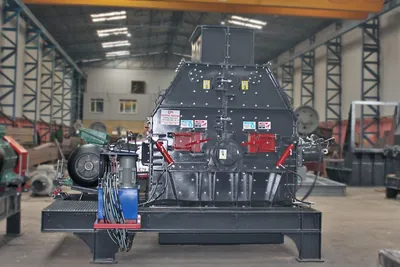
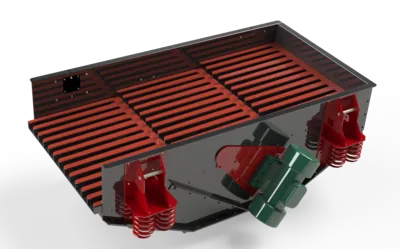
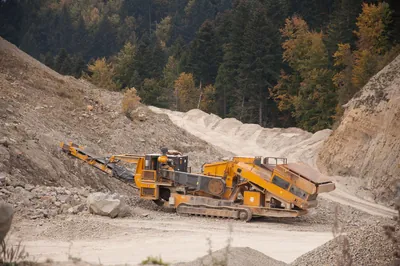
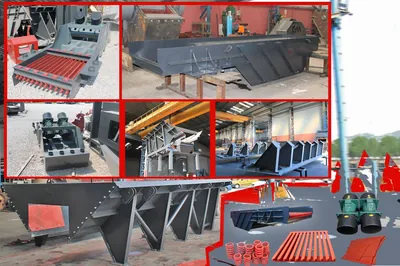
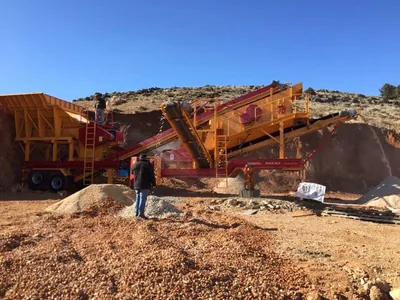
What safety means on a crushing and screening plant
Safety on an aggregate plant is the physical separation of four things from the path a person walks: moving parts, stored energy, falling material and airborne dust. The better that separation is built into the plant itself, the less weight falls on procedure and personal protective equipment. A written instruction has never stopped a tail pulley. A guard has. This hub covers guarding, energy isolation, emergency stopping, respirable dust, noise, work at height, confined space entry and risk assessment, always against the real layout of a crushing line rather than a generic checklist.
One caution belongs at the top. Occupational exposure limits differ substantially between jurisdictions. The same dust concentration can be compliant in one legal area and a clear breach in another. Every numeric threshold below therefore names the regulatory area it belongs to, and the binding text is always the one in force where the plant operates.
Why hazard begins with layout
Crusher inlets, conveyor tail pulleys, screen springs, feeder grizzly bars and transfer chutes are where energy concentrates. If a walkway runs past those points, the exposure is a design problem rather than a behavioural one. Routing walkways away from energy-dense zones, planning maintenance access so it is only feasible on a stopped machine, and placing inspection windows beyond arm's reach deliver protection that no retrofitted warning sign can match. The safety questions of a stationary crushing plant differ from those of a mobile jobsite solution: the first allows permanent platforms and handrails, the second demands a fresh assessment at every set-up.
Machine guarding and safety distances
A guard either makes the hazard zone unreachable or stops the machine when access is opened. A fixed guard should require a tool for removal and must not create a new hazard once removed. A movable guard works together with an interlocking device, and guard locking becomes mandatory where rotating masses keep turning after the stop command. A vertical shaft impactor rotor can spin for minutes after shutdown; if the hatch can be opened during that window, the guard is not doing its job.
On mesh and perforated guards, aperture size and distance to the hazard are inseparable. The minimum distances that prevent upper limbs reaching through regular openings are standardised:
| Opening width e (mm) | Slot (mm) | Square (mm) | Round (mm) |
|---|---|---|---|
| e ≤ 4 | 2 | 2 | 2 |
| 4 < e ≤ 6 | 10 | 5 | 5 |
| 6 < e ≤ 8 | 20 | 15 | 5 |
| 8 < e ≤ 10 | 80 | 25 | 20 |
| 10 < e ≤ 12 | 100 | 80 | 80 |
| 12 < e ≤ 20 | 120 | 120 | 120 |
| 20 < e ≤ 30 | 850 | 120 | 120 |
| 30 < e ≤ 40 | 850 | 200 | 120 |
| 40 < e ≤ 120 | 850 | 850 | 850 |
The values are the ISO 13857 upper limb figures for persons aged fourteen and over. The practical reading is blunt: a 30 mm square mesh placed closer than 120 mm to the hazard is not a guard. Slot openings are far more dangerous than square openings of the same width because a flattened hand passes through them, and that is precisely the mistake most often found on tail pulley enclosures.
Conveyor nip points
Every place where the belt meets a pulley, an idler or a scraper is a nip point. On conveyor belt runs these must be enclosed so that access is physically impossible. Pulling a stone off a running belt by hand remains the single most common cause of limb loss in this industry, and no amount of training suppresses that reflex as reliably as an enclosure does.
Energy isolation and prevention of unexpected start-up
Maintenance, cleaning and clearing a blockage are the moments when a machine is most dangerous, because guards are deliberately out of the way. Energy isolation closes that gap. Electricity is only one of the energies involved: hydraulic pressure, pneumatic pressure, spring tension, heat and, most often forgotten, gravity. A raised crusher lid, a loaded bin and material sitting on an inclined conveyor are all ready to move long after the isolator is opened.
A workable isolation sequence runs as follows. Define the task, notify everyone affected, shut the machine down by the normal means, isolate every energy source at its own disconnect, apply lock and tag, dissipate residual energy, then verify zero energy by attempting a start. Skip that last step and the whole chain loses its value. In group work each person applies an individual lock, because an isolation held by a single lock collapses the moment its owner changes shift. On the control side, the automation and control system must block remote starting whenever a field lock is present.
Emergency stop and pull-cord systems
An emergency stop is not a control device; it is a last-resort safety function. It does not reduce the underlying risk, it limits the consequences of an event already in progress. Under ISO 13850 an emergency stop may only produce a Category 0 or Category 1 stop as defined in IEC 60204-1. Category 0 removes power immediately, Category 1 removes it after a controlled deceleration. For high-inertia rotors Category 1 is frequently the safer choice, since an abrupt cut can create secondary hazards.
On a long conveyor a single push button is inadequate. A pull-cord switch tensioned along the belt forms a continuous stopping device over the accessible length of the line. A correctly specified system trips both when the cord is pulled and when it breaks or goes slack; a device that only responds to pulling silently loses protection exactly where the cord has failed. Cord tension and switch spacing belong in the maintenance schedule, not in the commissioning file alone.
Respirable crystalline silica and dust
Silicosis is the quiet occupational disease of aggregate crushing, and exposure accumulates across a shift rather than arriving in a single event. The limits vary by jurisdiction more than most operators expect:
| Regulatory area | Respirable crystalline silica, 8-hour reference |
|---|---|
| European Union, carcinogens and mutagens directive | 0.1 mg/m³ binding limit |
| United States, OSHA 29 CFR 1910.1053 | 0.05 mg/m³ permissible limit; 0.025 mg/m³ action level |
| Türkiye, dust control regulation annex | 10 / (%SiO₂ + 2) mg/m³ respirable quartz formula |
| Türkiye, cristobalite and tridymite | half of the calculated quartz value |
| Türkiye, inert or nuisance dust | 5 mg/m³ respirable, 15 mg/m³ total |
| Türkiye, Portland cement | 5 mg/m³ respirable, 15 mg/m³ total |
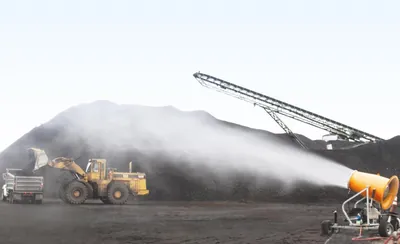
Three jurisdictions, one plant crushing the same rock, three different obligations. The engineering answer is hierarchical regardless of which applies. Reduce generation first: lower the feed drop height, enclose transfer points, shorten free fall. Then suppress: water mist at transfers and screen decks, enclosed extraction where water cannot be used. Wet screening changes dust generation at the root compared with dry screening, and the selection criteria are set out in the dry versus wet screening comparison. Enclosing the body of a conventional vibrating screen alone produces a measurable difference. Respirators come last, and only count when they fit the face, are maintained, and carry the right filter class.
Noise exposure
Where a crusher, a screen and a feeder run together the noise is continuous and broadband. Hearing loss is slow, painless and irreversible, which is exactly why it cannot be managed without measurement.
| Threshold | EU Directive 2003/10/EC | US OSHA 29 CFR 1910.95 |
|---|---|---|
| Lower action value | 80 dB(A), 135 dB(C) peak | 85 dBA action level |
| Upper action value | 85 dB(A), 137 dB(C) peak | not defined |
| Exposure limit value | 87 dB(A), 140 dB(C) peak | 90 dBA permissible limit |
| Exchange rate | energy equivalent, 3 dB | 5 dB |
| Impulse ceiling | governed by peak values | 140 dB peak |
One detail changes how the numbers are used. In the European scheme the 87 dB(A) limit is assessed with the attenuation of hearing protectors taken into account, while the 80 and 85 dB(A) action values are assessed on the unprotected ambient level. The differing exchange rates mean the same measurement can produce different conclusions under the two regimes. Source control always comes first: resilient mounting, rubber-lined chutes, balanced rotors and enclosed crusher bodies all give measurable gains.
Work at height and confined space entry
Screen decks, bin mouths and conveyor towers all need routine access. Access solved with permanent stairs, handrails and toe boards is structurally safer than a temporary arrangement rebuilt each time. Trigger heights differ: in the United States OSHA requires fall protection at 1.8 m and above in construction work and at 1.2 m and above in general industry. European and Turkish practice is risk-based rather than fixed to a single number, and protection is required at any height where a fall onto dangerous equipment is possible.
Bins, silos and feed hoppers are confined spaces. The dominant hazard there is not falling but engulfment: bridged material collapses without warning and buries a person in seconds. Entry into an aggregate bunker or a cement silo requires a permit, an attendant outside, a rescue arrangement and atmospheric testing. The OSHA permit-required confined space standard defines the acceptable oxygen range as 19.5 to 23.5 percent by volume, with the test order oxygen, then flammables, then toxics. Energy isolation is a precondition of such permits but never sufficient on its own, because it does nothing about engulfment.
Risk assessment and the standards map
A risk assessment is a living record, not an archive document. Adding a jaw crusher, changing feed material or restructuring shift patterns all invalidate an existing assessment. The hierarchy is not negotiable: eliminate by design, then protect by technical measures, then inform and equip.
| Standard | Scope |
|---|---|
| ISO 12100 | Risk assessment and risk reduction methodology |
| ISO 13849-1 | Safety-related parts of control systems, PL a to e |
| ISO 13850 | Emergency stop, Category 0 or 1 only |
| ISO 13857 | Safety distances for upper and lower limbs |
| ISO 14118 | Prevention of unexpected start-up |
| ISO 14119 | Interlocking devices and guard locking |
| ISO 14120 | Design of fixed and movable guards |
| EN 620 | Belt conveyors for bulk material |
| IEC 60204-1 | Electrical equipment of machines, stop categories |
Layout and equipment choice decide most of these obligations on site rather than on paper. A quarry stationary plant concept allows platforms, handrails and access routes to be designed from the start. The choice made within the crushers range also changes feed height, blockage frequency and therefore how often an operator has to approach the machine at all. If you want your layout reviewed through a safety lens, send us your current flow diagram and our engineering team will work through access routes, guard boundaries and isolation points with you.
Frequently Asked Questions
Which energies must be isolated before clearing a crusher blockage?
Electrical supply is only the first. Hydraulic and pneumatic pressure, spring tension and gravity loads must all be isolated, because material in a bin or on an inclined conveyor can still move after the isolator is opened. The isolation counts as complete only once zero energy has been verified by attempting a start.
How close to a hazard can a mesh guard be installed?
That depends on the aperture, not on the mesh alone. Using the ISO 13857 upper limb values, square openings between 20 and 30 mm require at least 120 mm to the hazard. Slot openings of the same width demand considerably more distance because a flattened hand passes through them.
Why specify a pull-cord instead of push buttons on a conveyor?
On a long run an incident can happen tens of metres from the nearest button. A cord tensioned along the belt gives a continuous stopping device across the accessible length. A correctly specified switch trips both when the cord is pulled and when it breaks or goes slack.
Is there a single international limit for respirable silica?
No, and assuming one is a common compliance failure. The European Union applies a binding 0.1 mg/m³ limit under its carcinogens directive, OSHA in the United States sets 0.05 mg/m³ with an action level of 0.025 mg/m³, and Türkiye uses a formula based on the silica percentage of the dust.
What must be tested before entering a bin or silo?
The atmosphere is tested before entry and monitored continuously during the work, in the order oxygen, flammables, then toxics. The OSHA permit-required confined space standard sets the acceptable oxygen range at 19.5 to 23.5 percent by volume. Testing alone is not enough, because bridged material can still collapse and engulf the entrant.