EN — English
 TR — Türkçe
 DE — Deutsch
 RU — Русский
 FR — Français
 ES — Español
 AR — العربية
 SR — Српски

Rent or Buy? Mobile Crusher Cost Comparison for Construction Sites
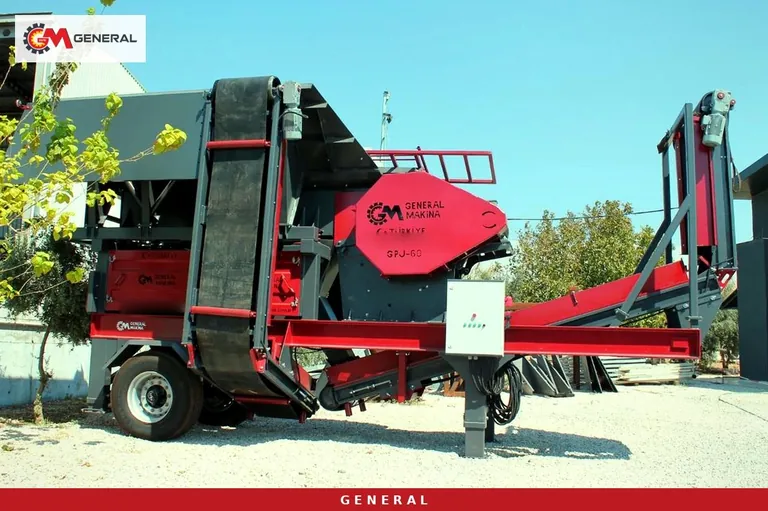
When a road, dam or infrastructure job needs aggregate, two options land on the table: rent a mobile crusher for a set period or buy your own machine. On paper, renting looks like the easy way to start without tying up capital. On site, once you count operating months, relocations, rock abrasiveness and control over the schedule, the picture changes. This article measures both routes with the same formula, opens up the items that never appear on a rental invoice and builds a decision matrix around the job schedule. Two points up front: General Makina does not offer rental; it builds new machines, and for a contractor with continuous work the right choice is to buy a new machine. A used machine, which can look attractive in the short term, is part of this calculation too, but the conclusion does not change: buying a new machine is always the most sensible and correct choice.
The decision comes down to one question: how many months a year will the machine crush for you?
The first variable separating rent from buy is not the machine price but the operating period. A one-off fill job lasting a few weeks and a year of back-to-back road sections cannot be judged with the same arithmetic. Rent is paid again for every month worked; the capital burden of an owned machine is spread across years, and every additional operating month pulls the cost per tonne down.
So go to the decision meeting with your work programme, not a brochure. List the tenders and contracts for the next two to three years; for each job write the expected aggregate tonnage, crushing period and number of moves between sites. The resulting figure, "crushing months per year", is the heaviest input to the formula below. When this list is written for the first time, the machine that was "only needed now and then" often turns out to be needed for most of the year.
The second variable is transport. A mobile plant earns its value by moving from site to site, but each move means a mobilisation charge, a set-up day and commissioning time. Under a rental these are usually invoiced per job; with your own machine they run on your crew and your schedule.
Items that never show on the rental invoice
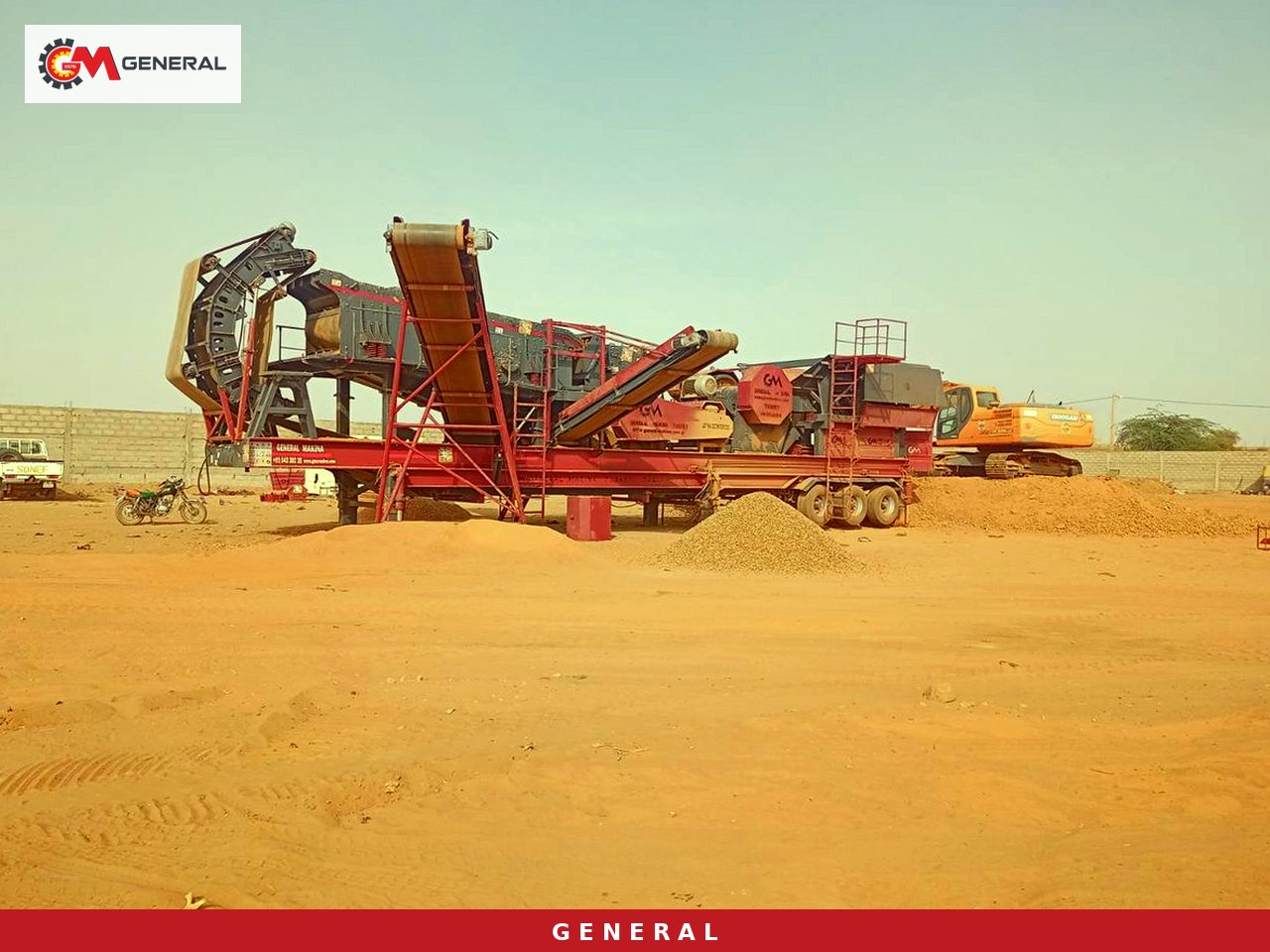
A rental quote reads like a single monthly line; the real cost sits in the contract appendices. When you assess a rental offer, ask about each of the following separately and get the answer in writing:
- Minimum hire period: whether you keep paying if your job finishes early.
- Mobilisation and demobilisation: who pays for haulage, crane, set-up and dismantling.
- Wear parts: how jaw plates, blow bars, screen mesh and conveyor belts are measured at hand-over and return, and how the difference is billed.
- Breakdowns and standby: whether rent keeps running while the machine is down, and whether a replacement unit is guaranteed.
- Operator and maintenance: who supplies the operator and who is responsible for daily servicing and greasing.
- Damage and insurance: who carries damage to the chassis, hydraulic legs and electrical panel.
Beyond these there is an item no figure can capture but which hits the schedule directly: availability. In the peak months of the construction season, rental machines are in demand. Failing to find a plant of the right capacity in the week you win a tender ties your site programme to someone else's fleet. A contractor who owns the machine does not carry that risk.
There is also the question of fit. A rental fleet sends whichever unit is free. On abrasive basalt or granite, a plant with an impact secondary raises wear-part consumption; on soft limestone, a cone secondary carries weight and power you do not need. When you buy, you choose the crusher type for your rock; when you rent, you usually make do with what is available.
Building the cost of ownership properly: formula and hypothetical example
The honest way to compare the two options is to convert both into an annual cost. Tonnage-driven items such as fuel or grid energy and wear parts are largely paid by you in either case, so focus the comparison on the fixed and recurring items that make the difference.
Annual rental cost = (monthly rent × crushing months per year) + (mobilisation charge × number of moves) + standby and damage charges
Annual ownership cost = (investment − resale value at the end of economic life) ÷ economic life (years) + financing cost + insurance and periodic maintenance + (your own transport cost × number of moves)
The figures below are a hypothetical example, not real values; "units" are used instead of a currency. A contractor crushes for 9 months a year across three sites. On the rental side, monthly rent is 10 units and each mobilisation 4 units: 9 × 10 + 3 × 4 = 102 units. On the ownership side, the annual share of investment minus resale value is 50 units, financing 12 units, insurance and maintenance 10 units, and your own transport 2 units per move: 50 + 12 + 10 + 3 × 2 = 78 units. In this example ownership comes out 24 units a year ahead.
The same example gives the break-even point. Calling crushing months per year a, the equation 10 × a + 3 × 4 = 50 + 12 + 10 + 3 × 2 gives 10 × a = 66, so a = 6.6 months. Under these assumptions, buying is cheaper for any machine working longer than 6.6 months a year. Put your own figures into this template; to see the energy and wear side per tonne you can use the operating cost calculator.
Two further gains do not appear in the formula. The first is residual value: a machine with regular servicing and a known history sits on the balance sheet as an asset at the end of its economic life, while a rental leaves you with nothing. The second is opportunity income: a firm that owns its plant can sell aggregate to neighbouring sites between main jobs or take on a short extra contract without waiting for a rental slot.
Decision matrix: rented, new and used
The table below puts the three routes side by side against the criteria a site manager actually asks about. A used machine may seem to ease the budget in the short run, but bearings with unknown history, fatigued chassis welds and an electrical panel without warranty move the same uncertainty as a rental onto your own balance sheet. The table's conclusion is therefore clear: for continuous work a new machine is the right choice.
| Criterion | Rented | New purchase | Used |
|---|---|---|---|
| Schedule control | Depends on the rental fleet | Fully yours | Yours, but exposed to breakdowns |
| Crusher type matched to rock | Limited to what is available | Chosen for the rock | Limited to the listed machine |
| Warranty | Depends on the contract | 1 year at General Makina (wear parts excluded) | Usually none |
| Maintenance history | Not visible to you | Your own record from day one | Unverifiable or incomplete |
| Value at the end of the period | None | An asset on the balance sheet | Low and uncertain |
| Best suited to | One-off, short jobs | Continuous and recurring work | Not recommended |
Renting has a narrow window of sense: the firm's core business is not crushing, and the need is a one-off lasting a few weeks. If crushing recurs in your programme every year, rent means paying for the machine instalment by instalment to someone else.
Which new machine for which site schedule?
After the decision to buy comes model selection. For a contractor moving from site to site, capacity, feed opening, power source and ease of transport decide the matter. Examples matching three site profiles from General Makina's mobile crushing and screening plants and track-mounted mobile crushers:
| Model | Capacity | Max. feed | Power | Weight | Role on site |
|---|---|---|---|---|---|
| General 640 (GPJ 60 jaw + GNR 50 impact) | 60-100 t/h | 500 mm | 300 kVA generator (optional) | 38,000 kg | Small and mid-size road and construction jobs |
| General 950 (GPJ 90 jaw + DMK01 impact) | 120-180 t/h | 800 mm | 600 kVA generator | 70,000 kg | High tonnage on hard, abrasive rock |
| GM 90JP (GNR 90 jaw, 95 kW, tracked) | 70-180 t/h | 700 mm | 250 kVA power unit | 35,000 kg | Primary crushing that moves often within a site |
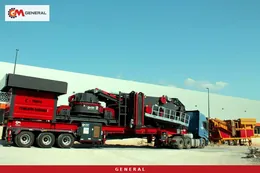
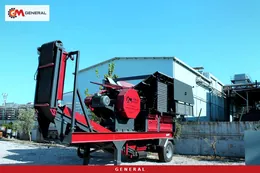
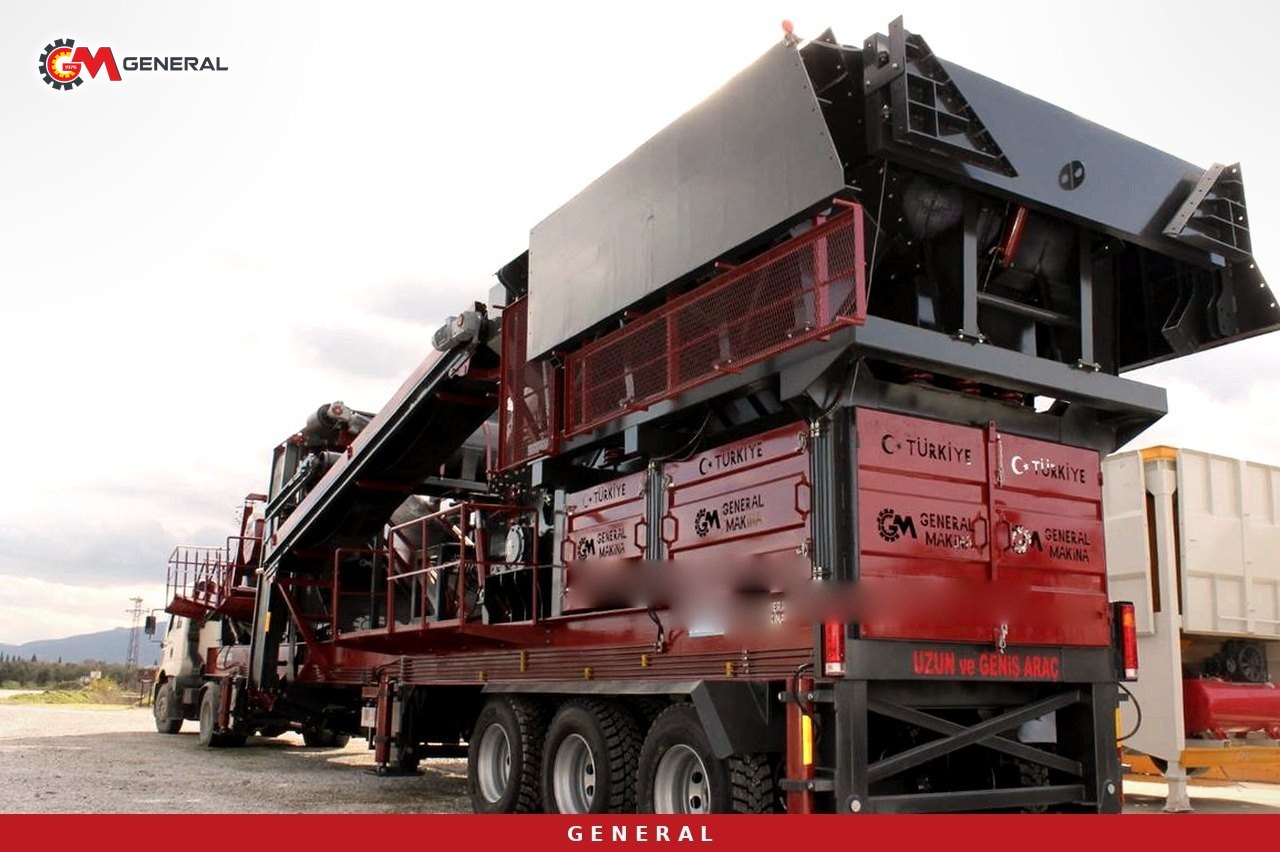
The General 640 is a compact plant that fits on one truck and is ready to work quickly on its hydraulic legs, a natural starting point for contractors bringing crushing in-house for the first time. The General 950 travels on one truck and, in the words of its product page, starts producing in 30 minutes; it combines a jaw with an impact secondary on basalt, granite and quartz. The GM 90JP walks on its own tracks and needs no ground preparation or concrete foundation; its 10 m³ hopper and grizzly vibrating feeder are standard. These three profiles stand for a machine chosen to fit your programme instead of whatever happens to be in a rental fleet.
Checklist before you buy
- List the jobs for the next two to three years; write down crushing months per year and the number of moves.
- Identify the rock at each site (limestone, basalt, granite, river gravel) and the largest block size; choose the feed opening accordingly.
- Define the required product fractions and daily tonnage target.
- Check whether the sites have grid power; have the generator rating written into the quotation scope.
- Compare height and weight limits on the haul route with the plant's transport dimensions.
- Put the rental quotes you hold into the formula above and calculate the break-even month.
- Ask for the warranty scope, wear-part supply and recommended spare parts list together with the quotation.
To see which items push a quotation up, our article on the factors that set mobile crusher prices complements this list.
Frequently asked questions
Does General Makina rent out mobile crushers?
No. General Makina does not provide rental; since 1976 it has built and sold new crushing and screening plants in Izmir under ISO 9001 and CE. Our advice to firms with continuous crushing work is to buy their own new machine.
When can renting be considered?
If crushing is not the firm's core business and the need is a one-off, short job, renting can be considered. If crushing recurs every year, run the break-even calculation with your own figures: rent starts from zero every year, while the capital burden of an owned machine is divided over years.
Isn't a used machine a middle way between renting and new?
It looks that way, but a used machine usually has no warranty, its maintenance history cannot be verified and the breakdown risk falls directly on your schedule. So a used machine is no middle way: buying a new machine is always the most sensible and correct choice.
How do I get price and delivery information?
Send us the rock type, target tonnage, product fractions, power source and your site list; price and delivery for the specific configuration are given with the quotation.
Conclusion: a new machine for continuous work
Renting is a short bridge for a one-off need; for a contractor whose crushing work recurs every year, it is a way of moving capital into someone else's machine. Schedule control, a crusher suited to the rock, warranty and an asset left on your books at the end of the period make buying a new machine the right choice. A used machine does not change this calculation; a new machine is always the most sensible choice. Send us your work programme and rock data, and we will prepare a quotation for a new plant that fits your site schedule.
Definitions of technical terms: Glossary