EN — English
 TR — Türkçe
 DE — Deutsch
 RU — Русский
 FR — Français
 ES — Español
 AR — العربية
 SR — Српски

7 Financial Criteria When Buying a Mobile Stone Crushing Plant for Sale
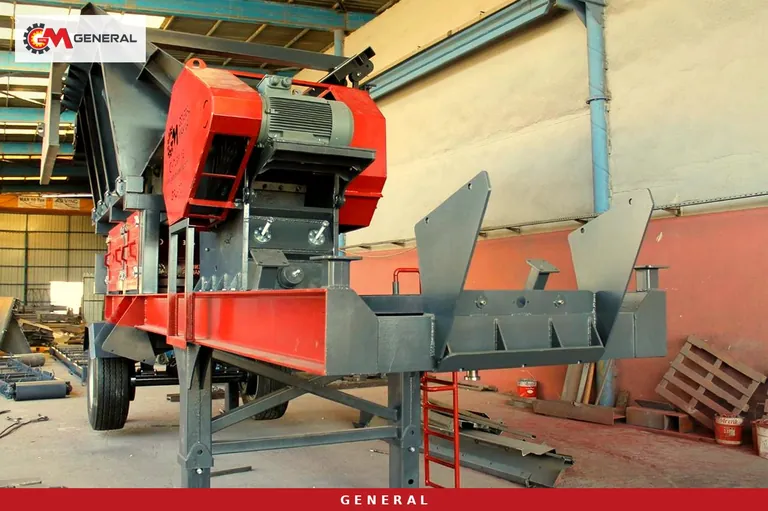
Most buyers who look at a mobile stone crushing plant for sale compare quotations on a single line: the total price. Yet the machine will work on site for years, and the real bill is paid through the operating cost charged to every tonne of aggregate. This article walks through the seven financial criteria an investment committee would ask about, in order: capacity fit, crusher type and wear, product mix, energy, transport and set-up, warranty and certification, and the growth path. Let us say it up front: a used machine may look attractive at first glance, but a new machine wins on almost all of these seven criteria; for an operation that will produce continuously, buying a new plant is always the most sensible and correct choice.
Set the yardstick first: cost per tonne
The way to weigh all seven criteria on the same scale is to convert everything into cost per tonne. The purchase price is only one input to that calculation. A simple framework looks like this:
Cost per tonne = (hourly depreciation share + hourly energy cost + hourly wear cost + hourly labour cost + hourly maintenance cost) ÷ net hourly output (tonnes)
Hypothetical example, not a real value: plant A produces 125 tonnes of saleable product per hour at a total cost of 100 units per hour; its cost per tonne is 0.8 units. Plant B is more expensive and runs at 110 units per hour, but delivers 160 tonnes of saleable product in the same quarry; its cost per tonne falls to about 0.69 units. Here the machine with the higher purchase price produces cheaper aggregate. To run the numbers with your own values, use the energy and wear cost calculator.
The words "net output" in the denominator matter. Material that fails to pass the screen and returns to the crusher, fractions that sit unsold in the stockpile and breakdown stoppages all shrink that figure. Most of the criteria below are about enlarging the denominator or shrinking the numerator.
Production criteria: capacity, crusher type and product mix
1. Sizing capacity to real demand
Buying a big plant is often defended with "we will need it later", but a plant running at half load has to spread its depreciation over fewer tonnes. The opposite is expensive too: an undersized plant pushes you into longer shifts, overtime and a second machine. The correct method is to divide your annual order volume by workable days and shift hours to find the required tonnes per hour, then place that figure in the middle of the manufacturer's capacity band. In General Makina's wheeled family the band is 60-100 t/h for the General 640, 80-150 t/h for the General 800, 120-180 t/h for the General 01 and 250-300 t/h for the General 02. If your demand presses against the top of a band, look at the next model up; if it sits at the bottom, the smaller model may give a lower cost per tonne. The whole family is listed on the mobile stone crushers page.
2. Crusher type sets the wear bill
Wear-part spending is the most volatile item in cost per tonne, and it depends on matching rock hardness to crusher type. An impact crusher gives high reduction and cubical product in low-abrasive rock such as limestone; the General 800 (PDK 1280) and General 02 (GPS 1413) are built on that logic. In hard, abrasive rock such as basalt or granite, however, the same impact rotor consumes its parts quickly. For that material a compression layout like the General 944, which pairs a GPJ 90 jaw with a GM430 cone, extends metal life and lowers the parts cost per tonne. Sharing your rock type, and ideally a sample, at quotation stage is far cheaper than paying for parts on the wrong crusher for years.
3. Product mix shapes the revenue side
Two plants with the same tonnage can bring different revenue; what decides it is the share of saleable fractions. The General 640 delivers 0-5 / 5-12 / 12-19 mm with its three-deck screen, while the General 02 separates four fractions, 0-5 / 5-12 / 12-19 / 19-40 mm, on its 2000×5000 mm four-deck screen. If 19-40 mm sells in your region, the fourth deck is direct revenue; if it does not, it is a pile waiting in stock and tying up capital. Closed-circuit operation sends oversize back to the rotor and reduces off-spec material. Because screen openings and the final grading are set at order stage for the rock to be processed, write the mix your market wants into your quotation request.
Model comparison: reading the figures with a financial eye
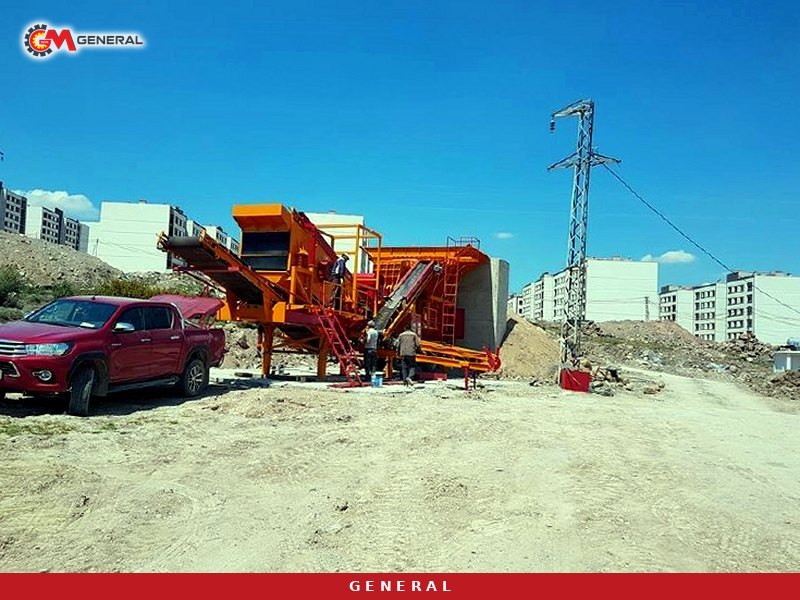
The table below brings together technical data from the product pages in the columns that affect an investment decision. Weight and transport dimensions point to haulage cost, generator rating to the energy set-up, and crusher type to wear risk.
| Model | Crusher layout | Capacity | Max. feed | Generator | Weight | Transport dimensions |
|---|---|---|---|---|---|---|
| General 640 | GPJ 60 jaw + GNR 50 impact | 60-100 t/h | 500 mm | 300 kVA (optional) | 38,000 kg | 3500×17000×4500 mm |
| General 800 | PDK 1280 primary impact | 80-150 t/h | 600 mm | 450 kVA | 35,000 kg | 3600×15500×4500 mm |
| General 01 | GPS 1210 impact (primary+secondary) | 120-180 t/h | 700 mm | 550 kVA | 55,000 kg | 4300×18500×4500 mm |
| General 944 | GPJ 90 jaw + GM430 cone | 120-180 t/h | 800 mm | 550 kVA | 70,000 kg | 4130×20350×4500 mm |
| General 02 | GPS 1413 primary impact | 250-300 t/h | 1000 mm | 660 kVA | 76,000 kg | 4340×20600×4500 mm |
Two financial conclusions follow from the table. First, within the same 120-180 t/h band, the choice between the General 01 and the General 944 depends more on rock abrasiveness than on price. Second, the feed opening determines whether you need pre-crushing: if blocks of up to 1000 mm come from the face, the General 02 takes them directly, while a plant with a smaller inlet may require an extra crusher or a change in blasting.
Operating criteria: energy and transport
4. Energy source and generator rating
The energy cost of a mobile plant depends on whether grid power is available on site. Without grid power, the generator and its fuel are a direct operating item; as the table shows, the generator is 450 kVA on the General 800 and 660 kVA on the General 02, and a 300 kVA generator is optional on the General 640. Calculate the energy item separately with these two lines:
With a generator: hourly energy cost = fuel consumption (l/h) × unit fuel price. On grid power: hourly energy cost = average power drawn (kW) × unit electricity price.
Fuel consumption varies with the site, the rock and the load factor, so pin this value down for your own operating conditions during the quotation rather than estimating it. Automation options such as a soft-starter and a frequency-controlled panel smooth out start-up load peaks and reduce the need to oversize the generator.
5. Transport, set-up and the cost of changing sites
The financial case for a mobile plant is the ability to change sites, and the cost of each move grows with weight and size. Between the 35,000 kg General 800 and the 76,000 kg General 02, not only the tractor class changes but also permits and route planning. Write down how many site moves you expect per year and cost each move as the sum of haulage, dismantling and set-up, and the days without production. Folding hydraulic conveyors and support legs need no concrete foundation, which gives a clear advantage over a stationary plant on the set-up line. Plan permits for heavy haulage by confirming local regulations with the relevant authority.
Long-term criteria: warranty, certification and growth path
6. Warranty, certificates and parts access: new versus used
A warranty is a financial instrument that transfers unforeseen repair risk to the manufacturer. General Makina plants carry ISO 9001 and CE certification and are delivered with a 1-year warranty excluding wear parts. A used machine offers no such cover: the history of the bearings, chassis and hydraulic circuit is unknown, the first major failure lands directly on the buyer's budget, and the production stoppage shrinks the tonnes in the denominator. That is why treating a used machine as a "discounted new one" in the comparison is a mistake; the financial picture always shows a new machine as the right choice for continuous work. For a detailed look at the risks, see our article on risks of buying a used mobile crusher.
Parts access belongs under the same heading. Jaw plates, blow bars and screen mesh are consumed regularly; sourcing them from the same manufacturer, with the right metallurgy, shortens downtime. Check before purchase that the spare parts range covers your model.
7. Growth path and the arithmetic of the second investment
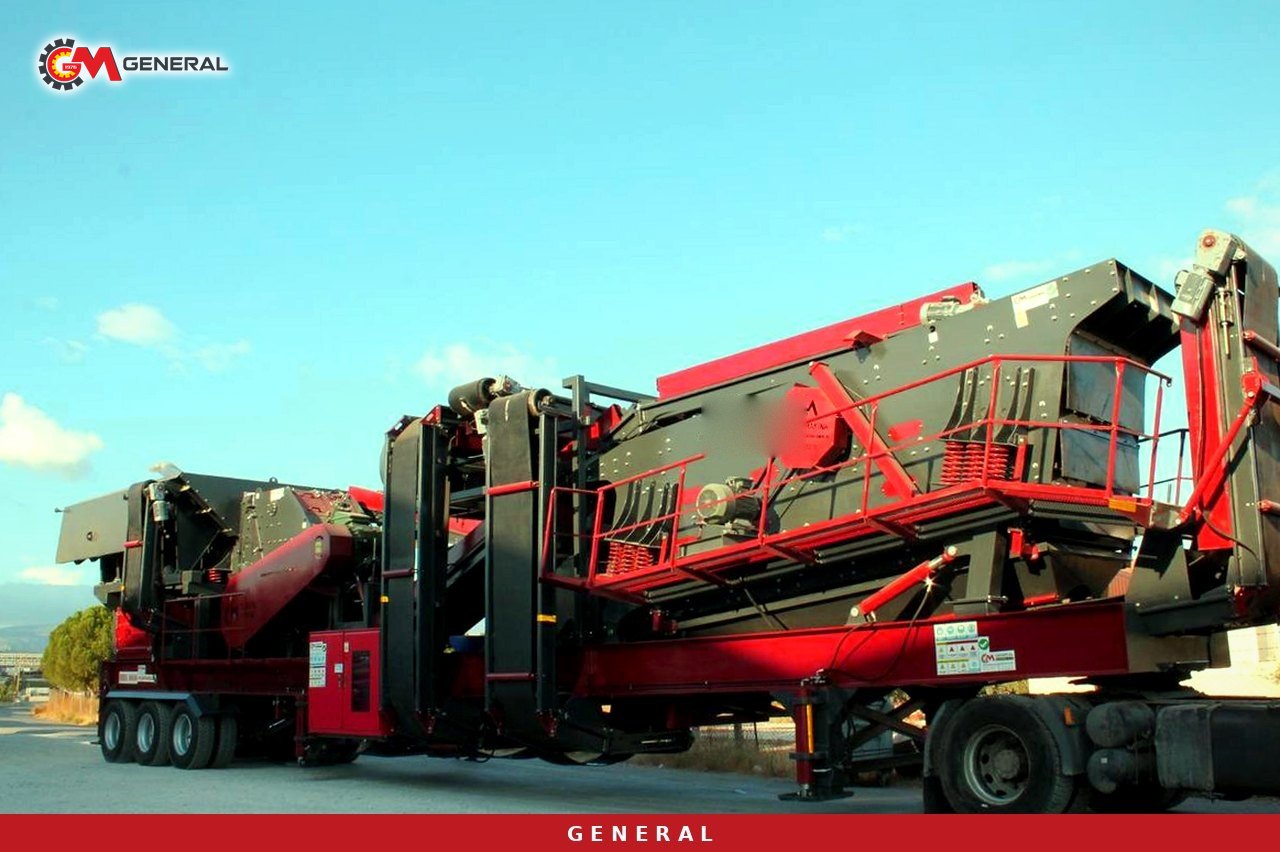
The plant you buy today is the first link of tomorrow's line. When demand grows, is it cheaper to sell the first machine and buy a bigger one, or to add a second crusher or screen next to it? Think about it from the start. Moving from the General 640 to the General 800 is a natural step up; a plant such as the General 02 can be linked into one line with an additional crusher, screening unit and concrete batching plant. A line that grows with the same manufacturer keeps parts stock and operator training common, which lowers the cost per tonne of the second investment. To compare capacity and layout, the 01-02-03 comparison on the General 02 product page is a good starting point.
Financial checklist before you request a quotation
- Have you calculated the net tonnes per hour required by your annual sales target?
- Is the rock type and its abrasiveness known, and was the crusher type chosen accordingly?
- Are the fractions your market demands, and their shares, written into the quotation?
- Is grid power available on site, or is a generator included in the scope?
- How many site moves do you expect per year, and are the transport weight and dimensions known for each?
- Are the warranty scope, the excluded wear parts and the certificates (ISO 9001, CE) stated in writing in the quotation?
- Have you planned how you will expand capacity in two and five years?
Frequently asked questions
What drives the price of a mobile stone crushing plant most?
The capacity band, the crusher layout (impact or jaw + cone), the number of screen decks, whether a generator is in scope, and the automation options. Since the price shifts with these choices, only a quotation prepared for your site gives a current figure.
Isn't a used plant the more sensible financial choice?
No. The lower entry price is usually clawed back in cost per tonne through an unknown failure history, no warranty and parts mismatch. For continuous production, a new machine is always the most sensible and correct choice.
Can renting be an alternative to buying?
General Makina does not offer rental. Except for a short one-off job, buying a new plant puts the asset on your balance sheet and sets the right cost base for every tonne in an operation that produces continuously.
How are delivery time and payment terms set?
Both are finalised at order stage according to the chosen model, the screen and grading set-up, and the generator and automation scope. Ask about them together with your quotation request.
Conclusion
The right mobile stone crushing plant is not the one with the lowest price tag but the one that gives the lowest cost per tonne across all seven criteria: capacity matched to demand, a crusher suited to the rock, a product mix suited to the market, planned energy and transport, a written warranty and a clear growth path. In this picture a used machine loses its cost advantage; a new machine is the right choice. Send us your rock type, target tonnage and fractions, and reach us through our contact page for a quotation prepared for your site.
Definitions of technical terms: Glossary