EN — English
 TR — Türkçe
 DE — Deutsch
 RU — Русский
 FR — Français
 ES — Español
 AR — العربية
 SR — Српски

100 TPH, 200 TPH and 350 TPH Mobile Crusher Capacity Selection Guide
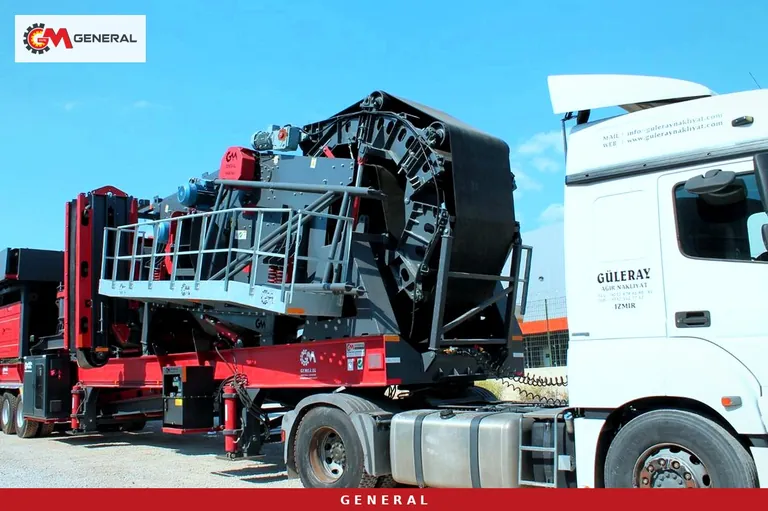
The line we see most often on enquiry forms is "capacity: 100 t/h", "200 t/h" or "350 t/h". Those three figures describe far more than the size of a machine. They define the whole site: the size of the blocks coming from the face, the bucket volume of the loader, the generator rating, how many trucks are needed to move the plant and how many people run it. In this guide we take each class separately and show, using the technical data on our product pages, which General Makina mobile model works comfortably in that class and which one struggles. We covered the step from a daily target to an hourly crusher load in our article on how to choose a mobile crusher for 100-300 tonnes per hour. Here the focus is what to do once you have that number: picking the right class.
Three figures, three operating scales
A 100 t/h operation is typically fed by one excavator or one wheel loader, runs on a single chassis and moves often: a road maintenance crew, a municipal site, a small quarry. At 200 t/h the crusher and screen that a single chassis can carry reach their limit, so you need either a heavy single chassis or a line split over two platforms. 350 t/h is the ceiling of the mobile range. To see that tonnage from one wheeled crushing and screening plant, the rock has to be easy to break.
Four items change as you move up a class, and you should check each of them when comparing offers:
- Feed opening: if the largest block from the face does not enter the crusher, nominal capacity means nothing. Across the range, maximum feed size runs from 500 mm to 1000 mm.
- Power unit: generator size climbs with the class, from 250 kVA to 750 kVA. If you plan a grid connection, size the transformer accordingly.
- Screen area and number of decks: if the screen stays small while crusher tonnage rises, recirculating material chokes the line.
- Transport: one truck, a four-axle chassis or two separate platforms. Each needs a different permit and route plan.
The 100 t/h class: compact, single chassis, frequent moves
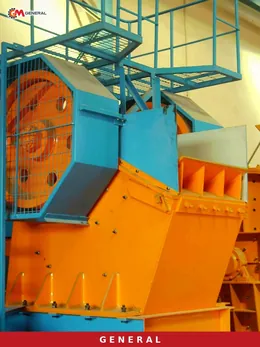
There are four candidates in this class, each answering a different need. General 640 carries a GPJ 60 jaw crusher and a GNR 50 impactor on one chassis, works in the 60-100 t/h range and accepts 500 mm feed. 100 t/h is the top of its range, so for an operation that needs 100 t/h continuously the 640 is only sufficient in soft, clean rock. Its product fractions are limited to 0-5 / 5-12 / 12-19 mm; if your specification includes 19-40 mm, this model drops off the list.
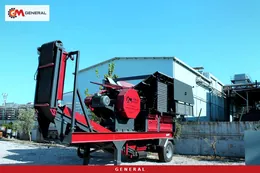
General 800 delivers 80-150 t/h with its PDK 1280 primary impact crusher, takes 600 mm feed and includes a 19-40 mm fraction. A 100 t/h target sits inside its range and well away from the top end; in limestone and low-abrasive rock it is the most balanced wheeled choice for 100 t/h. Its 450 kVA generator and 35,000 kg weight keep transport at single-truck level.
On the tracked side there are GM 100 (100-180 t/h, 600 mm, 160 kW GNR-01 impactor, integrated 1500×5500 mm three-deck screen) and GM 90JP (70-180 t/h, 700 mm, 95 kW GNR 90 jaw, 10 m³ hopper). Note that 100 t/h is the bottom of the GM 100 range. Running a machine below its capacity is not a technical problem, but it means a larger investment than that tonnage needs. GM 90JP is a primary jaw unit; its 1000×2000 mm two-deck screen is meant for removing fines, not for making product fractions. If you plan to sell aggregate, add a secondary crusher and a screen behind it.
The 200 t/h class: where a single chassis runs out
200 t/h is beyond the top end of the 120-180 t/h models such as General 01, General 944 and General 950. The shortlist gets shorter in this class, and the decision depends more on line architecture than on crusher type.
Tracked option: GM 125
GM 125 runs at 150-250 t/h with its 200 kW GNR PDK02 impact crusher, takes 700 mm feed and carries a 6 m³ hopper with a 1360×2160 mm grizzly pre-screen. 200 t/h is the middle of its range. Its technical table lists no integrated screen, only a 600×5000 mm by-pass conveyor. If you need more than one saleable fraction, plan a mobile screen behind the GM 125 and have that item written into the offer from the start.
Wheeled option: GNR-MC110
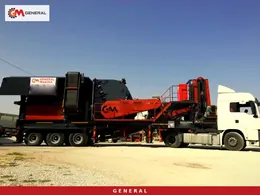
GNR-MC110 carries a GPJ 110 primary jaw and a DMK03 secondary impactor on two separate chassis. It runs at 200-300 t/h with 900 mm feed, a 2000×6000 mm four-deck screen and a 750 kVA generator. The primary chassis measures 3000×13500 mm and weighs 55,000 kg; the secondary chassis measures 4200×18300 mm and also weighs 55,000 kg. 200 t/h is the bottom of its range, so the reason to choose the MC110 at 200 t/h is the rock, not the capacity: in hard, abrasive basalt and granite, a jaw primary gives longer wear-part life. Because the primary chassis can run on its own, the line also suits an operator who wants to grow output step by step.
The 350 t/h class: the ceiling of the mobile range
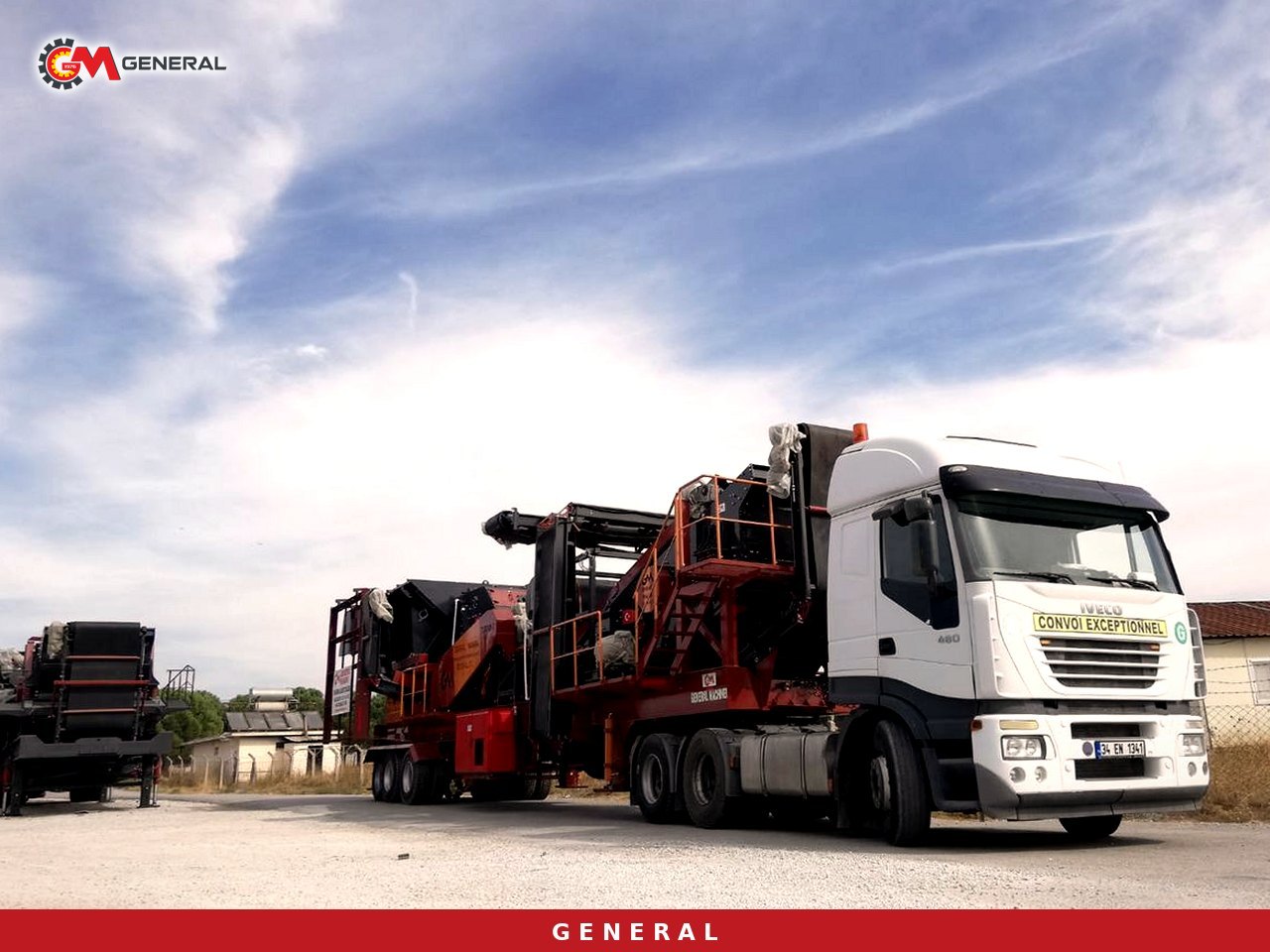
The only wheeled crushing and screening model that covers 350 t/h is General 03: GPS 1415 primary impact crusher, 250-375 t/h, 900 mm feed, 2400×5000 mm four-deck screen, 750 kVA power and a four-axle chassis built to international transport standards. 350 t/h falls in the upper part of that range. The conclusion is clear: General 03 can deliver this tonnage in clean material that suits impact crushing, such as limestone. Expecting 350 t/h from a single mobile plant in hard, abrasive rock is not realistic.
General 02 (250-300 t/h, 1000 mm feed, 660 kVA) and GNR-MC110 (200-300 t/h) do not reach this class. If a site needs a continuous 350 t/h and the rock is hard, there are two routes: split the load over two parallel mobile lines, or build a permanent fixed crushing plant. When the quarry has a long life and the site will not move, the second route usually gives a more sensible investment structure.
There is one exception. If the material is already 0-100 mm (river gravel, pre-crushed stock), the job may be screening rather than crushing. The GNR ME2060 mobile screening plant covers 200-350 t/h with a 20 m³ hopper, a 100 mm hopper grid and a 2000×6000 mm three-deck screen, and it does so without a crusher. It is not a crusher, but separating how much of a 350 t/h requirement really needs crushing can change the investment considerably.
Decision matrix: which model is comfortable in which class?
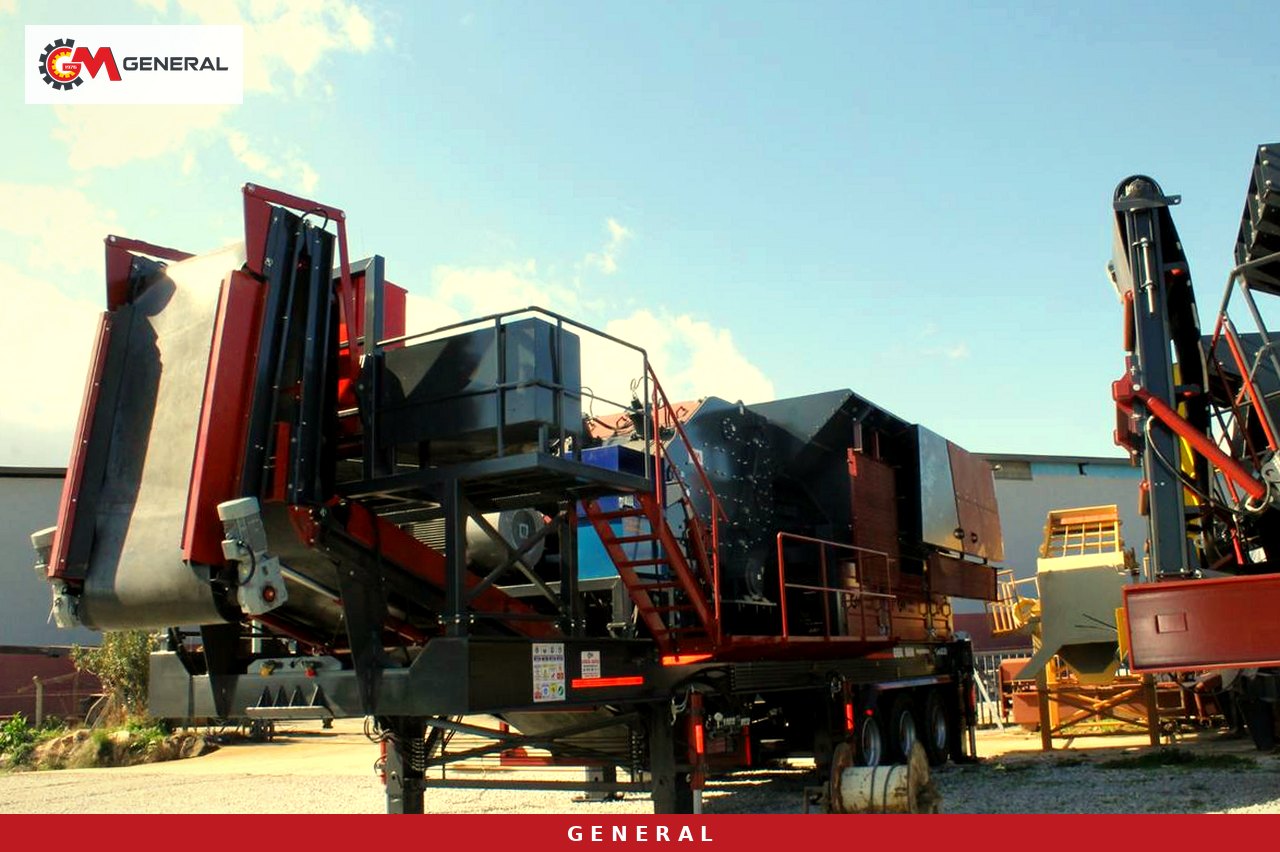
The table below is compiled only from the technical tables on our product pages. "Comfortable" means the target tonnage sits inside the range and away from both ends; "at limit" means it coincides with one end of the range.
| Model | Capacity (t/h) | Max. feed (mm) | Power (kVA) | Screen | 100 t/h | 200 t/h | 350 t/h |
|---|---|---|---|---|---|---|---|
| General 640 | 60-100 | 500 | 300 (optional) | 1200×4000, 3 decks | At limit | Too small | Too small |
| General 800 | 80-150 | 600 | 450 | 1300×4000, 3 decks | Comfortable | Too small | Too small |
| GM 90JP (tracked, primary) | 70-180 | 700 | 250 | 1000×2000, 2 decks | Comfortable | Too small | Too small |
| GM 100 (tracked) | 100-180 | 600 | 450 | 1500×5500, 3 decks | At limit (bottom end) | Too small | Too small |
| GM 125 (tracked) | 150-250 | 700 | 550 | — | Oversized | Comfortable | Too small |
| GNR-MC110 (twin chassis) | 200-300 | 900 | 750 | 2000×6000, 4 decks | Oversized | At limit (bottom end) | Too small |
| General 02 | 250-300 | 1000 | 660 | 2000×5000, 4 decks | Oversized | Oversized | Too small |
| General 03 | 250-375 | 900 | 750 | 2400×5000, 4 decks | Oversized | Oversized | At limit (easy rock) |
You can see all wheeled models on the mobile stone crushers page and the tracked GM family on the track mounted mobile crushers page. For the only wheeled candidate in the 350 t/h class, the General 03 technical page gives the full equipment layout.
Signals to move up a class: checklist
If your calculation lands on the edge of a class, answer the questions below. Two "yes" answers point to the next class up; no "yes" at all points to the class below:
- Is the rock hard and abrasive, such as basalt, granite or quartz-rich stone? Then assume you will run in the lower half of the range.
- Is the 0-5 mm sand share in your product recipe high? Fine product increases the load returning to the crusher in closed circuit.
- Is the largest block from the face close to the model's maximum feed size? Blocks near the limit bridge in the feeder and pull the average down.
- Does the specification ask for a coarse fraction such as 19-40 mm? That size is not in the General 640 fraction list.
- Can your loading equipment really feed the chosen tonnage? However large the crusher, it cannot produce more than the bucket cycle delivers per hour.
- Will the plant move many times a year? With frequent moves, a single chassis or a tracked model loses less set-up time than a two-platform line.
It helps to put the site-specific variables into one formula: Required crusher load = (Daily product target ÷ Net crushing hours) + Load recirculated in closed circuit. Take net crushing hours from your actual downtime records, not from the shift length.
Information that pins down the class when you ask for a quote
Price steps up with the class, but tonnage is not the only driver. Number of chassis and axle layout, generator size or grid connection, number of screen decks, tracks or wheels, and any extra screen or secondary unit all affect the offer directly. To let our engineers recommend the right class, give the following in writing: rock type and analysis if available, largest block size, required fractions and their shares, daily target and shift pattern, energy source, and how many times a year the plant will move. As a starting point, the product selection wizard also narrows the models down from these inputs.
Frequently asked questions
For 100 t/h, should I choose General 640 or General 800?
100 t/h is the top of the General 640 range (60-100 t/h) and the middle of the General 800 range (80-150 t/h). If you need a continuous 100 t/h and a 19-40 mm fraction, choose General 800. For hard rock at a lower average tonnage, General 640 with its jaw plus impactor layout is worth considering.
Tracked or wheeled at 200 t/h?
If the plant will move often inside the quarry and follow the face, GM 125 (150-250 t/h) fits, but it needs a screen behind it to make fractions. For hard rock, blocks up to 900 mm and a four-fraction product, the twin-chassis GNR-MC110 is the better starting point.
Is 350 t/h possible with a single mobile plant?
In the wheeled range only General 03 (250-375 t/h) reaches this tonnage, and it does so in easy-to-break rock. In hard rock, consider two parallel lines or a fixed plant. If the material is 0-100 mm, the GNR ME2060 screening plant (200-350 t/h) can be a solution without a crusher.
How do I find out price and delivery time?
Price and delivery depend on the chosen configuration, power unit and additional equipment; there is no fixed list. When you request a quote with your rock and target data, we prepare a configuration and price specific to your project.
Conclusion
At 100 t/h there is a wide choice, and the right pick depends on the rock and the fraction list. At 200 t/h the decision is between a single and a twin chassis; at 350 t/h it is between the ceiling of the mobile range and a fixed plant. Place your target in a model's comfortable zone, not at the end of its range. General Makina has been manufacturing in Izmir since 1976, holds ISO 9001 and CE certificates and gives a one-year warranty on its machines, excluding wear parts. Send your rock and tonnage data through our contact page and we will prepare the configuration and offer that fit your class.
Definitions of technical terms: Glossary