 EN — English
 TR — Türkçe
 DE — Deutsch
 RU — Русский
 FR — Français
 ES — Español
 AR — العربية
 SR — Српски
Jobsite and Mobile Plant
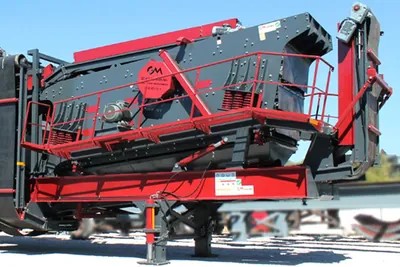
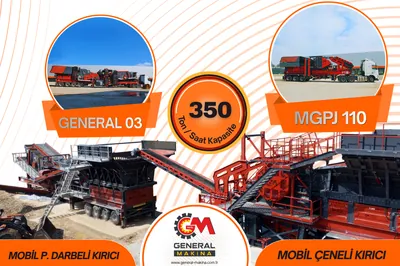

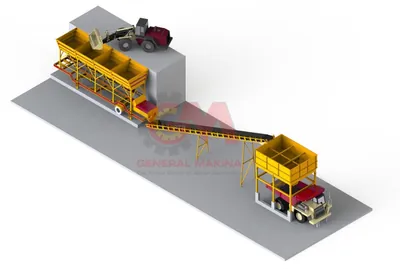
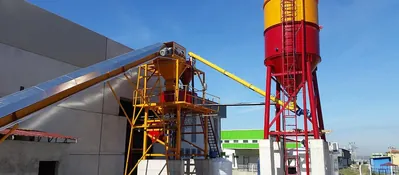

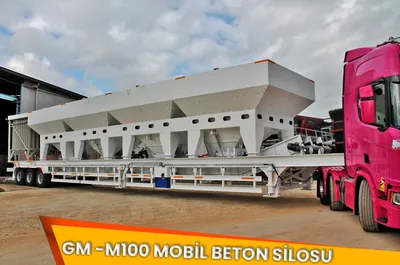
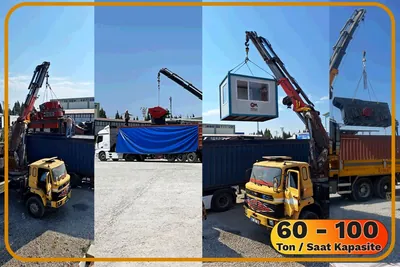
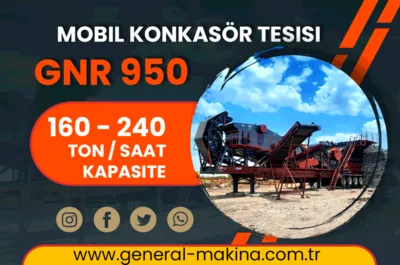

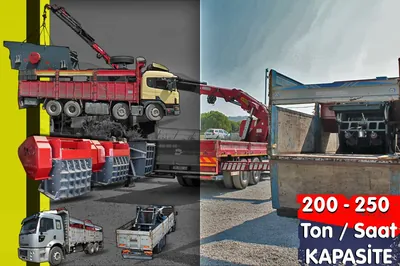
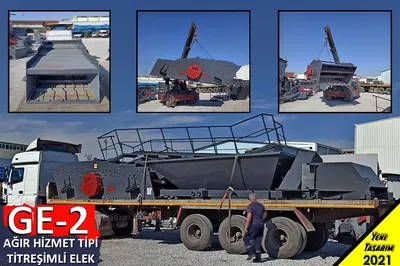
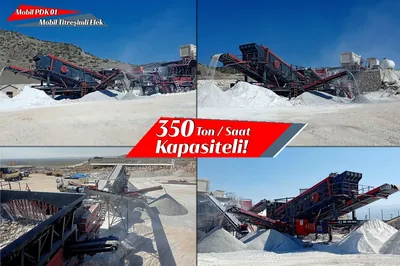
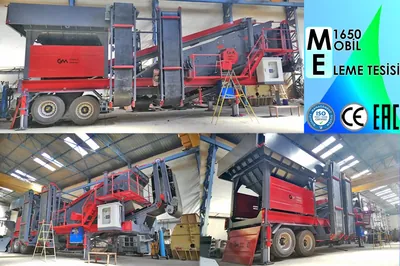
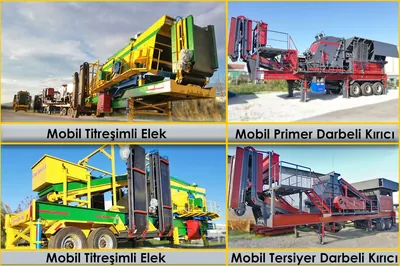
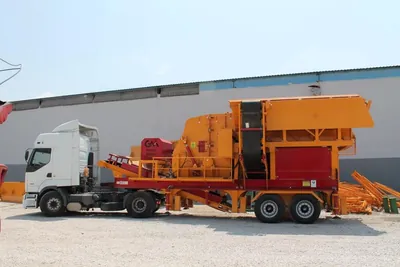
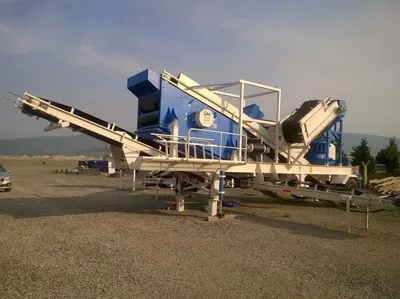
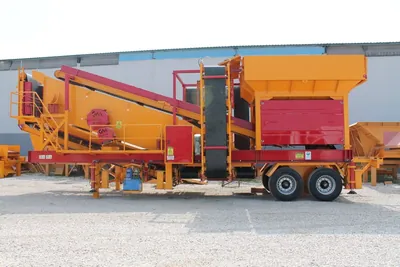
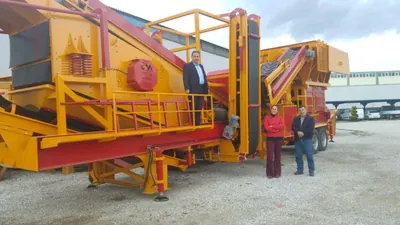
Crushing on the jobsite: making aggregate where it is used
When a construction site buys every tonne of aggregate from a distant quarry, most of the money is spent on wheels rather than on stone. A mobile crushing and screening plant reverses that arithmetic. Rock from excavation, concrete from demolition and off-spec material along a road alignment are processed inside the site boundary and turned back into a usable product. This section of the knowledge centre covers the engineering behind that idea: ground preparation, commissioning, recycling circuits, road base and plant-mix production, transport dimensions and permits, and the discipline of setting up a plant that will be dismantled again in a few months.
The difference between a jobsite plant and a quarry plant is time. In a quarry the plant stands in one place for a decade. On a construction site the same machine is erected, produces for one season and is loaded back onto a trailer. That is why a site engineer cannot judge a plant on cost per tonne alone: set-up time, mobility, permitting load and how easily the ground can be handed back all belong in the same evaluation.
The ground under the plant is the real foundation
A mobile plant needs no concrete foundation, but it certainly needs ground. Machine weight combined with the dynamic forces produced by a crusher is more than enough to consolidate loose fill. Fresh fill, soft topsoil and a pad without drainage are the three classic mistakes; a plant that looks perfectly aligned during the first shift loses its level within days, and screen feed goes with it.
Preparing the pad
The working area must be levelled and compacted. Compacted crushed stone, firm undisturbed soil or an existing concrete apron are the preferred surfaces. Where bearing capacity is uncertain, a field measurement such as a plate load test settles the question; guessing means re-excavating under a running plant later. On marginal ground, steel plates, hardwood cribbing or engineered support pads spread the load over a larger contact area.
Stabilising and levelling
Legs and supports are fully extended so the load travels from the chassis into the ground. Levelling is verified with an instrument on the feeder and screen bodies, not by eye. A screen sitting out of level pushes material to one side and wears a single band of the screen media. Where the plant has to be raised for conveyor clearance, the weight is never left standing on hydraulic cylinders; it is blocked and seated on locking pins.
The commissioning sequence
Commissioning happens in three stages. The cold stage checks electrical, hydraulic and mechanical connections, fastener torque and fluid levels, then runs the plant unloaded so motors, drives and switchgear can be observed without material. The second stage is a loaded trial with real feed: vibration, noise and bearing temperatures are monitored while feed rate and crusher setting are calibrated to the target product. The third stage is continuous running that proves product consistency and mechanical stability. Sites that skip this order spend their first week collecting breakdowns instead of tonnes.
Selecting a mobile plant by feed size
The first number that decides plant selection on a jobsite is not the target tonnage but the size of the largest lump. If blocks from the excavation exceed the feed opening, rated capacity stays on paper: the crusher bridges, and the excavator operator spends the shift sorting oversize. The table below compares feed and capacity figures for General Makina mobile crushing plants across different site scales.
| Plant | Maximum feed size | Capacity | Output size setting | Optional generator |
|---|---|---|---|---|
| General 640 | 500 mm | 40-70 t/h | 0-100 mm | 300 kVA |
| General 01 | 700 mm | 120-180 t/h | 0-100 mm | 550 kVA |
| GNR-MC110 | 900 mm | 200-300 t/h | 0-100 mm | 750 kVA |
| General 02 | 1000 mm | 180-250 t/h | 0-100 mm | 660 kVA |
All four plants are configured to deliver standard fractions such as 0-5, 5-12, 12-19 and 19-40 mm, and those cut points can be changed through screen media selection to match a project specification. On a contained infrastructure package the General 01 mobile crushing plant covers shift demand comfortably, while a long road project that walks along its alignment benefits from the larger feed opening of the General 02 mobile crushing plant, which removes the need for a separate pre-crushing step. On demolition sites where the machine moves between piles every few days, the GM-90JP tracked jaw crusher positions itself without a tractor unit. Before committing to a size and a chassis type, compare the full mobile crushing plant range and read it alongside the mobile, tracked and stationary plant selection guide.
Recycling demolition concrete and excavated rock
The economics of on-site recycling come from two lines in the budget: spoil that never leaves and aggregate that never arrives. Crushed concrete has an angular particle shape and a rough surface texture, so it interlocks well and forms a stable layer once compacted. That makes it a genuine alternative to natural aggregate for fill, sub-base and internal haul roads.
Removing contaminants
The decisive process is not crushing but cleaning. Timber, plastic, insulation and soil make the product unusable, and reinforcing steel damages both the material and the belts. A recycling circuit therefore combines magnetic separation, air separation and, where the input is variable, a manual picking station. The concrete recycling plant guide is a detailed starting point for the whole circuit.
Grading and moisture
A sub-base material aims at continuous grading: smaller particles fill the voids between larger ones so that compaction produces a dense, load-bearing layer. Maximum particle size follows layer thickness. The fines content is not left to chance, because excess fines impair drainage and make the layer unstable when wet. Recycled aggregate is more absorbent than natural rock, so slightly more water is usually needed to reach optimum moisture during compaction. Acceptance criteria always belong to the road authority of the country in question; bearing and abrasion limits are read at the start of the project, and production is set up to meet them rather than argued about afterwards.
Road base and plant-mix production
Road work needs more than crushing and screening. Material has to be blended, stabilised with a binder where the design calls for it, moistened and laid. A plant-mix circuit combines screened fractions in defined proportions to produce a homogeneous base material. On long alignments a mobile plant-mix and stabilisation unit moves forward with the works while blend ratio, water and binder dosage are logged shift by shift. For layer build-up and plant layout, follow the road base plant-mix facility guide. Where the same site also pours concrete, feeding a mobile concrete batching plant from the aggregate circuit removes another haulage line.
Transport, permits and site layout
Road transport is the most underestimated item in a mobile plant project. Transport height, width and axle loads are calculated in advance against every bridge and underpass on the route, and the need for abnormal load permits, escort vehicles or night movement follows from that calculation. The turning radius of the site entrance matters just as much: a trailer that cannot swing in leaves the plant waiting at the gate.
The permit file
Permitting concerns the activity rather than the machine. Temporary plant installation, dust and noise, waste acceptance, water use and plant traffic are each assessed separately. Sites processing demolition waste also document what arrived and where the product went. If the file is not closed before mobilisation, the plant stands idle on hire and site overheads.
Layout
Layout follows material flow: feed stockpile, plant, product stockpiles and loading bay arranged as a one-way cycle. Throwing products to sufficient height with a conveyor belt shortens loader cycles and keeps stockpiles from merging. Prevailing wind decides where crusher and screen discharge points sit, so that the dust source is not placed on the same line as the site office or neighbouring buildings.
Balancing set-up, production and demobilisation on short projects
If erection takes a week and dismantling three days on a three-month contract, that time comes straight out of the production calendar. On short jobs the right plant is therefore not the largest one but the one that starts producing fastest with the least infrastructure. Where no grid connection exists, generator operation is planned from the outset, and the generator ratings in the table above also drive fuel consumption and storage volume. A wear-part stock stays on site: waiting for a screen mesh or a wear plate at a remote location is the most expensive way to lose a shift.
At the end of the project the site is cleared as deliberately as it was built. Stockpile areas are stripped, fines are not left to blow, temporary roads are removed and the ground is reinstated to the contract condition. The plant is returned to transport configuration, wear parts are inspected, and shortages are made good before the next site rather than during its first shift. Teams that want the decision in numbers can build set-up, transport and production items into one sheet with the operating cost calculator. Tell us the excavation material, the fractions your specification demands and the duration of the contract, and our engineers will work out the plant configuration and the layout for that particular site with you.
Frequently Asked Questions
Does a mobile crushing plant need a concrete foundation?
No. Mobile plants are designed to work without a permanent foundation, but they still need a levelled and compacted pad. Fresh fill or undrained ground settles under machine weight and crusher vibration, and the plant loses its level within days.
Which figure decides plant size on a construction site?
The largest lump in the feed, not the target tonnage. Maximum feed size is 500 mm on the General 640, 700 mm on the General 01, 900 mm on the GNR-MC110 and 1000 mm on the General 02; capacity only becomes meaningful once the feed opening is respected.
Can crushed demolition concrete replace natural aggregate?
For fill, sub-base and internal haul roads it can. Crushed concrete is angular and rough textured, so it interlocks and compacts well. It must be cleaned of timber, plastic and reinforcing steel, and graded to the specification of the relevant road authority.
How should commissioning be sequenced?
Cold checks and a no-load run come first, then a loaded trial on real feed while vibration, noise and bearing temperatures are watched, and finally continuous running to prove product consistency. Feed rate and crusher setting are calibrated during the loaded stage.
What if the site has no mains power?
Generator operation is planned from the start. Optional generator ratings are 300 kVA for the General 640, 550 kVA for the General 01, 660 kVA for the General 02 and 750 kVA for the GNR-MC110, and those ratings drive fuel consumption and on-site storage volume.
When does permitting work have to start?
Well before mobilisation. Temporary installation, dust and noise, waste acceptance, water use and site traffic are separate assessments, and abnormal load transport is checked against every structure on the route. An open file means the plant stands still while hire costs run.