EN — English
 TR — Türkçe
 DE — Deutsch
 RU — Русский
 FR — Français
 ES — Español
 AR — العربية
 SR — Српски

Rent or buy a crusher for a short-term project?
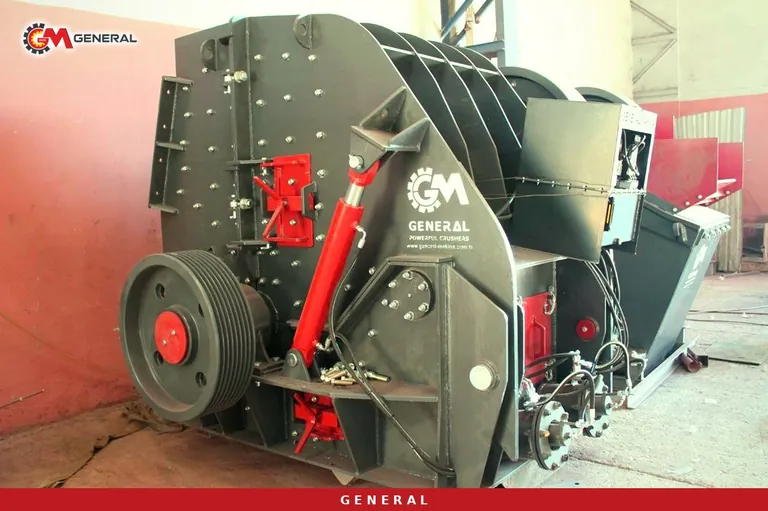
The question is utilisation, not price
Site engineers usually frame their first decision as machine selection, when the real decision is who owns the machine. Whether to rent or buy a crusher for a short-term project is not settled by comparing a rental rate with a purchase price. What decides it is the share of available working days on which the unit will actually run. Ownership costs keep flowing whether the machine works or not, and spreading them across few production hours pushes cost per tonne up quickly.
Renting reverses that structure: payment is tied to the period of use, and when the machine leaves site the cost stops. That is why short, one off or seasonal work usually favours rental, while continuous high volume work favours ownership.
The utilisation threshold
A widely used industry benchmark holds that equipment used on more than 60 to 70 per cent of available working days is generally cheaper to own than to rent. That corresponds to roughly 150 to 180 working days a year. Below the threshold, the fixed costs of ownership are carried by too few hours.
| Annual utilisation | Approximate working days | Favoured route | Reason |
|---|---|---|---|
| Below 60 per cent | Fewer than 150 days | Rental | Fixed costs spread thin, hourly cost rises |
| 60 to 70 per cent | 150 to 180 days | Decision band | Remaining cost lines and project pipeline decide |
| Above 70 per cent | More than 180 days | Purchase | High usage carries the fixed cost and builds equity |
The threshold is a starting point rather than a verdict. If you hold one project and the machine idles once it closes, a healthy first year utilisation collapses in the second. The calculation therefore has to cover the whole holding period, not the project duration alone.
The core and flex approach
Experienced contractors rarely commit to a single route. Machines that work daily or weekly, sitting above the utilisation threshold, are bought and kept in the core fleet. Units required for seasonal peaks, an unusual gradation or a single contract are rented. Capital then stops being tied up in machines standing in the yard out of season.
Rent or buy a crusher for a short-term project: setting the comparison up fairly
A rental rate is one line; ownership is a stack of lines. The two only compare honestly when both sides cover the same scope.
| Cost line | Under rental | Under ownership |
|---|---|---|
| Capital tied up | None, payment follows the period of use | Cash or finance, plus the alternative use of that capital |
| Depreciation | Carried by the lessor | Carried by you, steepest in the early period |
| Planned maintenance and repair | Usually defined in the contract | An annual budget line set against purchase price |
| Wear parts | Varies by contract, must be written down | Entirely yours, including the stock you hold |
| Insurance and site security | Mostly with the lessor | Added as an annual cost |
| Transport and mobilisation | Paid per project | Your own gear, still a real cost |
| Idle periods | Cost stops | Cost continues |
| Residual value | None | Recovered at the end of the holding period |
A common planning range for annual maintenance and repair is roughly 8 to 15 per cent of purchase price. On a crusher processing abrasive rock the upper end of that range is realistic. Leaving this line out of the ownership column makes rental look unfairly expensive. If you want to enter the hourly operating lines individually, the operating cost calculator provides that breakdown in a ready framework.
Building the break-even
Three inputs are enough: project duration, target tonnage and the realistic hourly throughput of the machine. Tonnage divided by throughput gives the operating hours required; divided again by the shift plan it gives real working days. Compared with the available working days in a year, that produces utilisation.
- Write down total project tonnage and the delivery schedule.
- Set a realistic hourly throughput for your material rather than the catalogue figure.
- Convert that into required operating hours and working days.
- List the work the machine will do after this project; if there is none, write zero.
- Compute utilisation across the whole holding period and compare it with the threshold.
- Add depreciation, maintenance, insurance, wear and mobilisation to the ownership total, then subtract residual value.
Those six steps replace instinct with a figure. Where the two totals land close together, flexibility and cash flow decide, and on short duration work flexibility usually points towards rental.
Questions worth asking first
What must appear in the rental contract?
Ownership of wear parts, who performs planned maintenance, the response time for a breakdown, the scope of transport and mobilisation, and the hourly or daily usage limit. Leave those five vague and the headline rate is misleadingly low.
Is renting before buying worthwhile?
It is. Running the same machine on your own material with your own crew before committing produces real capacity and wear data. That data makes the subsequent purchase decision far more solid than any specification sheet.
Does rental become expensive if the project overruns?
It does, which is why a single scenario is not enough. Model an extended duration separately and identify the month in which utilisation crosses the threshold. It is often possible to write a purchase option valid until that month into the agreement.
Let us build the numbers
Send your project tonnage, delivery schedule and material type. You will get a realistic hourly throughput, the required working days and utilisation, together with a jobsite table comparing both routes on identical scope.
Definitions of technical terms: Glossary