EN — English
 TR — Türkçe
 DE — Deutsch
 RU — Русский
 FR — Français
 ES — Español
 AR — العربية
 SR — Српски
Rebar Separation When Crushing Reinforced Concrete
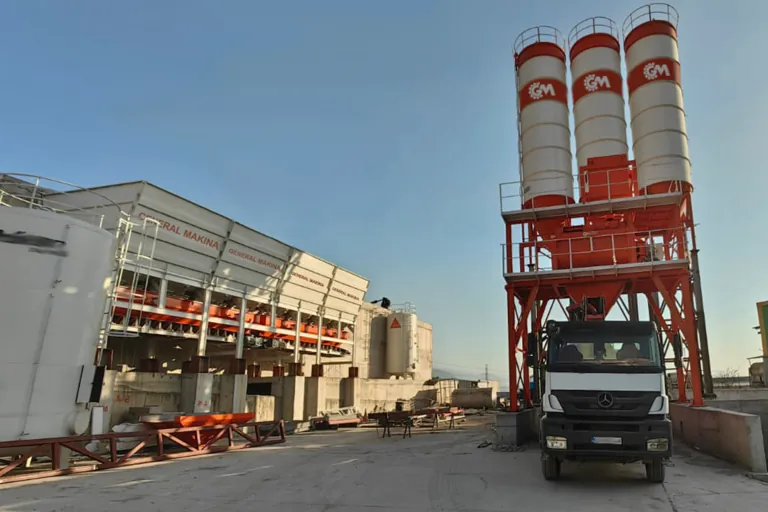
When demolition concrete stops a crushing line, the cause is rarely the strength of the concrete; it is the steel inside it. Rebar separation when crushing reinforced concrete is the discipline of pulling that steel out of the stream before it reaches the crushing chamber. Without that discipline a plant stops managing hourly output and starts managing downtime.
Why steel behaves unlike any other contaminant
Soil, timber and plastic pass through the crusher and leave with the screened fractions. Steel does not. Because it is long and bendable it wraps around the rotor, hooks on the jaw mouth and wedges between plates. The cost lands in three places: sudden stops with manual clearing, cracked or broken wear parts, and bearing damage from the shock transmitted to the shaft.
Steel that enters the chamber is also never fully stripped from the concrete, so fragments stay in the product. Wire in recycled aggregate forces extra picking before the material can be used for anything beyond fill, and it lowers what the pile can be sold for.
The first line of defence is upstream of the crusher
The cheapest steel is the steel the line never sees. During demolition the slabs are broken with a concrete cracker or pulveriser, the exposed bars are cut with shears, and the cut steel goes to a separate pile. Large, tangled and cage-shaped rebar that survives this stage will never be handled cleanly by a magnet: its weight is beyond the reach of the field, and it tumbles on the belt and drops back into the stream.
A workable site sequence is coarse picking by excavator attachment and by hand, a fixed obstruction or grizzly at the feed mouth, and magnetic separation last. Each stage has a distinct job and none replaces another.
Choosing a magnet for rebar separation when crushing reinforced concrete
An overband magnet suspended above the belt lifts the remaining steel out of the stream before the chamber. In the self-cleaning type a rotating belt carries the captured piece out of the field and discharges it to the side, so the line keeps running. Four headings decide the selection.
| Selection heading | Permanent magnet | Electromagnet |
|---|---|---|
| Material burden depth | Shallow to medium burden | Deep burden needing field reach |
| Throughput | Low and medium flow | High capacity lines |
| Field strength | Fixed | Adjustable |
| Fit for mobile plant | Compact and light solution | Higher power and weight demand |
Suspension height is the critical dimension: the magnet must be positioned to reach the deepest part of the burden. As the bed thickens, a unit working with a fixed field can no longer see steel in the bottom layer. Where large and tangled rebar is expected, cleats on the separator belt and side guards prevent pieces from rolling back and pinning the belt against the housing.
Two-stage layout and where the unit sits
On high capacity lines separation does not finish at one point. A heavy-duty magnet after the primary crusher takes the coarse and long pieces; a second, finer unit after secondary crushing collects shortened wire and tie fragments. The arrangement also raises product cleanliness, because short wire left in the fine fractions is only caught at the second stage.
Magnetic efficiency depends on a consistent feed size. If very large blocks travel in the stream the bed heaves, field penetration drops and steel stays hidden. The magnet therefore belongs over a belt section where material runs level and layered, not at a chute discharge or a point where the stream is thrown.
Measures on the crusher side
However good the separation, the chance of a tramp piece never falls to zero, so tolerance is looked for in the crusher as well. On an impact crusher an adjustable blow beam and a spring release let the chamber open when hard metal enters. A jaw stage generally tolerates metal passage with less damage, but the risk of a jam is high, and the ability to open the chamber hydraulically shortens the stoppage.
The operator rule is simple: if the magnet is not running, the line does not run. In concrete recycling, magnet maintenance is not a comfort item but the crusher's protection system. The full circuit around it, including where the magnet sits relative to the mobile impact crusher, is decided at layout stage.
The revenue side of the scrap
Separated steel is not waste; collected and sold, it forms a second line item that offsets part of the recycling operation's cost. That requires the scrap to be reasonably stripped of concrete, clean and gathered into one pile. A bin or container placed at the magnet discharge point keeps the scrap together instead of scattering it across the yard.
The contribution of a separation arrangement is therefore twofold: lower downtime and parts spend, plus income from scrap. On a mobile setup both are weighed together, and that combined effect is what decides the case on the jobsite and mobile plant side.
Shift checklist
- Is the magnet belt turning and is the discharge point clear?
- Is suspension height set for the current burden depth?
- Is cage rebar accumulating at the feed mouth?
- Is the scrap bin full or starting to overflow?
- Any sign of wrapped wire inside the crushing chamber?
Frequently asked questions
Can reinforced concrete be crushed without a magnet?
It can, but the price is paid in downtime and parts. Hand picking is sustainable on small intermittent jobs; in continuous production, stable running should not be expected without separation equipment.
Does a magnet take out all of the steel?
No. Short pieces fully buried in concrete can only be caught once crushing exposes them, which is why a second separation stage matters for product cleanliness.
Does separation equipment cut capacity?
Correctly placed, it adds no resistance to the flow. Losses come from installation mistakes such as mounting the magnet where the stream is thrown, or setting suspension height wrongly.
Definitions of technical terms: Glossary