EN — English
 TR — Türkçe
 DE — Deutsch
 RU — Русский
 FR — Français
 ES — Español
 AR — العربية
 SR — Српски

A Guide to Mobile Screening Plants for Contractors Moving from Site to Site
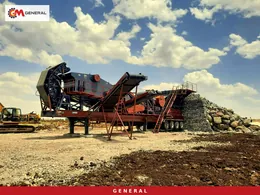
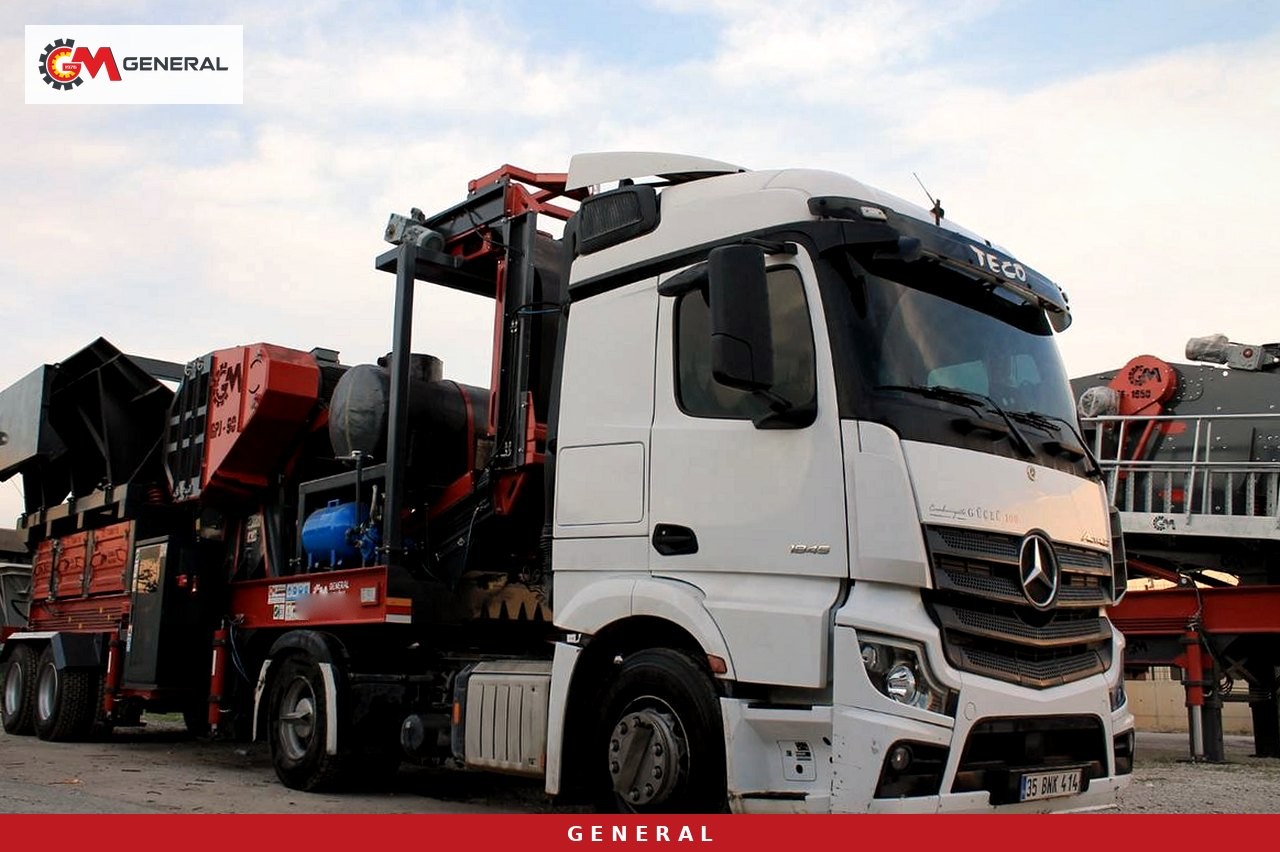
A contractor who works on three or four different sites a year cannot treat a screening plant like a line that stays in one quarry for a decade. When the machine is dismantled, hauled and re-levelled on every job, transport dimensions, set-up sequence and what happens when the material changes matter as much as capacity. This guide looks at General Makina's four single-chassis mobile screening models — the dry-screening GNR ME1650 and GNR ME2060 and the washing GNR YM1240 and GNR YM1650 — from the point of view of a company that moves from site to site: which one suits which material, what the technical data actually says, what to check before the truck leaves and when it arrives, and how to plan screen decks.
What a travelling job demands from a screening plant
A wrong choice on a stationary plant costs you once; on travelling work the same mistake repeats on every new site. So before talking about models, answer three questions in writing. How much of the material on upcoming jobs will be clean, and how much clayey or wet? Will the sites have a grid connection, or will you run on a generator everywhere? Will the plant sit behind a crusher, or will a loader feed it natural sand and gravel directly?
All four models settle two of these questions from the start: each is built on a single mobile chassis and each can run on mains power or a generator. A road job without electrical infrastructure does not rule the plant out; it only means the generator scope has to be discussed together with the plant at quotation stage. The real split is material and tonnage. How the crusher itself relocates is a separate decision, covered in our comparison of tracked and wheeled mobile crushers. This article focuses on the screening side that runs behind a crusher or without one.
Dry or washing? The material decides
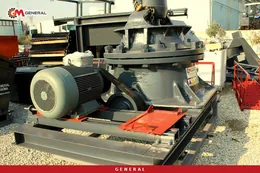
The GNR ME1650 mobile dry screening plant and its bigger sibling, the ME2060, carry no washing unit. Hopper, vibrating screen and stockpile belts make this the simplest answer for clean, dry sand and gravel: no water supply, no settling pond, no sludge handling. But if the material contains clay or high moisture, fines stick to the wire, apertures blind and separation breaks down. The result is aggregate that looks screened yet gets rejected by the concrete or asphalt specification and stays in the stockpile.
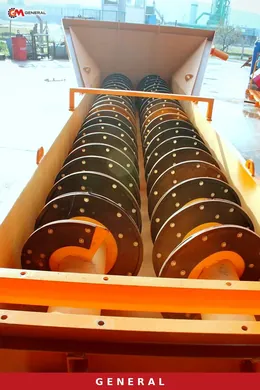
The GNR YM1240 and the GNR YM1650 mobile washing and screening plant carry a washing screen and a fine material screw on the same chassis. Clay and silt are stripped off while the material is screened under water sprays; the screw scrubs the fine sand, sends silty water out through the overflow and discharges clean sand. The price is setting up a water source and a wastewater arrangement on every site. Moisture must be planned too: sand leaving the screw usually holds 15-30% moisture; if drier, stockpile-ready sand is needed, a hydrocyclone and a dewatering screen are added to bring it down to 8-20%.
Quick field signs that call for washing
- If material taken from the bucket forms lumps when squeezed and leaves a mud stain in the palm, dry screening will not run efficiently.
- If sand from a riverbed or from levels close to the overburden shows clay bands, it needs washing.
- For dusty but dry material coming from a crushing line, dry screening is the first choice; a lab result decides whether the dust spoils the product specification.
- Clay severity should be measured with a Methylene Blue (MBV) or Sand Equivalent (SE) test, not guessed.
The subtle point for a travelling contractor: you may not know today what material the next site will deliver. If most of your work is clean crushed rock, starting with the ME series makes sense. If you regularly handle river material or clayey pits, trying to screen dirty material on a dry plant brings back the same blinding problem on every site.
Capacity and feed limit: the figures for the four models
The table shows data published on the product pages; an empty cell means no published value.
| Model | Type | Capacity | Max. feed size | Dimensions | Weight | Power |
|---|---|---|---|---|---|---|
| GNR ME1650 | Dry screening | 120-180 t/h | 0-100 mm | 3800 × 10800 × 4500 mm (transport, WxLxH) | 18,000 kg | Generator or mains |
| GNR ME2060 | Dry screening, fully automatic | 200-350 t/h | 0-100 mm | 15 m × 4.10 m × 4.50 m (plant dimensions) | — | Generator or mains |
| GNR YM1240 | Washing screen + screw | 60-100 t/h | 0-100 mm | 4200 × 10800 × 4500 mm (transport, WxLxH) | 18,000 kg | Mains or generator |
| GNR YM1650 | Washing screen + screw | 120-180 t/h | 0-100 mm | 4200 × 13600 × 4500 mm (transport, WxLxH) | 21,000 kg | Mains or generator |
First conclusion from the table: all four models share a 0-100 mm feed limit. These plants do not take blasted rock; they either sit behind a crusher or are fed natural sand and gravel already in that range. On the ME2060 the 100 mm hopper grizzly enforces the limit physically: oversize is diverted before it reaches the screen, protecting the wire.
Second conclusion: the same 120-180 t/h band offers both a dry (ME1650) and a washing (YM1650) option. You can switch type for the same tonnage target depending on material; because of its washing equipment, the YM1650 is a longer and heavier load. The GNR YM1240 compact washing and screening plant is the smallest washing solution; it suits tight sites and smaller tonnages, and its transport length matches the ME1650.
When reading capacity, keep in mind that the figures describe the feed the plant can process. More decks and smaller apertures reduce real throughput. Hypothetical example: a site that must process 1,500 tonnes a day over 10 operating hours needs an average feed of 150 tonnes per hour. That sits inside the band of both the ME1650 and the YM1650, but close to the upper edge. If the same job calls for three or four products and fine apertures, the ME2060's 200-350 t/h band leaves more headroom. Placing the target tonnage in the middle of the plant's band keeps it from choking when the material changes on a new site.
Transport dimensions and haulage planning
On travelling work, haulage is the operation you repeat most often. The ME1650 and YM1240 share the same 10800 mm transport length and 4500 mm height; they differ in width — 3800 mm for the ME1650, 4200 mm for the YM1240. Among the three models with published transport dimensions, the YM1650 is the longest at 13600 mm. The figure published for the ME2060 is the plant dimension; on its twin-axle chassis the rear axle is used for manoeuvring, which helps in tight turns on site.
When planning a route, compare these figures with bridge clearances, narrow village passages and the site gate. Especially with the 4200 mm wide washing models, settle with the haulier before departure whether the route needs a special permit or an escort; this is the item that most often slips in a transport schedule.
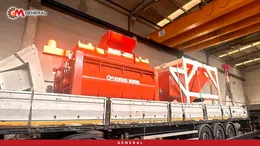
For washing plants the shipment is more than the chassis: the water pump, hoses, a hydrocyclone and dewatering equipment where needed, and the generator must follow the same schedule. For dry plants the deciding factor is the space where the stockpile belts will unfold and where the piles will sit.
Arrival on site: checklist and set-up steps
The checks made in the first hours on site decide the output of the following weeks. Prepare the items below before dispatch and tick them off one by one on arrival.
Arrival checklist
- Ground: is the pad level, compacted and safe from turning into mud when it rains? If the chassis sits at an angle, material distribution across the screen suffers.
- Feed side: is it clear which side the loader or truck approaches the hopper from, and is there room to manoeuvre? The ME2060's 20 m³ hopper can be fed directly by truck or loader.
- Stockpile area: is there enough room at each belt end for its product, without piles running into each other?
- Power: are the grid connection point or the generator position, cable route and earthing ready?
- Water (YM series): have the water source, pump and the pond or treatment point for silty water been defined?
- Screen media: do the fitted apertures match the products this site needs, and are spare meshes on site?
- Sample: before the first feed, has a run-of-pit sample been checked for clay content and grading?
Set-up steps
- Bring the plant to the marked position, unhitch it from the tractor and level the chassis.
- Unfold the stockpile belts to working position and check that belt ends line up with the pile locations.
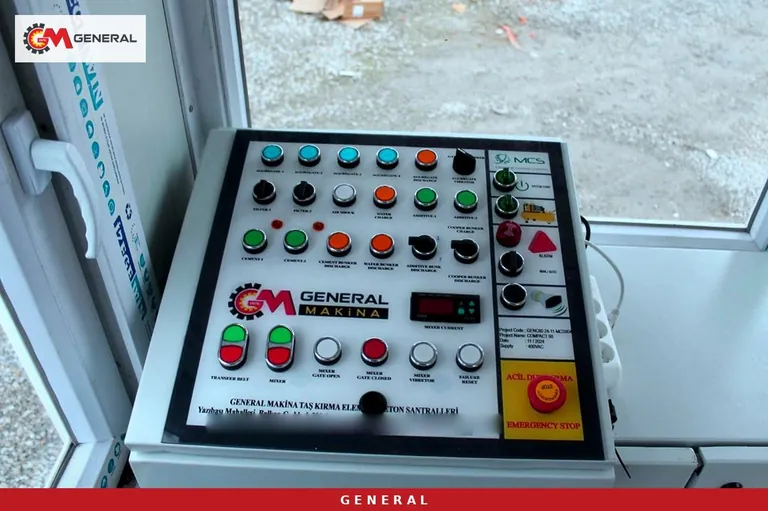
- Connect power; on the ME2060 the fan-cooled panel and remote control are commissioned at this stage.
- On the YM series, connect the water line and check the spray arrangement and the screw overflow outlet.
- Run the plant empty; watch belt tracking and check that the screen vibrates evenly.
- Start with a low feed rate, sample the first products, adjust feed rate or meshes if needed, then ramp up to full tonnage.
Screen decks and product planning
The number of products a mobile screening plant can make is limited by its decks: a screen with n decks gives at most n+1 fractions. The ME2060's 2000×6000 mm triple-deck screen splits run-of-pit material into 4 fractions in one pass and is driven by a 22 kW screen motor. On the other models, apertures and output grading are set at order stage according to the material. That is why stating in writing which products you will sell when asking for a quote ensures the plant reaches the site with the right meshes.
The cost of adding a deck
A capacity drop of roughly 10% per successive deck is considered normal. A job that needs four products runs at a lower throughput on the same plant than one that needs two. In addition, bed depth at the discharge end should not exceed 3-4 times the aperture; otherwise fines ride over the top before reaching an opening and end up in the coarse product. In practice, this means setting the feed rate according to the deck with the smallest aperture.
Building fractions around sales
Each site on a travelling job has its own specification: a road job asks for sub-base and certain chip sizes, while material going to a concrete plant needs separate, clean sand. Plan by fixing the most valuable product first, then the by-products that inevitably come with it. Opening a separate deck for a fraction you cannot sell means taking the capacity loss for nothing; blending that product into a neighbouring fraction is often more profitable.
Link to screen motion type
Blinding is not only a washing issue; screen motion plays a part as well. Within the vibrating screens range, the circular-motion conventional screen separates crushed aggregate on 1-4 decks; the three-shaft GNRTK screen reduces blinding with its adjustable oval stroke and keeps efficiency on near-size and damp material; the trommel screen handles clayey, wet and sticky material without blinding and can also work wet with optional water sprays. On the mobile side, though, the decision rests on the dry-versus-washing split between ME and YM.
Frequently asked questions
Can the same plant screen both crushed rock and river sand?
If the crushed rock is dry and clean, the ME series screens it without difficulty; if river sand carries clay and silt, apertures blind on a dry plant and the product is not cleaned. If you work regularly with both, the washing YM series covers a wider range of use, but requires a water arrangement on every site.
Can a mobile screening plant run without a crusher?
Yes, if the material is within the 0-100 mm feed range. The ME1650 can be filled with a loader bucket or by belt from an existing crushing and screening line; in natural sand and gravel pits a crusher may not be needed. Coarser material needs a crushing stage first.
Can washed sand be stockpiled and sold straight away?
Moisture at the screw discharge is usually 15-30%. If drier sand suitable for mortar and concrete mixes is required, adding a hydrocyclone and a dewatering screen brings moisture down to 8-20%. Which chain you need depends on who you sell the sand to and under which specification.
What determines the price of a mobile screening plant?
Model and capacity band, dry or washing equipment, number of decks and choice of screen media, extras such as a hydrocyclone and dewatering, and generator scope. The exact figure is given in a quotation prepared from your material and product data.
Conclusion: choose by material, then tonnage, then haulage
On frequently relocated work, the right order is: material first (dry or clayey), then tonnage and number of products, and last the transport dimensions together with water and power on site. For clean material the ME1650 leads; for high tonnage and many products the ME2060; for clayey and wet material the YM1240 or YM1650. You can review the whole range on the mobile washing and screening plants page. General Makina has been building crushing, screening and washing equipment since 1976, and our plants come with a 1-year warranty. Send your material sample, target products and list of upcoming sites through our contact page, and we will prepare your quotation on that basis.
Definitions of technical terms: Glossary