EN — English
 TR — Türkçe
 DE — Deutsch
 RU — Русский
 FR — Français
 ES — Español
 AR — العربية
 SR — Српски
How to Compare Crushing Plant Quotations
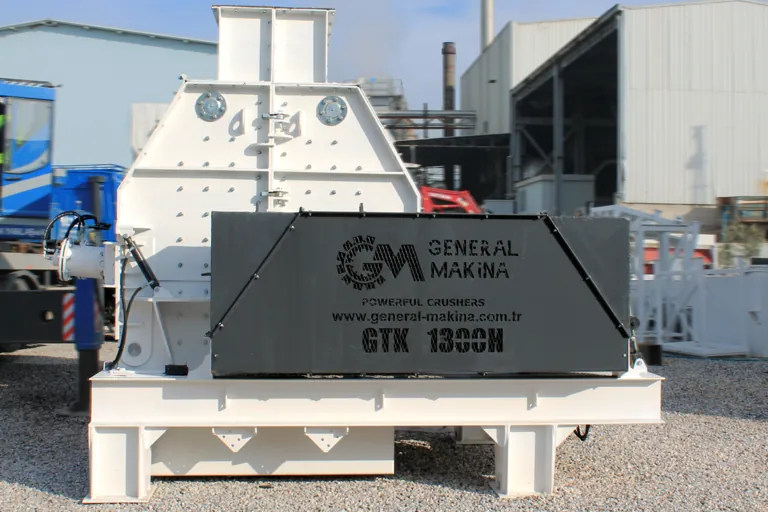
The most misleading document in a plant investment file is the one that puts two bottom-line figures side by side. Knowing how to compare crushing plant quotations means looking underneath those figures at what each supplier has quietly included or left out. Two offers promising the same tonnage are not the same purchase if one carries the structural steel, the conveyors and the switchgear and the other does not.
Why raw figures cannot be compared
A crushing and screening plant is a chain of interdependent units: feeder, primary crusher, transfer conveyors, secondary and tertiary units, screens, support structures, walkways, the electrical distribution panel, cabling and control software. Every supplier splits that chain differently between the standard package and the options list. In one document the word "plant" covers automation and site cabling; in another it stops at the mechanical units. That gap never shows up in the price line. It only appears when the two documents are broken into items and placed in the same column structure.
Capacity wording is the second source of confusion. A figure in tonnes per hour means nothing until the feed material, the maximum feed size, the moisture content and the target product curve are named. The same machine will produce noticeably less on hard abrasive feed than on soft limestone. If those four conditions are absent from the text, the tonnage is an expectation rather than a commitment.
How to compare crushing plant quotations item by item
Scope levelling means forcing both documents into one item list. Where an item exists in one offer and not the other, an estimated market value for that item is added to the incomplete side. Only the corrected totals are then compared.
| Item | Wording to look for | Consequence if missing |
|---|---|---|
| Feed unit | Hopper volume, grizzly feeder type, drive rating | Manual feed control, lost throughput |
| Structures | Steel frames, handrails, stairs, service platforms | Local fabrication, longer erection |
| Conveyors | Count, belt width, length, drive rating | Transfer gaps between units |
| Electrics and control | Panel, cable, trays, control software | A separate contractor agreement |
| Dust and noise measures | Spray nozzles, enclosure plates, filter unit | Extra spend during permitting |
| First set of wear parts | Jaw plates, blow bars, mantle and concave, screen media | An extra order before start-up |
| Transport | Number of trucks, oversize permits, insurance | An unbudgeted logistics invoice |
| Erection and commissioning | Crew size, days on site, crane, accommodation | Installation with the buyer's own resources |
What the delivery term folds into the price
Delivery terms are the most frequently overlooked difference between two offers. The Incoterms 2020 rules published by the International Chamber of Commerce comprise eleven terms: seven usable for any mode of transport (EXW, FCA, CPT, CIP, DAP, DPU, DDP) and four reserved for sea and inland waterway transport (FAS, FOB, CFR, CIF). Setting an ex-works figure against a delivered figure is not a comparison at all.
| Rule | Where the seller's duty ends | Main items left with the buyer |
|---|---|---|
| EXW | Goods made available at the seller's premises | Loading, export formalities, all carriage, import |
| FCA | Handover to the carrier at the named place | Main carriage, insurance, import formalities |
| CIF | Freight and insurance to the destination port | Everything after the port, import, inland haulage |
| DAP | At the named destination, ready for unloading | Unloading and import clearance |
| DPU | Unloaded at the named destination | Import clearance and duties |
| DDP | Cleared for import at the destination | Only the site work after unloading |
Erection, commissioning and training
These three items are usually compressed into a single line and they produce the largest deviation from budget. The questions are simple. How many people, for how many days on site? Who supplies the crane and the earthmoving machine? Who pays for accommodation and travel? And, above all, against which acceptance criterion is commissioning declared complete? Without a written criterion, a plant that turns is a plant that is finished, and the balance payment falls due. For the buyer, acceptance means sustained tonnage in the target fractions.
Operator training and maintenance training are separate deliverables. The operator needs to know what to check at the start of a shift; the maintenance technician needs the wear-part change procedure and the lubrication plan. Both the number of training days and the language of instruction belong in the document.
Spare parts, warranty and lead time
The machine is paid for once; wear parts are paid for throughout the life of the plant. An evaluation is therefore incomplete without a parts list and a supply commitment: unit list of critical parts, stock position, lead time after order, and whether warranty covers parts only or parts plus labour. Wear-part consumption feeds straight into operating cost and can close the initial price gap between two offers within a few seasons.
The start date of the warranty matters as much as its length. Does the clock run from shipment or from commissioning? On a plant erected late, that distinction is worth months.
Making the decision
Once the scope is level, the decision rests on three things: the corrected total, the plant's ability to hold the target product curve, and how reachable the supplier is after start-up. Together these form the backbone of sound procurement and supply practice, and no single price line substitutes for any of them.
Frequently asked questions
How long does scope levelling take
With the item list ready, a few hours per pair of offers. The slow part is writing back to suppliers to price the items that are missing.
How is a capacity commitment worded
Feed material, feed size, moisture and target fractions are defined in one sentence, and the tonnage is tied to those conditions. An unconditional capacity sentence should not be accepted.
When is the lowest offer the right one
When its scope has been levelled, its capacity conditionally committed, its parts supply put in writing, and its corrected total is still the lowest. If any of those four is missing, the lowest figure is a deferred cost rather than a saving.
Definitions of technical terms: Glossary