EN — English
 TR — Türkçe
 DE — Deutsch
 RU — Русский
 FR — Français
 ES — Español
 AR — العربية
 SR — Српски

Mobile Crushing and Screening Plants for Sale: How to Choose the Right Model for Your Project
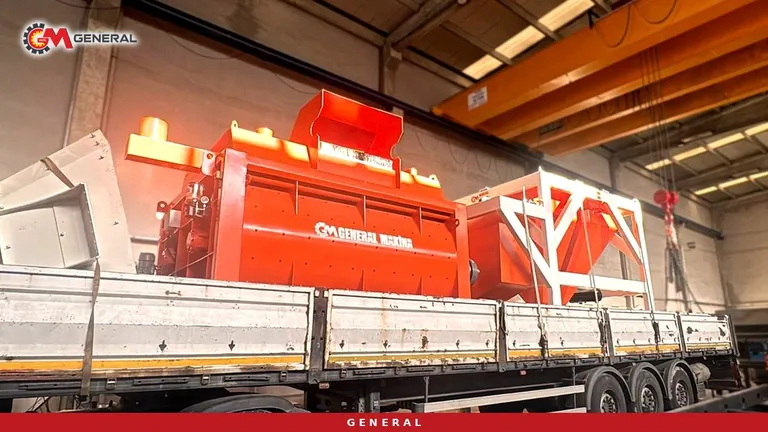
The quickest way to choose among mobile crushing and screening plants for sale is to start from your own project data rather than from a catalogue. Once you know which rock you will crush, how many tonnes per hour of saleable product you need, the size of the largest block coming from the face, the fractions you will sell and how often the plant will move between sites, the ten models in General Makina's wheeled mobile range narrow down to a few candidates. This article uses those five inputs in sequence, shows which technical value we check at each step, and works through two hypothetical projects to the final choice.
Fill in the project card before looking at models
In quotation meetings the first thing we ask about is the site, not the machine. A comparison made without these five lines in writing rarely goes beyond lining up capacity figures. Use measurements instead of estimates: measuring the longest edge of a few sample blocks at the quarry face is far cheaper than misreading the feed limit.
- Material: low-abrasion rock such as limestone or dolomite; hard, abrasive rock such as basalt, granite or quartz; or river gravel mixed with clay?
- Target capacity: how many tonnes per hour of saleable product must leave the screen? Divide the daily tonnage by the shift hours.
- Feed size: the largest block the excavator will drop into the hopper.
- Required fractions: which product sizes will you sell for concrete, asphalt or fill, and is sand (0-3 or 0-5) a separate target?
- Relocation frequency: will the plant stay in one quarry for years, or move often between road jobs?
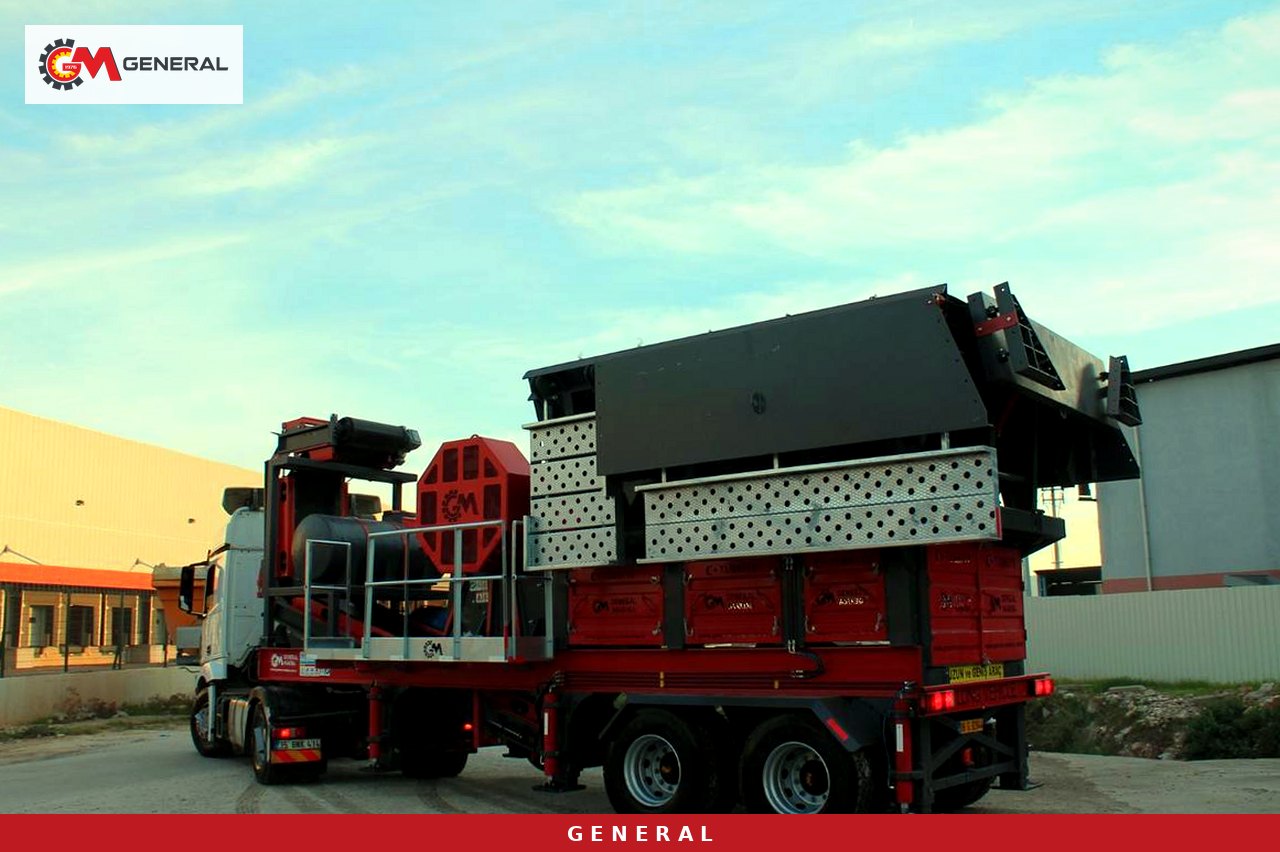
Step 1 – The material decides between impact and jaw + cone
The range is built on two crushing principles. In the impact models (General 01, 02, 03 and General 800) the rock is broken by the blow of a spinning rotor; the reduction ratio is high and the product is cubical. The price is that the more abrasive the rock, the faster the hammers and liners wear out. In the jaw-primary models (General 640, 944, 950, GNR-MC110 and Mobil 90) the first stage breaks large blocks by compression, and the second stage is either impact or cone depending on the model. The decision comes down to one question: where do you want to pay for wear?
Limestone and low-abrasion rock
In limestone with low silica content an impact crusher delivers high reduction in a single stage, and wear parts last for reasonable intervals. The product page states plainly that the General 800 is recommended for limestone and low-abrasion rock. The General 01 handles primary and secondary duty with a single GPS 1210 impact crusher, which means less equipment and a simpler flow.
Basalt, granite, quartz and iron ore
In these rocks an impact primary burns money on wear parts. A jaw primary is the standard starting point here. For the secondary stage there are two routes: the General 944 keeps the compression principle in the second stage with a GM430 cone crusher and extends the life of the wear metal, while the General 950 places a DMK01 impact secondary behind the same GPJ 90 jaw primary and aims for a more cubical product. The more abrasive the rock, the more the balance tips toward the 944; the tighter the cubicity specification, the more it tips toward the 950. We covered the mechanical differences between the two crusher types in detail in impact or jaw crusher selection criteria.
Clay-contaminated river gravel
Here product cleanliness matters as much as crusher type. Dry-screening clayey run-of-quarry means clay sticking to the screen mesh and product falling out of specification. The Mobil 90 jaw crushing, washing and screening plant carries a washing screen and a twin 600×6000 mm screw washer behind its GPJ 90 jaw primary; it crushes, washes and screens river gravel in a single pass.
Step 2 – Narrow the model with target capacity and feed size
Read capacity ranges as a band that shifts with the material, the feed grading and the amount of material recirculating in the closed circuit. A practical rule: if your target tonnage sits at the top end of a range, look at the next model up, because in hard rock and fines-heavy production the plant runs in the lower half of its band. We discussed balancing capacity against investment size separately in plant capacity sizing and the investment trade-off.
Feed size, on the other hand, is not negotiable. If a block from the face exceeds the model's maximum feed, either it bridges in the crusher mouth or the site incurs the cost of separate breaking (hydraulic breaker, revised blasting pattern). For example, the General 640 is limited to 500 mm and the General 800 to 600 mm, while the General 02 accepts blocks up to 1000 mm.
| Model | Capacity | Primary crusher | Secondary / tertiary crusher | Max. feed | Product fractions |
|---|---|---|---|---|---|
| General 01 | 120-180 t/h | GPS 1210 impact (primary+secondary) | — | 700 mm | 0-5 / 5-12 / 12-19 / 19-40 mm |
| General 02 | 250-300 t/h | GPS 1413 impact | — | 1000 mm | 0-5 / 5-12 / 12-19 / 19-40 mm |
| General 03 | 250-375 t/h | GPS 1415 impact | — | 900 mm | 0-5 / 5-12 / 12-19 / 19-40 mm |
| General 640 | 60-100 t/h | GPJ 60 jaw | GNR 50 impact | 500 mm | 0-5 / 5-12 / 12-19 mm |
| General 800 | 80-150 t/h | PDK 1280 impact | — | 600 mm | 0-5 / 5-12 / 12-19 / 19-40 mm |
| General 944 | 120-180 t/h | GPJ 90 jaw | GM430 cone | 800 mm | 0-5 / 5-12 / 12-19 mm |
| General 950 | 120-180 t/h | GPJ 90 jaw | DMK01 impact | 800 mm | 0-5 / 5-12 / 12-19 mm |
| GNR-MC110 | 200-300 t/h | GPJ 110 jaw | GS1215 / DMK03 impact | 900 mm | 0-5 / 5-12 / 12-19 / 19-40 mm |
| GNR-MVSI 900 | 90-180 t/h | — | VSI 900 vertical shaft (tertiary) | 50 mm | 0-3 / 3-5 / 5-12 mm |
| Mobil 90 (washing) | 90-150 t/h | GPJ 90 jaw | — | 800 mm | 0-5 / 5-20 / 20-60 mm |
A "—" cell means the model has no such stage or the product page gives no separate value. Screen mesh openings and the final grading are planned for each order according to the rock to be processed.
Step 3 – The fractions you need set the screen and number of stages
Your product list is as decisive as capacity. A close look at the table shows that the 640, 944 and 950 are defined with three fractions (0-5 / 5-12 / 12-19 mm), whereas the General 01, 02, 03, 800 and GNR-MC110 add a fourth 19-40 mm group. If coarse 19-40 mm aggregate or sub-base material sells in your region, this difference alone can change the shortlist.
If your target is cubical manufactured sand for concrete or asphalt, a primary/secondary plant may not be enough on its own. The GNR-MVSI 900 is a tertiary shaping stage that takes material up to 50 mm and splits it into 0-3 / 3-5 / 5-12 mm groups; it is added behind the main plant, not instead of it. If washed and coarser product is needed, the Mobil 90's 0-5 / 5-20 / 20-60 mm split and 0-130 mm output setting serve a different market. Once the sand and washing requirement is clear, the models on the mobile crushing plants page need to be configured together as one line.
Step 4 – Relocation frequency chooses the chassis
A plant that moves once a year and a plant that changes job site every month do not share the same chassis priorities. For frequent moves, compact single-chassis models come first: the General 640 is designed to fit on a single truck and is up and running quickly on hydraulic legs; the General 950 also travels on a single truck. The General 03, with its 4-axle chassis built to international transport standards, makes high tonnage portable, which is an advantage on cross-border projects.
The GNR-MC110 works on a different logic: its primary and secondary groups sit on two separate chassis and can be operated independently. That means two transport loads; in return it brings a high-capacity jaw primary to site without hitting the weight limit of a single chassis, and lets you start with the primary alone and add the secondary later. If the plant will reposition daily within the same quarry, track-mounted solutions should be considered rather than wheeled ones.
Selection on two hypothetical projects
Hypothetical example A: limestone quarry
1,200 tonnes of saleable product per day, 10-hour shift: 1,200 / 10 = 120 t/h net requirement. The largest measured blocks exceed the General 800's 600 mm limit but stay below 700 mm; the required products are 0-5 / 5-12 / 12-19 / 19-40 mm, and the plant will stay in the same quarry for years. Because the rock is low-abrasion, the impact models fit. The General 800 (80-150 t/h) covers the tonnage in the upper part of its range but is ruled out by block size. The General 01, with its 120-180 t/h range and 700 mm feed, leaves both tonnage headroom and block tolerance and delivers all four fractions. Result: General 01.
Hypothetical example B: basalt, frequently relocated road project
800 tonnes per day, 10-hour shift: 80 t/h net requirement. Blocks below 500 mm, products 0-5 / 5-12 / 12-19 mm, and the plant will change site several times a year. Basalt is abrasive, so a jaw primary is a must. The General 640 (60-100 t/h, 500 mm feed) meets the requirement and, because it fits on a single truck, suits the relocation frequency. If tonnage grows later, the General 944 is the next step on the same material. We described how the crushing circuit is laid out for basalt in plant selection for basalt crushing and screening.
Frequently asked questions
How do I decide between the General 944 and the General 950?
Both have a GPJ 90 jaw primary, 120-180 t/h capacity and 800 mm feed. The difference is the secondary: the 944 uses a GM430 cone crusher, the 950 a DMK01 impact crusher. If the rock is highly abrasive and wear-part cost is your priority, choose the 944; if cubical grain shape is central to the specification, the 950 is the better fit.
Can I produce both coarse aggregate and sand with one mobile plant?
The main plants deliver fractions that include 0-5 mm crusher dust/sand. If cubical, finely graded manufactured sand is the target, however, a tertiary stage such as the GNR-MVSI 900 has to be added behind the main plant.
What determines the price of a mobile plant for sale?
The crusher type and number (single impact, jaw + impact or jaw + cone), screen size and number of decks, generator rating, chassis design and add-on units such as washing all drive the price. The figure is settled by a quotation prepared from the data on your project card.
Do the plants come with a warranty?
Yes, our plants carry a 1-year warranty. Its scope and the status of wear parts are stated in writing in the quotation file.
Moving on to the quotation
Once the five inputs are clear, the shortlist usually comes down to two models; the final decision is made by how your rock behaves. If you include the following in your enquiry, the evaluation can be completed in a single round:
- Material type and, if possible, a sample or test result
- Daily tonnage and shift length (net t/h requirement)
- Measured largest block size
- Fractions to be sold and any sand or washing requirement
- Number of relocations per year, power source (generator or grid) and transport route
With more than 50 years of experience, General Makina turns this data into a model recommendation. Send us your project card via our contact page and we will prepare a quotation for the mobile crushing and screening plant that suits you.
Definitions of technical terms: Glossary