EN — English
 TR — Türkçe
 DE — Deutsch
 RU — Русский
 FR — Français
 ES — Español
 AR — العربية
 SR — Српски
OEM vs aftermarket crusher wear parts sourcing
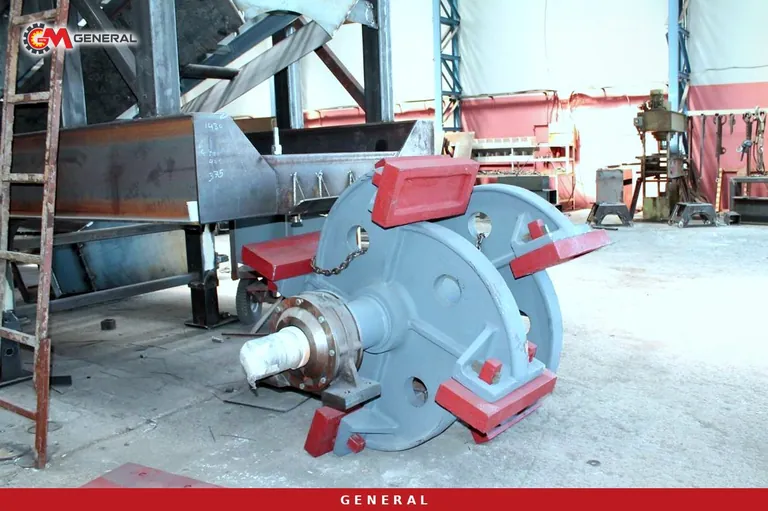
When wear part quotations are laid side by side, the first figure anyone reads is the unit price, and it is the most misleading input in the decision. The honest answer to OEM vs aftermarket crusher wear parts sourcing comes from how many tonnes the part crushes before replacement and how long the plant stands still while it is changed. Between two parts, the expensive one is the cheap one whenever its cost per tonne is lower.
OEM vs aftermarket crusher wear parts sourcing: the quantity to compare
For a jaw plate, a mantle or a blow bar, the real measure is the price of the part divided by the total tonnage crushed with it. Two further items belong in that denominator: production lost during the change and the labour of changing it. An aftermarket part with twenty per cent shorter life looks attractive at thirty per cent less money, yet the advantage disappears if it turns one annual stoppage into two. The decision therefore rests on three inputs: part price, achieved life and the cost of the stoppage. To derive an hourly stoppage cost specific to the plant, the cost breakdown used in the operating cost calculator approach is the practical route.
Material: the manganese steel grades
Most crusher wear parts are cast in austenitic manganese steel. Its distinguishing behaviour is that the surface work-hardens under impact while the core stays tough. The casting standard defines several grades separated by carbon, manganese and alloy additions. A quotation that merely says "manganese steel" is not a specification; the grade has to be named.
| Grade | Carbon (%) | Manganese (%) | Chromium (%) | Distinguishing character |
|---|---|---|---|---|
| A | 1.05–1.35 | 11.0 minimum | — | General purpose base grade |
| B-1 | 0.90–1.05 | 11.5–14.0 | — | Lower carbon shifts the balance towards toughness |
| B-2 | 1.05–1.20 | 11.5–14.0 | — | Balanced carbon range |
| B-3 | 1.12–1.28 | 11.5–14.0 | — | Higher carbon shifts the balance towards wear resistance |
| C | 1.05–1.35 | 11.0 minimum | 1.5–2.5 | Chromium raises yield strength and resistance to gross deformation |
Maximum silicon and maximum phosphorus are also fixed by the standard; high phosphorus makes a casting more prone to cracking. Every grade requires solution annealing followed by a water quench, and without that treatment the part will not behave as expected even if the chemistry is correct. Molybdenum-bearing grades are chosen for heavy-section castings because molybdenum makes it easier to retain the austenitic structure deep in the section.
Documents to request with the quotation
Without documents the buyer can only compare prices. At least five should be demanded: the chemical analysis report for the casting heat, the heat treatment record, the hardness report, the dimensional inspection report and the traceability number of the heat. On delivery, the heat marking stamped on the part should match the paperwork. These documents turn the risk of buying the same item from a different source into something measurable; an undocumented part is not cheap, it is unknown.
Geometry and fitting
Correct chemistry does not guarantee that the part will seat. On a jaw plate the back profile and the wedge recess matter; on a mantle the cone angle and the feed opening; on a blow bar the rotor slot section and the clamping face. A single millimetre of error on the back face can leave the plate without full contact against the body and break it in service. That is why a first order from a new source is normally a single part rather than a full set, with the contact pattern checked during fitting.
Warranty and the limit of liability
The most frequently overlooked aspect of aftermarket supply is the chain of liability. Once a rotor is damaged, whether the cause was the part or a feed error becomes a matter of argument. The way to prevent that argument is to require, in writing, cover that extends beyond replacement of the part to the damage the part may cause. The scope a supplier is willing to accept is the most direct signal of how much they trust their own casting.
Comparison needs recorded life data
In most plants the weakest link in a sourcing decision is that life data is never recorded. Writing down the removal date is not enough: the tonnage crushed with the part, the rock type, the average feed size and the setting range belong in the same record. The same jaw plate gives completely different lives in basalt and in limestone, and comparing two sources across different rock invalidates the result before it begins. Once the record keeping is in place, the decision rests on data within a few months and the supplier debate ends.
Which source for which component
| Component | Governing risk | Preferred source | Reasoning |
|---|---|---|---|
| Jaw plate | Back profile and wedge seating | Either source, with documents | Once geometry is verified, life difference is measurable |
| Mantle and concave | Cavity geometry and product curve | Source with a verified cavity profile | A wrong cavity distorts the product gradation |
| Blow bar | Rotor slot fit and balancing | Source with dimensional certification | Imbalance destroys the rotor bearings |
| Rotor body, eccentric shaft | Risk of damaging the base machine | Manufacturer | The cost of an error dwarfs the price of the part |
| Side liners, cheek plates | Low | Best value source | Easy to change, limited secondary damage |
Read across the table and the dividing line is not OEM against aftermarket but documentation and secondary damage risk. Related buying practice is collected under procurement and supply.
Frequently asked questions
Do aftermarket parts always last less?
No. Life depends on grade selection, heat treatment and geometry; a documented aftermarket casting can outlast an original supplied in the wrong grade.
How is a life comparison made fairly?
Measure under the same feed material, the same setting and a comparable tonnage band, and record total tonnes crushed at every change.
Is it right to trial a full set at once?
Not from a new source. Fit one part first, measure the contact pattern, the wear pattern and the life, and order the set only if the result holds.
Definitions of technical terms: Glossary