EN — English
 TR — Türkçe
 DE — Deutsch
 RU — Русский
 FR — Français
 ES — Español
 AR — العربية
 SR — Српски
Incoterms for crushing equipment export FOB vs CIF
A delivery term is not a price line
Incoterms for crushing equipment export FOB vs CIF usually surfaces at the very end of a quotation comparison, as a three-letter abbreviation nobody interrogates. Those three letters do not describe the value of the goods. They state at which physical point risk passes to the buyer, who carries which costs, and who handles customs on each side of the border. If two quotations differ only in the figure but not in the term, two different scopes of work are being compared as though they were one.
Two families of rules: any mode, and sea only
The Incoterms 2020 text contains eleven rules split into two families. The first works with any mode of transport: EXW, FCA, CPT, CIP, DAP, DPU and DDP. The second is reserved for sea and inland waterway carriage: FAS, FOB, CFR and CIF. The split is not cosmetic. Risk under the second family is tied to the moment goods are loaded on board a vessel, so those rules lose their meaning as soon as a truck or an aircraft enters the chain.
Transfer of risk and transfer of cost are different points
This is the distinction most often missed. Under FOB the seller loads the goods on board at the port of shipment and risk passes at that moment. Under CIF the seller pays carriage and insurance through to the destination port, yet risk still passes at the port of shipment, when the goods are on board. CIF therefore does not mean the seller carries the goods at its own risk until arrival; the seller has taken on the cost of carriage and cover, nothing more.
| Rule | Where risk passes | Who pays main carriage | Insurance obligatory |
|---|---|---|---|
| EXW | At the seller's premises, goods placed at the buyer's disposal | Buyer | No |
| FCA | On handover to the first carrier at the named place | Buyer | No |
| FOB | When goods are on board at the port of shipment | Buyer | No |
| CFR | When goods are on board at the port of shipment | Seller | No |
| CIF | When goods are on board at the port of shipment | Seller | Yes, minimum cover |
| CIP | On handover to the first carrier | Seller | Yes, wide cover |
| DAP | At the named destination, ready for unloading on the vehicle | Seller | No |
Why the term follows the cargo, not the invoice
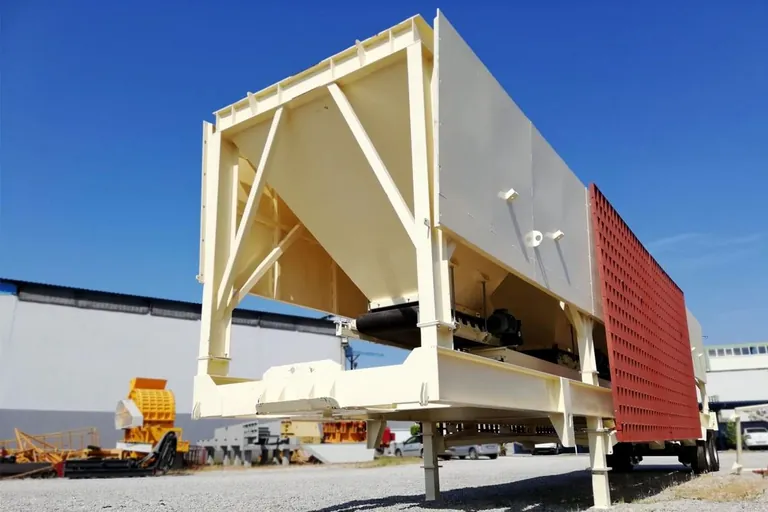
Crushing and screening equipment is not one kind of cargo. A jaw crusher body or a long conveyor frame will not fit a standard box; it travels on a flat rack, in an open top, or as break bulk. For that cargo, loading on board is a genuine operation, and the contract must say which party supplies the crane capacity and the lashing material at the quay. The maritime family, FOB, CFR and CIF, was written for exactly this picture.
The wear parts, screen media and control panel travelling in the same order, on the other hand, are containerised. With a box the goods leave the seller's control at a terminal or an inland depot, not on the ship. Using FOB there means the seller keeps the risk of goods it no longer controls until they are lifted on board. The correct answer is a rule that ties delivery to the first carrier: FCA, CPT or CIP.
Capability decides as much as geography
Where the buyer has a strong forwarding network at home and negotiates its own freight, FOB or FCA makes sense. Where the buyer is importing for the first time and wants a single counterpart as far as the destination port, CIF or CPT fits better. If the expectation is delivery to site, DAP applies; DDP loads import clearance onto the seller as well and is only realistic where the seller is registered for tax in that country.
The level of insurance travels with the rule
Only two rules carry an insurance obligation. Under CIF the cover the seller must provide is a minimum, limited to named perils, and is treated as reasonable for bulk commodities. Under CIP the 2020 text raised the requirement to wide cover. Parties remain free to agree something higher by contract, and on machinery shipments they frequently do: a cargo sold CIF is often insured well above the floor the rule sets.
| Scenario | Suitable rule | Reasoning |
|---|---|---|
| Out-of-gauge crusher body, buyer holds its own carrier contract | FOB | Seller to the loading port, buyer beyond it |
| Complete plant, buyer wants one invoice to the destination port | CIF | Freight and cover with the seller, risk passes on loading |
| Containerised spare parts and screen media | FCA or CIP | Delivery at the first carrier, no gap opens |
| Road delivery to a site in a neighbouring country | DAP | A sea rule does not fit, unloading rests with the buyer |
What the contract must spell out
The abbreviation alone is never enough. A named place belongs beside it: a port, a terminal or an address. The edition of the rules is stated too, because the same letters can carry different duties in different editions. Beyond that, the contract records how terminal handling charges are split, which party runs export and import clearance, and who bears demurrage if the vessel or the box is held. For tracked, high-profile loads such as mobile stone crushers, a dimension and weight schedule is attached as well, because route permits are issued against that schedule. The wider set of commercial topics sits under procurement and supply.
Frequent questions
Is FOB always the cheapest option?
The price line looks lower because freight and insurance are not inside it. Total landed cost only appears once the buyer's own freight rate is added to the comparison.
What is wrong with FOB on containerised cargo?
The goods are handed over at a terminal, yet risk stays with the seller until they are on board. Between those two points sits a stretch of liability the seller cannot control.
Does CIF keep the seller responsible until arrival?
No. The seller pays carriage and insurance, but risk transfers at the port of shipment. Damage found at arrival is handled as an insurance claim, not as a debt of the seller.
Definitions of technical terms: Glossary