EN — English
 TR — Türkçe
 DE — Deutsch
 RU — Русский
 FR — Français
 ES — Español
 AR — العربية
 SR — Српски
Crusher HS Code and Import Customs Documents
Where classification begins
A machine's identity at the border is its tariff heading, and everything follows from it: the duty rate, the right to a preferential regime, even which technical documents will be demanded. When crusher HS code and import customs documents come up, the first job is describing accurately what the machine does. Machinery for sorting, screening, separating, washing, crushing, grinding and mixing solid mineral substances such as earth, stone and ores sits together under heading 8474.
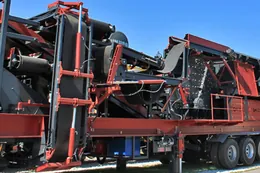
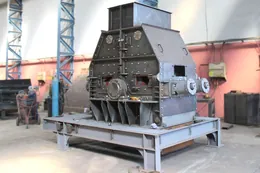
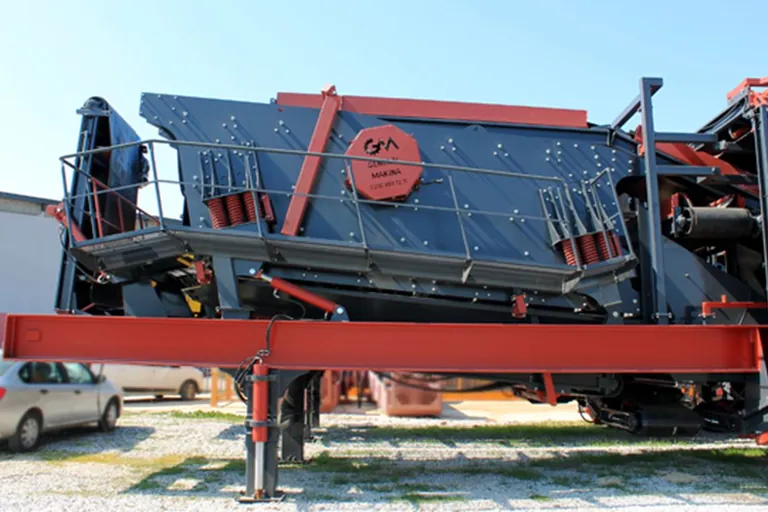
Within the heading the split follows function. Crushing and grinding machines fall in subheading 8474.20, which is where jaw, impact and cone crushers belong. Sorting, separating and washing machines fall in 8474.10, covering vibrating screens, classifiers and washers. Parts identifiable as suitable for use solely or principally with machines of this heading are declared under 8474.90.
Crusher HS code and import customs documents: six digits are global, the rest is national
The first six digits of the Harmonized System are the same worldwide. Countries append their own digits for statistical and fiscal purposes, so the same machine starts with identical six digits in two countries yet is declared with codes of different length. Quoting the six digit code on the export invoice and having the buyer confirm the full destination code is therefore the safest practice.
The most frequent error in declaring parts is treating a general purpose component as a machine specific part. Bearings, electric motors and hydraulic cylinders have headings of their own and are not declared under 8474.90. Items that could not serve another machine, on the other hand, are the typical content of that subheading: jaw plates, mantles, concaves, blow bars and screen media. Checking how each term translates is easier with the technical glossary at hand.
Shipping to the European Union: A.TR
A customs union covering industrial goods exists between Turkey and the EU, and its document is the A.TR movement certificate. A.TR shows that the goods are in free circulation inside that union; it is not a proof of origin. It covers most industrial goods and certain processed agricultural products, while primary agricultural products, coal and steel fall outside it and are handled through separate preferential arrangements.
There is also a recent procedural easing: since 2024 EU member states accept electronically issued A.TR certificates carrying a QR code without a wet ink signature. When shipping is planned, that detail allows the formality to run electronically instead of waiting for paper to travel by courier.
Markets that need preferential origin: EUR.1
To claim reduced duty when shipping to a country with a free trade agreement, the origin of the goods has to be proven. The standard document for that is the EUR.1 movement certificate. EUR.1 states that the goods satisfy the origin rules of the relevant agreement, meaning they were sufficiently manufactured or processed. In countries holding a bilateral free trade agreement with Turkey, such as Serbia, the preferential rate is claimed with this certificate or with the origin declaration the agreement allows.
| Document | What it proves | Where it is used | Who issues it |
|---|---|---|---|
| A.TR movement certificate | Free circulation in the customs union | Turkey - EU industrial goods | Exporter, endorsed by customs |
| EUR.1 movement certificate | Preferential origin | Free trade agreement countries | Exporter, endorsed by customs |
| Certificate of origin | Country of origin of the goods | Non preferential trade, tender requirement | Chamber of commerce |
| Declaration of conformity | Compliance of the product with legislation | EU market, CE marking | Manufacturer |
| EAC declaration or certificate | Compliance with technical regulation | Eurasian Economic Union | Applicant established in the union |
The Eurasian Economic Union: EAC
Shipping machinery to Russia and the other members of the union brings technical regulation TR CU 010/2011 on the safety of machinery and equipment into play. A product falls either under an EAC declaration of conformity or, for higher risk groups, under an EAC certificate of conformity; items listed in the relevant annex, mining equipment among them, sit on the certificate side. The EAC mark may not be affixed before conformity assessment is complete.
Document content is equally binding. A technical passport, a user manual and a safety justification are prepared in Russian, with the safety justification setting out design hazards, the measures taken against them and safe use across the machine's service life. Neither a declaration nor a certificate can be issued in the name of a foreign manufacturer: the applicant must be a legal entity or entrepreneur registered inside the union. Separate technical regulations for low voltage equipment and electromagnetic compatibility may apply on top.
Consistency across the shipping file
A commercial invoice, packing list, transport document and insurance policy accompany every shipment. On top of those, one or more of the documents above is added depending on destination. The critical property of the file is consistency: the tariff code on the invoice, the goods description on the transport document and the model name on the conformity paperwork must match. A single mismatched model code turns into a physical inspection and a vehicle standing at the border for days.
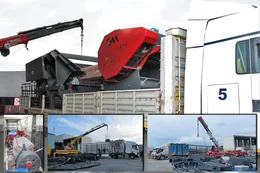
Complete plant shipments carry a second difficulty, since a plant travels on several vehicles in several consignments. Declared on its own, a consignment can make some units look like parts rather than machines. To reduce that risk, consignment lists are numbered unit by unit from the outset, and each invoice states which unit belongs to which plant.
Who makes the final call
Definitive classification is always confirmed with the customs administration of the destination country or with a licensed broker; this article builds the logic of classification and does not replace an administrative decision. Delivery, warranty and spare part aspects of the procurement process are covered under procurement and supply. Tell us the destination and the scope of the plant and the document set can be listed together at the order stage.
Definitions of technical terms: Glossary