EN — English
 TR — Türkçe
 DE — Deutsch
 RU — Русский
 FR — Français
 ES — Español
 AR — العربية
 SR — Српски

7 Critical Questions to Ask When Choosing Crushing Plant Manufacturers
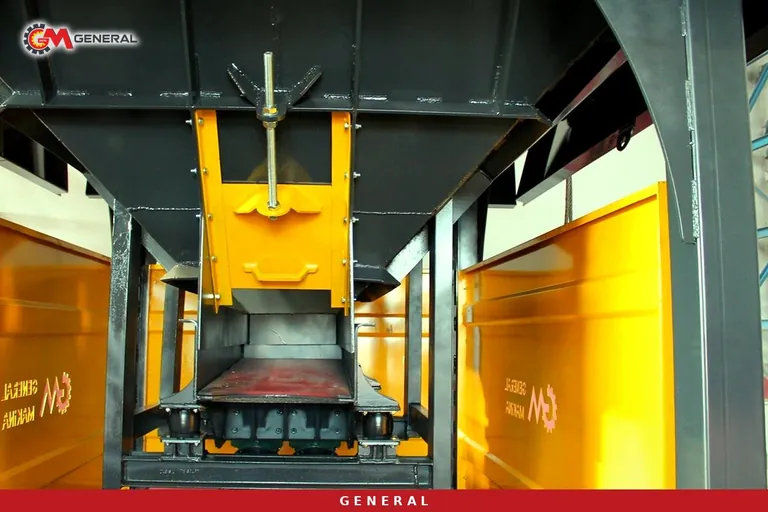
When you buy a crushing and screening plant, you are really choosing a manufacturer first. The machine you receive reflects how that manufacturer calculates capacity, how it writes its warranty and how it supplies parts. Two quotations carrying the same capacity label can deliver very different product tonnage on the rock in your own quarry. This article lists seven questions to put to a manufacturer at the negotiating table, describes what a strong answer looks like for each, and names the document you should ask for. A scoring table at the end links every answer to the paperwork that proves it. After each question we also show how General Makina answers it with data published on its own website, so you can compare replies against published figures rather than verbal promises.
1. For which material and conditions is your capacity figure valid?
Crusher capacity is not a fixed number. It falls as the discharge setting narrows, and it drops as the rock gets harder or wetter. A sentence such as "the plant does so many tonnes per hour" therefore tells you nothing on its own. What you need to know is which rock, which maximum feed size and which closed side setting the figure was calculated for.
What a good answer looks like: The manufacturer gives capacity as a range and explains that the lower end corresponds to a tight discharge setting and the upper end to a wide one. It also volunteers that crusher throughput and saleable product tonnage are not the same thing, because oversize returning from the screen loads the circuit. A weak answer is a single figure followed by "it works on any rock".
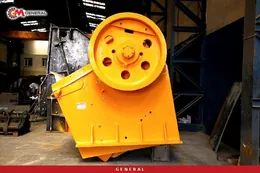
How General Makina answers: The tables on its product pages state capacity together with the opening and discharge setting. On the GNRK series jaw crusher page, for example, the GNRK 90 is listed with a 900×650 mm opening, a 70–180 mm discharge range and 60–225 t/h capacity in the same row; the wide capacity range follows directly from the wide range of discharge settings.
2. Does the technical table clearly state crusher, screen and motor values?
A quotation that says "1 primary crusher, 1 screen" without model, size and motor power makes it impossible to compare two offers. If one of two lines in the same price band uses a crusher with a smaller rotor or a narrower screen, you will only see the difference in the table.
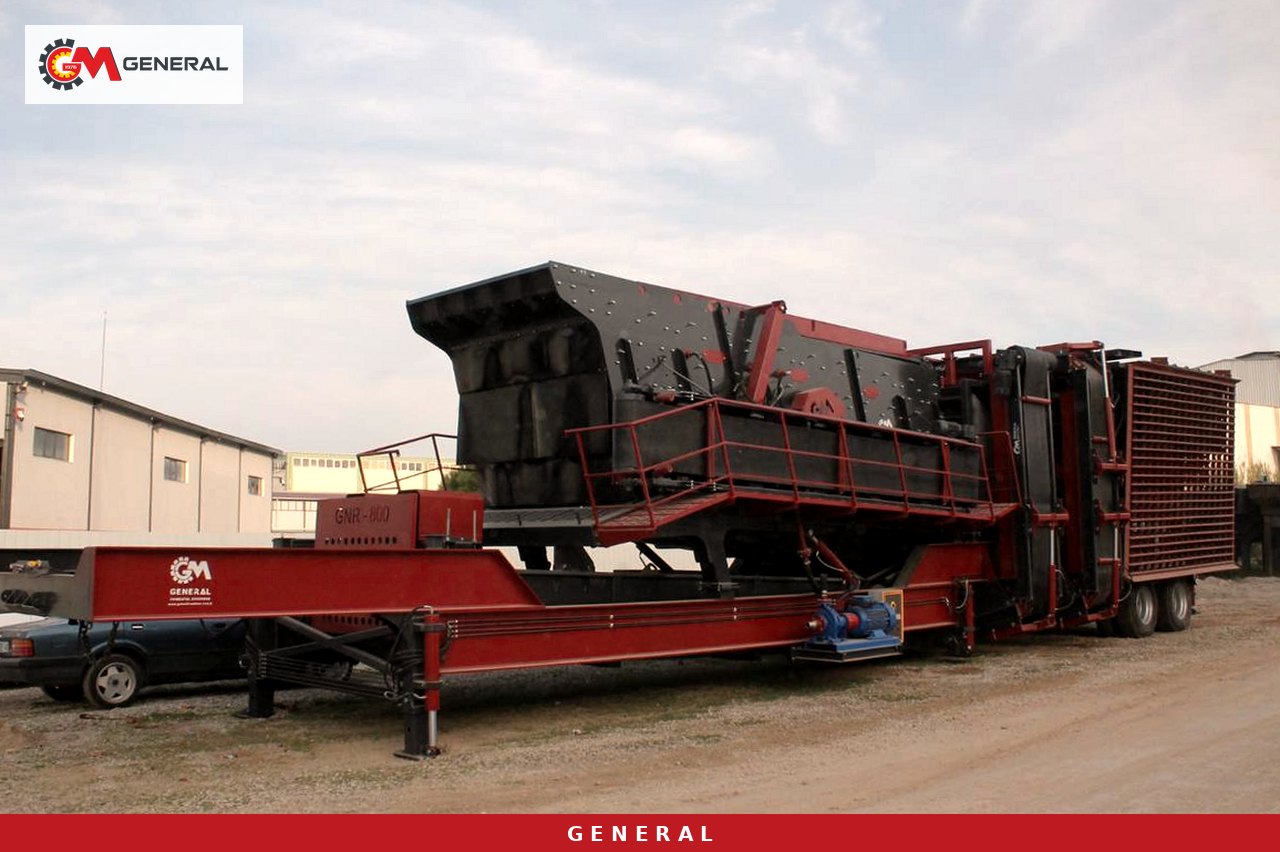
What a good answer looks like: Every line of the equipment list carries the model name, the opening or rotor size, motor power in kW and weight; for screens it states deck size, number of decks and motor kW/rpm. These values match the manufacturer's published catalogue table exactly. Where a quoted value differs from the catalogue, the manufacturer explains why in writing.
| Equipment | Size | Feed / discharge | Motor | Capacity |
|---|---|---|---|---|
| GNRK 90 jaw crusher | Opening 900×650 mm | Discharge 70–180 mm | 75/90 kW | 60–225 t/h |
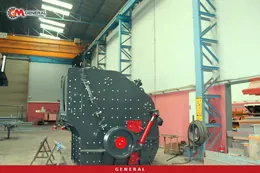
| GNR PDK02 primary impact crusher | Rotor 1400×1200 mm | Max. feed 900 mm | 200 kW | 200–300 t/h |
| GNR K110 cubicizer crusher | Rotor 1550×1800 mm | Max. feed 210 mm | 160 kW | 160–250 t/h |
| GNR 1650 vibrating screen | Screen 1600×5000 mm | — | 15 kW / 1500 rpm | — |
How General Makina answers: These tables are published openly on the crusher and screen pages; for the GNRK 90 the weight of 11,400 kg is also given. You can verify a quoted line by placing it next to the published table.
3. Will you configure the plant for my material?
A line that is right for limestone turns quickly into a wear-cost problem on basalt. That is why the manufacturer asking you questions matters as much as you asking it questions. A supplier that draws a flow sheet without asking about rock type, silica content, clay and moisture, the largest block size and the fractions you intend to sell is selling a standard package.
What a good answer looks like: The manufacturer asks for a material data sheet, requests a sample where possible and bases its proposal on that information. It states in writing which crusher type was ruled out for an abrasive feed and why. For clayey feed it says at quotation stage whether pre-screening or washing is needed.
How General Makina answers: The stationary crushing plants page states that line design follows the material type: impact crushers for low-abrasion limestone, jaw plus cone configurations for hard rock such as basalt and granite. The GNR PDK series page draws the boundary explicitly: in granite, basalt, quartzite and river gravel with silica above 10% or a Bond abrasion index above 0.15, blow bars wear out fast, so jaw plus cone is preferred for these materials. For a detailed comparison of the two crusher types, see our article on impact versus jaw crusher selection.
4. What does the warranty cover, and where are wear parts excluded?
The warranty period is the easiest line in a quotation to read, but the real information sits in the scope. If it is not written whether the period starts at delivery or at commissioning, which parts are excluded and under which operating conditions the warranty lapses, the period alone means little.
What a good answer looks like: A draft warranty certificate comes with the quotation. Excluded wear parts are named one by one: jaw plates, blow bars, impact plates, screen meshes, belts. The maintenance records and material conditions required for the warranty to remain valid are stated plainly; "wear parts excluded" is never left without a list.
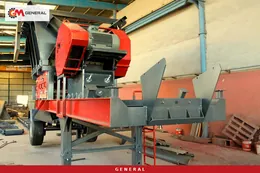
How General Makina answers: General Makina products carry a 1-year warranty. Exclusions are stated on the product pages; on the General 800 mobile crushing plant page, for example, the 1-year warranty excluding wear parts appears together with CE and ISO 9001 certification. At quotation stage, simply ask for the excluded parts to be listed by name in writing.
5. How are spare parts and wear parts supplied?
Most of a crushing line's operating cost appears after the first year, in wear parts. On a machine where you do not know which alloy a part is made of, each replacement may bring a different grade, and your cost per tonne slips out of control.
What a good answer looks like: The manufacturer supplies a wear-part list for each machine with part name, alloy and code. It states the brand and type of standard components such as bearings, motors and gearboxes, so you know you can also source them on the open market. It also suggests alloy options to suit your material.
How General Makina answers: The product pages state the wear-part material: on the GNRK jaw crusher the jaw plates are austenitic manganese steel (Mn13/Mn18). The GNR PDK primary impact crusher page explains blow-bar selection by material: high-chrome white cast iron for clean, abrasive feed, and tough manganese or martensitic alloy for demolition concrete where tramp iron is a risk. When crushers, screens, feeders, conveyors and automation all come from the same manufacturer's range, you deal with one counterpart for parts.
6. Can you show reference plants and shipments, and can I see one on site?
A brochure photo does not prove that the machine has run for months on rock similar to yours. The reference question is there to learn whether the manufacturer has done comparable work before and what the owner of that work thinks today.
What a good answer looks like: The manufacturer lists plants close to your rock type and capacity range with location and year, and helps you speak to the operator or visit a running plant. Ask the reference operator: after how many operating hours were jaw plates or blow bars replaced, was there a warranty claim and how was it settled, did the plant reach the quoted capacity.
How General Makina answers: General Makina has been manufacturing since 1976; more than 50 years of experience shows in the photographs of installed plants. The cover photo of this article shows the stationary plant in Hakkari built with a PDK 02 primary impact crusher and a 110 cubicizer crusher, and the photo above shows the stationary plant in Antalya. If you want to see a plant working on material close to yours, raise the request during the quotation meeting.
7. What is included in the quotation: transport, erection, commissioning, automation?
The difference between two quotations often lies not in the machine but at the edge of the scope. A concrete foundation design or an electrical panel included in one may be hidden in another under "by the buyer". Before comparing offers, ask for "included / excluded / optional" to be written against each of these items:
- Equipment list: model, size, motor power and weight for every item
- Steel structure, platforms, stairs and handrails
- Number of conveyors, belt width and length
- Concrete foundation design: who draws it, who pours it, who supplies the anchor plan
- Transport: delivery point at the factory or on site; who handles loading
- Erection: crane, crew and time on site at whose cost
- Electrical panel, cabling and cable trays
- Automation: PLC, operator panel, sequential start and interlocks
- Power: generator or grid, and whose scope the transformer is in
- Commissioning, trial production and operator training
- Warranty certificate, CE certificate and operation and maintenance manual
How General Makina answers: The automation and control system page describes concretely what to look for in the scope: line logic running on a PLC, the SCADA screen in the control cabin showing each unit's current and alarms, units started in sequence from the stockpile back to the feeder, and feeder speed reduced automatically when crusher current approaches its limit. Ask whether the "automation" line in the quotation includes these functions.
Scoring table for the seven questions
Print the table below and take it to the meeting. Score each question 0 (no answer), 1 (verbal answer) or 2 (answered with a written document). The maximum is 14 points; a low-scoring quotation is shifting risk onto you, whatever its price.
| Question | Document to check | Sign of a strong answer | Score (0–2) |
|---|---|---|---|
| 1. Capacity for which material and conditions? | Crusher technical table, capacity range by discharge setting | Material, feed size and discharge setting stated with figures | |
| 2. Are crusher, screen and motor values clear? | Equipment list by model | Model, size, kW and weight on every line | |
| 3. Is the plant configured for the material? | Material data sheet, flow sheet | Manufacturer asks you for a sample or rock data | |
| 4. What does the warranty cover? | Draft warranty certificate | Period, start point and excluded parts named | |
| 5. How will spare and wear parts come? | Wear-part list, material grade | Part name, alloy and code listed | |
| 6. Can a reference plant be shown? | Reference list, site photos | Plant on similar rock and a contact person | |
| 7. What is in the quotation scope? | Scope and exclusions page | Transport, erection, commissioning and automation itemised |
Frequently asked questions
If two quotations state the same capacity, how do I find the difference?
Put the equipment lines side by side: crusher opening or rotor size, motor power, screen size and number of decks. If a smaller crusher sits behind the same capacity claim, that line will approach the stated figure only at a wide discharge setting. Then compare the scope pages.
Is a quotation with a longer warranty period safer?
The period alone is no guarantee. If the list of excluded parts, the start point and the validity conditions are not written down, a long period stays on paper. At General Makina the warranty is 1 year with wear parts excluded, and this is stated openly on the product pages.
Do these questions still apply if I buy a used line instead of a new plant?
A new machine is always the right choice. On a used line most of the questions about how capacity was measured, which alloy the parts are made of and who holds the warranty remain unanswered; with a new plant bought from the manufacturer you can demand a written answer to each of the seven questions.
What determines the price?
Crusher and screen models, the number of crushing stages, conveyor lengths, automation level, power source and the transport, erection and commissioning services within the scope all set the price. That is why the price is given per project once your material data and scope list are clear.
A buyer who gets written answers to all seven questions compares quotations on risk, not just on price. Send us your material data, target fractions and required capacity, and let the General Makina team answer these seven questions in writing in its own quotation. You can submit your request through our contact page.
Definitions of technical terms: Glossary