 EN — English
 TR — Türkçe
 DE — Deutsch
 RU — Русский
 FR — Français
 ES — Español
 AR — العربية
 SR — Српски
NEWS & BLOG
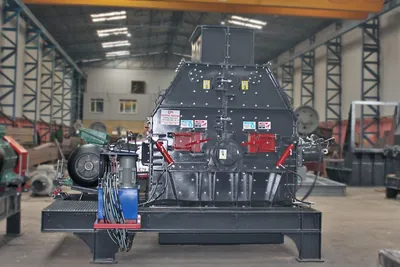
Crushing plant lockout tagout procedure
Cutting the main breaker on a crusher isolates one energy source out of at least five. Hydraulic accumulators, tensioning springs, rotor inertia and the material column in the hopper all stay live. This guide builds the machine-level energy inventory and the lock-tag-try sequence around them.
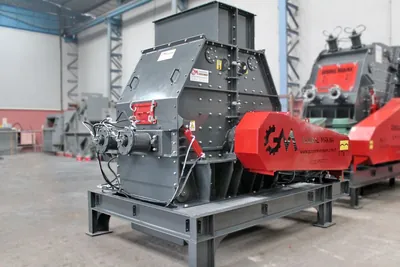
Crushing plant payback period calculation
Payback equals total invested capital divided by annual net cash flow; the variable that distorts the result most is not catalogue throughput but the share of the year the plant actually runs.
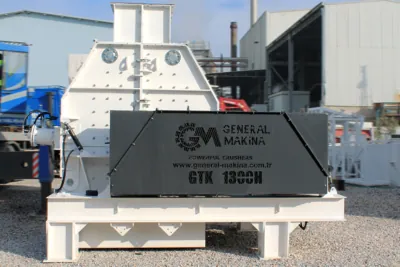
How to Compare Crushing Plant Quotations
Two crusher quotations rarely describe the same job. Level the scope first, then read the delivery term, the commissioning clause and the spare-parts commitment before you look at the bottom line again.
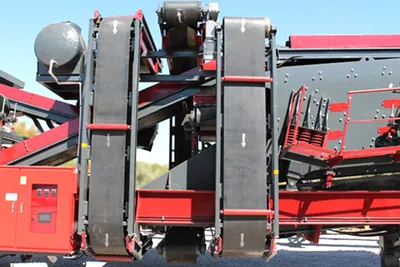
Site Ground Preparation for Mobile Crusher
A tracked or wheeled crushing plant does not need a reinforced concrete foundation, but it does need a platform that will not settle, will not hold water and has measurable stiffness. This article groups the work into three testable headings: bearing capacity verified by plate load testing, levelling within the machine's own slope tolerance, and drainage that moves water off the pad.
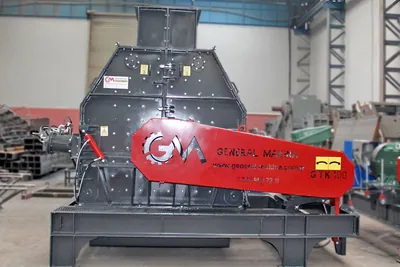
Crusher bearing temperature monitoring
Housing temperatures above 70 °C consume grease life quickly, and 90 °C is a stop-and-inspect decision. This guide fixes the measuring points, compares contact and thermographic methods, explains why the rise over ambient matters more than the absolute reading, and lists the real root causes of overheating.
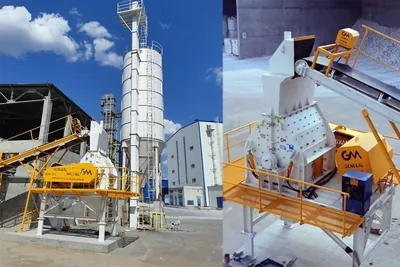
Crushing Circuit Bottleneck Identification
A crushing and screening circuit produces only as much as its slowest station allows. This guide shows how to locate that station within a single shift using build-up and starvation observation, stage-by-stage actual-to-nominal ratios, motor current traces and screen load checks.
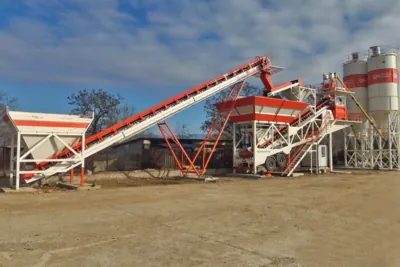
F80 P80 Reduction Ratio Calculation
Reduction ratio is the feed aperture passing 80 percent of the material divided by the product aperture passing 80 percent. Each machine type has a workable band, and the circuit total is the product of the stages rather than their sum.
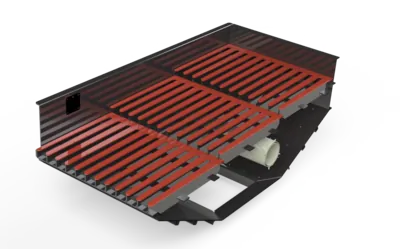
Dust suppression system design for crushing plant
Suppression is a flow-and-pressure calculation, not a shopping decision. This guide walks the source inventory, nozzle coverage, pump and pipe sizing, and the water budget that decides whether the system survives its first summer.
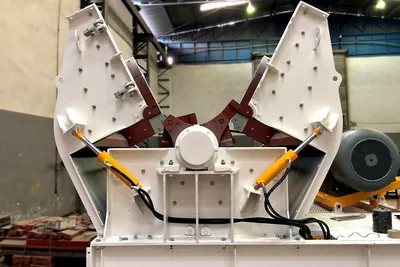
Crusher Machine Guarding Requirements: Distances and Interlocks
Guarding on a crushing plant fails for predictable reasons: the barrier is the right height but the wrong distance from the hazard, the mesh opening lets a finger through, or the panel is removed for greasing and never refitted. This guide sets out the reach criteria, the fixed versus movable decision and the interlock logic.
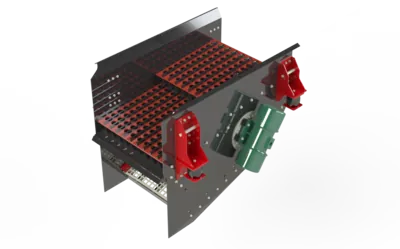
Crushing and screening plant investment cost: what the budget really contains
Installed plant cost is far larger than the invoice total of the machines. For plants that handle only solids, a widely used factorial estimate multiplies the delivered cost of major equipment by roughly 3.1 to reach total installed capital. This article opens that multiplier and turns it into line items.
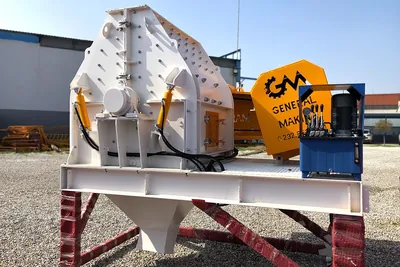
Crushing plant RFQ technical specification
Offers become comparable when the document states the result instead of a machine list. Material data, a capacity and gradation clause and measurable acceptance criteria decide whether two bids can be reviewed side by side.
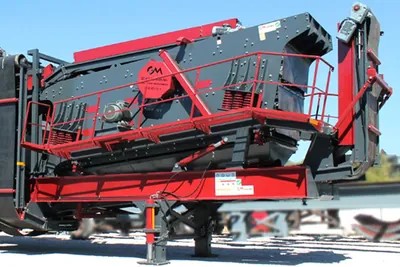
Mobile crushing plant site commissioning plan
From the moment the unit is unloaded to the first tonne produced there is a fixed order: ground acceptance, set-down, levelling, unfolding, no-load running, first feed. Each step here carries its own acceptance criterion.
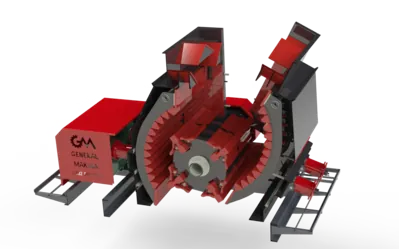
Crusher lubrication schedule and grease selection
Grease is three decisions taken at once: thickener, base oil viscosity and consistency grade. The interval follows bearing geometry and speed rather than the calendar, and overfilling a housing destroys as many bearings as starvation does.
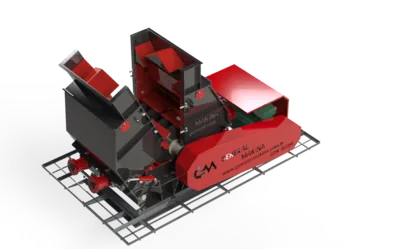
Crushing plant capacity utilization rate explained
The tonnes-per-hour figure on a datasheet is a ceiling, not a monthly output. Split calendar hours into planned, running and effective producing hours, then measure availability, performance and quality separately to see how much of the rating actually reaches the weighbridge.
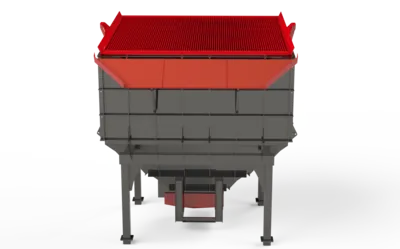
Blast fragmentation crusher feed size: getting the pit and the primary to agree
The largest rock leaving the muckpile should stay near 80 percent of the primary gape. Cross that line and you buy bridging, secondary breaking and unplanned stops. The remedy sits in the drill pattern and the scalping deck, not in a bigger machine.
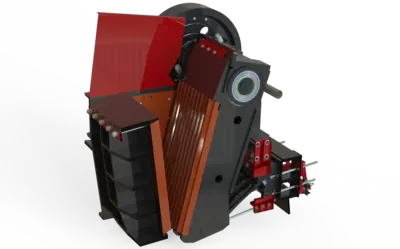
Jaw Plates (Fixed / Moving): Material and Selection
Jaw plates are cast in work-hardening manganese steel (Mn13-Mn22); grade and tooth profile follow the feed material. Replace when tooth crests flatten or the CSS no longer holds. Compatible with GNRK and mobile GNR jaw crushers.
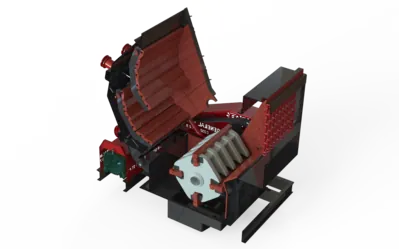
Blow Bars (Impact Hammers): Material and Application Matching
Blow bar material follows the feed: manganese steel for primary duty with tramp-iron risk, martensitic alloy for mixed duty, high-chrome for clean abrasive fines. Always change in balanced sets. Fits PDK, DMK and M-DMK crushers.
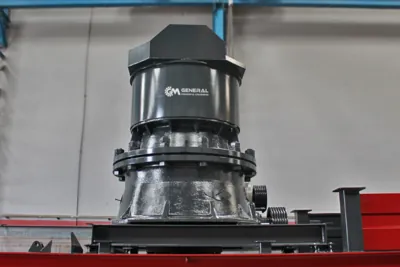
Mantle and Concave: Cavity Types and Replacement
Mantle and concave form the cone crusher chamber; coarse/medium/fine cavity profiles are chosen by real feed size and target fraction. Both liners are replaced as a pair when throughput drops or the product coarsens at the same CSS.
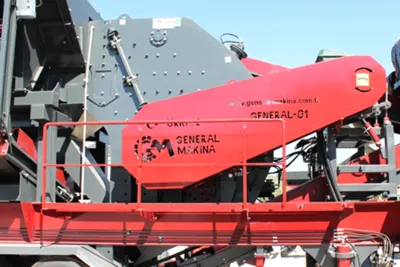
Mobile Crusher Daily Checklist
Pre-shift inspection for mobile crushers: tracks, feeder, crusher, screen-conveyor line and controls. Qualitative checklist — intervals come from the manufacturer per model.

Crusher Wear Parts Guide
Jaw plates in jaw crushers, blow bars in impact crushers, mantle-concave in cones, rotor tips in VSI, liners in cubitzers. Part-to-machine matching and replacement signs.
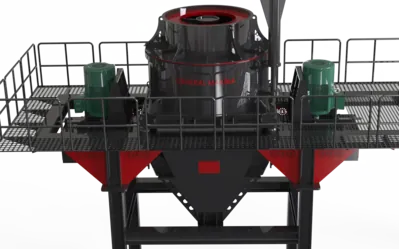
VSI Rotor Maintenance
VSI rotor tips must wear evenly; premature wear on one tip signals imbalance and bearing risk. GNR 700/800/900 rotor sizes and inspection points.
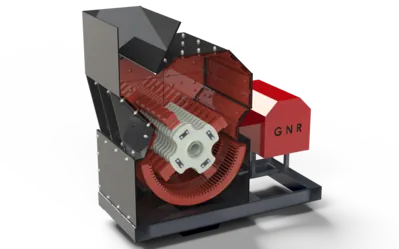
Crusher Blockage
Three causes of blockage: tramp iron, overfeeding, wrong setting. The role of hydraulic protection and CSS on cone crushers, plus a safe clearing sequence.
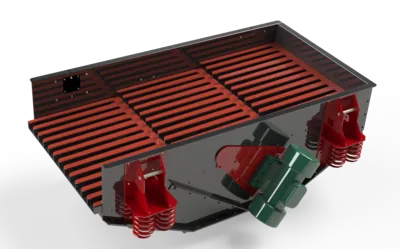
Screen Media Selection and Replacement Signs
Screen media choice depends on aperture, wire diameter and deck count. Real GNR screen dimensions; torn panels, opened apertures and falling efficiency are replacement signs.
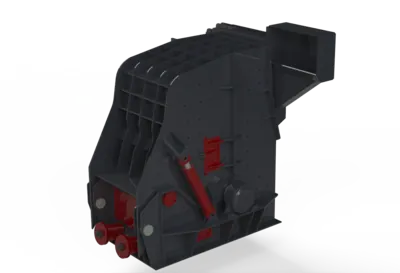
Cubicizer or Tertiary Impact Crusher? Motor Power per Ton Compared
The GNR K series cubicizer draws an average of 0.77 kW/(t/s) per capacity midpoint; the GNR tertiary impact series 1.20. Installed power need is about 36% lower with the cubicizer. The gap is largest at small capacities and closes around 250 t/s.