EN — English
 TR — Türkçe
 DE — Deutsch
 RU — Русский
 FR — Français
 ES — Español
 AR — العربية
 SR — Српски
Crusher Plant Maintenance and Spare Parts Management: How to Prevent Wear
Wear in a crushing plant cannot be stopped; its rate, location and cost can be managed. When the same jaw plate is finished long before the planned shutdown in one quarry and lasts until the overhaul in another, the difference is rarely in the part itself. It lies in the rock the part works against, the feed arrangement and the inspection habits on site. This article ties maintenance and spare parts management in a crushing and screening plant to one goal: lowering wear cost per ton crushed. We do not cover stock quantities or reorder points here; the focus is on choosing the part correctly before it enters the plant and running it correctly once installed.
The unit is the ton crushed, not the part price
General Makina's crusher wear and spare parts page states that the right metric for a wear part is not its price but the cost per ton crushed. That total combines part price, replacement frequency and the production lost while the plant stands for the change. The definition looks small but can reverse maintenance decisions: an expensive, long-lasting alloy can be cheaper per ton than a cheap part replaced often, and on clean limestone the opposite can be true.
Three records per change are enough to take this comparison out of guesswork: the date the part was fitted, the date it was removed and the tonnage that passed through the crusher in between. Tonnage comes from weighbridge tickets or a belt scale. Add a photo of the removed part and its thickness at the thinnest point, and the next alloy decision rests on site data rather than on a supplier's claim.
No alloy choice without knowing the rock
What wears the part is not the Mohs hardness of the rock but its free quartz and silica content, which the industry expresses as the Bond abrasion index (Ai). When the quarry moves to a new vein, or river material is mixed with quarry rock, the wear rate changes. A sample and analysis of the feed therefore come before the alloy decision; a part used on the same machine for years can become the wrong part once the rock changes.
Jaw plates and cone mantles: manganese steel that hardens under impact
Austenitic manganese steel (Mn13/Mn18/Mn22) work-hardens at the surface under impact, with surface hardness rising from 200 HB to 550 HB. On the GNRK series jaw crusher the jaw plates are Mn13/Mn18 grade, and the same material family is used for cone mantles. Work-hardening needs impact: if the plate does not receive regular and sufficient load, the surface does not harden and the part wears like mild steel. Running the crusher half-loaded with intermittent feed therefore costs not only capacity but plate life.
Blow bars and aprons: chrome or manganese
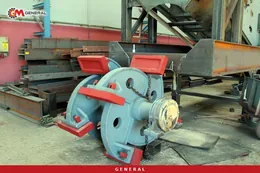
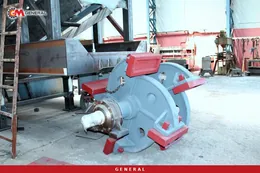
High-chrome white cast iron (Cr about 15-25%, about 700-800 HB) is the standard blow bar for clean, abrasive feed in an impact crusher. It is brittle: it can crack when it meets an oversize block or a piece of tramp iron. For feed containing rebar and metal, such as construction and demolition waste, manganese or martensitic blow bars are preferred. According to the product page, ceramic-reinforced MMC bars give about 2-3 times the life of high-chrome in abrasive duty; this option is worth evaluating on lines with clean but abrasive feed.
Screen surface: wire mesh and polyurethane
On the screen side the choice is between vibrating screen wire mesh and polyurethane. Aperture and surface type are fixed with the order according to the product gradation. A hole in the screen surface means oversize returning to the crusher or contaminating the stockpile, so the screen surface is monitored together with crusher wear.
| Part | Typical feed | Alloy / surface | Accelerates wear | Preventive step |
|---|---|---|---|---|
| Jaw plate (GNRK) | Granite, basalt, quartzite, river gravel | Manganese steel Mn13/Mn18 | Wet clayey feed, too little impact | Washing or scalping, continuous feed |
| Cone mantle / concave | Basalt, granite, river stone, ore | Manganese steel | Starved or one-sided feed | Choke feed, liner profile suited to the stage |
| Blow bar (clean rock) | Limestone, dolomite | High-chrome or MMC | Tramp iron, blocks above the feed limit | Grizzly, removal of foreign metal |
| Blow bar (recycling) | Concrete and demolition waste | Manganese or martensitic | Rebar and metal pieces | Pre-sorting, avoid brittle alloys |
| Grizzly bars | Run-of-mine ahead of the primary | Mn13-type manganese casting | Blocked gaps, side loading | Daily gap check |
| Screen surface | All fractions | Wire mesh or polyurethane | Wrong aperture, loose tensioning | Aperture to gradation, weekly tension check |
Feed limit and rock choice on an impact crusher: the GPS example
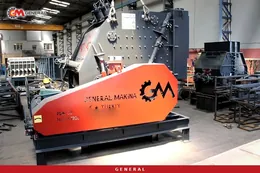
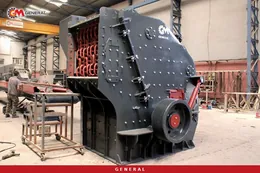
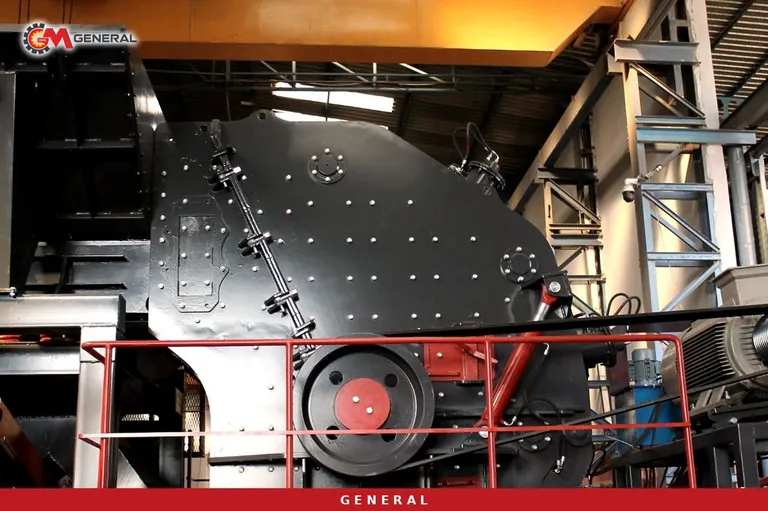
The GPS series primary-secondary impact crusher performs coarse and secondary crushing in one housing; its wear parts are the blow bars and aprons. The product page defines suitable material as limestone, dolomite, soft to medium non-abrasive rock and recycled material; it rules out high-silica granite, basalt and gravel, because impact combined with high abrasiveness accelerates part consumption. This distinction belongs at the purchasing stage, before the maintenance team inherits it: keeping an impact crusher alive on abrasive rock with frequent blow bar changes is not preventing wear but financing it.
| Model | Rotor (mm) | Max. feed (mm) | Motor (kW) | Capacity (t/h) |
|---|---|---|---|---|
| GPS-1210 | 1200×1000 | 600 | 160 | 100–250 |
| GPS-1413 | 1400×1250 | 800 | 250 | 125–320 |
| GPS-1415 | 1400×1500 | 1000 | 315 | 150–400 |
From a maintenance point of view the key column in this table is the feed limit, not capacity. If blocks above 600 mm enter a GPS-1210, for example, the blow bars and aprons work under impact loads outside their design; on a high-chrome bar this is a fracture risk, not wear. The countermeasure is taken upstream of the crusher: blasting and pre-sizing, the grizzly on the feeder and oversize control at the hopper mouth. The rule is similar on a jaw crusher; according to the GNRK page the maximum feed is about 0.8–0.9 times the opening width.
Feed arrangement: continuous, choke and centred
Much of the wear depends on which area of the part is actually working. For the cone crusher the product page prefers choke feed. When the crushing chamber runs full, rock grinds against rock and the load spreads around the mantle; a half-empty chamber and feed falling to one side thin one zone of the mantle faster, distort the profile and shift the setting. The feed chute should be arranged to drop material into the centre of the crusher, and as the chute liner wears, check whether the flow has changed direction.
The same logic applies across the rotor width of an impact crusher: if material piles up on one edge of the rotor, only part of each blow bar works, and the bar wears unevenly and is replaced early. On a jaw crusher, uninterrupted flow supports work-hardening of the plate and keeps the chamber full. The vibrating rock feeder delivers coarse rock evenly to the crusher mouth and maintains choke feed; its product page notes that continuous rather than intermittent feed gives a more stable crusher output. In wet, clayey run-of-mine material a grizzly feeder can clog; on such sites wobbler feeder solutions separate the fine, sticky portion and send cleaner material to the crusher.
Keep fines out of the crusher
Material that does not need crushing still consumes energy and wears the part when it passes through the crusher. The by-pass section of a grizzly feeder lets fines and soil skip the crusher and go straight to the conveyor or screen; according to the product page this reduces jaw and impact liner wear and cuts unnecessary crushing energy. On the mobile pre-screen DMK the pre-screen removes soil and fines so that the abrasive fine fraction does not load the crusher. For wet, sticky clay feed the GNRK page recommends washing or scalping first to prevent cavity clogging.
The by-pass only works if the grizzly gaps are open. The grizzly bars are Mn13-type manganese castings that harden under impact from about 200 to 450-550 HB; even so, a stone wedged in a gap holds fines on top of the grizzly and sends them straight into the crusher. The grizzly gap should therefore be one of the first points checked at the start of each shift.
Field practices that extend part life
Turning double-sided blow bars on time
On the mobile pre-screen DMK the blow bars can be used on both sides, and the product page describes this as twice the life per part. The gain depends on when the bar is turned: it must be reversed before the first face wears close to the holding zone; if this is left too late, the second face may become unusable. The hydraulically opening housing on the same machine speeds up turning and replacement, which makes it easier not to postpone this check. Turning and replacement limits are taken from the machine's own operating manual.
Daily and weekly checklist
| Frequency | Check | What it prevents |
|---|---|---|
| Daily | Are the feeder grizzly gaps open | Fines loading the crusher |
| Daily | Any blocks above the feed limit at the hopper mouth | Broken blow bars and plates |
| Daily | Does material fall into the centre of the crusher | One-sided wear |
| Daily | Product size and screen oversize return | Unnoticed setting drift |
| Daily | Tramp iron and foreign metal in the feed | Cracked chrome blow bars |
| Weekly | Measure and record blow bar, plate and mantle thickness | Unplanned stops, late turning |
| Weekly | Tightness of liner bolts and wedges | A loose part hammering its seat |
| Weekly | Screen surface tension, holes and tears | Oversize contaminating the stockpile |
This table gathers the wear-specific checks; which shutdown window each one belongs in is covered separately in the planned shutdown maintenance schedule article.
Spare parts management: right code, right alloy, traceable source
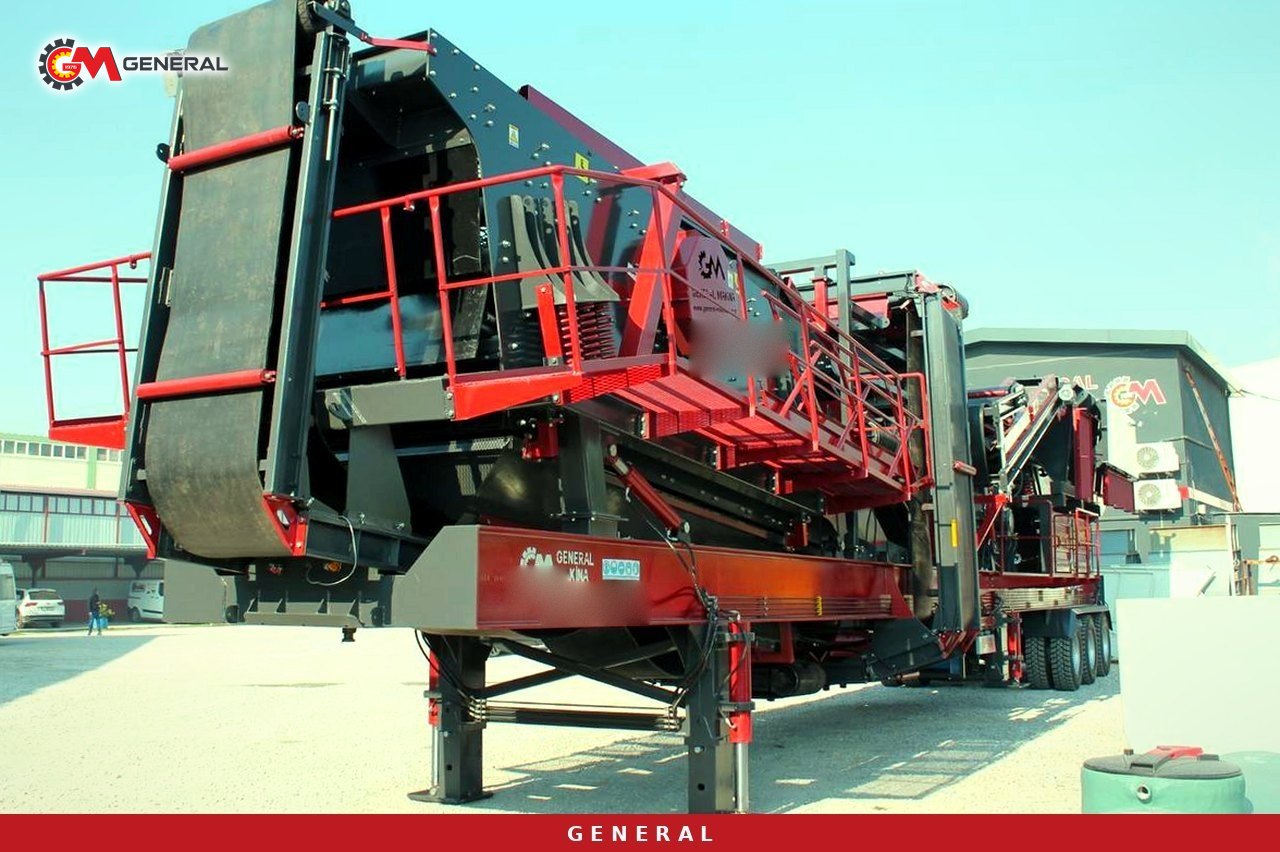
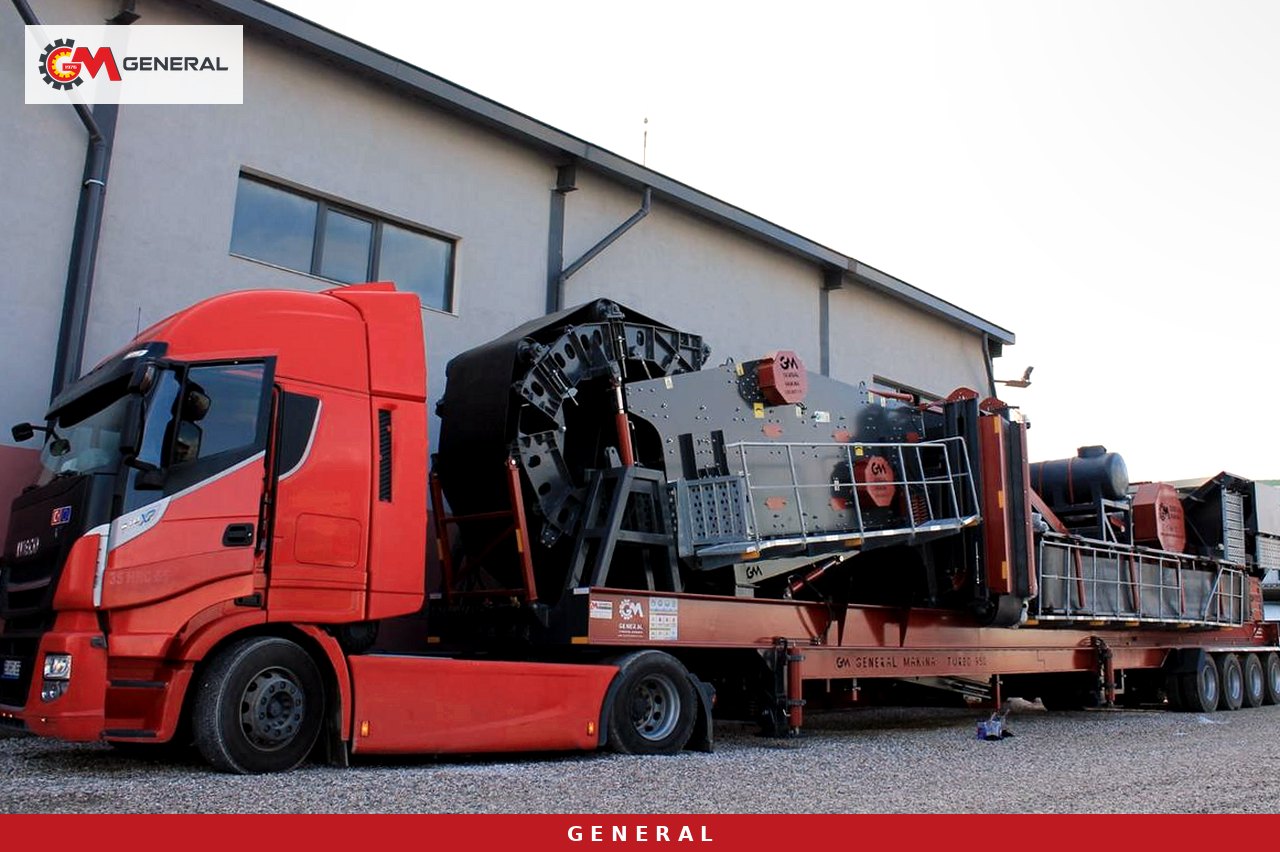
The right part starts with the machine model and the part code. General Makina supplies original spare parts for the crushers, screens, feeders, conveyors and concrete batching plants it manufactures; for other brands the requirement must be shared and compatibility assessed. The corporate profile includes after-sales service and continuous spare parts supply, and some product pages state a 10-year spare parts assurance or 10 years of paid service. The 1-year machine warranty does not cover wear parts; they sit in the operator's budget, and managing them is the operator's job.
The risk of an undocumented or untraceable part lies in its consequences, not its price. A plate outside dimensional tolerance does not seat properly; the remaining gap lets impact move the part and damages the holder and the housing. A manganese casting without documented chemistry may not work-harden as expected, and a cracked chrome blow bar damages the rotor and housing liners together. For the method that calculates how many of each part to hold from consumption rate and lead time, see the article on critical spare parts stock and reorder point.
- Write down the machine model and serial number.
- Add the part code or drawing number.
- State the rock type fed and whether it has changed recently.
- Share the tonnage and time between the last two changes.
- Photograph the wear profile of the removed part.
- Specify the required alloy and material certificate in the quotation request.
- Include bolts, wedges and fasteners in the same order.
Frequently asked questions
When should I turn or replace a blow bar?
By measurement, not by calendar. The trend of the weekly thickness measurement shows when the first face of the bar will approach the holding zone; turning is planned before that point. Limit dimensions are taken from the machine's operating manual.
Can the same blow bar be used for limestone and granite?
Not recommended. High-chrome suits clean limestone; on high-silica granite impact crushing already consumes parts fast, and a line with jaw and cone crushers should be considered for that material.
Can I buy parts for another brand of crusher?
General Makina primarily supplies original parts for the equipment it manufactures. For another brand, share the model, part code and dimensions and compatibility will be assessed separately.
Are wear parts covered by the warranty?
No. Machines carry a 1-year warranty and wear parts are excluded. That is why alloy choice, feed arrangement and regular measurement directly determine the operator's cost.
Conclusion
Reducing wear is not about a single part but about the whole chain: an alloy matched to the rock, block size within the feed limit, centred and continuous feed, fines kept out of the crusher, and turning and replacement based on measurement. Share your machine model, the rock you feed and your latest change records, and we will review your spare parts needs together with the right alloy. For a quotation, reach us through our contact page.
Definitions of technical terms: Glossary