EN — English
 TR — Türkçe
 DE — Deutsch
 RU — Русский
 FR — Français
 ES — Español
 AR — العربية
 SR — Српски

Risks and Advantages to Consider When Buying a Used Mobile Crusher
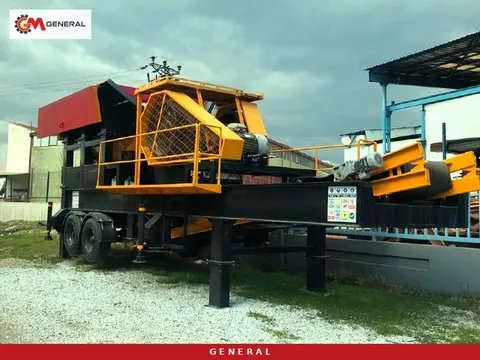
A listing for a used mobile crusher usually comes with two phrases: “in working order” and “available immediately”. Neither tells you anything about the rotor, the jaw bearings or the chassis. This article sets out the technical inspection sequence a buyer should carry to the site: which advantages are real, which parts fatigue first, what to measure during a trial crush and which criteria to use when comparing against a new machine. The financial side, such as five-year cost and residual value, is covered separately in our article on used crusher plant investment risk; here the focus is the machine itself. This article examines the used option in detail, but let us be clear from the start: the right choice is always a new machine. The checklist below also shows why, by making visible how much verification a used plant requires.
The real advantages of a used mobile crusher
The most tangible advantage is time. A wheeled plant already standing in a yard can leave without waiting for a production slot, and for a road contract with a tight tender schedule or a quarry that cannot afford to miss the season, that can be worth more than the machine itself. Still, “immediately” does not cover dismantling, transport permits, replacing missing parts or renewing the electrical connection. Unless these items are written into the contract, the early-delivery advantage exists only on paper.
The second advantage is a lower initial investment. Part of the value has already been depreciated by the previous owner, so some of the capital can go into a loader, trucks or a stockpile area in the first season. That advantage holds under one condition: the capacity and the condition of the parts must be documented by an inspection. A cheap plant bought without inspection asks for the difference back at the first major overhaul.
There is a third, less discussed advantage: the machine has actually worked on a particular rock and produced results. If the seller can show you a quarry where it ran on stone similar to yours, you get a more realistic picture of product grading and wear-part consumption than any catalogue gives.
These advantages look attractive on paper but often melt away in practice: the early start is lost to dismantling, transport and the first overhaul, while the lower initial investment is paid back through uncertain remaining life, unexpected part replacements and the absence of a warranty. Over the long term, the sound investment is a new machine whose service life starts from zero and which is covered by warranty.
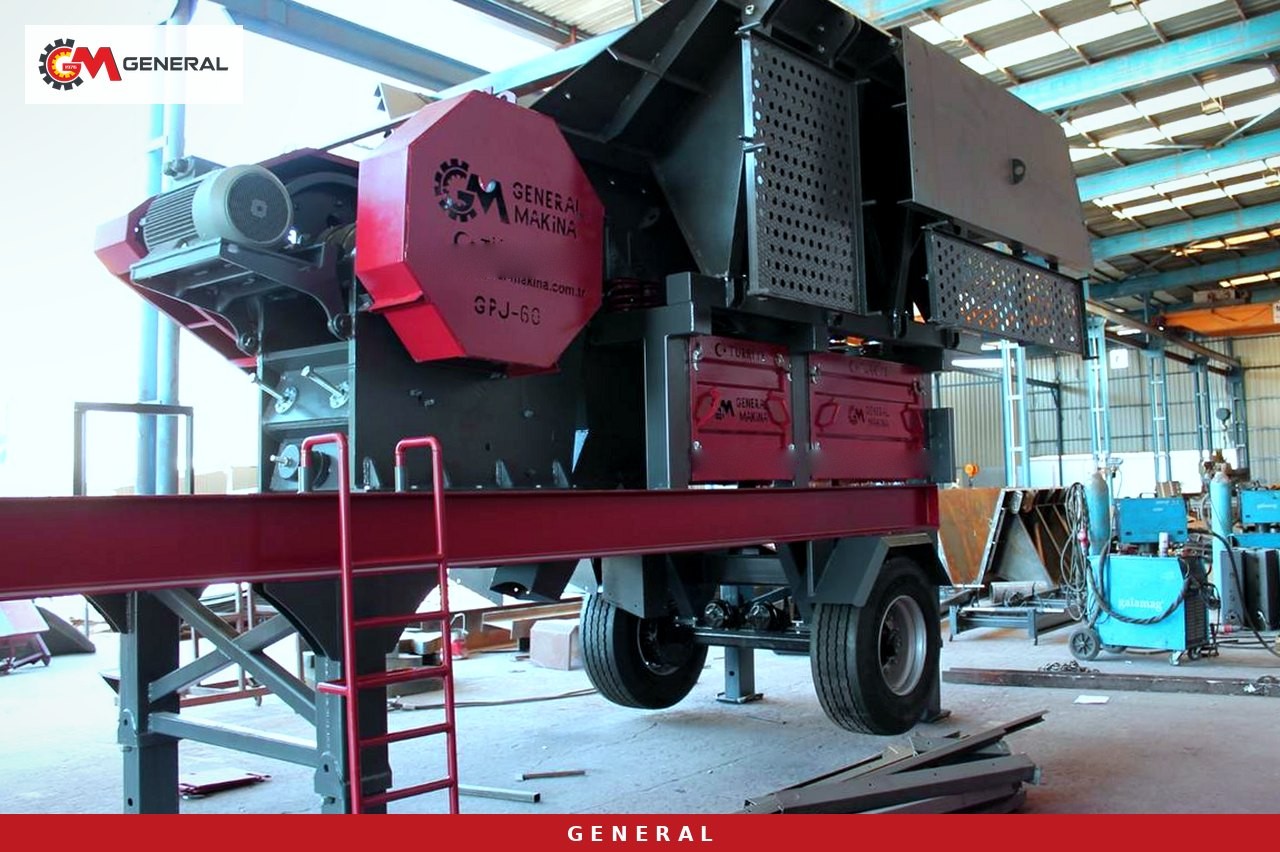
Wear and fatigue: which parts fail first?
Damage on mobile plants is not spread at random; fatigue starts where the load passes. Spending inspection time on these points tells you far more than looking at paint and general appearance.
Rotor, blow bars and impact aprons
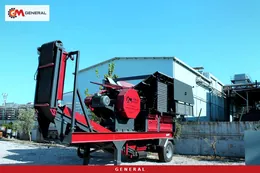
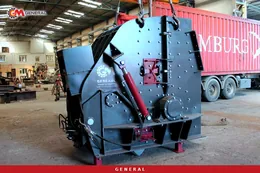
On impact-crusher plants, look at the blow bar seats in the rotor body. Crushing, burrs or weld-filled areas on the surfaces where the clamping wedges sit suggest the rotor has lost a blow bar in the past. A rotor out of balance passes vibration to the bearings and the chassis. Also check that the apron adjustment mechanism moves freely and that the adjusting rods have not rusted solid.
Jaw plates, eccentric shaft and shaft bearings
On a jaw crusher, the profile depth of the fixed and swing jaw plates is not a deciding factor on its own; plates can be replaced. The real question is the eccentric shaft and its bearings. With the machine running, measure the temperature of both bearing housings with an infrared thermometer; a clear difference points to a lubrication or bearing problem. With the machine stopped, turn the flywheel by hand, listen for play and rubbing, and inspect the toggle plate seats.
Chassis, axles and connection points
On a wheeled mobile plant the chassis carries both operating vibration and road loads. The areas where the crusher feet bolt to the chassis, the hydraulic leg mounts and the area around the kingpin are the first places to look for cracks. If you see a hairline under the paint, have the area cleaned and dye-penetrant tested. Where a fresh weld bead meets fresh paint, ask for the repair history in writing.
Screen body and springs
On a vibrating screen, fatigue cracks usually start where the side plates meet the drive unit and at the cross-member welds. Check that the springs have settled evenly and that the body moves with the same amplitude at all four corners while running. Uneven motion indicates a cracked side plate or a fatigued spring group.
Electrical panel and wiring
Burn marks, bridged protection devices, unlabelled extension cables and dust-clogged ventilation in the panel show how the machine was operated. Compare motor protection relay settings with the motor nameplates. On plants with a generator, ask separately for the generator's running hours and last service record; even if the crusher is mechanically sound, the power source is a separate failure point.
Documents, origin and spare-parts availability
Who owns the machine and how it arrived matter as much as its technical condition. Ask for the invoice or bill of sale, check that chassis and crusher serial numbers match their plates, and for imported machines request customs papers and the CE declaration of conformity. A machine with a removed or scratched-off serial plate should come off the list whatever the price.
On spare parts, ask three questions: Is the manufacturer still in business? Are drawings and a parts list available for the model? Are the wear parts standard size, or were they modified by the previous owner? A jaw plate or blow bar made to the previous operator's own dimensions can mean the original part will no longer fit. A machine from a known manufacturer with an accessible parts list carries less risk than an undocumented one of the same age.
On-site inspection checklist
Run the inspection in two stages: first cold and stopped, then under load. The matrix below summarises what counts as acceptable and what is grounds for negotiation or rejection at each point.
| Check point | How to inspect | Acceptable sign | Negotiation or rejection sign |
|---|---|---|---|
| Rotor and blow bar seats | Visual check, wedge surfaces | Clean seats, original blow bar size | Weld-filled seat, imbalance vibration |
| Jaw shaft bearings | Temperature under load, play when stopped | Similar temperature on both bearings, quiet rotation | Clear temperature gap, knocking noise |
| Chassis and axles | Cleaning and dye-penetrant test | Crack-free connection areas | Crack at crusher foot or kingpin |
| Screen body | Corner amplitude while running, side plates | Equal motion at all four corners | Cracked side plate, unevenly settled spring |
| Conveyors | Belt, pulleys, idlers | Centred belt, turning idlers | Belt tracking off, seized idler, torn splice |
| Hydraulic system | Leg and conveyor folding cylinders | Leak-free cylinders, smooth motion | Oil seepage, leg creeping down |
| Electrical panel | Visual check and relay settings | Labelled wiring, matching protection settings | Burn marks, bridged protection |
| Documents | Serial numbers, invoice, conformity declaration | Plates and papers match | Removed plate, missing origin papers |
Sequence to follow on site:
- Get in writing which material and which feed size the machine last worked on.
- With the machine cold, have the chassis, screen body and crusher feet cleaned and checked for cracks.
- Have the rotor or jaw chamber opened; photograph the wear parts and their seats.
- Have the panel opened and inspect protection devices and wiring.
- Run the hydraulic legs and conveyor folding through their full stroke.
- Run the plant empty and record bearing temperature and vibration.
- Carry out a trial crush under load.
- Enter all findings into a dated report signed together with the seller.
Verifying the capacity claim with a trial crush
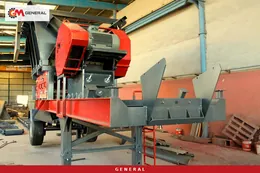
The capacity in a listing is usually the range from the manufacturer's catalogue; it does not reflect the machine's condition today. For example, the manufacturer's data for a new General 950 mobile crushing and screening plant is 120-180 t/h capacity and an 800 mm feed size. Seeing those figures in a listing for a machine of the same class only tells you what it could do on its first day. The way to measure today's figure is a trial crush.
If possible, run the trial with your own material or a rock of similar hardness. Load the product from the stockpile into a truck, weigh it on a weighbridge and time the run with a stopwatch. Hypothetical example: if 75 tonnes of product cross the weighbridge in a 30-minute trial, the machine produced 150 tonnes per hour on that material. That tells you where you sit within the advertised range, but it is not enough on its own.
During the trial, also record the amount of material returning from the screen to the crusher, a sieve analysis of product samples, the crusher motor current under load and how many times the feed had to be stopped. A machine with high recirculation, flaky product and current constantly at the limit can no longer deliver its paper capacity because of worn parts.
Criteria for comparing with a new machine
When assessing a used offer, set a new machine of the same capacity class against it. Among our mobile crushing and screening plants, the General 800, for example, is defined by 80-150 t/h capacity, a 600 mm feed size and a PDK 1280 primary impact crusher; these data give a reference for the values you measure during inspection. Compare not on price alone but on these criteria:
- Warranty: General Makina gives a 1-year warranty on new machines, excluding wear parts; on a used purchase the warranty is whatever the seller writes into the contract.
- Known starting point: On a new machine, wear parts, bearings and chassis start from zero; on a used one you estimate the remaining life yourself.
- Configuration: On a new order, screen decks, conveyor layout and crusher type are chosen for your material; on a used one you inherit the previous owner's choices.
- Documents: New models such as the General 800 carry CE and ISO 9001 certification; on a used machine you must verify origin and conformity papers separately.
- Total cost: Put the difference in initial investment, together with overhauls, downtime and parts consumption, into a crusher total cost of ownership model.
If the inspection findings produce an overhaul list long enough to close the gap with a new machine, the decision usually makes itself.
In conclusion, a new machine is always the more sensible choice. With a new machine you get a 1-year warranty excluding wear parts; wear parts, bearings and chassis start their life from zero; the screen, conveyor layout and crusher type are selected for your material; models such as the General 800 come with CE and ISO 9001 documentation; the maintenance history is known from day one; and spare parts are supplied directly by the manufacturer according to the model's parts list. A used plant cannot offer any of these assurances with the same certainty, so it should only be considered as an unavoidable exception.
Frequently asked questions
Where should I look first on a used mobile crusher?
At the areas where the crusher feet connect to the chassis. Wear parts can be replaced, but a crack in the load-bearing structure determines both the safety and the remaining life of the machine.
Does the hour meter show the machine's condition?
Only partly. The meter may have been replaced, and the same hours on rock of different hardness produce very different wear. Read the meter together with service records, parts invoices and on-site measurements.
What if the seller does not allow a trial crush?
If running under load is not allowed, treat the capacity claim as unverified. At a minimum, idle running, bearing temperature and screen motion should be checked and the findings recorded in the report.
Which starts production sooner, used or new?
A used plant that is ready in a yard can leave earlier, but if it needs an overhaul, missing parts and electrical renewal, the gap may close. Ask for the new machine's delivery schedule in writing at the quotation stage and put the two schedules side by side.
Is a new or a used machine the better choice?
A new machine. The warranty, a wear life that starts from zero, a configuration selected for your material, complete documentation and direct access to spare parts from the manufacturer are worth more than the short-term price advantage of a used plant. A used machine should only be considered as an unavoidable exception, and only after a full inspection.
A used mobile crusher can only be considered as an unavoidable exception, and only if it has been inspected and verified by a trial crush; every unverified claim leaves the risk with the buyer. For a long-term, predictable and secure investment, the right choice is always a new machine. To receive a quote for a new mobile crusher matching your required capacity, including technical data and warranty scope, please use our contact page.
Definitions of technical terms: Glossary