EN — English
 TR — Türkçe
 DE — Deutsch
 RU — Русский
 FR — Français
 ES — Español
 AR — العربية
 SR — Српски

Mobile Crushing Plant Prices 2026: 5 Factors That Set the Cost
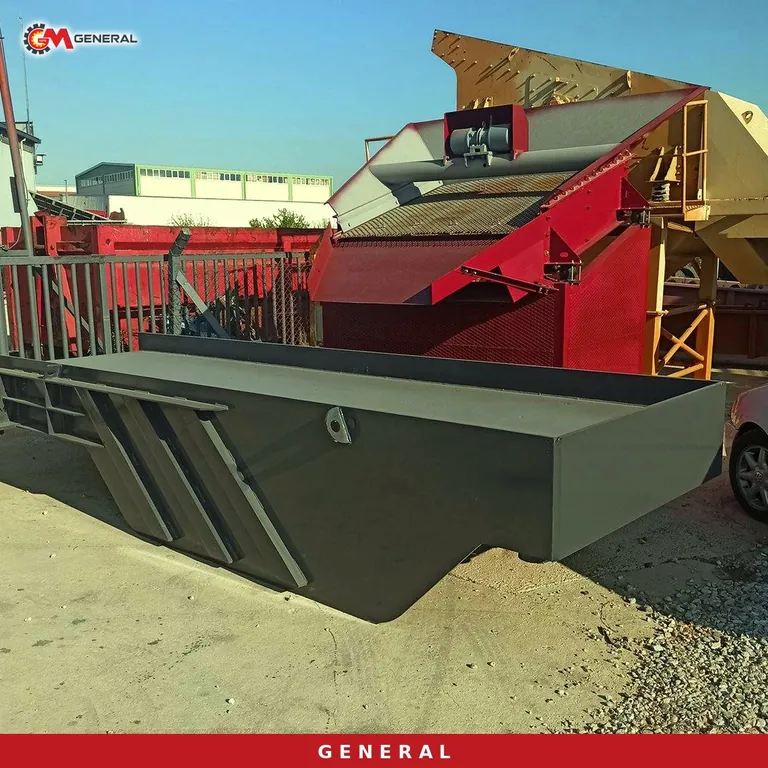
The honest answer to "how much does a mobile crushing plant cost?" is not a number but a scope definition. Take two wheeled plants from the same catalogue: change the number of crushers, the screen decks, the power unit or the chassis, and the quoted price moves with it. This article uses the technical data of the seven models in General Makina's mobile crushing and screening plant range (General 640, 800, 01, 02, 03, 944 and 950) to unpack the five factors that set a quotation, and closes with the information you should prepare before asking for one. The goal is that you can read any quotation you receive line by line.
1. Capacity and crusher arrangement: how many stages, how many machines?
The backbone of a quotation is hourly tonnage and the crusher arrangement that produces it. As capacity rises, the rotor, the frame, the screen area and the power unit all grow together; yet the real price step comes from how many machines share the crushing work. The General range uses three layouts:
- Primary and secondary in one body: the GPS 1210 triple-pendulum impactor on the General 01 handles both stages in a single machine at 120-180 t/h.
- Single primary impactor: the General 800 (PDK 1280, 80-150 t/h), General 02 (GPS 1413, 250-300 t/h) and General 03 (GPS 1415, 250-375 t/h) run in closed circuit with one crusher.
- Jaw primary plus a second stage: the General 640 (GPJ 60 jaw + GNR 50 impactor), General 944 (GPJ 90 jaw + GM430 cone) and General 950 (GPJ 90 jaw + DMK01 impactor).
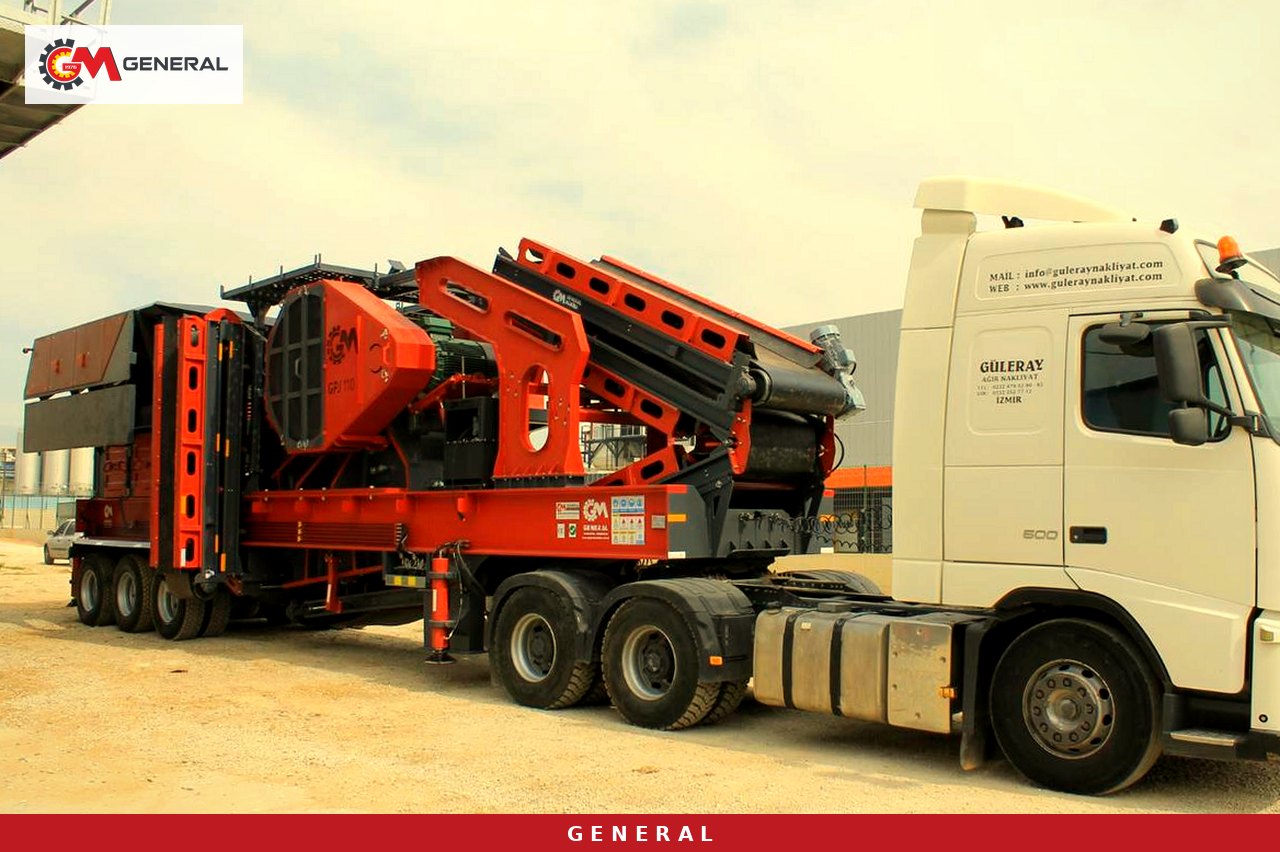
A two-crusher line carries a second drive group, a second set of wear parts and a transfer conveyor linking the machines. A single-body impactor removes that intermediate link. So when you lay the General 01 quotation next to those for the General 944 or 950, all in the same 120-180 t/h band, the gap you see is less a model difference than a difference in the number of machines.
Choose capacity on a realistic operating point, not on the top of the catalogue range. Hypothetical example: a quarry targeting 1,000 tonnes of saleable product per day over 10 net working hours has to average 100 tonnes per hour. With a range of 60-100 t/h, the General 640 would run permanently at its limit; the General 800 at 80-150 t/h or the 120-180 t/h models leave headroom. The larger model means a higher quotation, but a plant running at its ceiling shows its losses in the production log every single day.
| Model | Crusher arrangement | Capacity | Max. feed | Screen | Power unit | Weight |
|---|---|---|---|---|---|---|
| General 640 | GPJ 60 jaw + GNR 50 impactor | 60-100 t/h | 500 mm | 1200×4000 mm, triple-deck | 300 kVA (optional) | 38,000 kg |
| General 800 | PDK 1280 primary impactor | 80-150 t/h | 600 mm | 1300×4000 mm, triple-deck | 450 kVA | 35,000 kg |
| General 01 | GPS 1210 impactor (primary+secondary) | 120-180 t/h | 700 mm | 1600×5000 mm, four-deck | 550 kVA | 55,000 kg |
| General 944 | GPJ 90 jaw + GM430 cone | 120-180 t/h | 800 mm | 1600×5000 mm, three-deck horizontal | 550 kVA | 70,000 kg |
| General 950 | GPJ 90 jaw + DMK01 impactor | 120-180 t/h | 800 mm | 1600×5000 mm, three-deck horizontal | 600 kVA | 70,000 kg |
| General 02 | GPS 1413 primary impactor | 250-300 t/h | 1000 mm | 2000×5000 mm, four-deck | 660 kVA | 76,000 kg |
| General 03 | GPS 1415 primary impactor | 250-375 t/h | 900 mm | 2400×5000 mm, four-deck | 750 kVA | 4-axle chassis |
2. Rock hardness, abrasiveness and feed size
The material decides the crusher type, and the crusher type decides both today's price and the future wear-parts list. On low-abrasive stone such as limestone, a primary impactor gives high reduction and cubical product; the General 800 is described for exactly that job. On hard, abrasive rock such as basalt, granite, iron ore, chrome and quartz, a jaw crusher takes the first stage.
The most instructive comparison is the General 944 against the General 950. Both carry a GPJ 90 jaw primary, 800 mm feed, 120-180 t/h capacity, a 1600×5000 mm three-deck horizontal screen and a weight of 70,000 kg. The main line where they differ is the second stage: a GM430 cone on the 944, a DMK01 impactor on the 950. A cone crushes by compression and extends the life of metal parts in abrasive rock; an impact secondary is chosen for high reduction and cubical shape. The power unit follows: 550 kVA on the 944, 600 kVA on the 950. Same capacity, then, does not mean same price; the second-stage choice changes both the purchase price and parts consumption in later years. We cover which type suits your rock in impact or jaw: crusher type selection criteria.
Read the feed opening together with your blasted size
The maximum feed size sets the dimensions of the crusher inlet and the hopper: 500 mm on the General 640, 600 mm on the 800, 700 mm on the 01, 800 mm on the 944 and 950, 900 mm on the General 03 and 1000 mm on the General 02. If the largest block coming from the face exceeds that opening, there are two routes: pick a model with a larger inlet and a higher price, or reduce block size through the blast pattern and pre-sorting ahead of the crusher. The cost of the second route never shows in the plant quotation; it appears in quarry operations. So put a measured value, not a guessed "largest block", in your enquiry; measuring the longest edge of blocks picked at random from truck bodies is a reasonable start.
3. Equipment scope: screen, conveyors, power unit and automation
Two quotations with the same model name can cover different scope. The auxiliary items that move the price most fall under three headings.
Screen area and number of decks
The number of decks decides how many separate products you get in one pass. The four-deck screens on the General 01, 02 and 03 (1600×5000, 2000×5000 and 2400×5000 mm respectively) give 0-5 / 5-12 / 12-19 / 19-40 mm fractions. The General 640 (1200×4000 mm), 944 and 950 (1600×5000 mm) produce 0-5 / 5-12 / 12-19 mm with three-deck screens. If your market does not buy 19-40 mm, there is no reason to pay for an extra deck; if it does, ask for it in the first quotation rather than trying to add it later. Screen apertures on every model are set at order stage according to the rock being processed, which is why a material description is requested when quoting.
Power unit
The generator is one of the largest auxiliary items, and how it enters the scope differs between models. On the General 640, a 300 kVA generator is listed as optional; on a site with a grid connection it can be left out of the quotation. The technical tables show a 450 kVA unit on the General 800, 550 kVA on the General 01, 660 kVA on the General 02 and 750 kVA on the General 03. When reading a quotation, ask to see whether the generator is included, and its rating, on a separate line.
Conveyors and automation
The return conveyor is part of the closed circuit; the number and length of stockpile conveyors depend on the site layout. On the General 01, a touchscreen panel, soft-starter and internet-linked remote monitoring are offered as options. When options are not priced on separate lines, an invisible gap opens between two quotations. With clay- or soil-bearing feed, a washing unit should also be discussed as a separate scope item.
4. Chassis, transport dimensions and site installation scope
The chassis enters the price both through the amount of steel and through transport conditions. The weights and transport dimensions in the technical tables show this clearly: General 800 at 35,000 kg and 3600×15500×4500 mm; General 640 at 38,000 kg and 3500×17000×4500 mm; General 01 at 55,000 kg and 4300×18500×4500 mm; General 944 and 950 at 70,000 kg and 4130×20350×4500 mm; General 02 at 76,000 kg and 4340×20600×4500 mm. The General 03 travels on a 4-axle chassis built to the international transport standard. As weight goes up, the tractor class, route permits and escort requirements change; these sit outside the ex-works price but must be known at decision time.
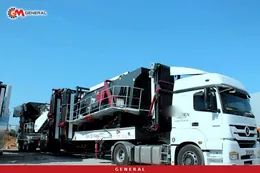
On installation, the advantage of wheeled plants is their low foundation requirement. On the General 03, folding hydraulic conveyors and support legs allow set-up without excavation or a concrete foundation; the General 640 is running within minutes on its hydraulic legs; the General 950 moves on one truck and starts producing in 30 minutes. The quotation should still answer in writing: is delivery ex-works or on site, who carries freight and insurance, are first commissioning and operator training included? If you will relocate several times a year, the chassis transport dimensions become a recurring cost on every move.
5. Levelling the scope when comparing quotations
Two total prices cannot be compared unless the scopes match. The most practical method is a levelling table that spreads every quotation over the same lines. For any item that appears in one quotation but not the other, either ask the other supplier for it in writing or add your own estimate as a "missing item".
| Item | What to look for in the quotation | If it is missing |
|---|---|---|
| Crushers | Model and type; in a two-stage line, are both crushers named? | Request a separate line for the second crusher |
| Screen | Size and number of decks | Price the deck difference separately |
| Power unit | kVA rating; included or optional? | Compare with the cost of a grid connection |
| Conveyors | Number of return and stockpile conveyors | Complete according to site layout |
| Automation | Panel, soft-starter, remote monitoring | Request a priced options list |
| Delivery and freight | Ex-works or on site, insurance | Obtain a separate freight quote |
| Commissioning | Scope and operator training | Request a written scope of work |
| Warranty | Period and excluded parts | Request the list of non-covered parts |
This table levels the quoted price only. Site items such as foundations, power lines and permits are covered in our crushing and screening plant investment cost breakdown, and the ten-year view of energy, wear and maintenance in the crusher total cost of ownership model. A quotation comparison does not replace either; it is the first filter.
Information to prepare before requesting a quotation
- Rock type; if possible hardness and abrasiveness data, or a sample.
- Measured size of the largest blocks coming from the face.
- Target net hourly output and daily operating hours.
- Required product fractions and the demand for each.
- Clay and soil content of the feed, and any washing need.
- Whether the site has grid power; whether a generator is needed.
- Site location, access road and how often per year you will relocate.
- Feeding method: truck, wheel loader or excavator.
- Stockpile area and stockpile height limits.
- Expected delivery terms, commissioning and operator training.
When this information arrives complete, the quotation stops being a generic model proposal and becomes a scope built for your site. The choice between a General 640 and a General 944 is then made on rock hardness and capacity data rather than budget instinct.
Frequently asked questions
Why is there no fixed price list for mobile crushing plants?
The same model can be quoted with or without a generator, with a different number of screen decks, different conveyor counts and different delivery terms. A list price hides these differences; a site-specific quotation shows each item separately.
Why do two plants with the same capacity get different quotations?
In the 120-180 t/h band, the General 01 works with a single impactor, while the General 944 and 950 use a jaw primary plus a second-stage crusher. Between the 944 and 950, the secondary type (cone or impact) and the power unit also differ. Capacity may be equal, but the number and type of machines change the price.
Does it make sense to leave the generator out of the quotation?
Yes, if the site will stay in one place for a long time and the grid connection has enough capacity; on the General 640 the generator is already optional. If the plant will move often, keeping the power unit in scope is more predictable than building a grid connection at every new site.
Do I need to send a sample to get a quotation?
It is not mandatory, but it helps. On every model, screen apertures and the final product distribution are set at order stage according to the rock being fed. A quotation prepared without a sample or analysis data has to rely on assumptions for crusher type and screen selection.
The quoted price of a mobile plant is the sum of five factors: capacity and crusher arrangement, rock hardness and feed size, equipment scope, chassis and installation scope, and finally levelling quotations to the same scope. General Makina has built crushing and screening equipment since 1976 and, with more than 50 years of experience, delivers its plants with a 1-year warranty. Fill in the list above and send your quotation request through our contact page; we will prepare a quotation broken down item by item for your site.
Definitions of technical terms: Glossary