EN — English
 TR — Türkçe
 DE — Deutsch
 RU — Русский
 FR — Français
 ES — Español
 AR — العربية
 SR — Српски
Respirable Crystalline Silica Exposure Crushing Plant Guide
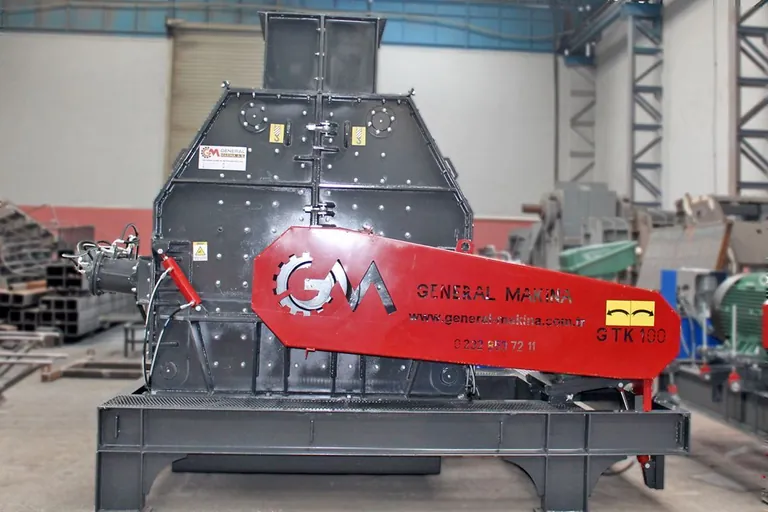
Respirable crystalline silica exposure crushing plant operators face every shift is one of the most underestimated hazards on a quarry site, because the harmful part of the dust cannot be seen. Coarse grains are trapped in the nose and throat, while the fine fraction of crystalline silica travels down to the alveoli and leaves scarring that does not heal. The more quartz the rock contains, the richer that fraction becomes during crushing and screening.
What the respirable fraction actually is
Dust is not a single size. In occupational hygiene, airborne particles are classified by how deep into the respiratory tract they penetrate. The respirable fraction is the finest portion, the part that reaches the alveoli, and it is defined by the sampling convention in EN 481, whose collection curve has its 50 per cent cut point at an aerodynamic diameter of 4 micrometres. This is why a working area that looks clean can still measure above the limit: the coarse grains that create a visible cloud settle within minutes, while the harmful fine fraction stays airborne for hours.
Where respirable crystalline silica exposure crushing plant work concentrates
Dust generation is never evenly distributed. The hot spots are predictable: the feeder mouth and the truck tipping area, the feed box of the primary crusher, every conveyor transfer point, the discharge chutes above and below the screens, dry screening decks, the tunnel outlets under stockpiles, and any platform cleaned with a broom. Operators, maintenance crews and sampling staff all sit on different exposure profiles, so a single measurement never represents a whole plant.
A dry screening deck releases noticeably more fine dust than a wet deck of the same capacity. Process choice is therefore also a dust decision, and the dry or wet screening question shapes respiratory risk as much as it shapes product quality.
Exposure limits and which rulebook binds you
Limits differ between countries and the legislation of the country where the plant stands is the binding one. Two frameworks are met most often in international practice:
| Framework | Value | What it means |
|---|---|---|
| OSHA permissible limit (United States) | 50 µg/m³ as an 8-hour time-weighted average | The legal ceiling that must not be exceeded |
| OSHA action level (United States) | 25 µg/m³ as an 8-hour average | The trigger for monitoring and medical surveillance duties |
| EU binding limit value | 0.1 mg/m³ respirable crystalline silica | A ceiling member states may not exceed; national values may be lower |
Two points are easy to miss when reading such a table. First, the values apply to the crystalline silica contained in the respirable fraction, not to total dust. Second, an eight-hour average cannot be carried over unchanged to a nine or twelve hour shift; long shifts require the average to be adjusted.
How exposure is measured
A valid result comes from the person, not from the room. The sampling pump is clipped to the worker's belt while the cyclone separator sits at collar height inside the breathing zone. The cyclone strips out coarse grains by centrifugal force and passes only the respirable fraction to the filter. Flow must be calibrated to the cyclone in use; 1.7 litres per minute for a 10 mm nylon cyclone and 2.2 litres per minute for the Higgins-Dewell type are the values in common use, and a drifting flow moves the cut point.
In the laboratory the filter is first weighed gravimetrically, which gives the mass of respirable dust. The crystalline silica content is then determined by X-ray diffraction or by infrared spectroscopy. Diffraction is preferred because it distinguishes quartz, cristobalite and tridymite; the infrared route is faster but more open to interference from other minerals. In practice these two approaches correspond to the NIOSH 7500 and NIOSH 7602 methods and to MDHS 101.
Control order: source first, respirator last
An effective programme starts at the source. In sequence: reduce drop heights at transfer points and cut induced air with enclosure plates; apply fine-droplet water sprays at crusher feed and discharge openings; enclose screen decks and, where needed, extract to a bag filter; keep haul roads and stockpile areas damp; supply the operator cabin with filtered air at slight positive pressure. Dry sweeping and blowing down with compressed air re-suspend settled dust and should be banned outright, replaced by wet cleaning or an industrial vacuum.
Choosing the respirator class
Respiratory protection is the last line, and it only makes sense alongside a measured exposure. Filtering facepieces under EN 149 fall into three classes:
| Class | Minimum filter efficiency | Maximum total inward leakage | Assigned protection factor |
|---|---|---|---|
| FFP1 | 80% | 22% | 4 |
| FFP2 | 94% | 8% | 10 |
| FFP3 | 99% | 2% | 20 |
For crystalline silica the reference class is FFP3; FFP2 belongs to lower-risk, non-carcinogenic dusts. The assigned protection factor states the number by which the respirator divides the ambient concentration, but that number only holds when the facepiece seals. Fit testing and a clear policy on facial hair therefore matter as much as the class marking. In heavily loaded atmospheres, models carrying the dolomite clogging mark breathe more easily through a full shift.
Health surveillance
Silicosis advances quietly and gives no early symptoms. Workers in the exposed group therefore need a pre-placement examination, periodic chest imaging and lung function testing, run as a programme rather than as isolated check-ups. Records must be personal and long-lived, both for individual follow-up and for interpreting measurement trends. Running monitoring, controls and surveillance together is the core of a credible occupational safety programme.
Frequently asked questions
Is monitoring needed when no dust is visible
Yes. Visibility is a property of coarse grains; the respirable fraction cannot be judged by eye and observation is no substitute for a risk assessment.
Are water sprays enough on their own
In most plants they are not. Sprays work at transfer and crushing points, but without enclosure, extraction and cleaning discipline the fine fraction stays airborne.
How often should measurement be repeated
Whenever the process, the rock source, the throughput or a dust control changes, and at regular intervals in between; the frequency follows national law and the site risk assessment.
Definitions of technical terms: Glossary