EN — English
 TR — Türkçe
 DE — Deutsch
 RU — Русский
 FR — Français
 ES — Español
 AR — العربية
 SR — Српски

Crusher CE Marking Machinery Safety Technical File
What the CE mark declares
The CE label on a machine body is often mistaken for a grade of quality. A crusher CE marking machinery safety technical file describes something quite different: the manufacturer declares that the machine meets the requirements of European Union legislation applicable to it, and keeps the evidence behind that declaration in a file. The label is the result, the file is the cause. Where the label exists without the file, the declaration has no foundation.
For machinery the present framework is the machinery safety directive 2006/42/EC. The instrument replacing it is Machinery Regulation (EU) 2023/1230, which applies from 20 January 2027. For a company buying a crushing and screening plant that transition raises a practical question: the contract should state which framework the certification at delivery is based on.
The four legs of the file
A safety file is not a single sheet. The risk assessment lists hazards for intended use and for foreseeable misuse, and shows the measure taken against each hazard together with the residual risk. The technical file documents the design, manufacture and operation of the machine to the extent needed to demonstrate conformity: general arrangement drawings, circuit diagrams, calculations, standards applied, test records. The declaration of conformity is the signed document carrying the manufacturer's name, the description of the machine and the legislation relied upon. Instructions are supplied in the language of the country where the machine will be used.
| Document | Content | Held by | Retention |
|---|---|---|---|
| Risk assessment | Hazard list, measure, residual risk | Manufacturer | Inside the technical file |
| Technical file | Drawings, calculations, standards, test records | Manufacturer or authorised representative | At least ten years |
| Declaration of conformity | Machine description, legislation, signature | With the user, alongside the machine | At least ten years |
| Instructions | Installation, operation, maintenance, residual risks | With the user, on site | Through the machine's life |
The retention period is not a formality. The technical file and the declaration of conformity are kept at the disposal of market surveillance authorities for at least ten years after the machine has been placed on the market. The new regulation also permits documentation in digital form; where documents are supplied digitally they must remain available online for the expected lifetime of the machinery and for at least ten years.
Crusher CE marking machinery safety technical file: a standard series of their own
Mineral processing machines have a dedicated harmonised standard series: EN 1009. Its first part gives common requirements for machinery and processing plants. The second part addresses feeding machinery and continuous handling equipment, the third crushing and milling machinery, the fourth screening machinery, and the fifth machinery for cleaning, water recycling, sorting other than screening, and mud treatment.
These parts are type C standards, so for the machines they cover they take precedence over general and generic safety standards. Once a standard is cited in the Official Journal of the European Union, a machine designed and built in conformity with it benefits from a presumption of conformity with the relevant essential health and safety requirements. Where a machine specific part conflicts with the common part, the machine specific part prevails.
The gap for mobile plants
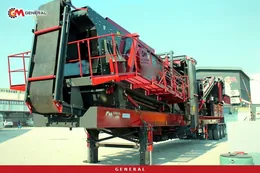
The first five parts of the series are primarily intended for fixed installations. Hazards particular to mobile and semi mobile machinery, such as braking and road transport, are not fully covered there; a sixth part addressing them has been in preparation. A company buying a tracked or trailer mounted plant has to close that gap inside its own risk assessment.
What the series does not cover is equally explicit. Road traffic rules, potentially explosive atmospheres, electromagnetic compatibility and the processing of explosive materials fall outside EN 1009. They belong to other legislation and standards and are handled separately.
What to ask for when buying
Three concrete requests at quotation stage remove most later argument. First, a copy of the signed declaration of conformity. Second, full instructions in the user's language. Third, a list of residual risks and of the guarding that is mandatory. Written into the tender specification, those three prevent the familiar post delivery hunt for missing paperwork.
Scope also has to be clear from the start: does the order cover a single machine or a set of interconnected units? A line erected as a plant is not the sum of separate declarations for its components; the combined line needs a risk assessment of its own. Drawing up the unit list through the product selection wizard is a practical way to make that scope explicit.
A file that stays alive on site
The file is not a stack of paper with a shelf life. Moving a unit to another position in the line, changing feed height or permanently removing a guard changes the hazard picture, and the risk assessment then has to be updated. The same applies to buying second hand: instructions and a declaration that do not arrive with the machine are a gap to be closed after purchase.
Other aspects of practice on site, from lockout tagout discipline to guard design, are covered in the occupational safety section. Share the unit list for your plant and which document belongs to which unit can be worked out together.
Definitions of technical terms: Glossary