EN — English
 TR — Türkçe
 DE — Deutsch
 RU — Русский
 FR — Français
 ES — Español
 AR — العربية
 SR — Српски
Crushing plant lockout tagout procedure
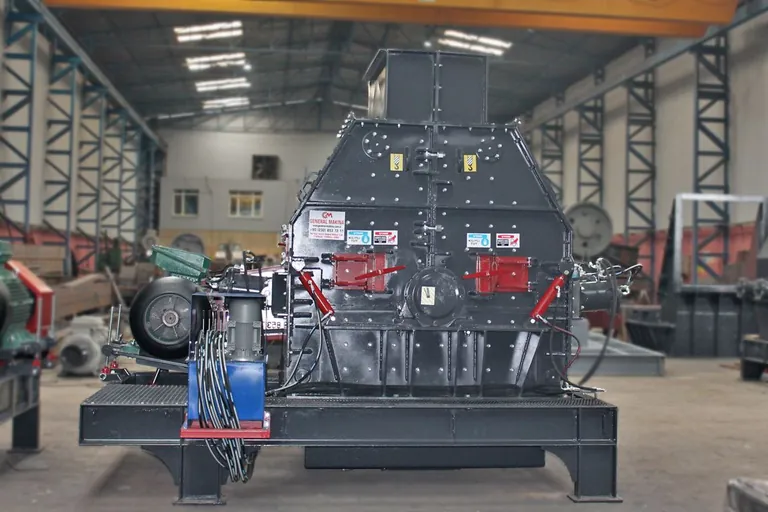
The decisive action before anyone reaches into a crusher cavity is not stopping the machine but making sure no stored energy can return. A crushing plant lockout tagout procedure exists for that single purpose, and it starts from an uncomfortable fact: pulling the main disconnect removes electrical energy only, while at least four other independent energies remain inside the same unit. What follows is the equipment-level inventory that has to be produced for every machine on the line, plus a sequence that survives contact with a working site.
Where a crushing plant lockout tagout procedure goes beyond one disconnect
A crushing and screening line is a chain of machines linked by material flow but not by energy. Stop the feeder and several tonnes of rock stay suspended in the hopper. Cut power to the crusher and the flywheel or rotor keeps turning for minutes. Shut the hydraulic pump and the accumulator still holds pressure. Each of those is a movement waiting to happen while a technician is inside the housing. Isolation is therefore two-dimensional: it is done per machine and per energy type, never once for the whole plant.
Two reference frameworks complement each other here. OSHA 29 CFR 1910.147 requires a management programme, meaning written procedures, trained authorized employees, locks and tags, and periodic inspection of the programme itself. ISO 14118 approaches the same hazard from the design side, addressing how a machine prevents unexpected start-up and how isolation and dissipation devices are built into it. A plant needs both: without lockable hardware the procedure stays on paper, and without a procedure the hardware is never used.
Machine-level energy source inventory
The table below lists the energy types found on a typical crushing and screening line, where each one sits, the device that isolates it, and the residual hazard that survives isolation. Every site should rebuild this table against its own equipment list rather than copying a generic form.
| Energy type | Where it sits | Isolation device | Residual hazard after isolation |
|---|---|---|---|
| Electrical | Crusher main motor, screen exciter drive, conveyor gearmotors | Lockable load disconnect, motor feeder switch, panel lock | Charge stored in variable-frequency drive DC link capacitors |
| Hydraulic | Setting cylinders, wedge tensioning system, housing opening cylinders | Lockable shut-off valve plus controlled pressure release | Pressure trapped in the accumulator, cylinder holding a load |
| Pneumatic | Cleaning lines, filter pulse system, some flap actuators | Ball valve lockout and venting of the line | Air still stored in receiver and pipework |
| Mechanical spring | Jaw crusher tension spring, screen suspension springs, guard springs | Controlled spring release and mechanical blocking | Sudden release of a partly compressed spring |
| Gravity | Material in the hopper, load on an inclined belt, hinged covers | Emptying the material, safety props, cover locks | A single oversize lump wedged in the cavity dropping free |
| Inertia | Crusher flywheel, impactor rotor, vertical shaft rotor | Waiting for full stop, rotor locking pin | Free rotor turned by hand or by residual imbalance |
| Thermal | Gear oil, hydraulic oil, coupling and bearing surfaces | Cooling time before opening | Hot oil sprayed out under remaining pressure |
The lock, tag and try sequence
Seven steps, in a fixed order. Preparation comes first: the authorized employee identifies the unit, lists the energies to be isolated and names the affected operators. Notification follows, so the control room and neighbouring units know before anything stops. The third step is a controlled shutdown, running the line empty rather than locking out a crusher full of feed.
Isolation is the fourth step, applying the specific device from the table to each source. Then locks and tags go on: every worker fits a personal lock with their own hand, no one fits or removes a lock for someone else, and the tag states who locked out, for which job and when. The sixth step dissipates stored energy — bleed hydraulic pressure, relax springs, stop and pin the rotor, empty the hopper. The seventh is the try: the normal start command is given at the panel, the machine is observed not to start, and the control is returned to zero. Skipping that verification means isolation was never actually proven, and it is one of the most common failures found during inspection.
Roles: authorized, affected and other employees
The authorized employee applies locks to energy-isolating devices and verifies isolation; training grants that authority. The affected employee operates the machine in normal production or works in the area being serviced. They never apply the lock, but the duty of not starting a locked machine sits squarely with them. Other employees are everyone else on site who must recognise what a lock and tag mean. Where these three roles are not written down, the classic incident appears: one person removing another person's lock in good faith.
Group lockout and shift handover
When several crews enter the same unit, a group lockout box carries the load. A single group lock goes on the isolator, its key goes into the box, and each worker adds a personal lock to the box. The key cannot come out until the last personal lock is removed. At shift change on unfinished work, the incoming crew fits its locks before the outgoing crew removes theirs, so the machine is never unlocked for a moment. The handover record states which energies remain isolated and which task is half done.
Returning energy to the machine
Re-energising is a procedure in its own right. Tools, blocks and offcuts come out, guards go back, covers close. The area is cleared and affected employees are warned. Locks are removed in reverse order, each by the person who fitted it. Only then are the isolators closed and the machine started from the control room. Where software interlocks, a maintenance mode and a defined start-up order exist, this step becomes auditable: a modern automation and control system keeps the maintenance status of each unit visible on the operator screen and refuses an out-of-sequence start.
Five failures seen most often
Cutting electrical power while forgetting hydraulics and springs. Opening a housing before the rotor has fully stopped. Using a tag alone, when a tag is a warning and not a physical barrier. Skipping the try step. Working under a feeder without emptying the hopper, because no switch disconnects gravity. Putting those five lines into the inspection form is the cheapest way to move the procedure off paper. Related field practices are collected under occupational safety.
Frequently asked questions
Does a two-minute adjustment need a lockout?
If a guard opens or any part of the body enters the danger zone, the duration is irrelevant. Only adjustments that genuinely require the machine to run are covered by a separate safe working method.
What if the person who fitted a lock has left the site?
The lock is removed only under a written exception, with management approval and a documented attempt to reach that person. Once the exception becomes routine, the whole system loses its meaning.
Is a separate procedure written for every machine?
Yes. The number and location of energy sources change from unit to unit, so one generic form cannot cover a plant; each machine should carry its own energy inventory posted beside it.
Definitions of technical terms: Glossary