EN — English
 TR — Türkçe
 DE — Deutsch
 RU — Русский
 FR — Français
 ES — Español
 AR — العربية
 SR — Српски
Screen Media Selection and Replacement Signs
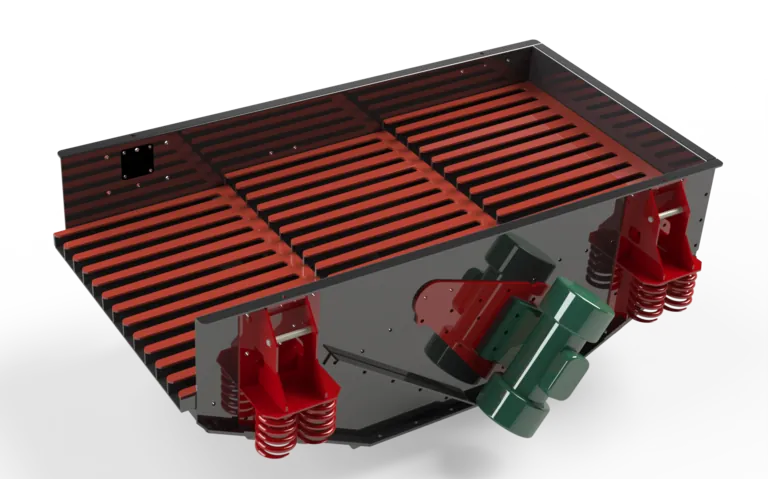
The screen is the quality gate of the plant: wrong media choice or late replacement silently ruins product spec.
What drives media selection
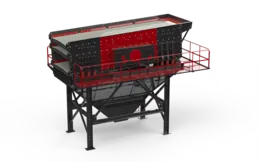
Aperture follows target product size, wire diameter follows load and abrasiveness, deck count follows the separation steps. The GNR conventional series comes in 1-4 deck configurations:
| MODEL | ELEK ÖLÇÜLERİ(mm) | MOTOR(kW/rpm) | AĞIRLIK(kg) | |||
|---|---|---|---|---|---|---|
| TEK KATLI | 2 KATLI | 3 KATLI | 4 KATLI | |||
| GNR 1020 | 1000X2000 | 4 /1500 | 1100 | 1200 | 1800 | - |
| GNR 1025 | 1000x2500 | 4 /1500 | 1500 | 1800 | 2200 | - |
| GNR 1030 | 1000X3000 | 5,5 /1500 | 1500 | 1700 | 2200 | 2700 |
| GNR 1230 | 1200X3000 | 7,5 /1500 | - | 2200 | 2700 | 3100 |
| GNR 1540 | 1500X4000 | 11 /1500 | - | 5400 | 6200 | 6600 |
Heavy duty: vibration-controlled series
High tonnage lines use large 3-deck bodies:
| MODEL | ELEK ÖLÇÜLERİ(mm) | MOTOR(kW/rpm) | KAT(adet) | AĞIRLIK(kg) |
|---|---|---|---|---|
| GNRTK-1550 | 1500x5000 | 22/1500 | 3 | 12000 |
| GNRTK-2060 | 2000x6000 | 30/1500 | 3 | 16500 |
Replacement signs
(1) Locally opened apertures — oversize leaks into fines; (2) polished, thinning wire sections; (3) a single torn aperture — replace the panel before it grows; (4) lost tension — the media slaps the deck and fatigue cracking accelerates.
Two installation rules
Distribute tension evenly (a loose edge fatigues first) and inspect rubber support profiles together with the media; new media over worn profiles fails early.
Catching efficiency loss early
When screening efficiency drops, media is the first suspect — but two other causes give the same symptom: worn support profiles and reduced stroke (vibromotor belt/counterweight). Separate all three in one inspection: media surface, profile line, stroke card.
The cost of wrong media
Wire too thin fatigues early; wire too thick cuts open area and the same body passes less product. Choose from the target gradation and feed abrasiveness — try media optimisation before upsizing the machine.
Panel swap or full re-mesh?
On modular-panel decks a single panel swaps fast; but if neighbouring panels are also near end-of-life, single swaps produce a string of short stops. Practical rule: when more than half the panels on a deck are on watch, replace the deck. Hook-tensioned media has no partial replacement — land the change window on a planned stop. Photograph the wear pattern of removed media and the next selection (aperture, wire, material) is made on real data. When efficiency drops, two other causes mimic worn media: worn support profiles and reduced stroke — separate all three in one inspection.
Closing note: screening efficiency affects the whole line — oversize leaking to the downstream crusher raises both crusher load and wear-part consumption. Media care is therefore not just a screen cost item but a total operating-cost item for the line.
Maintenance recommendations depend on the model and operating conditions — contact us for a plan specific to your machine.
Screen media materials: wire, polyurethane, rubber
Surface material matters as much as aperture. Woven steel wire gives the highest open area and lowest first cost — the standard for dry, moderately abrasive duty. Polyurethane panels last far longer in abrasive and wet duty and resist pegging, but their lower open area cuts capacity on fine separations. Rubber panels absorb impact on coarse decks (below grizzlies, after primaries) and reduce noise. Rule of thumb: fine and dry → wire; wet/abrasive → polyurethane; coarse/impact → rubber. With modular panels only the worn zone is replaced — cheaper than a full deck change.
Definitions of technical terms: Glossary