EN — English
 TR — Türkçe
 DE — Deutsch
 RU — Русский
 FR — Français
 ES — Español
 AR — العربية
 SR — Српски
Mantle and Concave: Cavity Types and Replacement
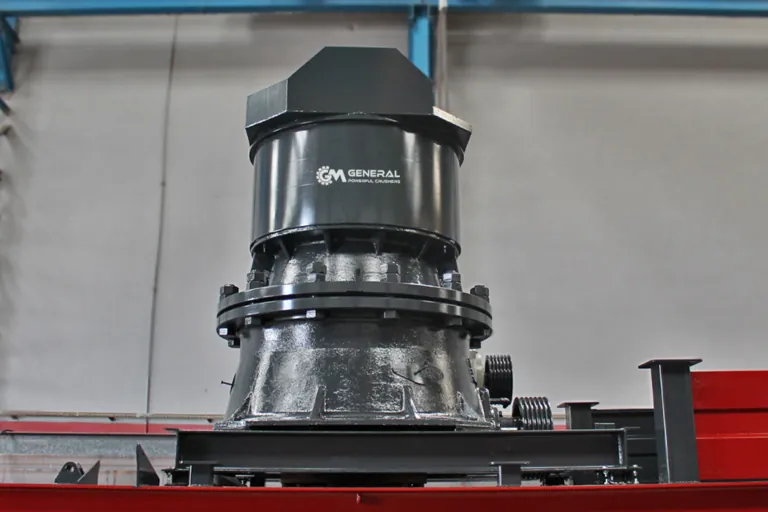
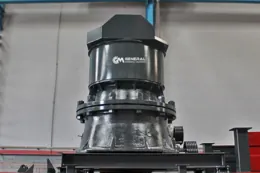
The mantle (on the moving cone head) and the concave (in the fixed bowl) form the crushing chamber of a cone crusher. Feed is squeezed between these two manganese-steel liners as the head gyrates — chamber shape is what defines the product curve.
Cavity types: why the profile matters
Liners come in coarse, medium and fine cavity profiles. A coarse cavity accepts larger feed but yields a coarser product; a fine cavity needs pre-screened, smaller feed and produces more fines and better cubicity. Choosing the profile is a process decision: match it to the actual feed top size and the target fraction, not to the largest liner that fits.
Material and wear behaviour
Mantle and concave are cast in work-hardening austenitic manganese steel; higher-manganese grades serve abrasive rock such as granite. The pair wears together — replacing only one liner leaves a distorted chamber. Signs that the set is due: falling throughput at the same setting, a coarser product at the same CSS, or liner thickness worn to the backing.
Fitting notes
Backing compound and correct head/bowl seating are critical: a loose liner cracks quickly. After liner change, run the crusher at reduced feed while the new profile beds in, and re-check the closed-side setting.
Compatible crushers
Mantles and concaves are supplied for the General Makina secondary/tertiary cone crushers in coarse and fine cavity options — see spare parts and state the machine model in your quote.
Field reference: in the 150 t/h Mobile Jaw & Cone Crushing-Screening Plant - Russia project the cone crusher runs in the secondary stage.
Definitions of technical terms: Glossary