EN — English
 TR — Türkçe
 DE — Deutsch
 RU — Русский
 FR — Français
 ES — Español
 AR — العربية
 SR — Српски
Impact or Jaw? Crusher Type Selection Criteria
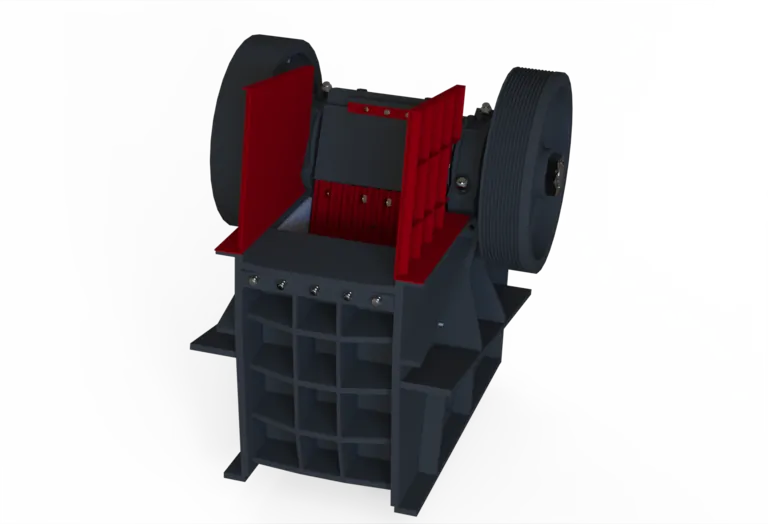
"Should we buy a jaw or an impact crusher?" has no single right answer; the abrasiveness of the material, the target particle shape and the stage plan are the deciding factors. In this article we place the two crusher types side by side using General Makina's actual technical figures and derive the decision criteria.
Difference in crushing mechanics
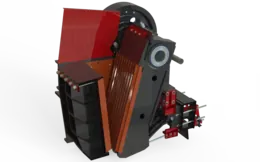
A jaw crusher compresses. Material between the fixed and moving jaw is crushed one step further with every oscillation of the eccentric shaft. The contact surface is small, the force is high.
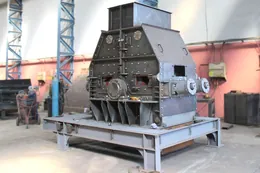
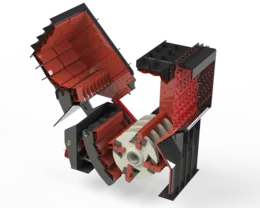
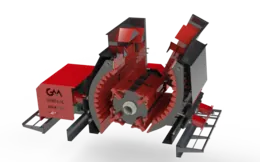
An impact crusher strikes. The blow bars on the rotor throw the material against the breaker plates; fracture occurs through impact energy. The material strikes several times inside the body.
This mechanical difference produces three practical results: the impact crusher produces cubical particles, delivers a higher reduction ratio, but wears faster in abrasive material because the impact surfaces take constant blows.
What happens at the same feed size?
To make the comparison meaningful, let us take two models with similar feed capacity:
| Criterion | Jaw GNRK 90 | Impact GNR PDK02 |
|---|---|---|
| Feed | 900 x 650 mm opening | 900 mm max. material |
| Capacity | 60-225 t/s | 200~300 t/s |
| Motor | 75/90 kW | 200 kW |
| Weight | 11.400 kg | — |
| Stage | Primary | Primary |
The numbers paint a clear picture: at a similar feed size the impact crusher delivers roughly 1.3 times the capacity while drawing 2.2 times the power. This does not mean the impact crusher is expensive — it is the energy paid in return for cubical particles and a finer product in a single stage. But this ratio should be kept in view when budgeting energy cost.
Stage plan: how many machines are needed?
The jaw crusher output is 40-130 mm on the GNRK 60 and 70-180 mm on the GNRK 90. This size is still coarse for most aggregate products; a secondary stage is required afterwards. On the impact side, the GPS series takes on the primary + secondary duty in a single body:
| Setup | Number of machines | Example | Capacity |
|---|---|---|---|
| Jaw primary + impact secondary | 2 | GNRK 90 + GNR DMK02 | 60-225 → 170-250 t/s |
| Single body primary + secondary | 1 | GPS-1413 | 125-320 t/s |
| Impact primary + impact secondary | 2 | PDK02 + DMK03 | 200-300 → 250-300 t/s |
The GPS-1413 delivers 125-320 t/s with a single machine and draws 250 kW. In the two-machine jaw+impact setup the total power is 90 + 200 = 290 kW. The single-body solution requires both less power and less space; in return, adjustability and spare part flexibility decrease.
Material abrasiveness: the real distinction
In material with high silica content such as basalt, granite and quartz, the blow bar wears quickly. In the jaw crusher the wearing part is the jaw plate; its replacement is less frequent and generally cheaper. In soft to medium-hard stone such as limestone and dolomite, the impact crusher provides an advantage in both shape and efficiency.
Practical rule: jaw primary for abrasive and hard material; impact primary for medium hardness such as limestone/dolomite. If product shape is critical (concrete, asphalt), an impact or VSI stage must definitely be planned.
Comparison in mobile installation
| Model | Type | Feeder | Capacity (t/s) | Motor (kW) | Weight (kg) |
|---|---|---|---|---|---|
| GNR 90 | Jaw primary | 1000 x 3800 | 70-180 | 95,5 | 25.000 |
| M-PDK02 | Impact primary | 1200 x 4750 | 200-300 | 250 | 45.000 |
On the mobile side the gap widens: the impact group is 1.8 times heavier and 2.6 times more powerful. The transport plan, site ground and generator capacity must be calculated according to this difference.
Decision table
| Situation | Recommendation |
|---|---|
| Hard, abrasive stone (basalt, granite) | Jaw primary, impact or cone secondary |
| Limestone, dolomite | Impact primary (PDK) or single-body GPS |
| Cubical particle requirement (concrete/asphalt) | Impact or VSI stage mandatory |
| Limited space / single machine | GPS series |
| Low energy budget | Jaw primary |
Related pages
Definitions of technical terms: Glossary