EN — English
 TR — Türkçe
 DE — Deutsch
 RU — Русский
 FR — Français
 ES — Español
 AR — العربية
 SR — Српски

Jaw Crusher Guide: Feed Openings, Hydraulic Adjustment and the Details Behind the Price
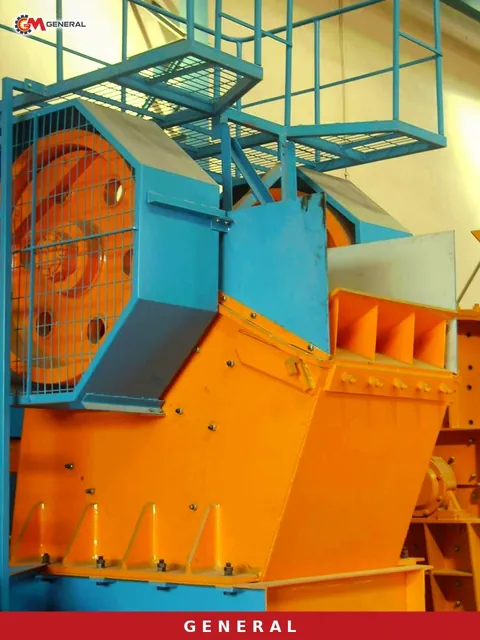
In a quarry or mine, the first place where rock is reduced is very often a jaw crusher. These machines can be used to process almost any ore or mineral you can name. The size range is wide as well: at one end there are laboratory-type crushers of 150x100 millimetres, at the other end models with a 1300x1100 millimetre feed opening for large operations. Naturally, motor power, machine weight, hourly crushing volume and the qualities of the final product differ from one model to the next.
The same family of machines can break very different rocks, from limestone, counted among the soft materials, to basalt, known as one of the hardest stones. An adjustment arrangement called the hydraulic assistant allows the jaw opening and product curve to be set according to the material, the product and the site, which also makes the adjustment itself safer and quicker. On every model, mobile or stationary, the jaw plates are made of manganese steel. As a result, efficiency does not drop until the end of plate life and the surface the plate sits on is not damaged.
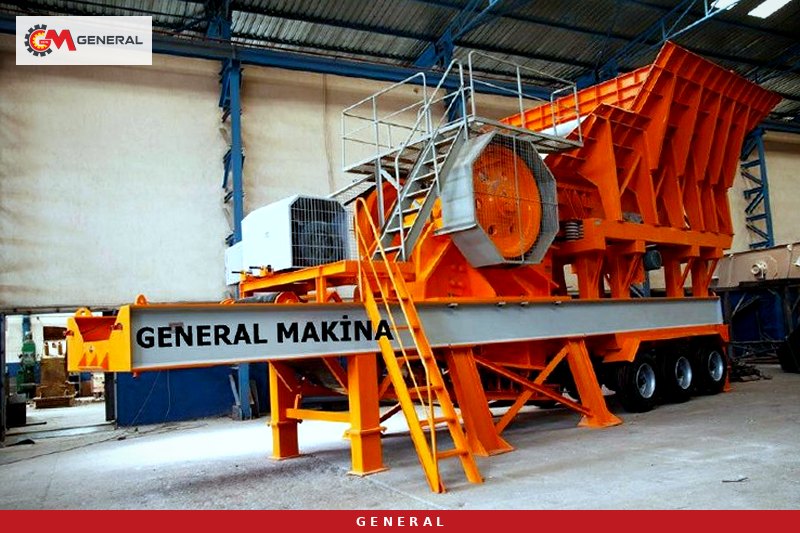
Jaw crushers are built in two types, primary and secondary, and chosen according to what the operation needs. Reliability, performance, durability and the profit the machine will bring are weighed together during selection. The first thing most investors look at, however, is the price. Many technical details sit behind it, including flywheel speed, the nip angle of the jaw, the materials used in the rear block and the pitman safety plates.
Some of those details are directly linked to safety at work. On large jaw crushers, flywheel hubs can cause serious failures; to prevent this, the flywheels are fitted to the eccentric shaft with special clamping systems. Since the machine does not always run continuously, solutions have also been developed for the problems caused by material left inside the jaw when it stops. Crusher shafts use forged steel made specifically for the job, combined with roller bearings. Grease-lubricated models that can run independently of external conditions give the operation the best results.
Price varies not only with these details but also with whether the crusher is a primary or a secondary type. The jaw setting system, the size of the machine and whether it is designed as mobile or stationary are further price factors. Examples of materials processed with a jaw crusher include limestone, quartzite, sandstone, marble, grey sandstone, granite, dolomite, gabbro, porphyry, gritstone, hornstone, andesite, amphibolite, diabase, diorite, gneiss and basalt. If you want to process a material that is not on this list, you can request information for it too.
There are points to watch on the manufacturing side as well. A plant that builds jaw crushers needs a professionally organised workshop, and careful assembly is the most important way of preventing accidents. Whether the forged steel suits the internal structure of the jaw shafts, and any defects invisible to the eye, are checked by ultrasonic inspection. Machines designed for heavy work must run reliably under load for long periods. One more thing to keep in mind: part replacements caused by wear have a decisive effect on the production cost per tonne.
The difference between primary and secondary lies not only in size but also in function. A primary crusher is the first stage that receives the large blocks coming from the quarry; with its wide feed opening and robust body, it reduces run-of-mine material to a size the next machine can accept. A secondary crusher takes material that has already been broken, works with a narrower discharge setting and brings the product closer to the target fraction. Four pieces of information are usually enough to find the right match at the quotation stage: the type of material to be processed, the largest lump size coming from the quarry, the hourly capacity targeted and the product sizes required. Once these are clear, both the machine size and the price that follows from it can be determined far more soundly.
In short, the price of a jaw crusher rises in step with its quality. Whenever you need a crushing and screening plant for the ore or mineral you process, General Makina continues to provide solutions.
Definitions of technical terms: Glossary