EN — English
 TR — Türkçe
 DE — Deutsch
 RU — Русский
 FR — Français
 ES — Español
 AR — العربية
 SR — Српски

Shift Handover Routine for a 150-250 TPH Stone Crushing Plant
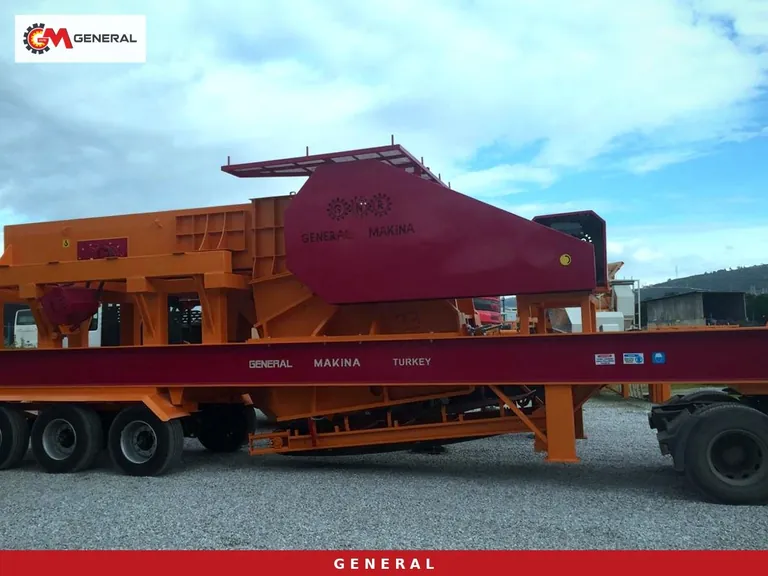
When the night operator climbs down from the cab in the morning, everything he knows about the plant leaves with him: the hour the jaw started to labour, why the third conveyor tracks to the right, how many times the generator flagged low oil. If none of that reaches paper or the panel, the day shift spends its first hour rediscovering the same faults. On a 150-250 TPH stone crushing plant that loss is not small. Feeder, crusher, screen and stockpile conveyors are linked, so a missed note on one machine upsets the rhythm of the whole line. This article sets out a shift handover routine in a field-tested order, based on the actual equipment of General Makina mobile crushing and screening plants.
Where the handover happens: on the line, not in the cab
At many quarries the handover is two sentences in the cab: "All normal, belt's drifting a bit." That tells the incoming operator nothing about which belt, how far, or under what load. We recommend a two-part handover. First a short summary in the cab using the written log and the panel records, then both operators walk the line end to end. The walk starts at the feed hopper and finishes at the last stockpile conveyor; following the material flow makes it easier to trace a problem to its source.
The outgoing operator does not have to stop the plant to hand it over. With the line running, sound, vibration and belt loading are seen as they really are. A stopped line, on the other hand, makes it easier to look at bearing temperature, belt tension or a worn liner. Which approach to use depends on the day: with planned maintenance, hand over stopped; in normal production, a running handover tells you more.
What belongs in the handover log
Whether it is a book or a digital form, the log should carry the same headings in the same order every shift. A free-text field can stay, but the mandatory fields must not be skippable. The groups below are the items most often left out on jaw or impact mobile lines in the 150-250 TPH class.
Feed, material and product
Record which face the material came from during the shift, whether the share of oversize blocks changed, and whether clayey or wet loads arrived. As clay increases, the by-pass opening of the grizzly pre-screen starts to blind; an operator who knows this lowers the feed rate in advance. On the product side, note how full each stockpile is, which fraction is expected for dispatch and whether a sample was taken. On a plant with a four-deck screen such as the General 02, four piles grow at once: 0-5, 5-12, 12-19 and 19-40 mm. When one overflows, it spoils the others.
Crusher setting and wear observations
If the jaw opening or the impact crusher setting was changed during the shift, the handover is not complete until the old and new values are written down. Wear parts do not need measuring every shift, but the observation that product size is creeping up must go into the log. It is the first warning for the maintenance crew who plan liner changes. Blockages, overcurrent trips or feeder stops are logged with times; if blockages follow a pattern, the check steps in our article on preventing blockage and overload in mobile crushers can be added to the handover note.
Screen, conveyors and power
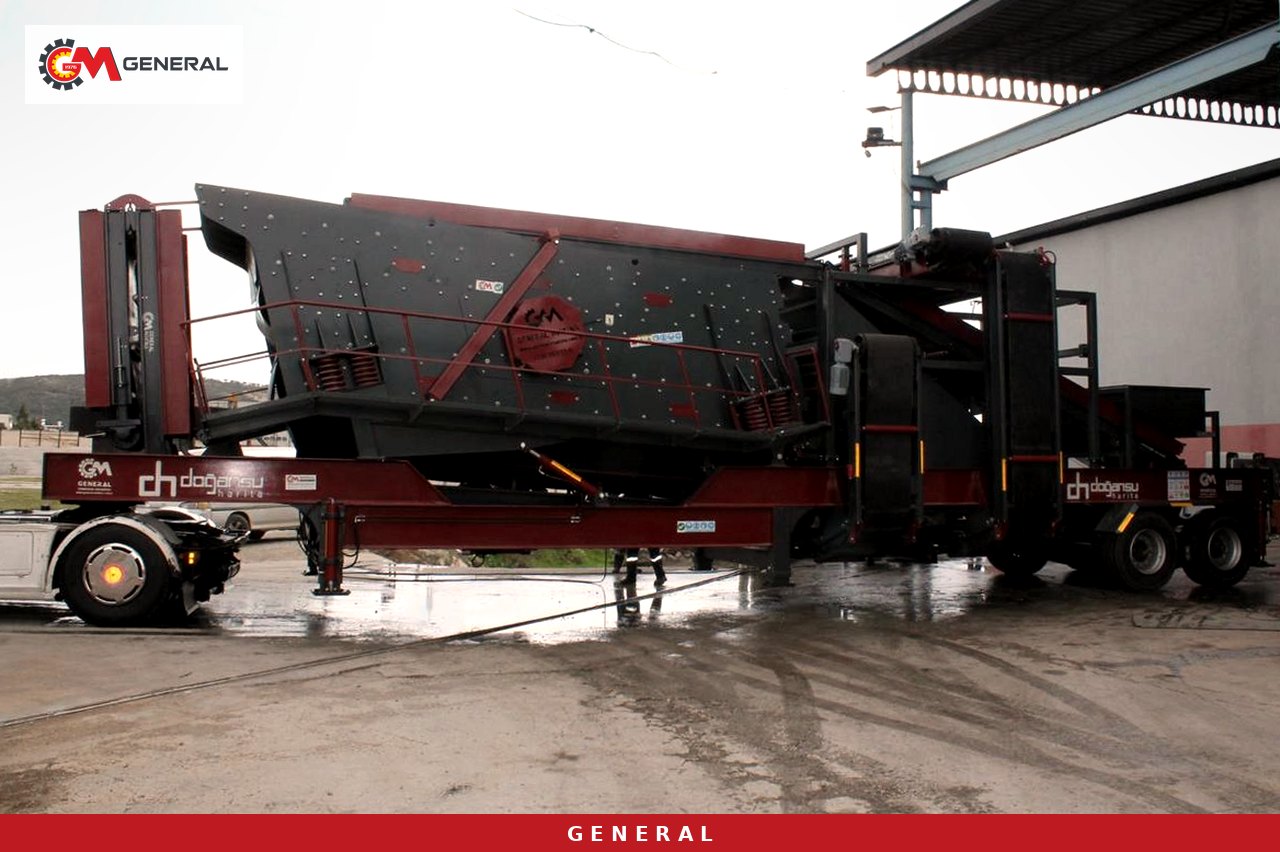
Broken screen springs, holed mesh, loose tensioning wedges, belt slip and scraper condition go here. On the power side, record generator alarms, fuel level and, at grid-fed sites, any outages. Generator size varies by model: the General 950 carries a 600 kVA unit, the General 02 a 660 kVA unit and the GNR-MC110 a 750 kVA unit. If the incoming operator knows which unit alarms under which load, he can manage the start-up sequence accordingly.
Model-specific handover checks
A handover checklist cannot be identical on every plant. A single-chassis line and a twin-platform line, or a crusher and a screening-only unit, call for different information. The table brings together catalogue values for models close to the 150-250 TPH target and the topic to ask about at handover.
| Model | Capacity | Max. feed | Crushing / screening layout | Power | Ask at handover |
|---|---|---|---|---|---|
| General 950 | 120-180 t/h | 800 mm | GPJ 90 jaw + DMK01 impact, 1600×5000 mm 3-deck screen | 600 kVA | Load balance between jaw and impact stage, closed-circuit return volume |
| GNR-MC110 | 200-300 t/h | 900 mm | GPJ 110 jaw (chassis 1) + GS1215/DMK03 impact and 2000×6000 mm 4-deck screen (chassis 2) | 750 kVA | Which chassis is running, whether the primary group is running alone |
| General 02 | 250-300 t/h | 1000 mm | GPS 1413 impact, 2000×5000 mm 4-deck screen | 660 kVA | Level of the four product piles, oversize returning to the rotor |
| GNR MK110 cubitzer | 160-250 t/h | 350 mm | Secondary rotor shaping, Hardox 500 inner liners | 200 kW motor | Change in particle shape, liner observation |
| GNR ME1650 | 120-180 t/h | 0-100 mm | Hopper, vibrating screen, stockpile conveyors (no washing) | Generator or grid | Mesh blinding, wet material arriving |
The GNR-MC110 needs particular care here. Because the primary and secondary groups sit on separate chassis and can run independently, the night shift may have shut the secondary for maintenance and produced with the primary only. If the morning operator starts the secondary without knowing this, he risks running a machine with unfinished maintenance. On the General 02, closed-circuit operation means a rising load on the return conveyor can point to a drifting setting or a holed screen mesh. If a GNR MK series mobile cubitzer has been added at the end of the line for cubical product, a visual check of its output is also part of the handover note. Other options can be compared on the wheeled mobile crushing and screening plants and mobile rock crushers pages.
The joint walk: the incoming operator's check sequence
During the walk the incoming operator asks and the outgoing one shows. If the order is the same every day, nothing gets skipped. The list follows the material flow:
- Feed hopper and vibrating feeder: blocks jammed in the hopper, clay packed between the grizzly bars, condition of the feeder springs.
- Primary crusher: spillage around the crushing chamber, unusual noise from the bearing area, belt tension and guards in place.
- Secondary stage: door fastenings on the impact crusher, lubrication gauges on lines with a cone or cubitzer.
- Vibrating screen: springs, mesh tension, holes or tears, metallic knocking from the screen box.
- Conveyors: tracking, scraper wear, seized drums and idlers, spillage under the belt.
- Stockpiles: overflowing or mixing fractions, loader access route.
- Power: generator panel, fuel, last alarm entry; on grid sites, switchboard temperature.
- Emergency stop buttons and pull-wire switches accessible, not buried by material.
Every defect seen on the walk goes into the log over the outgoing operator's signature. The point is not to find someone to blame but to know which shift a problem started on. When the same fault appears three shifts running, it clearly belongs in the maintenance plan.
Locked-out equipment and unfinished jobs
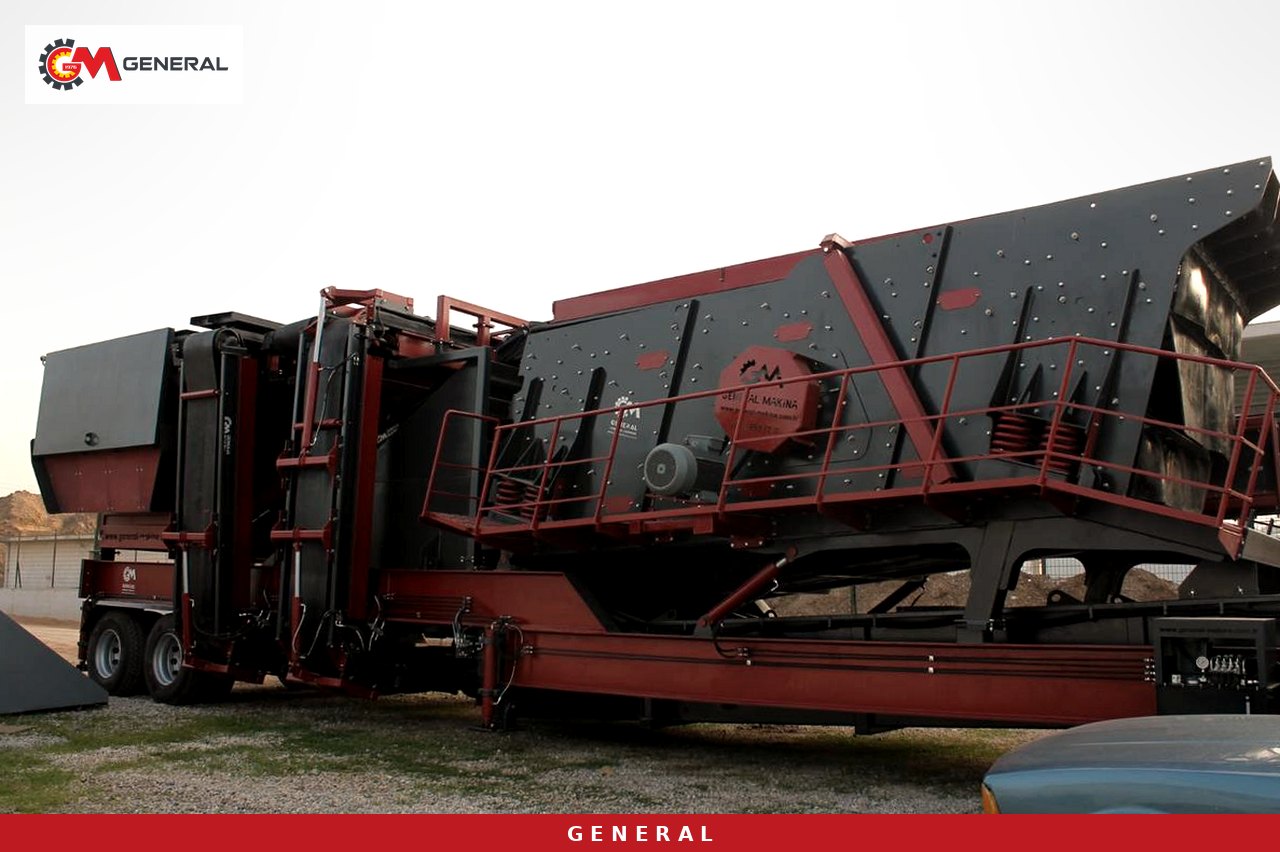
The riskiest moment of a handover is a maintenance job started on the previous shift and not finished. A mesh change may be half done, a belt splice may be curing, or a crusher door may have been left open. In that case the lock and tag on site speak before the written note. Under lockout-tagout, the person who fitted a lock either removes it personally or hands the job over in writing to the responsible person on the new shift; nobody else's lock is opened on a verbal okay at handover.
In the General Makina automation system, emergency stop buttons, pull-wire switches and guard sensors are wired directly into the safety circuit. While that circuit is open, the equipment concerned will not run whatever command comes from the automation. Even so, the incoming operator should check which safety input shows as open on the panel and should not reset it before finding the cause on site.
Minimum data for an open work order
For every open job, write down: which equipment, what was done, what remains, which part is awaited and whose lock is fitted. Those five lines let the morning maintenance technician prepare before walking out to the plant.
Matching panel records with the handover note
A networked automation panel records shift reports, tonnage produced, downtime and alarm history automatically. These records do not replace the operator's note, but they verify it. If the note says "two blockages overnight", the alarm history should show two crusher overcurrent entries. If record and note disagree, either an event was not written down or a sensor has a problem; both need discussing at handover.
Start-up sequencing also matters. On crushing lines, equipment is started against the material flow, from the stockpile conveyor back to the feeder, and when one machine stops, every stage before it stops automatically. If the incoming operator sees in the records which machine triggered the last stop, he knows what to look at on the first start. For the system that adjusts feeder speed to crusher current, see the automation and control system page.
Frequently asked questions
Should the handover log be on paper or digital?
Both work. What matters is fixed fields and a note that can be compared with the panel records. On dusty, hot sites a paper book stays in the cab, while a digital form can also be read in the office. Many operations use both.
Should the line be stopped during shift handover?
In normal production, handing over a running line gives more information. If there is locked-out equipment, unfinished maintenance or an open input on the safety circuit, the equipment concerned stays stopped until that job is closed.
How do we set up a handover routine on a new plant from day one?
At quotation stage, ask for the automation panel to be configured to keep shift reports, alarm history and downtime records. During commissioning, preparing a model-specific handover form with the operators helps the habit settle in the first months.
Do shift records help with warranty?
General Makina plants carry a 1-year warranty; wear parts are excluded. Regular shift records showing when a fault began help the technical support team diagnose the problem quickly.
Linking the handover routine to plant selection
A shift handover is the bridge between the operator who knows the machine and the one seeing it fresh. Single chassis or twin platform, closed or open circuit, crusher or screen only: the answers also decide what the handover form contains. As General Makina, building crushing and screening plants in Izmir since 1976, we can prepare a model recommendation for your 150-250 TPH line together with a model-specific handover checklist. Send us your material, capacity and site details through our contact page to request a quotation.
Definitions of technical terms: Glossary