EN — English
 TR — Türkçe
 DE — Deutsch
 RU — Русский
 FR — Français
 ES — Español
 AR — العربية
 SR — Српски

Mali Gold Mine Mobile Primary Jaw Stone Crushing Plant 150-250 TPH
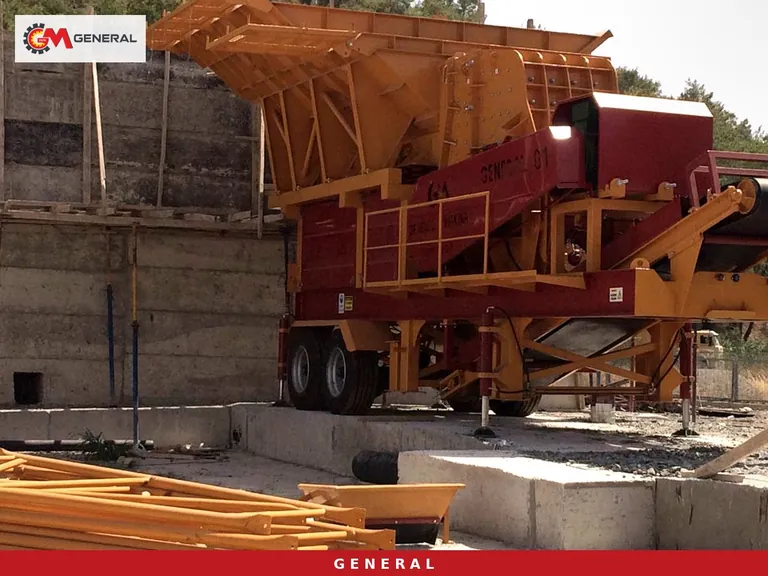
When a gold licence in Mali moves into production, the first machine in the crushing line carries the economics of the whole site: it takes blasted blocks or ripped ore, reduces them to a size the grinding circuit can handle, and has to keep doing so through the dusty dry season and the clay-heavy rainy months alike. This article looks at which mobile jaw unit a Malian mine operator targeting 150-250 TPH of primary crushing should choose, and why, using only models with verified catalogue figures. The aim is not a brochure summary but a decision framework for the ore, feeding, haulage and power questions you will face on site.
The real load on a primary crusher at a Malian gold site: from laterite cap to quartz-veined fresh rock
Whether in the belts west of the Kayes region or around Sikasso in the south, gold sites tend to share one profile: an iron-rich lateritic crust on top, clay-softened saprolite below it, and deeper down hard, abrasive fresh rock cut by quartz veins. As the open pit deepens, the material reaching the primary crusher shifts from soft and sticky to hard and sharp. The machine you choose in year one will be crushing very different ore a few years later.
A jaw crusher handles that transition well because it breaks rock by compression rather than impact. In quartz-rich rock a primary impactor loses metal from its rotor and blow bars quickly, whereas jaw plates work by squeezing, so wear per tonne stays lower. The plates are cast in austenitic manganese steel (Mn13/Mn18) whose surface work-hardens under load. Ore behaviour still varies from site to site; for a firm wear estimate, have abrasivity and compressive-strength tests run on samples from your own drill cores or a trial blast. We cover the general picture in our article on which rock types mobile jaw crushers handle most efficiently.
Matching the 150-250 TPH band to real models
The range in the title is a target band; it does not mean one machine runs at peak efficiency across all of it. The table below sets the units that cover or touch this band side by side, with verified values only. Unknown cells are marked "—" and are settled at order stage according to the material.
| Unit | Capacity (t/h) | Feed size | Crusher | Weight | Position in the band |
|---|---|---|---|---|---|
| GNR 90 mobile primary jaw | 70-180 | 0-1100 mm (series) | GNRK 90 | 25,000 kg | 150-180 t/h, lower end |
| GNR 110 mobile primary jaw | 180-300 | 0-1100 mm (series) | GNRK 110 | 55,000 kg | 180-250 t/h, main candidate |
| GNR-MC110 twin-chassis plant | 200-300 | 900 mm | GPJ 110 + DMK03 | 55,000 kg + 55,000 kg | Crushing plus screening |
| Mobile jaw plant with wobbler feeder | 250-450 | — | Primary jaw | — | Clayey ore, above the band |
150-180 TPH: the GNR 90 at the lower end
For a site starting with a modest ore schedule and processing only the oxide zone at first, the GNR 90 covers the lower part of the band with its 70-180 t/h range. With a 1000×3800 mm feeder and a GNRK 90 jaw it is the lighter chassis. If you plan to go beyond 180 t/h, however, running the machine permanently at its ceiling shortens plate life and raises mechanical stress; stepping up a model is the sounder choice.
180-250 TPH: the GNR 110 as a single unit
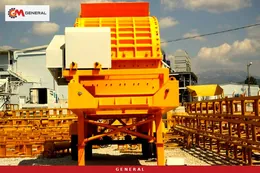
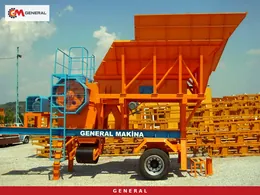
The option that sits best in the middle of the band is the GNR 110 from the wheeled primary jaw unit with feeder hopper series: 1100×4750 mm feeder, GNRK 110 jaw and 180-300 t/h capacity. A 250 TPH target falls inside that range, so the machine works with headroom. Its 0-250 mm product can go straight to a secondary crusher or a stockpile. The unit handles the primary stage only; secondary and tertiary stages are added as separate machines.
When you also need a secondary and a screen: the GNR-MC110
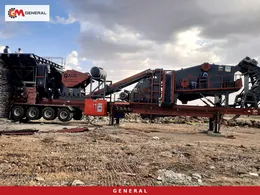
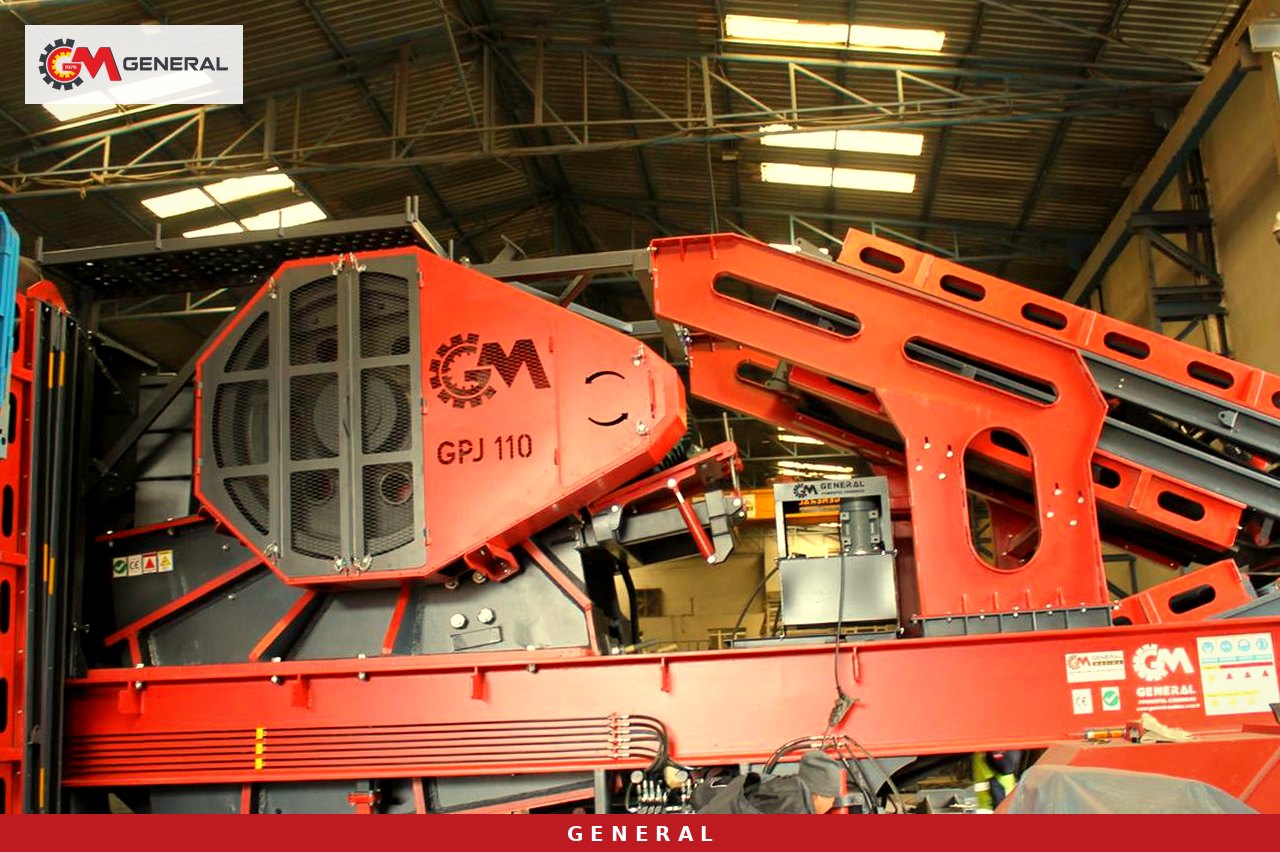
If you want to classify pre-crushed ore on site, for example to prepare a top size for heap leaching, look at the GNR-MC110 twin-chassis mobile jaw plant. Chassis one carries the feeder and GPJ 110 jaw; chassis two carries a DMK03 secondary impactor and a 2000×6000 mm four-deck screen. It is rated at 200-300 t/h and produces 0-5 / 5-12 / 12-19 / 19-40 mm fractions. Because the primary group can run on its own, you can buy chassis one first and add the secondary once the ore schedule is firm. One caution: an impact secondary wears its blow bars fast in very quartz-rich fresh ore, so the secondary choice should depend on sample testing.
Saprolite and the rainy season: getting the feed end right
At Malian sites the most common reason a primary crusher stops is not the jaw but the feed end. In the rainy season saprolitic ore gets wet, clay sticks to hopper walls and blinds the gaps between grizzly bars. In the dry season the same material arrives with fine dust. Choose the feeder with both extremes in mind.
- Vibrating grizzly feeder: in dry or medium-moisture ore it bypasses fines around the jaw and removes needless load from the crusher. The GNR 110 grizzly feeder in our crusher feeders range is rated at 200-300 t/h with a 2×7.5 kW drive; the series accepts material up to 1500 mm.
- Wobbler feeder: where a grizzly blinds on wet, sticky clay, the wobbler shafts tumble the ore and strip off clay and fines. The mobile jaw plant with wobbler feeder runs at 250-450 t/h, which may be more than a 150-250 TPH target needs, but on a saprolite-heavy site the reduction in stoppages can justify the margin.
- Hopper geometry: raisable side walls reduce spillage when feeding by truck or loader; plan the tipping direction around the ramp layout of the pit.
- Dust: in the dry season, water-spray dust suppression at transfer points and belt covers are measures that can be added per project; engine and hydraulic air-filter intervals should also be shortened to suit the site.
From Kayes to Sikasso: haulage, set-up and power
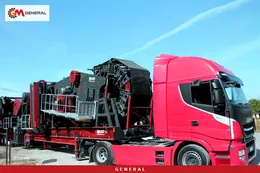
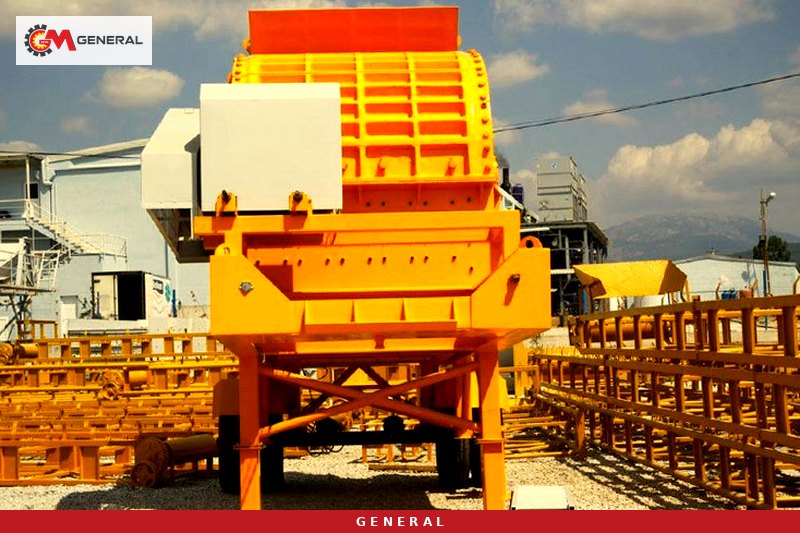
Mali is landlocked; equipment usually reaches a neighbouring country's seaport by ship and is then hauled to the mine by road. Chassis weight and dimensions therefore matter as much as capacity. The GNR 110 is a single chassis weighing 55,000 kg; on the GNR-MC110 each chassis weighs 55,000 kg, with chassis one measuring 3000 × 13500 mm and chassis two 4200 × 18300 mm. Confirm bridge and road limits on the route with your haulage contractor, and customs and transit permits with the relevant authorities.
Once on site, the mobile unit shows its advantage: it is levelled on hydraulic legs and starts work without a concrete foundation. Moving the crusher closer to the face as mining advances shortens truck haul distances. For an operation that will stay in one spot for years and grow well beyond 250 TPH, compare a fixed layout as well as single-chassis mobile crusher units.
On a gold site far from the grid, a generator is usually the only option. The catalogue figure for the GNR-MC110 is a 750 kVA generator; for the stand-alone GNR 110 the generator rating is set at order stage from motor and feeder loads. In the hot season, keeping the generator and control panel in a shaded, well-ventilated spot and cleaning radiators regularly are simple but effective conditions for trouble-free running.
Pre-order site checklist
- Ore zone split: how many years of oxide, saprolite and fresh rock, and in what order?
- Largest block size and blast design: the GNR series accepts 0-1100 mm, the GNR-MC110 900 mm.
- Primary product size versus the next process: are you feeding a grinding circuit or a heap leach?
- Rainy-season moisture and clay load: grizzly or wobbler feeder?
- Laboratory data: have abrasivity and compressive-strength tests been done?
- Route: have heavy-load limits between port, border crossing and site been confirmed?
- Power: generator or site transformer; is there a back-up plan?
- Wear-part stock: how many spare jaw plates and grizzly bars will be held on site?
With these answers in hand, a look at the other configurations on our wheeled mobile crushing plants page will show clearly which stages you really need when you request a quote.
Frequently asked questions
Why should the primary crusher for gold ore be a jaw crusher?
Quartz-veined fresh rock is abrasive; a jaw crusher breaks it by compression, so metal loss stays below that of an impact primary. It also handles soft oxide ore without trouble, so it adapts as the ore changes with pit depth.
Can a single GNR 110 deliver 250 tonnes per hour?
The GNR 110's catalogue capacity is 180-300 t/h, so 250 TPH falls within that range. The actual figure depends on ore hardness, moisture, block size and output setting, and should be confirmed after sample testing.
What warranty and certificates apply?
General Makina has manufactured in Izmir since 1976; the machines carry ISO 9001 and CE certification. The warranty is 1 year, excluding wear parts.
What determines the price?
Model and capacity, feeder type (grizzly or wobbler), whether a secondary and screen are needed, options such as a generator and dust suppression, the initial spare-parts package and shipping terms. Share these details and a project-specific quote is prepared.
Decision summary
For 150-250 TPH of primary crushing in Mali, the main candidate is the GNR 110 mobile jaw unit; consider the GNR 90 if early tonnage is lower, the GNR-MC110 if screening is wanted alongside crushing, and the wobbler-fed plant for saprolite-rich clayey ore. Contact us with an ore sample, target product size and site route details, and we will work out the right configuration and quote for your site together.
Definitions of technical terms: Glossary