EN — English
 TR — Türkçe
 DE — Deutsch
 RU — Русский
 FR — Français
 ES — Español
 AR — العربية
 SR — Српски

How to Prevent Blockage and Overload in Mobile Crushers
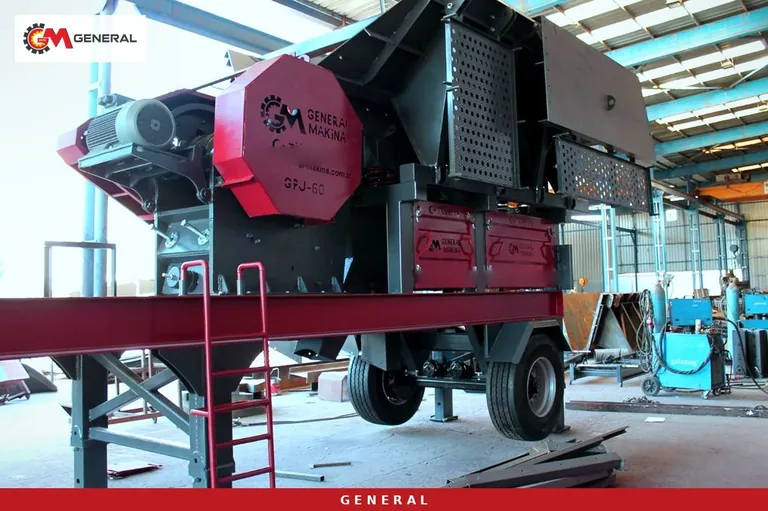
Most stoppages on a mobile crusher end up in the log under one of two headings: "mouth blocked" or "motor tripped". On site they are booked as separate faults, yet they are usually two ends of the same imbalance: the size, moisture and rhythm of the feed do not match the crusher's current setting or the speed of the discharge beneath it. This article sets out a diagnostic sequence from symptom to root cause and uses model data to show which equipment on mobile units actually solves which problem.
Diagnose first: blockage or overload?
To pick the right fix, place the event in one of four types. Each has a different symptom, cause and permanent remedy; treating one with the cure for another only postpones the next stoppage.
Bridging
Two or three large blocks form an arch in the jaw opening, nothing flows underneath and the motor runs light. Current draw is low. The problem is not the crusher but the block size being fed.
Packing
Wet fines and clay compact in the crushing chamber into a cake. Current rises fast, the crusher slows and stalls. The issue here is not size but a fines fraction that should never have entered the crusher.
Surge overload
The loader dumps a full bucket into the hopper at once and the feeder pushes that wave straight into the mouth. Current peaks briefly; repeated often enough, the protection trips.
Discharge-side choking
The belt under the crusher slows, slips or stops. Crushed product cannot leave, the chamber fills from below and the crusher looks "blocked". The root cause lies after the crusher.
| Observation | Motor current | Likely root cause | Permanent fix |
|---|---|---|---|
| Large blocks arched across the mouth | Low | Feed size exceeds the unit's acceptance | Block control at the face, correct primary unit |
| Muddy cake packed in the chamber | Rises, then stalls | Fines, soil and moisture entering the crusher | Grizzly by-pass; wobbler for clayey feed |
| Short, repeated current peaks | Fluctuating | Intermittent, irregular feeding | Hopper level + feeder speed control |
| Chamber full from below, belt labouring | High | Discharge belt or screen bottleneck | Interlocked sequential start, belt checks |
Oversize and bridging: working within the unit's feed acceptance
The cure for bridging is not to force the crusher but to limit the block that reaches it. Every mobile unit has a feed acceptance, and that figure is a ceiling, not a target. When blocks close to the opening size arrive continuously, arching is inevitable; blasting at the face and the loader operator setting oversize aside are therefore part of crusher efficiency.
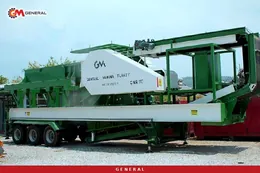
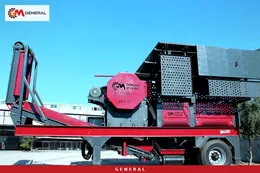
The same logic applies between stages in a train of units. The GNR series mobile primary jaw unit, for example, accepts 0-1100 mm feed and delivers 0-250 mm product, while the M-DMK series mobile secondary impactor accepts 0-350 mm feed. The primary's output fits the secondary's input and the chain is balanced. Skipping the primary and feeding run-of-mine straight into the secondary is the shortest route to bridging and rapid blow-bar wear. When you lay out the stages, write the input and output range of each unit in the portable rock crushers range side by side.
| Unit / model | Feed (mm) | Product (mm) | Capacity (t/h) | Anti-blockage mechanism |
|---|---|---|---|---|
| Mobile primary jaw GNR 60 / GNR 90 / GNR 110 | 0-1100 | 0-250 | 20-80 / 70-180 / 180-300 | Armoured feeder, frequency-controlled vibromotor |
| Mobile jaw unit with wobbler feeder | — | — | 250-450 | Self-cleaning wobbler pre-separation |
| Mobile secondary impactor M-DMK 01 / 02 / 03 | 0-350 | 0-50 | 120-180 / 150-250 / 175-300 | Screen on feeder deck + by-pass conveyor |
| Mobile DMK with pre-screen | 0-100 | 0-30 | 40-300 | Integrated vibrating pre-screen |
Fines, soil and moisture: the real source of packing
In many overload complaints the crusher is trying to re-crush material that is already below the required size. Soil and fines act as a cushion in the chamber, make it harder to break the large stones and, combined with moisture, bind into a cake. The solution is to keep that fraction out of the crusher altogether.
On grizzly feeders the bar section at the end of the trough does exactly that: fines and soil drop between the bars and bypass the crusher, while oversize rock goes to the mouth. The selection rule on the product page is clear: for dry, abrasive material a grizzly feeder is enough. With very wet, sticky, clayey feed, however, fixed bars blind: the gaps fill, the by-pass stops working and the whole load lands on the crusher again. At that point the answer is not wider bar spacing but a different separation principle.
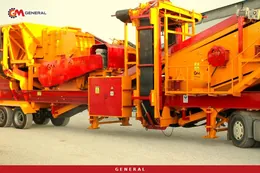
The wobbler feeder works with synchronised rotating elliptical disc shafts instead of vibration. Because the discs keep turning, the gaps clean themselves; the muddy fines drop through while oversize stone is carried to the crusher. On the GWB1136 the width is 1100 mm, the length 3600 mm and the motor power 18.5 kW, driven by motor, reducer and chain. On the mobile side, the jaw unit with wobbler feeder runs in the 250-450 t/h range as the primary stage in clayey quarries. You can compare every feeder type in the vibrating feeders category.
At the secondary stage the same principle applies on a smaller scale. On the M-DMK series a screen on the feeder deck separates soily fines and sends them to stockpile via a by-pass conveyor; on the mobile DMK with pre-screen, an integrated vibrating screen keeps already-sized material out of the crusher.
Feed rhythm and automation: catching overload before it happens
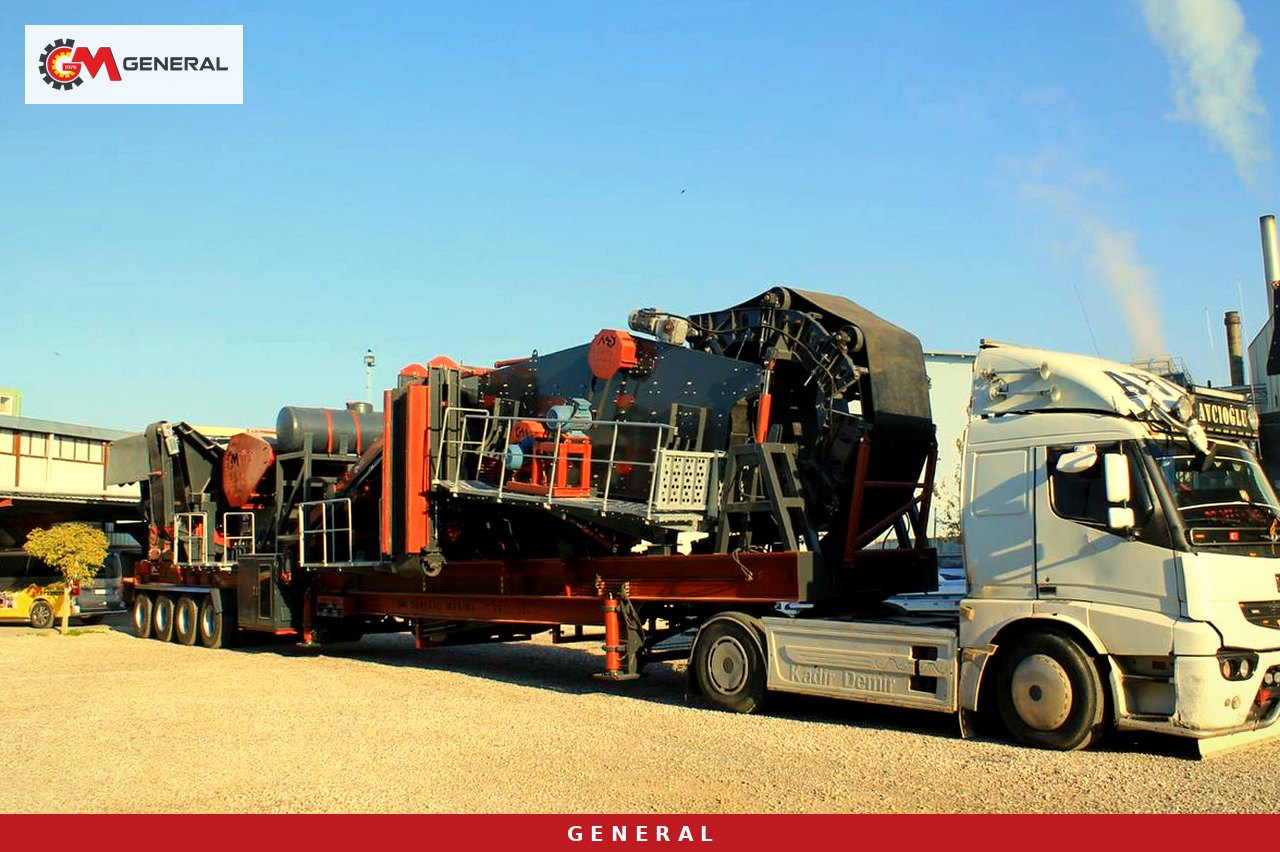
A jaw crusher likes a steady feed that keeps the mouth full (choke feed); this regime improves crusher efficiency and particle shape. The trouble is intermittent feeding driven by the loader cycle: the hopper runs empty, then a single bucket lands in the mouth as a wave. Keeping the hopper above a set level and matching feeder speed to crusher load damps that wave. The GNR series mobile primary jaw unit has a frequency-controlled vibromotor as standard, so feed rate is an adjustable parameter rather than a fixed one.
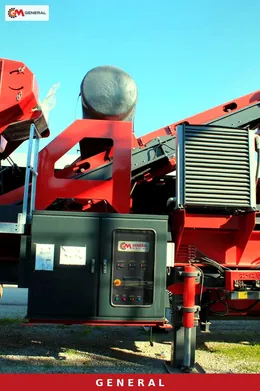
Instead of adjusting by hand every time, leave this loop to automation. In the description of the automation and control system three functions relate directly to blockage and overload:
- Current-based feeding: when crusher current approaches the threshold, feeder speed drops automatically and rises again once current returns to normal. The crusher does not stop; it just catches its breath.
- Sequential start: equipment starts against the material flow, from the stockpile back to the feeder, so the crusher never takes load before the belt beneath it is running.
- Interlocking: when one item stops, all stages above it stop automatically, preventing starts on a loaded belt and conveyor blockages.
Then there is the record side: once alarm history and downtime are stored, you can see at what time, in which loader cycle and with which batch of material the "motor tripped" entries cluster. Root-cause analysis moves from guesswork to data.
After the crusher: discharge, screen and setting
In some "blocked crusher" events the crusher is innocent. If the belt underneath is slack, an idler has seized or material has built up on the belt, product cannot leave and the chamber fills from below. Watching the discharge belt run empty and loaded at the start of the shift is the first check, before anyone touches the crusher setting.
In stationary or mixed lines, a grizzly screen ahead of the secondary relieves the same load. The grizzly screen comes in two types: type G sits between the feeder and the primary, type M bypasses fines in the primary product ahead of the secondary. The ELKG-1230, for instance, has a 1200×3000 mm deck and 10.2 kW motor; the ELKM-1435 has 1400×3500 mm and 15 kW. The bars are austenitic manganese castings with adjustable spacing, which lets you choose the by-pass size for the material.
One rule on settings: wear shifts the setting. As jaw plates or blow bars wear, the crusher no longer runs at the setting on paper; residence time in the chamber and the product curve change. Record the setting in a measurement log and schedule wear-part changes before they force a stop. Track this separately on units with frequent blow-bar changes such as the M-DMK secondary impactor.
Shift checklist: stopping blockages before they start
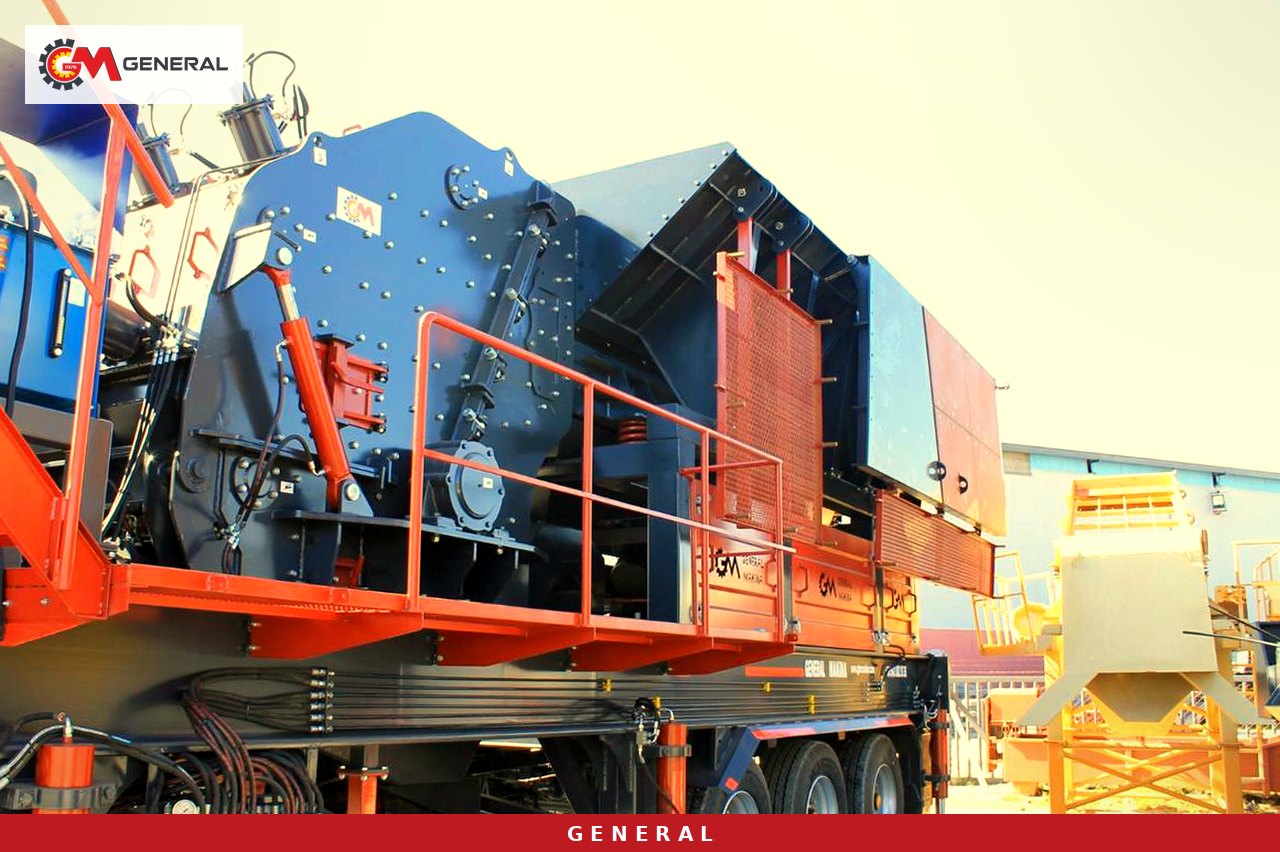
- Watch the discharge belt running empty and loaded; any slip, idler noise or build-up on the belt?
- Measure the crusher setting and log it; note the difference from the previous shift.
- Check the grizzly or pre-screen for clay build-up and filled bar gaps.
- Judge feed moisture by eye; after rain, start the feeder at low speed for the first hours.
- Agree a loader cycle with the operator that keeps hopper level steady; forbid dumping in one go.
- Have blocks close to the opening size set aside at the face; never try to free an arched block by hand while the crusher is running.
- Read the automation alarm log at the end of the shift; if the same alarm repeats, record the root cause.
If a bridged block must be cleared, isolate power and apply lockout-tagout; in the automation system the emergency stop and safety circuit stop the equipment independently of any command.
Frequently asked questions
Does widening the bar spacing solve blockage with clayey feed?
It brings temporary relief but moves the problem: larger particles escape to the by-pass and clay still sticks to the bars. The permanent fix is a wobbler feeder with self-cleaning rotating shafts.
Is opening the crusher setting the right way to prevent overload?
Opening the setting lowers current but coarsens the product and pushes load to the next stage. First bypass the fines and steady the feed; the setting is chosen for the product target.
Can a mobile secondary crusher be fed run-of-mine?
No. The M-DMK series accepts 0-350 mm feed; run-of-mine exceeds that. A primary unit such as the GNR series should first bring the material down to 0-250 mm.
Can automation be added to an existing mobile line?
The scope depends on the motor control layout and sensors on the line. Share your equipment list and the applicable interlocks and feed control are assessed project by project.
Conclusion
Blockage and overload are prevented not by forcing the crusher but by managing the flow into and out of it: stop oversize at the face, bypass fines and clay, link feeding to motor current and check discharge before the crusher. To size the right feeder and stage layout for your crushing and screening plant around feed moisture, clay content and target product, contact us and request a quote.
Definitions of technical terms: Glossary