EN — English
 TR — Türkçe
 DE — Deutsch
 RU — Русский
 FR — Français
 ES — Español
 AR — العربية
 SR — Српски

Africa Hot-Climate Maintenance for a 100-300 TPH Stone Crushing Plant
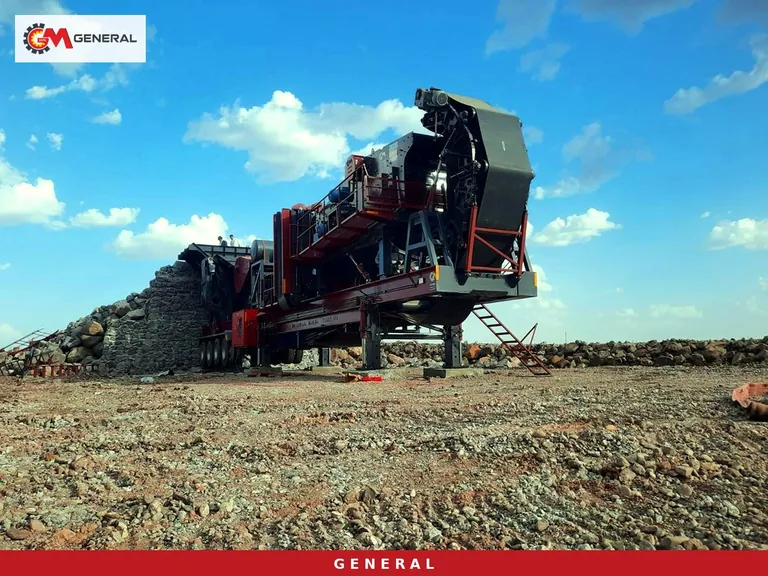
A maintenance schedule for a crushing and screening plant working in Africa cannot be a copy of a manual written for a European quarry. Fine dust carried by the Harmattan across the Sahel, midday heat at quarries on the edge of the Sahara, salty humid air along the West African coast and sharp day-to-night temperature swings on the East African highlands all wear the same machine from different directions. On a plant producing 100-300 TPH, the first casualty of that wear is almost always the lubricant: once it thins, picks up dust or is changed at the wrong interval, bearings, gears and the hydraulic circuit start complaining within weeks. This guide looks at which lubrication and maintenance habits have to change in a hot climate, where the load concentrates on the General series wheeled plants, and the checklist a shift crew should keep at hand, written from the point of view of people who have stood next to these machines on site.
Three enemies of the lubricant: heat, fine dust and swinging humidity
Heat lowers the viscosity of grease and oil. A thinner oil film can no longer keep the rolling elements apart from the bearing races; metal-to-metal contact begins, the bearing heats up and that heat thins the oil even further. That is the vicious circle of a hot site. Before the plant leaves for Africa, the viscosity grade of the grease and gear oil should therefore be chosen together with the lubricant supplier, staying within the range given in the equipment manual. How an oil filled for a temperate climate will behave on site is a question to settle before shipment, not after the first bearing failure.
Fine dust is the second enemy and often does more damage than heat. Silica dust hanging in the air during the dry season gets in through the tip of the grease gun, a tired seal lip or a hydraulic tank cap left open. Once mixed into the lubricant, it turns it into an abrasive paste. In quartz-rich granite and quartzite quarries the effect is far stronger; a small habit such as wiping the grease nipple before connecting the gun shows up directly in bearing life.
The third factor is swinging humidity. In coastal areas and at the start of the rainy season, a gearbox and hydraulic tank that cool down overnight collect condensation inside. Water breaks down the oil additives and leaves corrosion marks on bearing surfaces. The same picture appears on highlands where nights are cool and days hot. Desiccant breathers on the vent plugs and regular draining of water from the bottom of the tank are simple and effective measures in these regions.
How the maintenance load is spread across General models in the 100-300 TPH range
Even within the same capacity band, the crusher arrangement changes the daily work of the maintenance crew. On plants with a primary impactor, rotor bearings and blow bar monitoring dominate; on jaw-primary lines the eccentric shaft bearings matter most; with a cone secondary, the oil circuit and liner setting take priority. The table below puts the models side by side from a maintenance angle, using the values from the product pages.
| Model | Capacity | Crusher arrangement | Screen | Generator | Main maintenance focus |
|---|---|---|---|---|---|
| General 944 | 120-180 t/h | GPJ 90 jaw + GM430 cone | 1600×5000 mm, 3 decks | 550 kVA | Cone secondary oil circuit and liner setting |
| General 01 | 120-180 t/h | GPS 1210 impactor (primary + secondary in one body) | 1600×5000 mm, 4 decks | 550 kVA | Rotor bearings, turning and replacing blow bars |
| GNR-MC110 | 200-300 t/h | GPJ 110 jaw + DMK03 impactor, two chassis | 2000×6000 mm, 4 decks | 750 kVA | Separate lubrication round for each platform |
| General 02 | 250-300 t/h | GPS 1413 impactor | 2000×5000 mm, 4 decks | 660 kVA | Closed-circuit return conveyor and rotor |
| General 03 | 250-375 t/h | GPS 1415 impactor | 2400×5000 mm, 4 decks | 750 kVA | Large screen eccentric group and generator cooling |
On hard, abrasive granite, basalt and quartzite, the cone secondary of the 944 extends the life of the metal parts. In limestone-dominated quarries, the General 03 or the General 02 delivers high reduction with a single impactor and keeps the maintenance list short. For hard-rock work approaching 300 TPH, the jaw-primary GNR-MC110 stands out; because it is split across two chassis, the crew should plan a separate inspection round for each platform. All wheeled options are listed on the wheeled mobile crushing plants page.
Lubrication system by system: what to watch on a hot site
The plant's lubrication map consists of four main groups, and each one suffers differently in the heat. Instead of a single weekly "greasing day", a round split by system gives better results.
Crusher bearings and rotor housings
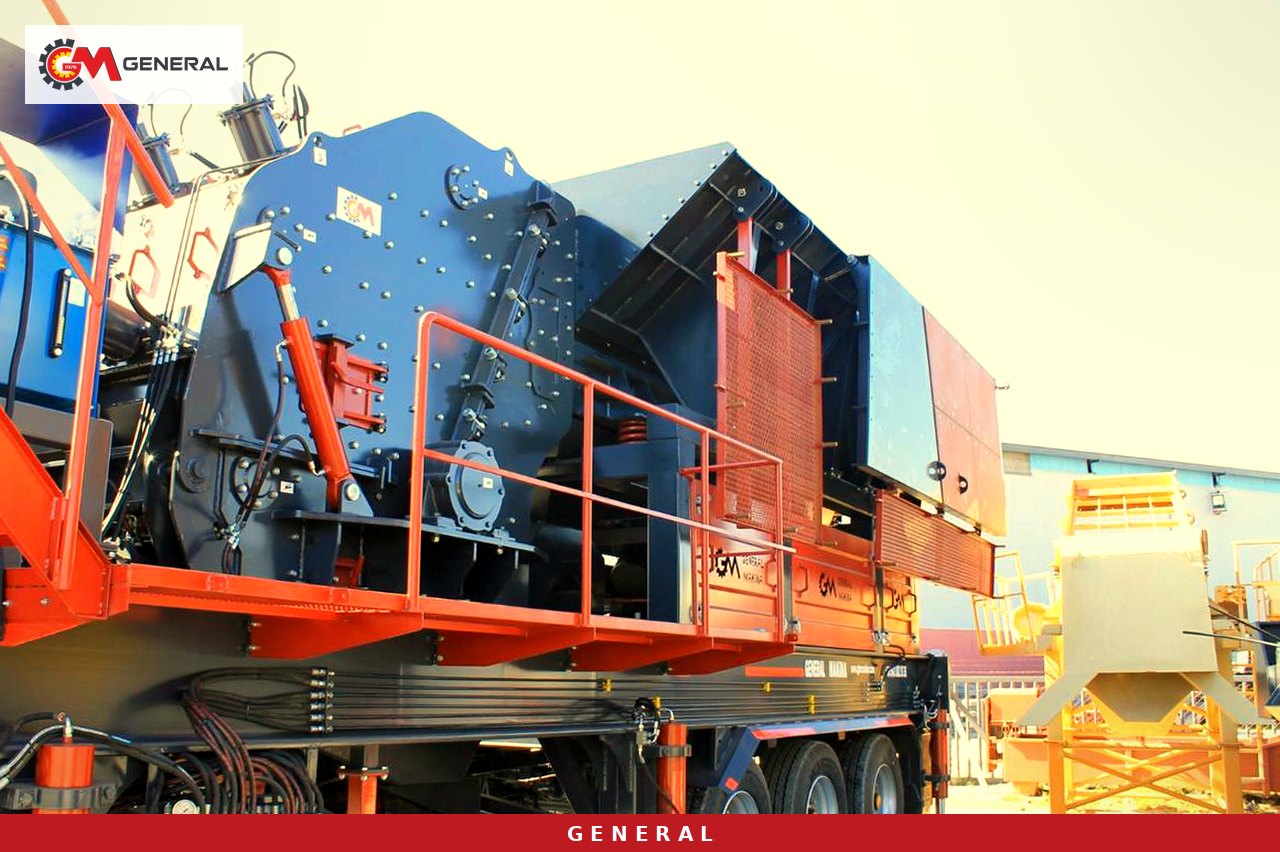
The rotor bearings of an impact crusher and the eccentric shaft bearings of a jaw crusher are the most expensive rotating parts on the plant. The most common mistake on a hot site is over-greasing: an overfilled housing churns the grease, heats it and pushes it out past the seal, where it then collects dust. The quantity in the manual should be applied with a metered gun. Measuring bearing temperature at the start of the shift and again at midday with a non-contact thermometer, and writing both readings in the same log, often reveals a failing bearing before it can be heard.
Screen eccentric group
Because of constant oscillation, a vibrating screen can heat its bearings faster than the crusher does. On large bodies such as the 2400×5000 mm four-deck screen of the General 03, the oil level and breather of the eccentric group belong on the daily list. Covering open hatches against dust during mesh or spring replacement is a precondition for keeping the oil clean.
Conveyor pulleys, idlers and the hydraulic circuit
Most conveyor idlers are sealed for life; the job here is not lubrication but spotting a seized idler early. A seized idler wears the belt and heats up through friction, which on a site surrounded by dry grass also means a fire risk. On the hydraulic circuit that drives the folding conveyors and support legs, watch the tank level, the oil colour and the filter indicator. Hydraulic oil that foams or darkens in the heat usually signals a cooler clogged with dust.
Generator and control panel: the most heat-sensitive section
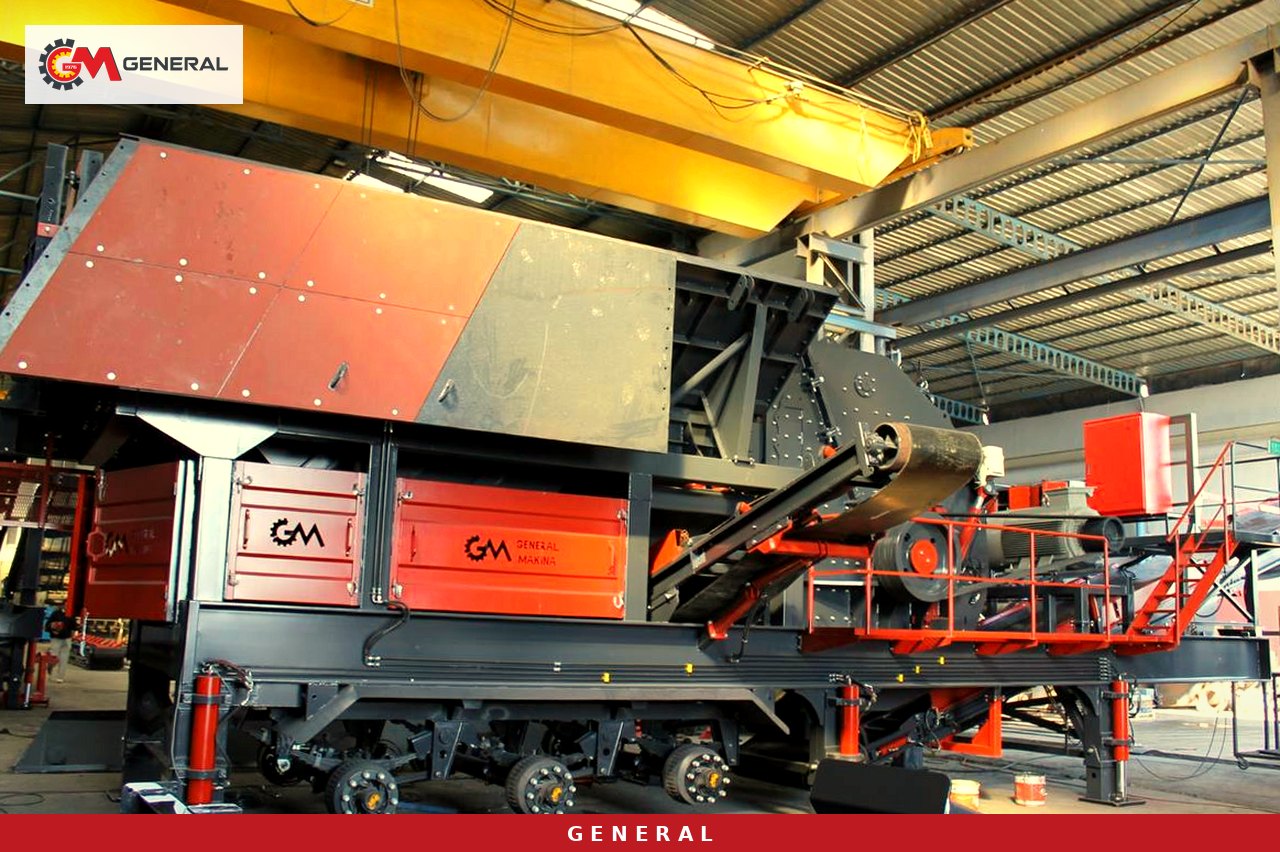
At off-grid African quarries, the plant is powered by a diesel generator. The General 02 carries a 660 kVA power unit, the General 03 and GNR-MC110 a 750 kVA unit, and the General 944 a 550 kVA unit. These are nameplate ratings; high ambient temperature and altitude reduce the power a diesel engine can deliver continuously. The engine maker's derating table defines how large that loss will be, so site altitude and climate should be shared at the quotation stage.
On the maintenance side, three habits make the difference:
- Clean radiator cores with compressed air from the inside out; air blown from the outside drives dust deeper into the core.
- Empty the air filter pre-cleaner every shift, change the main element according to the restriction indicator and keep spare elements on site in their sealed packaging.
- Position the electrical panel out of direct sunlight or build a sunshade over it, and add the panel fan filters to the checklist.
Fuel is a maintenance item too. Diesel carried to a remote site in drums or by tanker may contain water and sediment. Draining the pre-filter and water separator regularly prevents injector failures.
Planning wear parts around the rock and the climate
Wear part selection directly sets how often the plant stops for maintenance. African quarries process plenty of granite, basalt and quartzite, but also limestone and laterite, and each calls for a different alloy. Austenitic manganese steel work-hardens under impact and is used for jaw plates and cone mantles. High-chrome castings are preferred for blow bars on clean, abrasive feed, but can crack on oversized blocks and feed contaminated with tramp metal. For the right choice, a sample taken from the site should be sent for an abrasion test.
On a hot, remote site the real risk is not having the part on hand when replacement is due. Shipping one set of jaw plates or blow bars with the plant, scheduling changeovers for the cooler hours, and photographing and recording the wear profile of every removed part make sure the next order is placed with the right alloy. Because the 1-year warranty excludes wear parts, this item should be budgeted as an operating cost. For options, see the jaw plates, blow bars and cone liners page and the spare parts group.
Maintenance checklist by shift, week and season
The list below does not replace the manufacturer's manual; it is a frame for tightening the manual's intervals to suit an African site. Our maintenance instruction article also covers general daily and periodic tasks.
- Start of shift: measure and log crusher and screen bearing temperatures, empty the generator air pre-cleaner, check the hydraulic tank level and look for leaks.
- Midday: take a second bearing temperature reading, check the panel for over-temperature alarms and make sure the dust suppression nozzles are not blocked.
- Weekly: clean the radiator and oil cooler from the inside out, listen to the conveyor idlers one by one, check belt tension and scrapers.
- Monthly: take an oil sample and send it to a laboratory for dust and water content, renew the desiccant breathers and measure the wear part profiles.
- At the change of season: drain water from the bottom of the tanks before the rains, renew seals and gaskets before the dry season and review the grease grade for the coming months.
Frequently asked questions
Does a hot climate need a different oil grade?
On most sites it does. The viscosity grade is chosen within the range in the equipment manual, according to ambient conditions and the lubricant supplier's recommendation. Sharing site information with the order makes this choice easier.
Is oil analysis an unnecessary cost for a small operation?
No. Silica and water content in the oil reveal a seal or filter problem before the bearing is damaged. The downtime caused by a single main bearing replacement easily exceeds the cost of regular analysis.
How does dust suppression affect lubrication?
Water spraying at the crusher inlet and conveyor transfer points reduces airborne dust and lightens the load on seals and filters. Care is needed so that water is not aimed directly at bearings or the control panel.
Is maintenance training part of the delivery?
The scope of the briefing given to operators and maintenance staff during commissioning is agreed at the quotation stage. The after-sales spare parts and service support stated on the product pages continues from there.
Conclusion
On Africa's hot, dusty sites, crusher life depends as much on how clean and correctly specified the oil stays as on the power of the machine. When the right model, a lubrication round tightened for the climate, wear parts waiting on site and regular oil analysis are planned together, a 100-300 TPH plant holds its planned tonnage. To see the conditions of a Sahel quarry, take a look at the General 950 project in Niger. Share your site's rock type, climate and target capacity with our team, manufacturing in Izmir since 1976, and we will define the right model and maintenance package together: contact us for a quotation and technical details.
Definitions of technical terms: Glossary