EN — English
 TR — Türkçe
 DE — Deutsch
 RU — Русский
 FR — Français
 ES — Español
 AR — العربية
 SR — Српски

How to Choose Stone Crushing Plant Equipment: Crushers, Hoppers and Auxiliary Machines
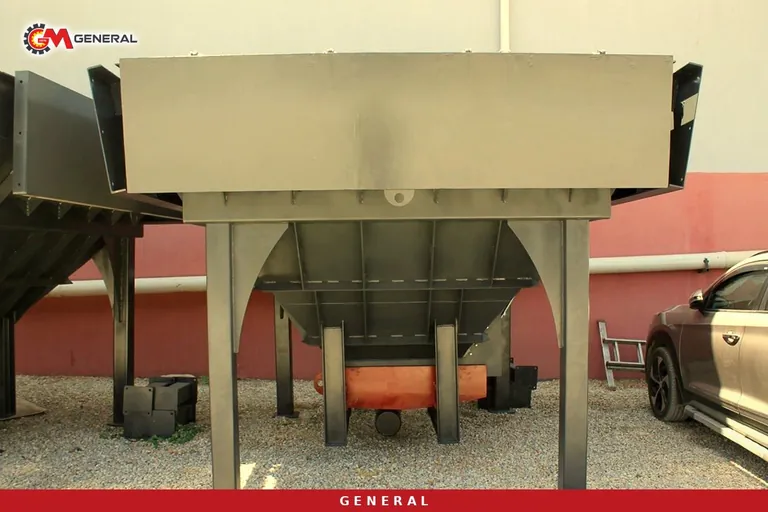
Which equipment is used in a stone crushing plant depends on the operator's field of activity and the nature of the work to be done. Because crushing and screening plants are used in many sectors, from construction to mining, they have to be able to process very different materials. For this reason, machines are designed from the production stage onwards according to the material to be processed and the targeted yield.
Plants are laid out with enough flexibility to be expanded or modified as the work requires. When higher performance is needed, the choice of primary crusher can be revisited, a secondary crusher can be added to the line as required, hopper capacity can be enlarged for more stockpiling, the feeding system can be reinforced or the motor power can be increased. Which of these adjustments are made depends entirely on the operator's preferences and expectations.
What information is needed when choosing equipment?
When you want to buy a crusher for your plant, manufacturers will ask you for some basic information. The scale of the work the machine will be used for, how much output is expected over a given period and which materials will be processed are the first of these. The answers to these questions directly shape the equipment list of the plant to be built.
It is also possible to find a large number of items of equipment sold individually on the market. Among them, products coming from the Far East stand out in particular. However, it should not be overlooked that specially alloyed products are the ones to prefer for lasting quality.
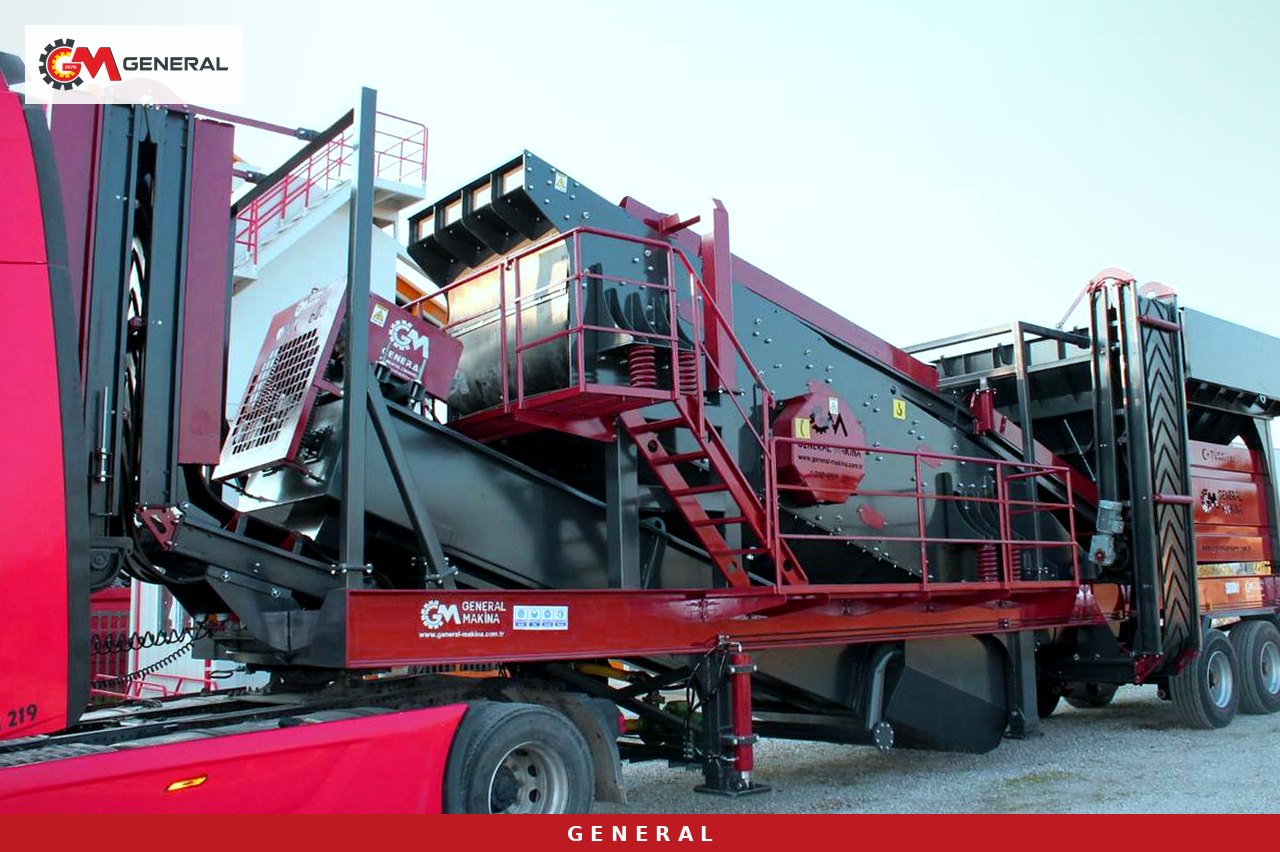
When drawing up the equipment list, machines should be assessed as part of the whole line rather than one by one. If the capacities of the feeder, crushers, screen and conveyors do not match, the weakest link limits the output of the entire plant; a powerful crusher ends up running below its capacity in front of an undersized screen. Access to spare parts and service should also be part of the decision: equipment with a long supply chain prolongs downtime when a fault occurs and loses on site the advantage it seemed to have on paper.
Equipment used in stone crushing plants
The product range in this field is very broad, because many factors influence the choice of equipment. A whole series of details, from the geological structure of the site to be worked to the efficiency the chosen crusher will achieve on that site, plays a part in the selection process. In this context, the equipment that attracts the most attention is the third-party machinery that sits outside the crushing and screening plant and takes on supporting tasks. The main items are:
- Hydraulic cone crusher
- Stone crusher
- Tracked hydraulic breaker
- Stone cutting machines
- Rock drill
- Backwash equipment
- Screening equipment
- Primary and secondary crushers
- Foundation drilling rig
- Mining equipment
Most of the equipment on this list is used regularly in crushing and screening plants. Many of these items are nowadays imported from different countries and incorporated into the plant at the assembly stage. They come into play when a plant cannot deliver the expected performance because of factors such as the material, the location, the ground or the working area.
In some cases they are used directly to meet the plant's own needs. For example, the maintenance, repair and spare-part requirements of the machines in a crushing plant are checked with the help of this equipment. In this way a working arrangement suited to the project is established and more efficient production is achieved.
What auxiliary equipment adds to a plant
Stone crushing plants have a large and efficient production potential. Operators support their plants with auxiliary equipment to take that potential further. This equipment plays an active role not only beyond the structure and working method of the existing crushing and screening plant, but also in tasks outside the area where the plant operates. Its importance grows even more for plants that do not use a mobile crusher.
On sites worked with a stationary crusher, these machines fill a large gap. Work in sections the crusher cannot reach can be carried out with this equipment, and the overall pace of work increases. As a result, higher output is reached while savings are made in machine power, labour and staffing. Above all, this equipment becomes an indispensable part of plants because it allows problems to be solved in a shorter time.
Definitions of technical terms: Glossary