EN — English
 TR — Türkçe
 DE — Deutsch
 RU — Русский
 FR — Français
 ES — Español
 AR — العربية
 SR — Српски
Crusher Total Cost of Ownership
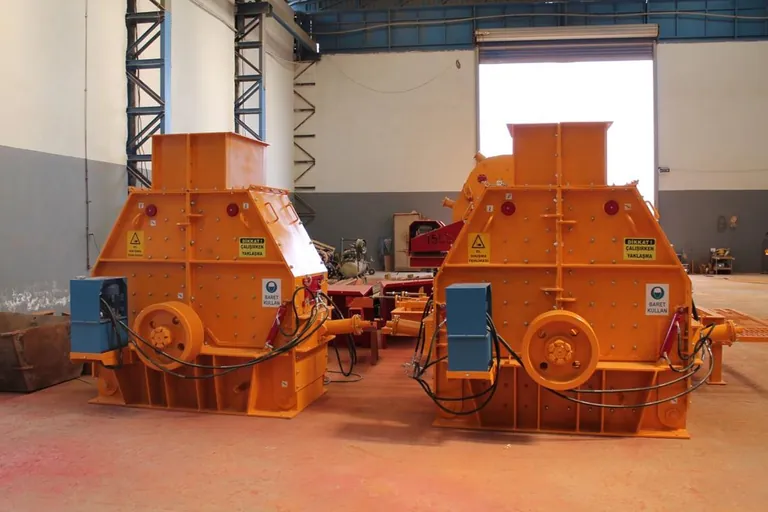
Buying the cheaper of two machines of the same capacity often means producing more expensively for ten years. Crusher total cost of ownership describes not the purchase price but the total cash leaving the business across every year the machine spends on site. This article sets out the skeleton of that model for an investor who wants the decision to come from a table rather than from instinct.
Drawing the boundary of the model
The first task is to write down what is inside and what is outside. The cost of a crusher alone means little; feeder, screen, conveyors and electrical infrastructure belong to the same production chain. The model is built either for a single machine or for the whole line, never for a mixture of the two. Mixed boundaries make offers from different suppliers impossible to compare.
The second boundary is time. Ten years is a window in which the main wear parts of heavy-duty equipment are replaced more than once, at least one major overhaul falls due and residual value becomes visible. A shorter window creates an artificial advantage for the cheap machine, because the real difference appears in the later years.
Line items and where each number comes from
A model becomes credible when it records where each figure came from. An estimate and a measurement should never sit in the same cell unmarked. The table below lists the items and the record that feeds each of them.
| Item | Type | Unit | Data source | Update frequency |
|---|---|---|---|---|
| Machine price and freight | Capital | one-off | Purchase contract | Once |
| Erection, commissioning, civils | Capital | one-off | Contractor invoices | Once |
| Energy | Operating | kWh per tonne | Meter readings and weighbridge | Monthly |
| Wear parts | Operating | grams per tonne or units per year | Store issue notes | Monthly |
| Spares and maintenance labour | Operating | hours per year | Work order records | Monthly |
| Lubricants and consumables | Operating | litres per year | Lubrication plan and store | Quarterly |
| Production lost to downtime | Opportunity | hours per year | Shift downtime sheet | Monthly |
| Major overhaul | Periodic | one-off | Service quotation and history | When scheduled |
| Residual or scrap value | Terminal | one-off | Market survey | Annually |
The inverse relationship between price and lifetime cost
Savings in a low-priced machine usually come from three places: thinner body and frame sections, simpler bearing arrangements and lower-grade wear part material. All three convert directly into operating expense. Thin sections crack under vibration, simple bearing arrangements shorten the maintenance interval, and a poorer manganese or chrome alloy gives away more grams of wear per tonne.
The inverse relationship is not universal; expensive is not automatically more economical. The distinction comes from one question: what is the higher price buying? If it buys a heavier rotor, a larger bearing or a better wear alloy, the difference turns into a measurable operating gain. If it buys only a badge, it does not.
Reducing everything to cost per tonne
A total figure is not enough to decide with, because two alternatives may have different capacities. The model therefore divides the ten-year cash outflow by the tonnage actually produced in the same period. The denominator is realised production, not the nominal capacity in the contract; dividing without allowing for availability and feed interruptions makes both alternatives look cheaper than they are.
Product mix must also be fixed while cost per tonne is calculated. The same line carries a different energy and wear load when it produces coarse aggregate than when it produces fine sand. Where the mix varies, the model is run separately for each product group. For a quick first estimate you can use our operating cost tool and then calibrate the result against your own records.
Sensitivity: which assumption flips the answer
The value of a TCO model lies not in producing a single number but in showing which assumption reverses the ranking. Three variables dominate in practice: annual operating hours, unit energy price and wear part consumption. An optimistic, an expected and a pessimistic value is entered for each; if the ranking of the alternatives survives all three scenarios, the decision is robust.
If the ranking changes between scenarios, then it is no longer the machine that decides but that assumption. The right move at that point is not to compare offers again but to measure the assumption, for example by logging real running hours and real part consumption for a month. Framing the case together with the other articles under investment and cost gives a safer answer than a single spreadsheet.
Frequently asked questions
How does downtime enter the model?
Downtime is often skipped because it produces no invoice. The correct approach is to multiply the lost hours by the tonnage that could have been produced and value it at the contribution margin of saleable product. This is decision data rather than an accounting entry, and it is kept on its own line.
Can renting and buying be compared in the same model?
Yes, provided the contract is read to establish who carries maintenance and parts responsibility, and that answer is placed into the same line item list. Otherwise renting looks cheap simply because its embedded costs are invisible.
How often is the model updated?
The model is not discarded once the investment decision is taken. As monthly actual energy and parts data are entered it becomes a budgeting tool and calibrates the assumptions of the next investment.
An ownership model fed with your own site data produces a better decision than the most detailed quotation. Write to our sales engineers to work through the line item list for your line configuration.
Definitions of technical terms: Glossary