EN — English
 TR — Türkçe
 DE — Deutsch
 RU — Русский
 FR — Français
 ES — Español
 AR — العربية
 SR — Српски

Hydraulic Faults in a Mobile Stone Crusher Plant 100-200 TPH
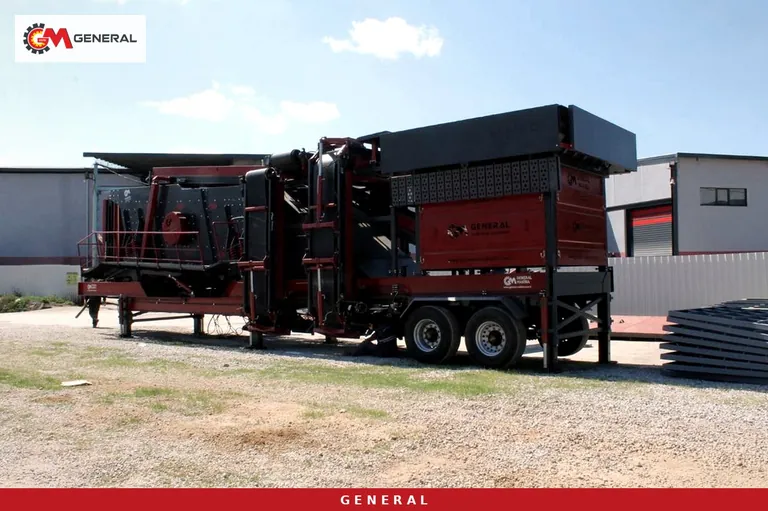
On a wheeled mobile crusher processing 100-200 TPH, the hydraulic circuit does not break rock. It unfolds the conveyors, sets the chassis on the ground, holds the gap on a cone crusher and protects the crusher against tramp steel. That is why hydraulic faults tend to appear during setup, teardown or adjustment rather than in the middle of production: a conveyor stops halfway, a leg sinks under load, the crusher will not hold its setting. This article works through the hydraulic faults met most often on site, from symptom back to cause, shows where hydraulics do the work on General models in the 100-200 TPH band, and proposes a routine the shift crew can actually follow.
Pressure values, oil grade and filter intervals are written in each machine's own operating manual and hydraulic diagram. The diagnostic steps below are general field practice; take the documents supplied with your machine as the reference before touching any setting.
What the hydraulic circuit does on a mobile plant
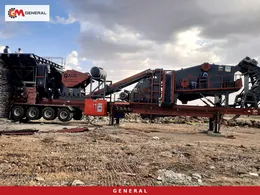
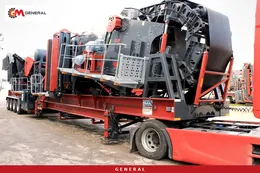
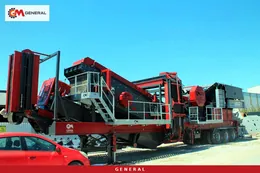
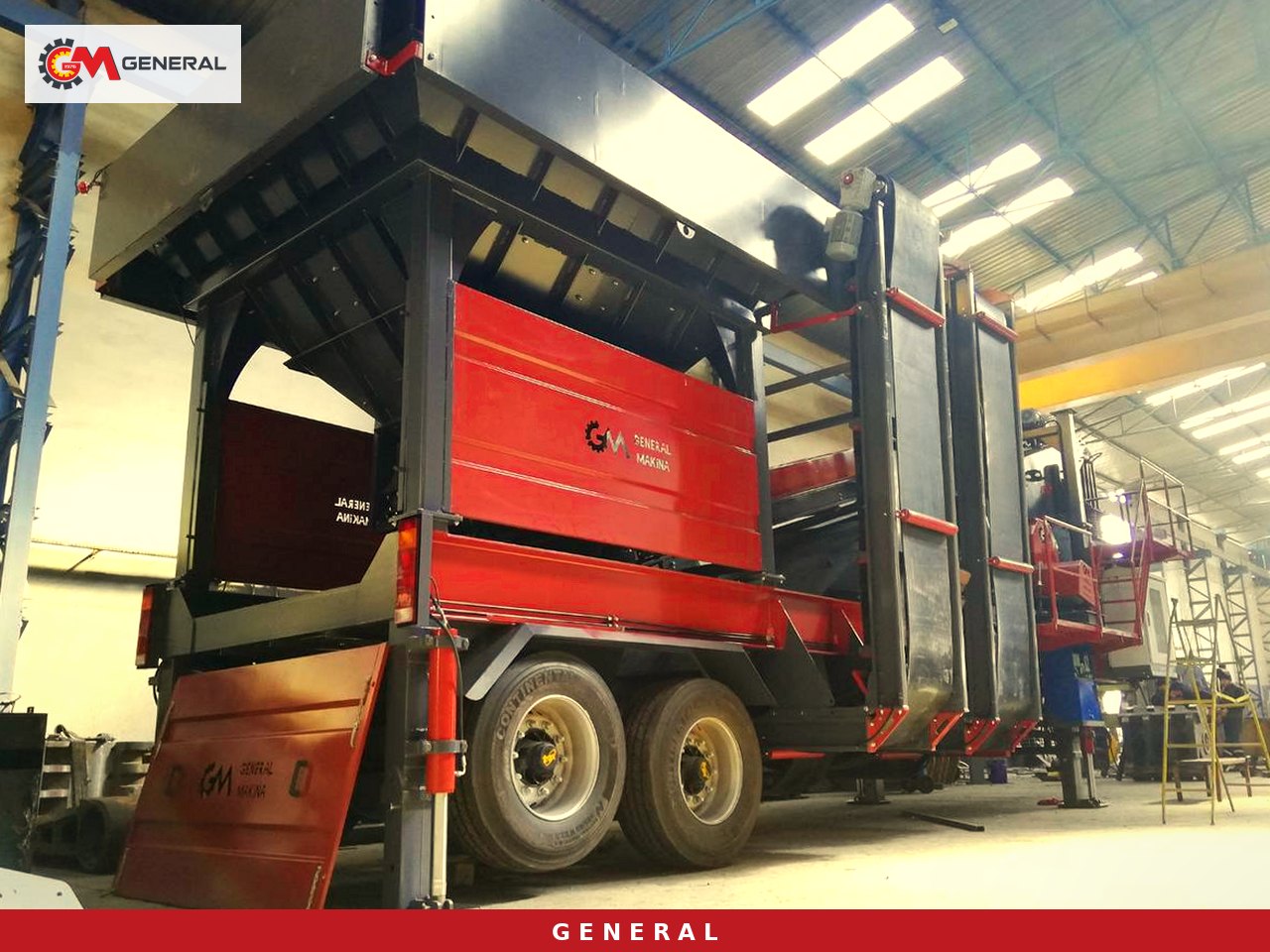
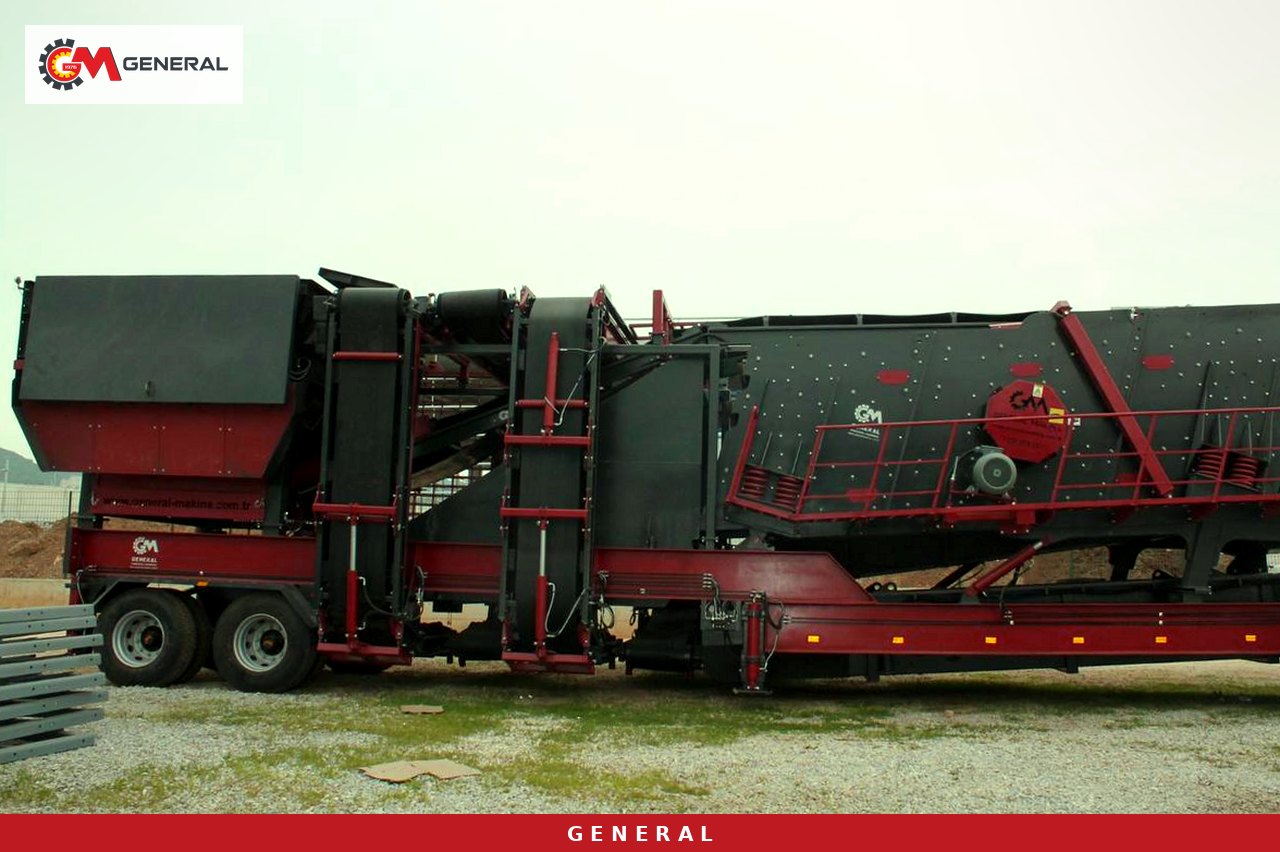
On wheeled plants the hydraulic circuit is mainly about positioning. On the General 800, folding hydraulic conveyors and support legs are gathered on one synchronised chassis; the plant settles on its legs without excavation or a concrete foundation, and the conveyors swing from transport to working position. These cylinders move a few times a day and then sit under load for hours. The fault pattern follows from that: slow sinking and seepage during standstill are more common than sudden bursts.
On the crusher itself, hydraulics play a different role. On the General cone crusher, product size is set by hydraulic CSS adjustment, and a hydraulic cylinder protects against sudden blockage. This circuit stays pressurised throughout production. If the setting drifts, the fraction leaving the screen shifts; if the protection reacts late, liners and frame take the hit. The hydraulically opening housing on the mobile pre-screen DMK units is used only during maintenance, but because it carries a heavy cover it is the cylinder that needs the most care from a safety point of view.
Tracked crushers change the picture again. The GM 90JP drives itself on Strickland tracks and needs no ground preparation or hydraulic legs. On a tracked machine the undercarriage and conveyor drives move to the centre of maintenance; which drives are hydraulic has to be read from that machine's own diagram. A buyer choosing between tracked mobile crushers and wheeled mobile crushing plants should build the maintenance plan around this difference too.
If the oil is not clean, the fault arrives later
Most hydraulic faults look as though they started in the pump or a cylinder, while the root is in the oil. A crushing site is a hard place for hydraulic fluid: fine rock dust, condensation from the swing between night and day temperatures and frequent hose removal all meet in the same circuit.
Rock dust and particle contamination
Dust on a crushing site contains silica and is abrasive. It enters through the tank breather, past the wiper seal on a cylinder rod or through the open mouth of a removed fitting. Every particle that gets in scores valve spools and pump surfaces; internal leakage rises, cylinders slow down and the oil heats up. Changing the breather filter on schedule, never leaving caps open and topping up through a filtered transfer pump cuts this chain at the start. The way to measure contamination is an oil sample: the lab report gives the particle class as an ISO 4406 code and turns filter changes from guesswork into a planned job.
Water and condensation
When the tank cools in the evening, moisture in the air space condenses and sinks to the bottom. Wet oil looks cloudy or milky, weakens the lubricating film and starts rust in valves. Keeping the tank level low during long standstills makes this worse. Drawing a small amount of oil from the drain plug at the tank bottom now and then and letting it settle in a clear jar is the cheapest diagnosis available on site.
Air ingress and foam
A loose clamp on the pump suction or a low oil level pulls air into the circuit. The pump sounds as if it were turning gravel, cylinders move in jerks and foam appears in the tank. That noise signals cavitation and aeration; a pump run in this state loses efficiency quickly. Check the level first, then the suction line fittings and clamps.
Symptom-to-cause fault table
The quickest way to diagnose on site is to sort the symptom by the circuit it belongs to. The table below collects the situations seen most often on a wheeled plant and the first points to check. Where a step needs a measurement, connect a gauge to the machine's test point and compare the reading with the value in the manual.
| Symptom | Likely source | First check |
|---|---|---|
| Support leg sinks slowly under load | Internal leakage past the piston seal or a leaking holding valve | Mark the rod with the leg under load and measure the travel after a set time |
| Folding conveyor stops or judders while unfolding | Blocked flow restrictor, air in the circuit, low pump pressure | Tank level, foam, pressure at the test point |
| Pump makes a gravel noise | Air or cavitation at the suction, clogged suction strainer | Suction clamps, strainer, oil level |
| Oil overheats quickly | Relief valve opening constantly, internal leakage, cooler core packed with dust | Cooler face, relief valve setting, thermometer reading on the return line |
| Cone crusher will not hold its setting, product coarsens | Leak in the adjustment circuit, accumulator pre-charge dropped | Adjustment cylinder pressure, accumulator check (authorised person) |
| Wet patch at a fitting or hose end | Loose connection, aged hose, wrong tightening torque | Locate the leak with a piece of cardboard, inspect the hose cover |
The order in the table is deliberate: cheap and quick checks come first. Before a pump comes off, the level, the filter indicator and the suction side should have been looked at. On many sites a fault reported as "the pump is gone" turns out to be a clogged suction strainer or a crushed hose.
How hydraulic load is spread across 100-200 TPH models
General models in this capacity band carry different crusher layouts, and the hydraulic workload changes with them. The table uses the data on the product pages; cells where the product page names no hydraulic equipment are marked with a dash. Hydraulic scope can vary by order, so the diagram supplied at delivery is the reference.
| Model | Capacity | Feed size | Crusher layout | Power | Weight | Hydraulic equipment named on the product page |
|---|---|---|---|---|---|---|
| General 800 | 80-150 t/h | 600 mm | PDK 1280 primary impactor | 450 kVA | 35,000 kg | Folding hydraulic conveyors, support legs |
| General 01 | 120-180 t/h | 700 mm | GPS 1210 impactor | 550 kVA | 55,000 kg | — |
| General 944 | 120-180 t/h | 800 mm | GPJ 90 jaw + GM430 cone | 550 kVA | 70,000 kg | Cone stage; hydraulic CSS adjustment and blockage protection on the General cone crusher |
| General 950 | 120-180 t/h | 800 mm | GPJ 90 jaw + DMK01 impactor | 600 kVA | 70,000 kg | — |
| GM 90JP (tracked) | 70-180 t/h | 700 mm | GNR 90 jaw, 95 kW | 250 kVA | 35,000 kg | No hydraulic legs required |
The practical reading is this. An operation crushing limestone with a primary impact plant such as the General 800 will find most hydraulic maintenance in the leg and conveyor cylinders. Where a General 944 was chosen for basalt or granite, the cone crusher's adjustment and protection circuit stays under pressure all shift, so oil cleanliness and accumulator checks move up the maintenance calendar. On sites with frequent setup and teardown, scored rods and damaged wiper seals are more common, because dust and rock chips fall on the rods during folding.
Site discipline when changing hoses, fittings and cylinders
The quality of a hydraulic repair depends less on the new part than on the dirt that enters during the change. Every connection opened on site is a door for contamination.
Hose selection and routing
A replacement hose must match the original in pressure class, bore and fitting type. A hose cut too short is stretched during folding; one cut too long sags and rubs against the chassis edge. Following the hose path once by hand while the conveyor folds and unfolds shows the rub point before assembly. Hoses passing through the rock-fall zone get a protective spiral wrap.
Cylinder leaks and rod damage
A score on the rod cuts the seal on every stroke; even with a new seal, the leak returns quickly. So before a seal change the rod surface is inspected under good light, and if the score is deep the rod is reground or replaced. When a cylinder comes off, its ports are plugged and the exposed hose ends are capped. After assembly the cylinder is cycled through full strokes a few times without load to bleed out the air.
For a few shifts after the change, watch the filter indicator closely. Dirt that entered during the repair collects in the filter in the first days, so an early warning is normal and means the filter is doing its job.
The hazards of working on a pressurised circuit
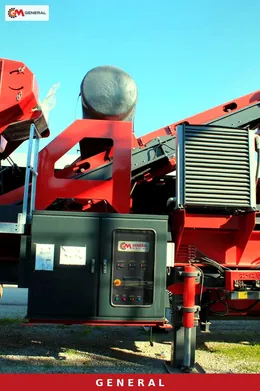
For a technician chasing a hydraulic fault, the biggest danger is pressure left in the circuit while the machine looks stopped. A support leg under load, a half-open conveyor or a raised crusher cover keeps squeezing the oil in its cylinder even with the engine off. A fine oil jet from a loosened fitting can then pierce skin, or the conveyor can drop without warning.
Before work begins, the load is supported mechanically: conveyors and covers are propped, blocks go under the legs. Then power is isolated, the controls are locked out and tagged (LOTO), and the valve levers are worked a few times to bleed line pressure. In circuits with an accumulator, such as cone crusher adjustment, the accumulator is discharged separately, and only trained staff handle the nitrogen pre-charge. Leaks are never traced by hand; a piece of cardboard is passed in front of the suspected point. For general routine, see our daily and periodic maintenance instruction.
Shift and weekly hydraulic checklist
The list below covers checks a shift crew can complete in a short time on a wheeled plant in the 100-200 TPH band. Use the intervals together with the machine manual.
- At shift start, read the tank level from the sight glass and look at the oil colour; cloudiness means water, foam means air.
- Check the return filter clogging indicator or panel warning and log the shift in which it first lit up.
- Look for dust build-up and scoring on leg and conveyor cylinder rods, and confirm the wiper seals are in place.
- Watch the folding movement for hoses that rub or sag.
- Clean rock dust off the cooler core; once the face is blocked, the oil heats up fast.
- On cone crusher plants, check during the shift that the CSS value and product size stay constant.
- Once a week, draw a sample from the tank bottom and let it settle in a clear jar; if water or sediment shows, send it to a lab.
- Before a long standstill, retract the cylinders and leave the tank at full level.
The logging habit is worth as much as the checks themselves. If the record shows how often the filter indicator lights up, when the oil darkened and how many times a given hose has been replaced, the next fault becomes visible before it happens. The crusher's blockage and overload behaviour also acts directly on the hydraulic protection circuit, so the feed arrangement deserves its own review.
Frequently asked questions
When should the hydraulic oil be changed?
The machine manual sets the interval, but oil analysis should make the call. If the contamination class and water content are at the limit, the oil is changed without waiting; oil that tests clean is not thrown away. New oil should never go into a tank that has not been cleaned at the bottom.
Can different brands of hydraulic oil be mixed?
It is not recommended. Additive packages may not be compatible and can cause foam or sludge. Top-up oil should match the viscosity grade and type already in the tank. If in doubt, follow the oil chart in the manual.
Are hydraulic faults covered by the warranty?
General Makina plants carry a 1-year warranty, excluding wear parts. Which group hoses, seals and filters fall into, and the conditions of use, are written into the quotation and the contract. Agreeing before purchase how damage from contaminated oil will be assessed helps both sides.
Is cone crusher setting drift a hydraulic fault?
Not always. As the liners wear, the closed side setting opens and the product coarsens; that is wear, and resetting fixes it. If the value drifts again soon after resetting, look for a leak in the adjustment circuit or an accumulator problem.
Hydraulic documents to request at handover
The site that solves a hydraulic fault fast is the one that filed the right documents when it took delivery: the hydraulic diagram, test point locations and pressure values, the oil and filter list and the hose size list. At quotation stage, ask in writing that these documents are part of the delivery scope and in which language they come. General Makina has built crushing and screening plants in Izmir since 1976, and its plants carry ISO 9001 and CE certification. Share your rock type, target capacity and site conditions through our contact page to get a configuration and quotation for the 100-200 TPH band.
Definitions of technical terms: Glossary