EN — English
 TR — Türkçe
 DE — Deutsch
 RU — Русский
 FR — Français
 ES — Español
 AR — العربية
 SR — Српски

Noise Reduction for a Mobile Stone Crusher Plant 100-200 TPH
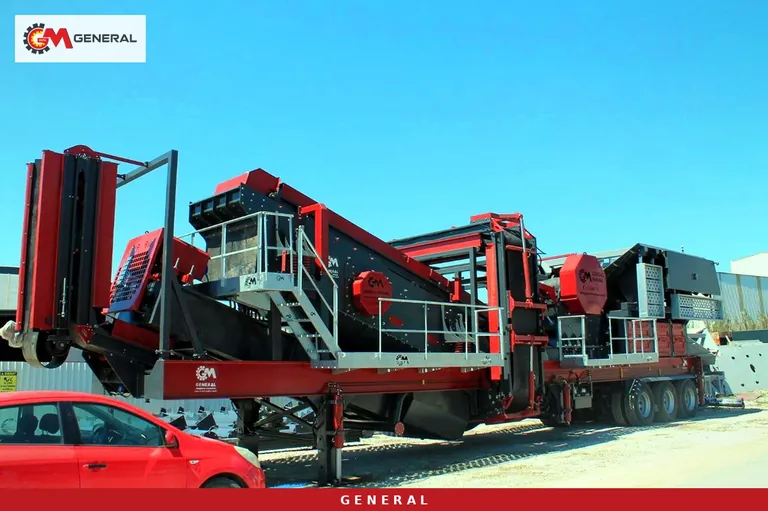
The day a mobile crusher arrives on site, two things start at once: production and the risk of complaints. The moment the first truck tips rock into an empty steel hopper, it is heard in the nearby village, at the factory next door or in the site cabins. On a line producing 100 to 200 tonnes per hour the sound does not come from a single machine. Feeder, crusher, screen, conveyor transfers, generator and loader together create one noise field. This article takes that field apart piece by piece and explains, from site experience, which measure works where and which stays on paper.
One warning first: noise reduction is not an accessory added after the purchase decision. The choice of crusher type, the layout of the plant on site and the energy source decide most of the sound before the machine even leaves the factory.
The noise map of a crushing and screening plant
Anyone who walks around a plant with a sound level meter sees the same thing: the highest reading is often not beside the crusher but at the feed point and on the exhaust side of the generator. An operator who wants less noise should rank the sources first, because leaving the loudest one untouched and investing in the second barely changes the total level. Decibels are a logarithmic scale; two sources of equal power together raise the level by about 3 dB, not twice as much. By the same logic, small improvements made while one dominant source is left alone make no audible difference.
Feeding and the crushing chamber
Impact noise is born where rock hits steel. When a truck or loader bucket empties into the hopper, the higher the drop and the emptier the hopper floor, the harder the impact sounds. The vibrating grizzly feeder also makes its own rattle while it removes fines. At the crusher itself the character of the sound depends on the type: an impact rotor throws stone with hammers turning at high speed and gives a sharp, percussive sound; a jaw crusher makes a lower-frequency, rhythmic squeezing sound; a cone crusher works by compression and produces a steadier, smoother hum.
Screen, conveyor transfers and power unit
A vibrating screen spreads the sound of stone bouncing on wire mesh or perforated plate. More decks mean a larger radiating surface. At conveyor transfers, the chutes where material drops from one belt onto the next, worn carrying idlers and loose sheet covers create a constant background noise. The generator is a separate source made up of engine, fan and exhaust, and it keeps producing sound at idle even during breaks when the plant is not crushing.
Models in the 100-200 TPH range and their sound character
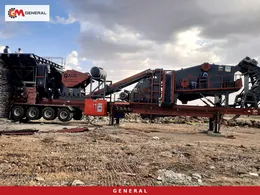
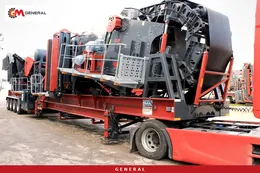
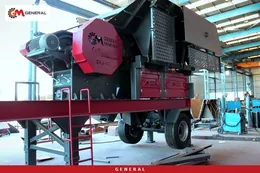
Within this capacity range the General Makina line offers several real options. The table below gives the figures as published on the product pages; the "sound note" column is not a measured value but a qualitative comment that follows from the crushing principle. The actual level of a plant on site depends on the rock, the feed arrangement and the layout, and it can only be known by measuring.
| Model | Crusher | Capacity | Feed size | Power unit | Sound note |
|---|---|---|---|---|---|
| General 800 (wheeled) | PDK 1280 primary impact | 80-150 t/h | 600 mm | 450 kVA generator | Impact character, high reduction in limestone |
| General 01 (wheeled) | GPS 1210 impact | 120-180 t/h | 700 mm | 550 kVA generator | Single crusher, soft starter and frequency control |
| General 944 (wheeled) | GPJ 90 jaw + GM430 cone | 120-180 t/h | 800 mm | 550 kVA generator | Compression crushing, smoother sound |
| General 950 (wheeled) | GPJ 90 jaw + DMK01 impact | 120-180 t/h | 800 mm | 600 kVA generator | Impact sound at the second stage |
| GM 100 (tracked) | GNR-01 impact, 160 kW | 100-180 t/h | 600 mm | 450 kVA | Integrated screen, closed circuit, compact layout |
| GM 90JP (tracked) | GNR 90 jaw, 95 kW | 70-180 t/h | 700 mm | 250 kVA | Primary only, a secondary unit is needed separately |
Where the site is sensitive to noise and the rock is hard, a jaw and cone combination such as the General 944 helps in two ways: the cone crusher sounds smoother than an impact rotor, and wear metal lasts longer in abrasive stone. In soft stone such as limestone, the General 800 is an economical solution that gives cubical product; in that case layout and feed arrangement carry more of the noise control. You can compare all wheeled options on the mobile crushing and screening plants page and the tracked alternatives on the track-mounted mobile crushers page.
Layout: distance, berms and orientation
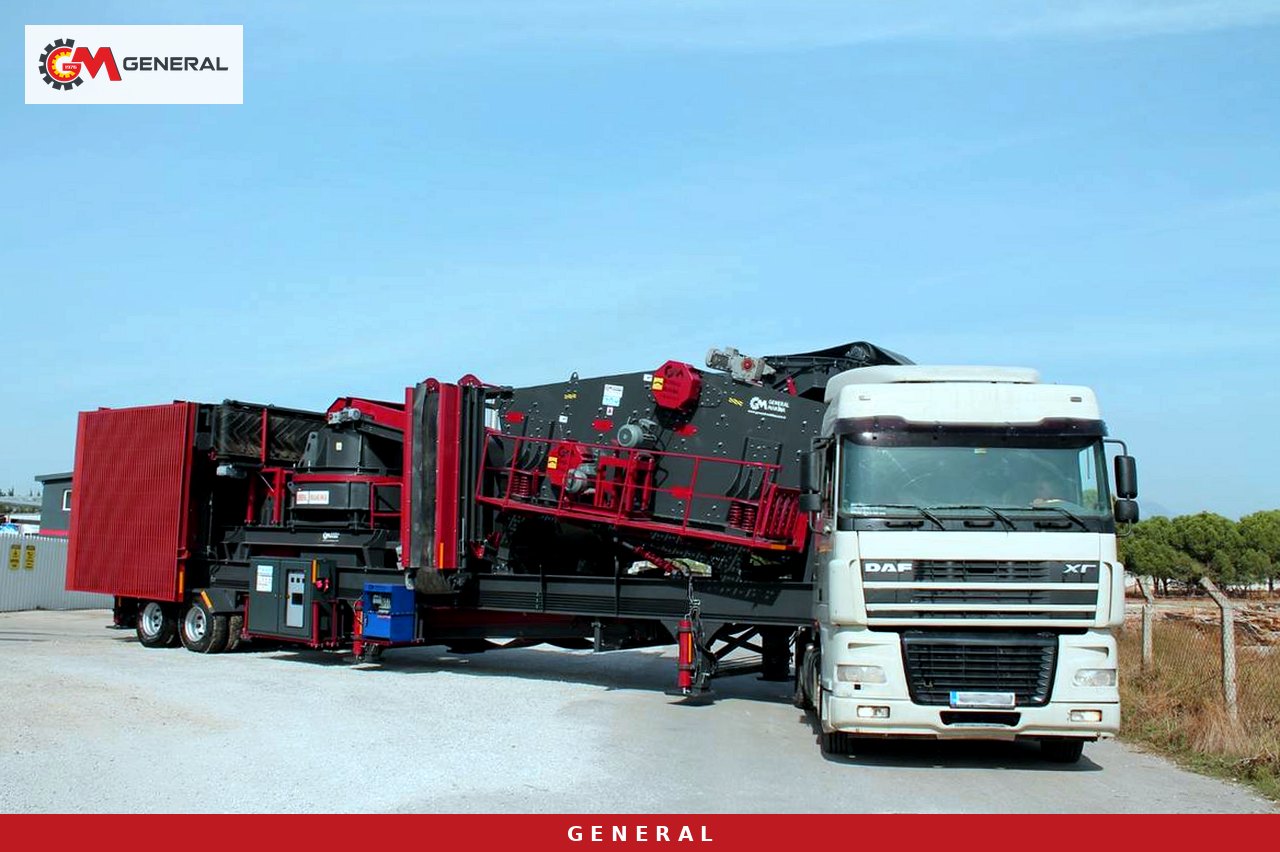
The cheapest noise measure is distance. In open ground, sound spreading from a single point drops by about 6 dB each time the distance to the source doubles. This rule of physics shows why moving the plant a few hundred metres inside the quarry is often more effective than investing in panels. That is the real advantage of a mobile plant: the crusher can be set up close to the face and far from housing, then repositioned as the face advances.
The second tool is topography. The working face itself acts as a natural wall between the plant and the sensitive receiver. Where there is no face, stockpiles and berms built from overburden do the same job. A berm works best close to the source or close to the receiver; a low berm placed halfway between cuts very little. It has to be high enough to break the line of sight: if the top edge of the crusher is visible from the receiver point, the sound reaches it too.
The third point is orientation. Turning the generator exhaust and fan outlet, the open side of the feed hopper and the screen discharge end away from housing costs nothing on installation day. The prevailing wind also has to be considered; receivers downwind hear the plant louder and get its dust from the same direction.
Measures on the machine
Some of the measures below are not standard on the products; they are additional equipment chosen according to the project and the sensitivity of the site. Which ones are needed depends on where the receivers are and on the working hours.
Hopper, chutes and screen surface
Rock falling into an empty hopper is much louder than rock falling into a full one. Always leaving a bed of material in the hopper noticeably reduces truck tipping noise on its own. Hopper and transfer chutes can be lined with rubber or polyurethane; these linings reduce both impact noise and steel wear. On the screen, polyurethane or rubber media run quieter than steel wire, but their effect on open area and capacity has to be judged against the rock. Reducing drop heights at belt transfers and fitting covers to chutes keeps both noise and dust at the source.
Choke-feeding the crusher
When a jaw or cone crusher is choke-fed, stone strikes other stone instead of steel. This improves both crushing efficiency and the sound character. Adjusting the grizzly feeder speed to the crusher load reduces surges. The General 01 plant has a touch panel together with a soft starter and frequency control; this equipment softens start-up loads and helps keep feeding more even.
Generator or grid
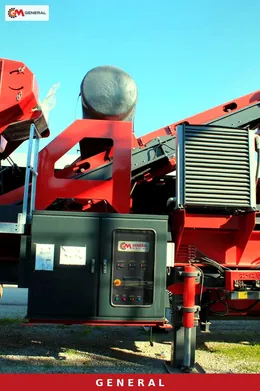
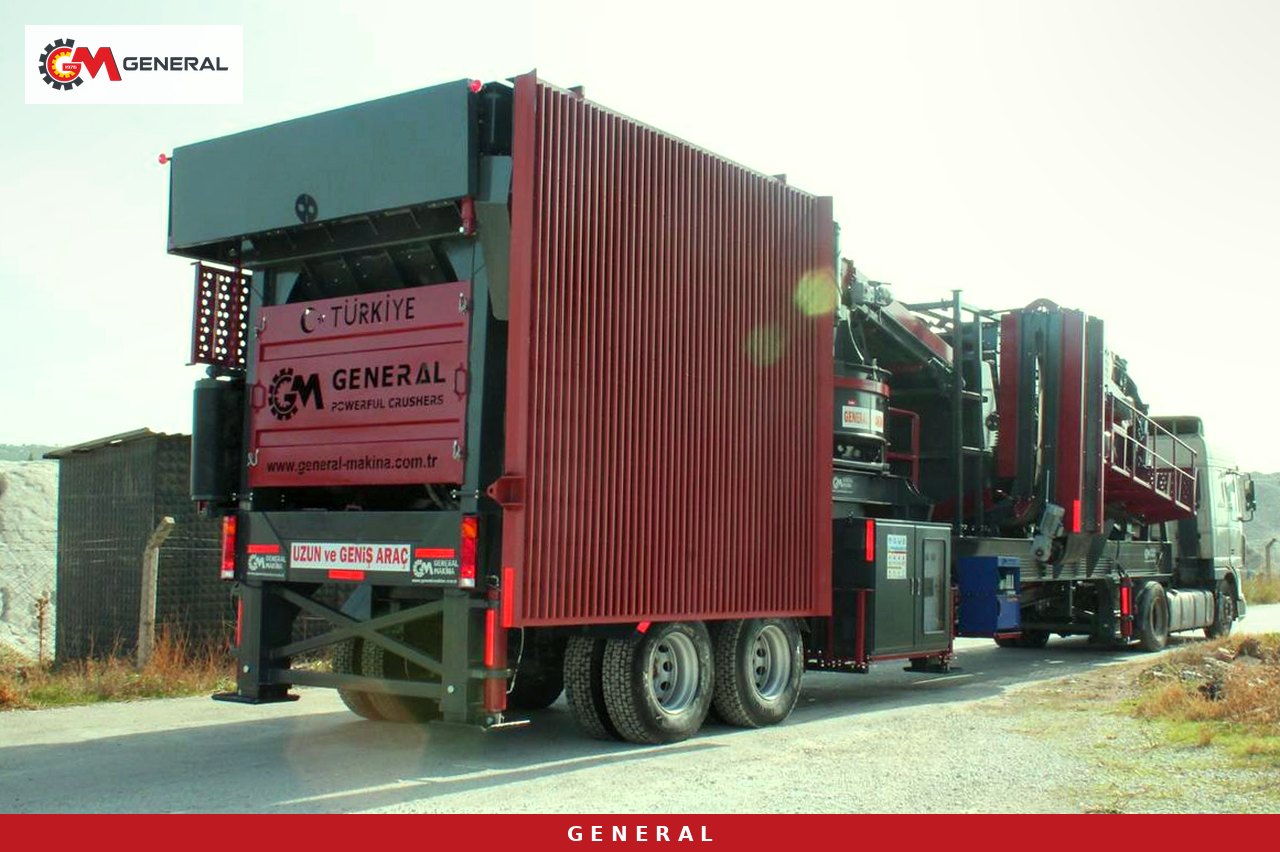
On remote sites a generator cannot be avoided, and these models use power units between 250 and 600 kVA. Choosing a generator with an acoustic canopy and directing the exhaust high and away from receivers makes the clearest difference. Where a grid connection is possible, the generator disappears as a source altogether. For example, the GNR ME2060 mobile screening plant is designed to run on a generator or on the grid and comes with a fan-cooled electrical panel. How a grid connection is made on a crushing line is settled per model at the quotation stage.
Operating discipline and maintenance
A large share of noise complaints comes from neglect rather than design. An idler with a failed bearing, a loose sheet cover or a rotor out of balance soon becomes the loudest point of the plant. A daily walk-round in which the operator listens catches many faults before they grow. For the details of a maintenance routine see our daily and periodic maintenance instruction. For noise, this start-of-shift checklist is useful:
- Are any carrying or return idlers seized or running noisily?
- Are sheet covers and bolts around the hopper, chutes and screen tight?
- Is there loose wire, a torn panel or a broken tensioner on the screen deck?
- Are feeder and screen springs working evenly, or is the body vibrating tilted to one side?
- Are the generator canopy doors closed with seals in place, and is the exhaust free of leaks?
- Has a bed of material been left in the hopper before the first tipping of the morning?
- Can the loader reversing alarm be changed to a less intrusive type for night work?
Planning working hours is also a measure. The noisiest jobs, such as truck tipping, changing crusher wear parts and sheet repairs, can be moved to daytime; if a night shift is needed, only screening and stockpile conveyors can be run.
Measurement, permits and community relations
Noise limits differ from country to country and from region to region within one country. Which limit applies, and at what point and in which time window it is measured, is written in local environmental regulations and in the plant's permit documents. Do not plan a layout before confirming these values with the relevant authority. In practice the method is this: a background measurement is taken at the receiver points before the plant is installed, the same points are measured again with the same instrument after installation, and the difference is recorded. A calibrated sound level meter, the time of measurement, wind conditions and the plant's tonnage at that moment should be logged; otherwise two measurements cannot be compared.
Environmental compliance is about more than sound. The same layout and enclosure measures also reduce dust, and berms also screen the view. Hearing protection for operators is a separate occupational health duty, independent of environmental measures. Open communication with neighbours, announcing working hours in advance and answering complaints with measurements bring a longer-lasting solution than the permit process alone.
Frequently asked questions
How much noise does a mobile crusher make?
Giving a single figure would be wrong. The level depends on crusher type, rock hardness, feed arrangement, generator canopy and measuring distance. The right method for your site is to measure at the same points before and after installation.
Do the acoustic canopy and rubber linings come as standard?
No, these are additional measures selected per project. If you tell us how sensitive the site is, how far the receivers are and what the working hours will be, we show the required measures as separate items in the quotation.
Is a tracked plant quieter than a wheeled one?
The undercarriage has no significant effect on the noise level; crusher type and layout make the difference. The advantage of a tracked plant is that it can relocate quickly as the face advances and stay behind the berm.
What determines the price and delivery?
The model, crusher combination, generator or grid choice, the selected noise and dust measures and the shipping method determine the price. We share the figure in a project-specific quotation once we have this information.
Preparing for a quotation
For a noise-sensitive site, send us the rock type, target tonnage, required product fractions, approximate distance to the nearest housing, working hours and grid availability. With this information we combine the crusher type, a layout proposal and the necessary additional measures in a single quotation. All our products carry ISO 9001 and CE certification and a 1-year warranty, wear parts excluded. You can send your request from our contact page.
Definitions of technical terms: Glossary