EN — English
 TR — Türkçe
 DE — Deutsch
 RU — Русский
 FR — Français
 ES — Español
 AR — العربية
 SR — Српски

Daily and Periodic Maintenance Instruction for a Mobile Crushing Plant
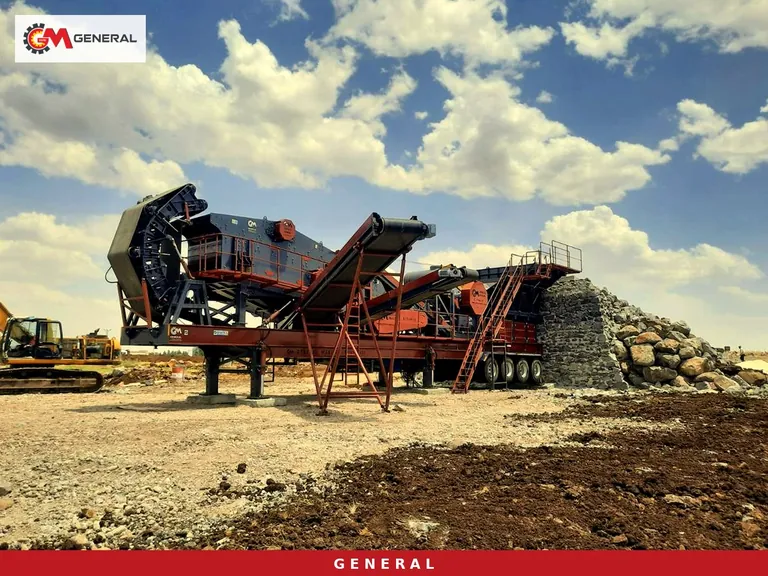
A maintenance instruction differs from a well-meant checklist in one respect: it defines who touches which component, with which energy source isolated, in what order, and where the finding is recorded. This article sets out the skeleton of such an instruction for a mobile crushing and screening plant. We do not repeat our posts on the pre-shift walk-around or on wear-part selection; the aim here is a three-layer routine that an operator can adapt to its own plant and have signed off: daily, weekly and periodic.
We give no hour intervals. The right interval depends on the model, the rock being crushed, the dust load and the daily running time, and the correct figure is written in the machine's operating manual and the manufacturer's maintenance recommendation. The job of the instruction is to build the discipline that carries those intervals onto the site and ties every check to a name and a record.
Scope, responsibilities and the lockout rule
The instruction covers every module on the wheeled chassis: feed hopper and feeder, the crusher or crushers, vibrating screen, conveyors, hydraulic legs and conveyor folding system, the power unit (generator set or grid connection) and the control panel. Across the General Makina range of mobile crushing plants the layout of these modules changes from model to model, but the maintenance logic stays the same.
Three roles, three signatures
- Operator: carries out the daily checks, fills in the shift form and reports abnormal noise, vibration and leaks. Does not take on any job that requires opening a guard or using tools.
- Maintenance technician: runs the weekly tasks, checks tension, lubrication and fastenings, and manages energy isolation.
- Plant manager: plans periodic maintenance, approves parts orders, signs the forms and confirms that open findings have been closed.
In small operations the roles may fall to one person; the signature fields on the form should still stay separate. When nobody writes down who checked what, the skipped step cannot be traced after the next breakdown.
Isolate energy before every job
The first item of the instruction is safety, not maintenance. In General Makina's automation and control system emergency stop buttons, pull-wire switches and guard sensors are wired directly into the safety circuit; when that circuit opens, the equipment stops regardless of any automation command, and lockout-tagout (LOTO) is supported through this circuit. Your instruction should use that structure in this order:
- Feed is stopped and the line is run empty until no material remains on the crusher and belts.
- The line is shut down through the automation in its normal sequence.
- The main isolator and generator output are switched off, a personal lock is fitted and a tag is hung.
- Residual pressure in the hydraulic leg and folding-conveyor circuits is released by the method in the manual; raised parts are secured with mechanical supports.
- The technician presses the start button personally to confirm the line will not run.
Only the person who fitted the lock removes it. When the job is finished, the safety circuit is not closed until the guards are back in place; for points without a guard sensor, add a separate tick box on the form.
Daily maintenance instruction
Before start-up
- Generator: fuel, engine oil and coolant levels; air filter indicator.
- Hydraulic oil level and any wetness at hose connections.
- Feed hopper: bridged material, blocks wedged in the grizzly gap.
- Crusher mouth and chamber empty; no looseness in the setting mechanism.
- Belt surfaces, scrapers and return drums free of caked material.
- Function of the emergency stops and pull-wire switches; this test is never left to the weekly list, it is done every day.
During operation
On automated plants the equipment is started against the material flow, from the stockpile conveyor back to the feeder; when one unit stops, every stage above it stops too. In the first minutes the operator watches the motor currents and the alarm screen on the panel. If the system slows the feeder as the crusher current approaches its limit, that is protection, not a fault. If the same warning keeps recurring through the shift, the feed size or the crusher setting has to be questioned. The operator's ear is also a measuring tool: an irregular knock from the screen, a squeal under a belt or a metallic sound in the crusher goes on the shift form with the time.
At the end of the shift
The line is run empty and stopped. Material built up on the screen deck and under the belts is cleaned off; on days with clayey feed this is not left until the next morning, because dried mud strains both the drums and the screen. Dust on the generator radiator and on the panel ventilation filters is checked. The form is completed, and any open finding is handed to the next shift in writing, not by word of mouth.
Weekly maintenance instruction
Weekly work targets the fastenings and tensions that the daily round cannot reveal. It is done by the technician after the plant has been stopped and locked out.
- Bolts and fastenings: screen body, vibrator motor and crusher chassis connections. Loosening on vibrating parts is the main subject of the weekly check.
- Screen media and tensioning: tears in wire or polyurethane panels, slack in tensioning wedges. A holed screen means oversize ending up in the product.
- Belts and pulleys: tension, cracking and alignment of the crusher and screen drive belts.
- Belt conveyors: belt tracking, seized idlers, splices, wear on scraper rubbers.
- Lubrication: grease points according to the lubrication chart in the manual. Too much grease does as much harm as too little; the quantity is set by the manual.
- Crusher wear parts: jaw plate, blow bar or mantle thickness is measured and recorded; the crusher setting is corrected for wear.
- Electrical: signs of heating at panel terminals, crushed cable trays, broken sensor cables.
The feeder type changes the weekly list. On a vibrating grizzly feeder the springs and vibrator motor fastenings come first. The wobbler feeder used for clayey and wet material does not vibrate; it works with rotating elliptical disc shafts. On the GWB1136 the drive is a motor-gearbox-chain arrangement and the motor power is 18.5 kW. For this feeder the weekly check covers chain tension, gearbox oil level and stones or clay lumps trapped between the discs. The self-cleaning action of the discs does not always eject foreign objects such as rock fragments or metal.
Periodic maintenance: triggers, not a calendar
Periodic maintenance is carried out when the running time stated in the manual is reached or when one of the events below occurs. Write both triggers into your instruction; whichever comes first starts the maintenance.
- Manual interval: the manufacturer's interval for engine oil and filters, hydraulic oil and filters, gearbox oils and bearing grease.
- Site move: after the plant has been towed on the road, check chassis connections, axles and tyres, hydraulic legs, folding conveyor hinges and cable sockets.
- Long standstill: after an off-season or a project gap, look for water in the fuel system, battery charge, condensation in the hydraulic oil and rodent damage to cables.
- Change of material: a new seam, a switch to river gravel or recycling feed changes the wear rate and the crusher setting; increase measuring frequency in the first weeks.
- Recurring alarm: if the automation log shows repeated overcurrent or temperature alarms on the same unit, open a root-cause job without waiting for the interval.
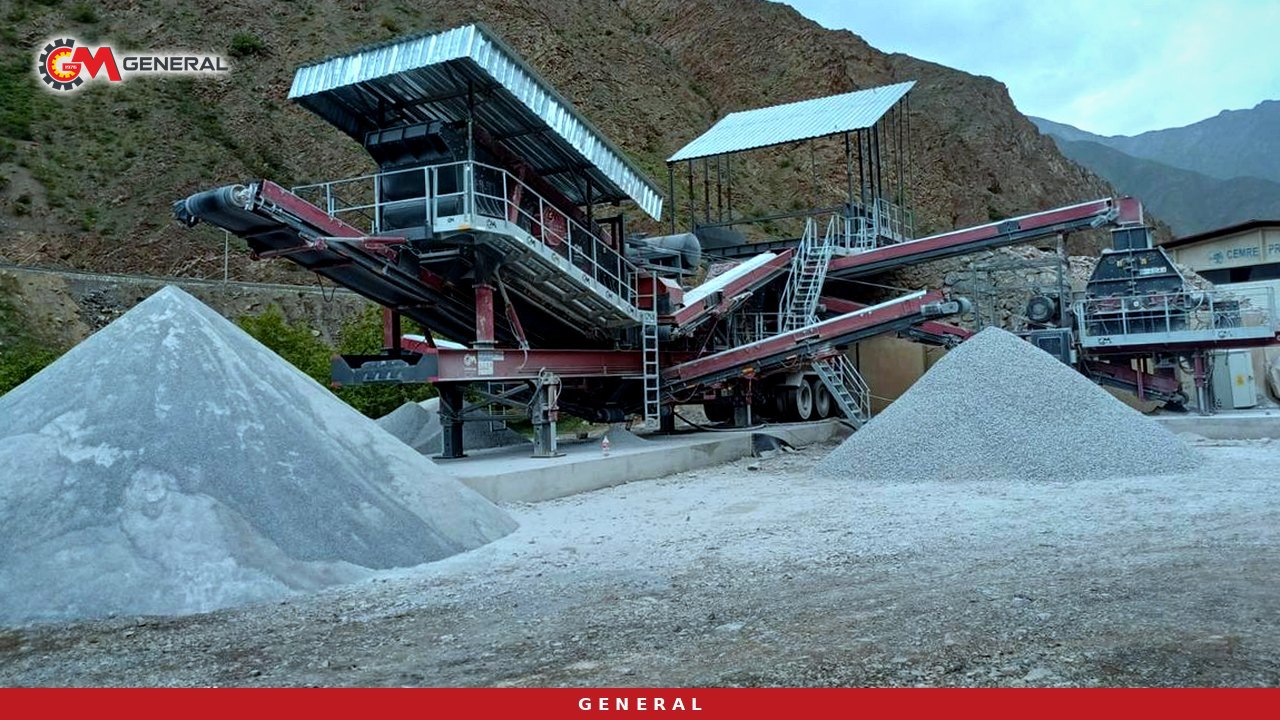
In periodic maintenance the crusher is opened: rotor or jaw bearings, the setting system, blow bar retaining wedges and housing liners are inspected. On the screen, bearing housings and the eccentric mechanism are assessed; on the conveyors, drum bearings and belt splices. The list of parts to be replaced is prepared before maintenance day; ordering a part after the crusher has been opened extends the standstill by the supply time. For alloy selection and cost-per-tonne tracking of wear parts, see our article on maintenance and spare parts management; the parts groups are listed on the spare parts page.
Maintenance focus by model
The same instruction template fits every model, but the weight of each module differs. The table below, based on the technical data on the product pages, shows which component deserves its own heading in the instruction for each model.
| Model | Crusher arrangement | Screen | Power unit | Separate heading in the instruction |
|---|---|---|---|---|
| General 640 | GPJ 60 jaw + GNR 50 impactor | 1200×4000 mm, 3-deck | 300 kVA (optional) | Separate wear record for two crushers; recirculation conveyor |
| General 800 | PDK 1280 primary impactor | 1300×4000 mm, 3-deck | 450 kVA | Blow bar measurement and rotor check |
| General 01 | GPS 1210 impactor (primary+secondary) | 1600×5000 mm, 4-deck | 550 kVA | Access to lower-deck panels on the four-deck screen; soft-starter and frequency control logs |
| General 944 | GPJ 90 jaw + GM430 cone | 1600×5000 mm, 3-deck | 550 kVA | Separate measurement lines for jaw plates and cone mantle |
| General 02 | GPS 1413 primary impactor | 2000×5000 mm, 4-deck | 660 kVA | Hopper and feeder wear at the 1000 mm feed opening |
| Mobil 90 | GPJ 90 jaw | 1600×5000 mm washing, 3/4-deck | 350 kVA | Wash water line, spray nozzles, 600×6000 mm twin screw washer |
| GNR-MC110 | GPJ 110 jaw + DMK03 impactor | 2000×6000 mm, 4-deck | 750 kVA | Connections between the two chassis; separate forms for primary and secondary |
On generator-powered installations the power unit comes with its own maintenance booklet, which should be attached to the plant instruction as an annex. On grid-fed installations that annex is replaced by panel, earthing and cable checks. On washing plants the water line is a layer of its own: blocked nozzles directly affect washing quality on the screen and sand recovery in the screw.
Record keeping: forms, measurements and alarm history
An instruction that stays on paper is not followed on site; the record is what proves it is applied. Three types of record are enough:
- Shift form: date, operator, ticked daily items, observation note.
- Weekly measurement sheet: wear part thicknesses, drive belt and conveyor belt tension, screen panels replaced.
- Periodic maintenance report: the trigger (manual interval or event), work done, parts replaced, notes for the next service.
If the automation panel is networked, shift reports, tonnage produced, downtime and alarm history are logged. Putting this data next to the weekly sheet shows how wear relates to tonnage on your particular site. When a fault occurs, the service team can review the alarm log and make a preliminary diagnosis before travelling; the tidier the record, the faster the diagnosis.
Frequently asked questions
Why do you not give maintenance intervals in hours?
The right interval depends on the model, the abrasiveness of the rock, dust and moisture. The figure in the manual is the starting point; measurements on your site show whether it is adequate under your conditions. An invented hour value leads either to unnecessary stoppages or to maintenance that comes too late.
Should the operator or the technician do the daily check?
The daily check is the operator's job. Any task that involves opening a guard, locking out or using tools belongs to weekly or periodic maintenance, in other words to the technician. That split clarifies both safety and accountability.
Does the warranty cover wear parts?
General Makina machines carry a 1-year warranty; wear parts are excluded. Jaw plates, blow bars and screen media are an operating budget item, and the measurement records in the instruction are the basis for planning that budget.
How do we adapt the instruction to our own plant?
Take the three layers in this article as a template and add the intervals from your manual and the modules of your model. During commissioning, ask the manufacturer's team in writing for the lubrication points and the critical checklist for your model.
Conclusion
A good maintenance instruction is short, role-based and backed by records: the daily layer relies on the operator's eye, the weekly layer on the technician's measurements and the periodic layer on the manual interval and on events at the site. Energy isolation and lockout come before all of them. For model-specific maintenance points, a spare parts list or a quotation for a new plant, get in touch with us.
Definitions of technical terms: Glossary