EN — English
 TR — Türkçe
 DE — Deutsch
 RU — Русский
 FR — Français
 ES — Español
 AR — العربية
 SR — Српски

Extending Hammer Life in an Impact Aggregate Crusher Plant 100-200 TPH
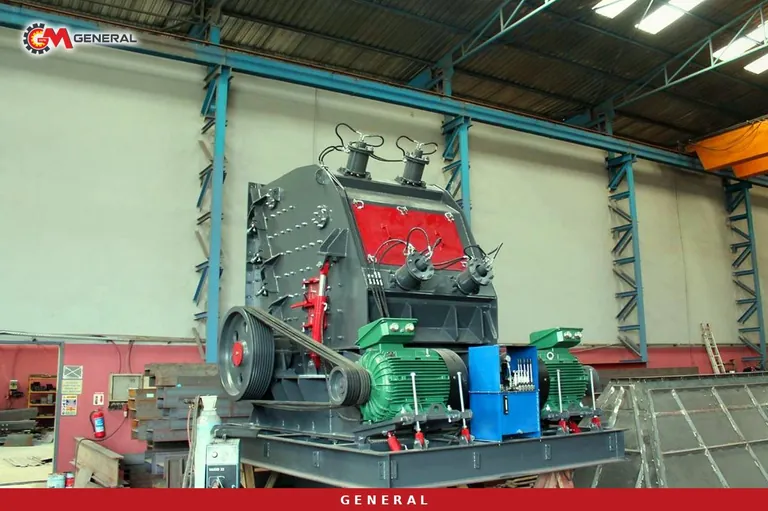
On an impact crusher running 100-200 TPH of limestone, the access door the operator opens most often is the rotor housing door. What he checks inside is always the same: how much the blow bars on the rotor, the parts most site crews simply call "hammers", have lost at their edges. These bars are the main consumable of a horizontal shaft impactor. As their life gets shorter, cost per tonne rises, the product gets coarser and the plant stops more often. This article explains the factors that set hammer life as you can observe them on site, gives the figures of real models in the 100-200 TPH range and proposes a recording routine the maintenance crew can start on the next shift.
A note on terms: the blow bar of an impact crusher is fixed rigidly to the rotor. Freely swinging hammers hinged to the rotor belong to a different machine class, the hammer mill. The advice below is for horizontal shaft impact (HSI) crushers.
Why the blow bar wears out before other parts
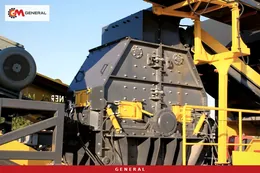
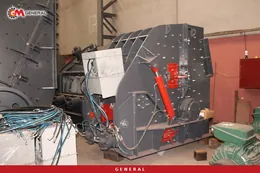
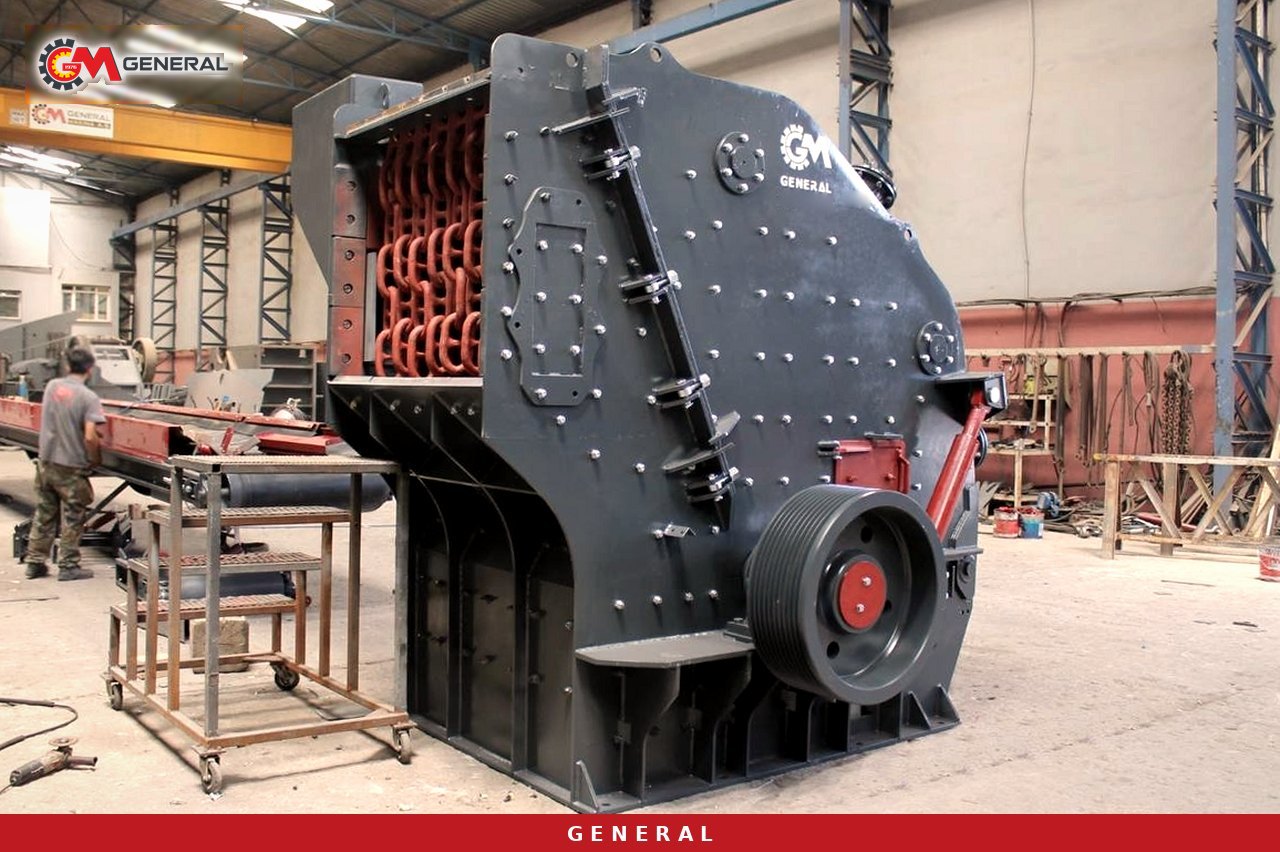
In an impact crusher the rock hits the bars of the spinning rotor, is thrown against the apron plates and breaks. Most of the energy passes through the leading edge of the bar. Apron liners and side liners wear too, but the surface that takes the first blow and loses metal fastest is the outer corner of the bar. Once that corner rounds off, the bar no longer meets the rock with a sharp edge and the rock slides along it instead. Two things follow: wear speeds up and particle shape deteriorates.
You can see this in the product grading as well. If the 0-5 mm share drops and the coarse fraction grows while the apron setting is unchanged, the cause is usually the changed bar profile. That lets you base the replacement decision on product data rather than on a glance.
What really drives wear: the silica content of the rock
Hammer life is governed by the free quartz and silica in the rock, not by its Mohs hardness. The measure for this is the Bond abrasion index (Ai). Limestone usually stays within Ai 0.001-0.03, which is where an impact crusher pays off. Granite, basalt, quartzite and river gravel with more than 10% silica or an Ai above 0.15 can consume a bar within hours. For those rocks a jaw and cone line is the better choice.
Taking a sample from a new quarry and having it tested in a laboratory before the plant is set up prevents unpleasant surprises with parts later. Even within one quarry Ai can change as the face moves, so taking fresh samples a few times a year is a sensible habit.
Clean limestone and dolomite lines
If the feed is clean and free of metal, high-chrome white cast iron bars (about 700-800 HB) give the longest life. In a more abrasive seam, ceramic-reinforced composite (MMC) bars can last roughly 2-3 times as long as high chrome. High chrome is hard but brittle, so the feed must be free of oversized blocks and tramp iron.
Demolition concrete and feed containing steel
Lines that process construction and demolition waste can let rebar, bolts or bucket teeth into the crusher. In this setting a high-chrome bar may crack. A tough manganese or martensitic steel bar is the safer option. The goal here is the alloy that absorbs the blow without breaking, not the hardest alloy.
| Feed | Recommended bar material | Point to watch |
|---|---|---|
| Clean limestone, dolomite | High chrome (about 700-800 HB) | Risk of breakage from big blocks and steel |
| Abrasive seam, high silica | Ceramic-reinforced MMC | If Ai is high, consider jaw + cone first |
| Demolition concrete, steel in feed | Manganese or martensitic steel | A magnet and hand picking also reduce wear |
Impact crushers for 100-200 TPH and how they wear
Machines in this capacity range differ in rotor width, feed opening and motor power. A wider rotor spreads the same tonnage over more bar surface, which reduces wear per unit of surface. The figures below come from the technical data on our product pages.
| Model | Stage | Rotor (mm) | Max. feed (mm) | Motor / power | Capacity (t/h) |
|---|---|---|---|---|---|
| GPS-1210 | Primary + secondary in one body | 1200×1000 | 600 | 160 kW | 100-250 |
| GNR DMK01 | Secondary | 1100×1000 | 800 | 160 kW | 120-180 |
| GNR DMK02 | Secondary | 1100×1200 | 800 | 200 kW | 170-250 |
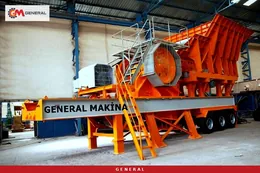
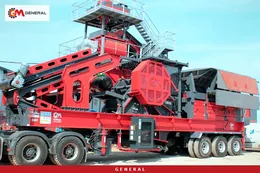
| General 01 (with GPS 1210) | Wheeled mobile plant | — | 700 | 550 kVA generator | 120-180 |
| GM 100 (with GNR-01) | Tracked mobile | — | 600 | 160 kW | 100-180 |
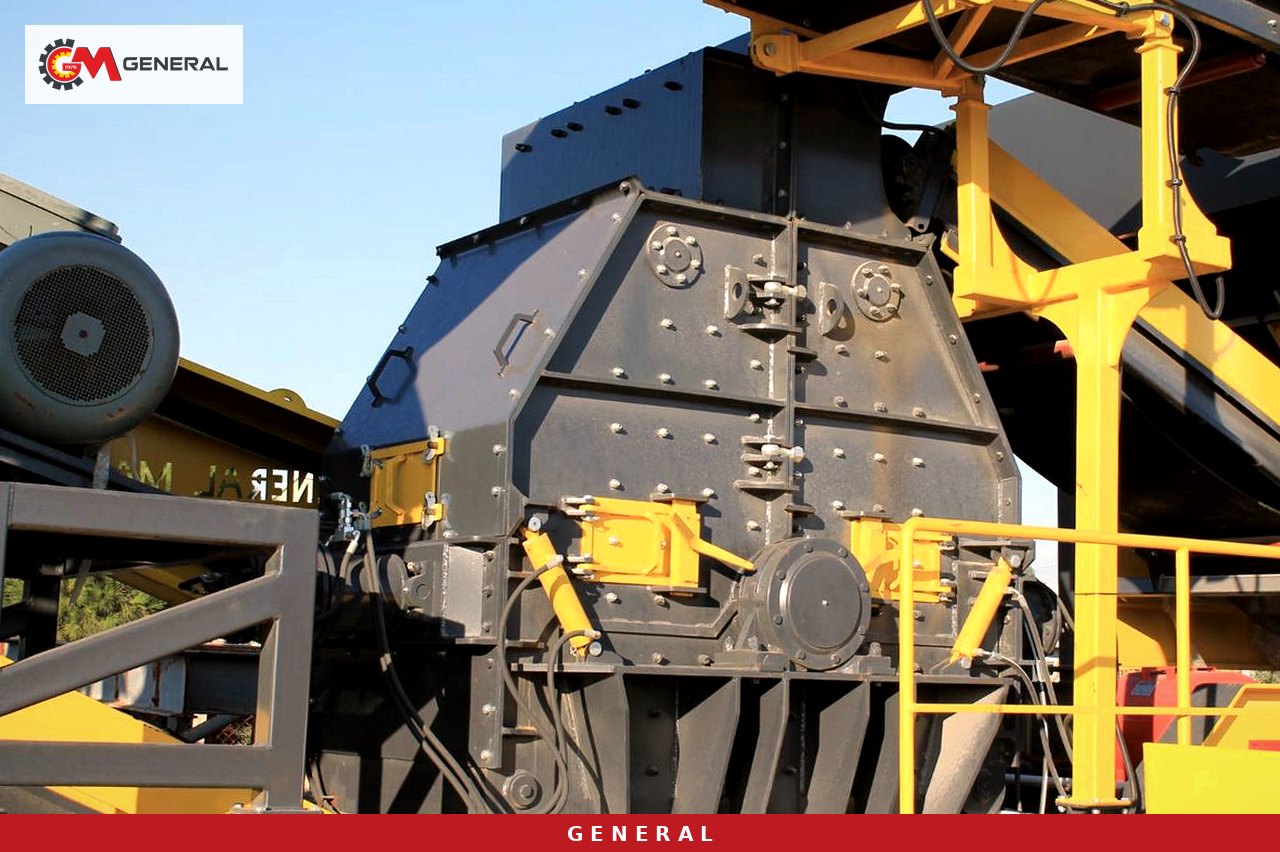
The GPS series performs primary and secondary crushing in one body, so it carries a single wear set. Two separate machines mean two bar stocks and two replacement stoppages; with the GPS one change is enough. On the other hand, because coarse feed and fine product are handled by the same rotor, the bar takes both impact and abrasion loads and the alloy must be chosen with more care. The GNR DMK secondary impact crusherworking behind a primary jaw crusher, receives smaller and more even feed, so its bar life is more predictable; its typical reduction ratio is about 10:1. You can compare the other options in our crushers category.
Feed arrangement and pre-screening
A large part of bar life depends on how material enters the crusher. When soil and fines go in, the bar beats grains that are already small and wear rises for nothing. A vibrating grizzly feeder removes this fine fraction through its by-pass grid before it reaches the crusher.
The second point is spreading material across the rotor width. If the feed piles up on one side, that end of the bars becomes hollow while the other end stays almost new. Such a bar is replaced early and half of its metal goes to scrap. Adjusting the chute angle and the feeder discharge so that the flow covers the full rotor width costs nothing extra.
The third is top size. The feed limit of the GPS-1210 is 600 mm, that of the DMK series 800 mm. Blocks above these limits strain the rotor and can break a high-chrome bar. Blast pattern design and a loader operator who sets oversize aside are therefore maintenance topics.
Turning, set replacement and apron adjustment
Turning the bar
Bars with a symmetrical profile can be turned 180 degrees when one edge is worn and run on the second edge. A bar turned at the right time crushes more tonnes in total than one whose single edge is used to the end. If it is turned too late, the seating area in the holder also wears and the second edge cannot be used safely. Follow the manufacturer's wear limit mark.
Replacing in sets and keeping the balance
Bars on the rotor are changed in opposite pairs or as a full set. Replacing a single bar with a new one upsets rotor balance, increases vibration and loads the bearings. Weighing new bars before fitting and matching the weight of opposite bars is good site practice.
Following the apron gap
As the bar loses metal, the gap between rotor and apron grows and the product gets coarser. Closing the apron setting in step with wear keeps the product size. While adjusting, make sure the gap is even along the rotor circumference; a skewed apron loads one side of the bar.
Recording wear cost per tonne
Comparing bar prices on their own is misleading. The right measure is the cost per tonne crushed over the life of a set. The calculation is:
Wear cost per tonne = (bar set cost + replacement labour + value of production lost during the stop) / tonnes crushed over the set life
Hypothetical example: set cost and labour total 100 units, lost production 40 units. If the set crushes 60,000 tonnes, the cost is about 2.3 units per 1,000 tonnes. If a more expensive alloy costs 170 units (lost production again 40 units) and crushes 120,000 tonnes, the cost falls to 1.75 units per 1,000 tonnes. These numbers only illustrate the method; use your own plant data. Our article on wear part life and replacement intervals covers the topic for other crusher types.
For the calculation to work, the same information has to be logged every shift. Give the maintenance crew this list:
- Date the set was fitted, alloy type and the weighbridge or belt scale reading
- Weekly bar profile measurement (same points, with a template)
- Turning date and tonnes crushed up to that point
- Every change to the apron setting
- Face changes in the quarry, higher moisture or incidents with steel in the feed
- Change in the 0-5 mm share in the product grading
- Signature confirming lockout and tagout steps were followed
The last item is about safety. Before the rotor door is opened, power must be isolated and locked, the rotor secured against turning and the heavy bars moved with lifting equipment. A fast but unsafe change risks injury and can stop the plant for far longer.
Frequently asked questions
When should a blow bar be replaced?
When it reaches the manufacturer's wear limit mark, or when the product has become so coarse that the apron setting can no longer correct it. Tracking tonnage and profile gives a better answer than a fixed hour interval.
Can an impact crusher be used in a granite plant?
It will crush granite, but the high silica consumes the bar very quickly. In high-Ai rock a primary jaw and secondary cone line is usually cheaper per tonne.
Can bars be supplied for another brand of crusher?
Yes. Our wear parts page covers cross-brand supply of jaw plates, blow bars and cone liners. All items are listed in the spare parts category.
Does the warranty cover blow bars?
Our machines carry a 1-year warranty; blow bars and liners are wear parts and fall outside that cover.
What to prepare for a quotation
Hammer life is the sum of machine selection and operating habits: a crusher suited to the rock, clean and even feed, an alloy matched to the material and a replacement plan based on records. As a team that has built crushing plants in Izmir since 1976, with ISO 9001 and CE certified machines, we look at these four elements together. Contact us through our contact page with your rock type, target capacity, required product sizes and current bar consumption records, and we will work out the right crusher and alloy for your quarry with you.
Definitions of technical terms: Glossary