EN — English
 TR — Türkçe
 DE — Deutsch
 RU — Русский
 FR — Français
 ES — Español
 AR — العربية
 SR — Српски

Egypt New Capital Aggregate Crusher Plant 200-300 TPH, Impact Type
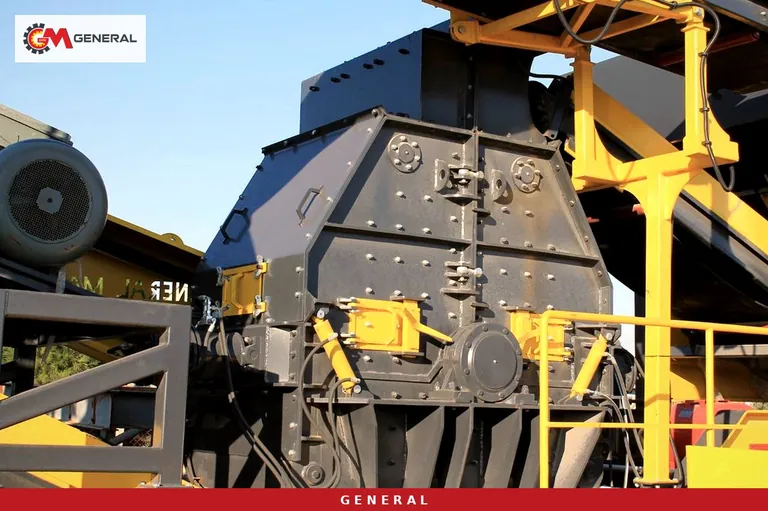
The New Administrative Capital rising east of Cairo, together with the housing, road and utility sites around it, asks one thing of a crushing plant: well-shaped aggregate flowing without interruption to batching plants and paving crews. A mobile impact plant working in the 200-300 TPH band fits that demand well, because much of the stone coming off the desert plateau in this area is limestone and dolomite, and a horizontal-shaft impactor turns these rocks into cubical product with a high reduction ratio in a single stage. Below we compare the real models that fall into this range, with their figures, and state plainly when an impact plant would be the wrong choice.
One point up front: the aggregate specifications, grading limits and schedules of individual New Capital projects belong to the relevant authority and the contractor. This article focuses on equipment selection; always confirm the project specification against the tender documents of the responsible authority.
What do New Capital sites need from the crusher?
On large urban programmes aggregate is never a single product. The same quarry is usually asked for four separate streams, and crusher selection depends on how these streams relate to each other:
- Concrete aggregate: cubical crushed stone with a low share of flaky particles for ready-mix and precast production. This is where an impact crusher is strongest.
- Manufactured sand (0-5 mm): completes the fine fraction of concrete where natural sand is scarce or contaminated.
- Road sub-base and wet-mix material: a mix with a defined grading and more tolerance on particle shape.
- Fill and stabilised material: soil and fines removed at pre-screening often end up here.
Wheeled plants with four-deck screens, such as the General 02 and General 03, deliver 0-5 / 5-12 / 12-19 / 19-40 mm fractions to separate stockpiles in one pass. That means the sizes a batching plant needs are covered without a separate screening group. If the specification calls for different cut points, the screen meshes are redefined at order stage to suit the material.
Limestone and dolomite: the case for impact crushing
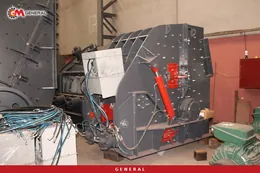
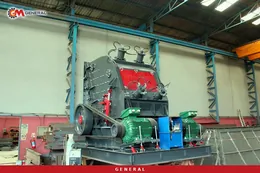
Limestone and dolomite quarries are common in the desert belt east of Cairo and in the hills towards Suez. These rocks have low abrasiveness, so a horizontal-shaft impactor (HSI) wears its blow bars at a reasonable rate, and according to GNR PDK series data it can reach reduction ratios of up to 20:1 in limestone. A jaw primary works at a lower ratio and usually needs a second crusher behind it. The result is fewer machines, fewer belt transfers and fewer power-consuming units in an impact line. We cover limestone-specific crusher selection separately in our article on high-efficiency mobile crushers for limestone.
Do not decide before testing quarry samples
Even within one district, silica content changes from bed to bed. Chert bands or sandy interlayers shorten blow bar life noticeably. Having a few quarry samples tested in a laboratory for abrasion index (Ai) and compressive strength at quotation stage turns the decision from a guess into data. The limit stated on the GNR PDK primary impact crusher page is clear: in material with more than 10% silica or an Ai above 0.15, blow bars can be consumed within hours.
If the feed turns out to be basalt or siliceous gravel
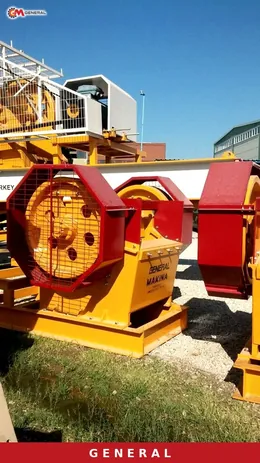
Egypt also has basalt and granite quarries, and some contractors source aggregate from more distant hard-rock pits. In that case an impact primary is the wrong choice. The General 950, which carries a jaw primary and an impact secondary on one chassis (120-180 t/h, 800 mm feed, 600 kVA), is built for hard stone; the 200-300 t/h target is reached by running two units in parallel. Buyers who want even lower wear cost can look at the jaw-plus-cone General 944. All crusher types are listed on the rock and stone crushers page.
Impact configurations within 200-300 TPH
The table below is compiled from product page data. Capacities are ranges that shift with the material and the required product curve; the upper end of a model is expected in easy-breaking stone such as limestone, the lower end in tougher feed.
| Configuration | Mobility | Capacity (t/h) | Max. feed (mm) | Crusher | Screen | Power | Weight (kg) |
|---|---|---|---|---|---|---|---|
| General 02 | Wheeled, 2 axles | 250-300 | 1000 | GPS 1413 impact | 2000×5000 mm, 4 decks | 660 kVA | 76,000 |
| General 03 | Wheeled, 4 axles | 250-375 | 900 | GPS 1415 impact | 2400×5000 mm, 4 decks | 750 kVA | — |
| GM 125 | Tracked, self-propelled | 150-250 | 700 | GNR PDK02, 200 kW | — | 550 kVA | 48,000 |
| M-PDK02 | Portable chassis with feeder | 200-300 | 1200 | Primary HSI, 250 kW | — | — | 45,000 |
| 2 × General 800 | Wheeled, two chassis | 2 × 80-150 | 600 | PDK 1280 impact | 1300×4000 mm, 3 decks (each) | 2 × 450 kVA | 2 × 35,000 |
Wheeled models that meet the target on one chassis
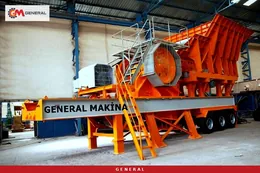
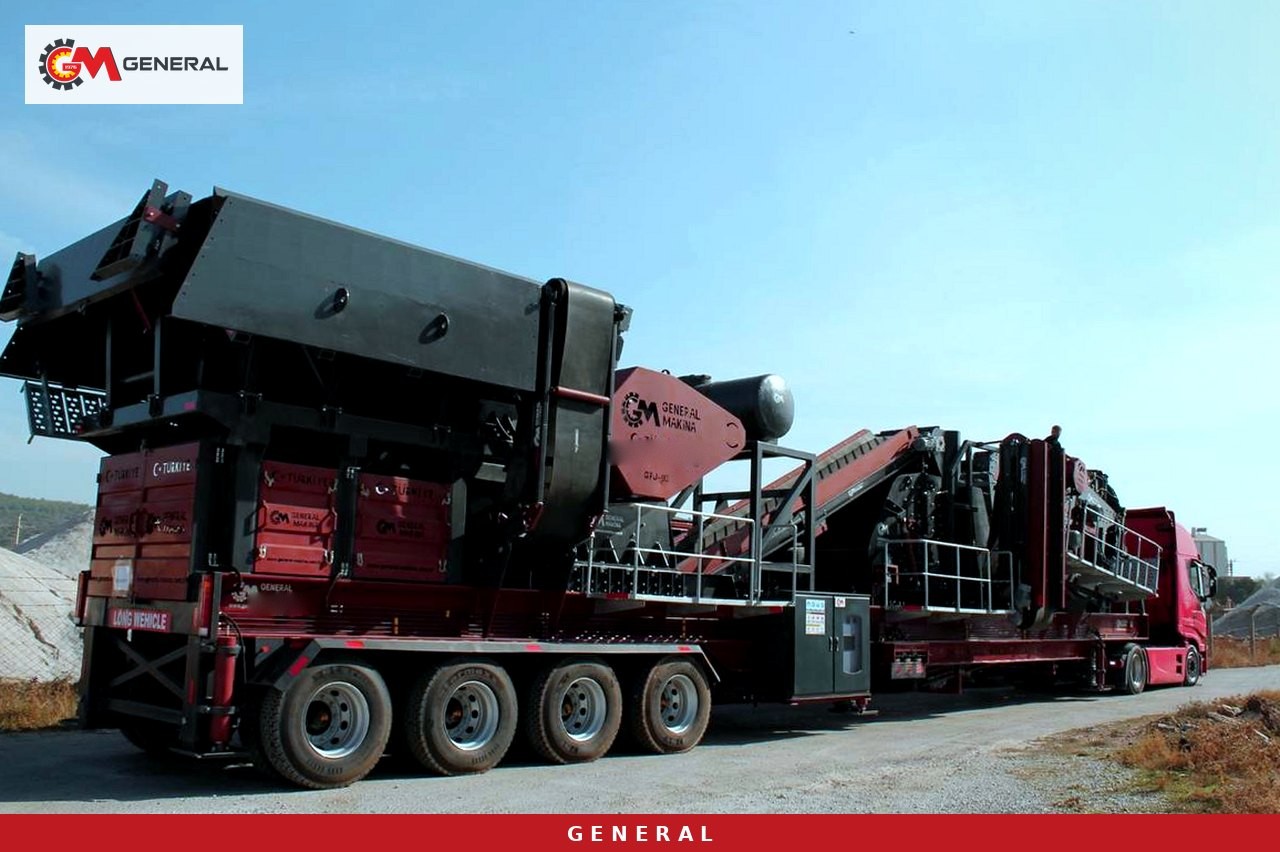
The General 02 accepts large post-blast blocks through its 1000 mm inlet without pre-crushing; it returns oversize to the rotor in closed circuit and delivers stockpile-ready product with its four-deck screen. This is the model that sits right in the middle of the 200-300 TPH target. The General 03 carries the same layout up to 375 t/h with a wider 2400×5000 mm screen and a 750 kVA power unit; it leaves headroom for a quarry that will feed several batching plants and plans to raise output later. Its four-axle chassis is built to international transport standards. The rest of the series is on the wheeled mobile crushing plants page.
Tracked and portable alternatives
The GM 125 is a self-propelled impact crusher delivering 150-250 t/h; it earns its place where the machine moves often inside the quarry and the blasting face advances quickly. It has no integrated screen, so a mobile screening unit must be added behind it for concrete aggregate. Tracked options are compared on the tracked mobile crushers page. The M-PDK02 combines a primary HSI with a feeder hopper on one chassis, produces 0-70 mm and should be planned to run ahead of a screening group. Two General 800 units in parallel suit an operator who does not want the whole line to stop while one machine is in maintenance: the remaining unit keeps producing at 80-150 t/h.
Stay mobile or move to a stationary line?
Work around the New Capital is a construction programme spread over years, which means a mobile plant is not automatically the right answer. Three questions settle it:
- How many years will the quarry run in the same place? If the stone source is fixed and contracts are long, a stationary line on concrete foundations offers a larger feed opening, more screen decks and up to 8 product sizes. A stationary layout with a GNR PDK01 primary makes sense here.
- Will the plant move between sites? For a contractor who wants to produce aggregate close to different road sections, a wheeled plant gives quick set-up with folding conveyors and support legs, with no excavation or foundations.
- How firm are permits and land allocation? If the quarry licence or land use is uncertain, a mobile investment reduces risk; the machine can be pulled to another site.
A common middle path also exists: start with a wheeled impact plant, and once the quarry has proven its yield, build a stationary line on the same site and move the mobile unit to a new project.
Keeping an impact line productive in desert climate
The New Capital area is hot, dry and full of fine wind-blown dust. How an impact crusher performs here depends on operating discipline as much as on the machine itself.
Blow bar alloy: in clean, low-silica limestone, high-chrome white cast iron gives long life. If the feed carries a risk of tramp metal such as construction waste, steel scrap or bucket teeth, a tougher manganese or martensitic alloy is chosen. The alloy decision directly sets wear cost per tonne; plan the spare blow bar set from the same alloy with the first order.
Dust: water-spray dust suppression at the crusher discharge, above the screen and at belt transfer points, together with conveyor covers, are measures that can be selected per project. Where water is limited, misting nozzles do the job with less water. Dust is an environmental matter, and it also affects screen meshes, bearings and engine cooling.
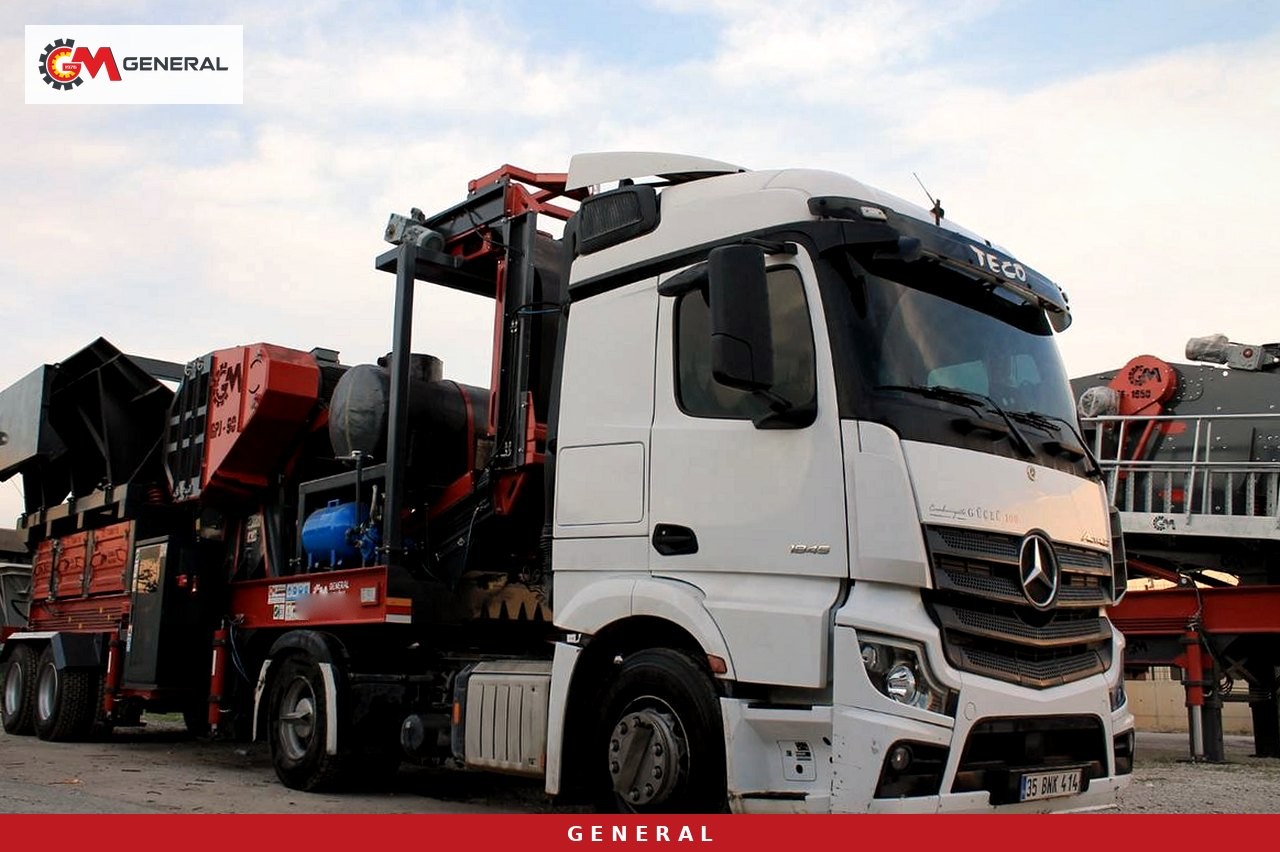
Power and cooling: the General 02 comes with a 660 kVA power unit and the General 03 with 750 kVA as standard. If site grid power is not yet available, the line runs independently on these generators. In the heat, cleaning radiator cores and air filters at the start of each shift is the cheapest protection against overheating stops.
Feed arrangement: grizzly pre-screening removes soil and fine sand before they reach the crusher. The GM 125 has a 1360×2160 mm grizzly as standard; on the other models the pre-screening layout is defined per project. Keeping stripped desert overburden out of the rotor extends blow bar life.
Shipping and site layout
Shipment from Izmir to Egypt can be planned through ports on the Mediterranean side or on the Red Sea coast; the choice depends on road distance from port to site and on the port's handling facilities. The wheeled General series travels on a single chassis, so it goes from port to site behind a tractor unit. The General 02's transport dimensions of 4340×20600×4500 mm drive route permits and vessel selection. The tracked GM 125 arrives on a lowbed and then positions itself on its own tracks.
The layout needs a level, compacted platform, a feed ramp wide enough for trucks to turn, and enough room for product stockpiles. North Africa is among the regions General Makina exports to; even so, first commissioning, technical attendance and the initial spare parts package should be agreed in writing at quotation stage. The plant is ISO 9001 and CE certified and is covered by a 1-year warranty, wear parts excluded.
Frequently asked questions
General 02 or General 03 for a New Capital job?
If the target is steadily 250-300 TPH, the General 02 is enough and its 1000 mm inlet takes large blocks easily. For a quarry that will feed more than one batching plant or expects to raise capacity later, the General 03 with its larger screen leaves headroom.
Can an impact plant cover manufactured sand demand?
The four-deck screen separates the 0-5 mm fraction, and in limestone this product is adequate for most work. If the concrete specification asks for a higher sand share or a specific fines limit, adding a VSI or a washing unit to the line may be needed.
Can the same plant crush basalt later?
It can, but blow bar consumption stops being economical. If the main feed is permanently switching to basalt, planning a jaw-primary line (General 950 or 944) is the better route.
What determines the price?
Price depends on model, screen and power unit selection, extra equipment such as dust suppression, blow bar alloy and the shipping method. Send us the rock type, target tonnage and required fractions, and a project-specific quotation is prepared.
Decision summary
If you will crush limestone or dolomite around the New Capital and need 200-300 TPH, the General 02 is the first candidate. For growth headroom choose the General 03; for constant relocation inside the quarry, a GM 125 plus a separate screening unit; for uninterrupted output, two General 800 plants. If the feed turns to hard rock, drop the impact primary. Share your sample analysis and target products through our contact page and we will send a configuration and quotation prepared for your quarry conditions.
Definitions of technical terms: Glossary