EN — English
 TR — Türkçe
 DE — Deutsch
 RU — Русский
 FR — Français
 ES — Español
 AR — العربية
 SR — Српски

Egypt Dolomite Mobile Impact Aggregate Crusher Plant 120-180 TPH
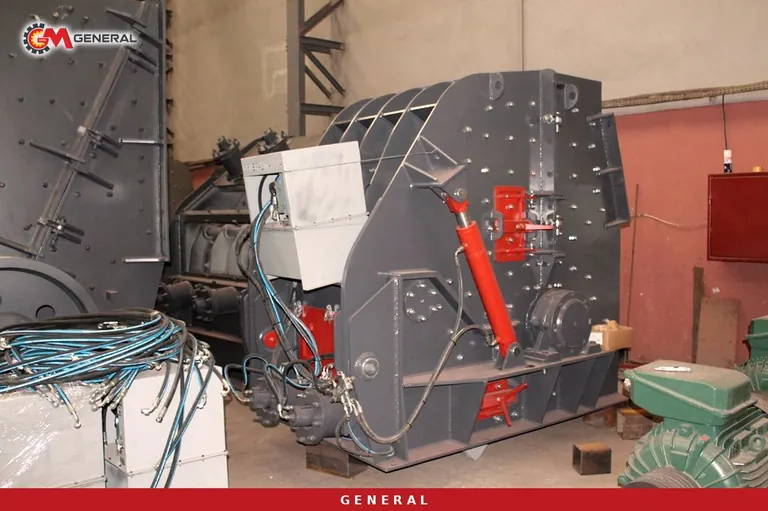
A contractor planning to crush dolomite in Egypt usually opens with one question: "will an impact crusher survive this rock?" It is a fair question. Dolomite is a close relative of limestone, yet it is slightly harder and denser, and some of its beds carry siliceous bands that eat crusher wear parts quickly. A mobile impact crusher aimed at 120-180 TPH therefore cannot be chosen from a capacity table alone; first you need to understand what kind of dolomite the quarry actually holds. This article walks through the properties of dolomite that matter to the crusher, the real models in our range that cover this band, and the conditions an Egyptian site brings with it.
How dolomite behaves inside a crusher
Carbonate rocks cover large parts of Egypt; dolomite horizons interbedded with limestone are common in the mountainous belt around the Gulf of Suez, in the Eastern Desert and in Sinai. Because the degree of dolomitisation can change even within one quarry, choosing a machine on the strength of a single sample is risky. From the crusher's point of view, three properties decide the outcome.
Hardness and density
Pure dolomite is somewhat harder than calcite-rich limestone and needs more energy to break. In an impact crusher this means a slightly coarser product at the same rotor speed, or a slightly higher power draw. The practical consequence: a capacity worked out for limestone may not carry over one-to-one to dolomite, so if you plan to run near the top of the target band, leave a margin when you pick the model.
Silica, chert and clay inclusions
The real threat to an impact crusher is not hardness but silica. If chert nodules or sandy bands sit between the dolomite layers, blow bars and impact aprons wear faster than expected. Clay inclusions, on the other hand, raise the amount of dusty fines and blind the screen meshes. That is why we recommend silica content and abrasiveness tests on samples taken from the quarry; the result can change the choice of wear-part material and even the crusher type.
Fines and dust
Dolomite produces a noticeable share of 0-5 mm when it is broken by impact. This material can become manufactured sand for concrete, but if the dust content is high, washing or air classification may be needed. On a dry, windy desert site the same fines are also a dust-control issue.
Which machine does what in the 120-180 TPH band?
For this capacity range, three real impact-based options stand out in our product line. The figures below come from the technical tables on the product pages; final screen apertures and grading are set per order to suit the material.
| Item | General 01 (wheeled) | GM 100 (tracked) | GM 125 (tracked) |
|---|---|---|---|
| Capacity | 120-180 t/h | 100-180 t/h | 150-250 t/h |
| Crusher | GPS 1210, two stages in one body | GNR-01, 160 kW | GNR PDK02, 200 kW |
| Max. feed size | 700 mm | 600 mm | 700 mm |
| Screen | 1600×5000 mm, four-deck | 1500×5500 mm, triple-deck | None on board |
| Power | 550 kVA | 450 kVA | 550 kVA |
| Weight | 55,000 kg | 42,000 kg | 48,000 kg |
| Hopper | — | 3.6 m³ | 6 m³ |
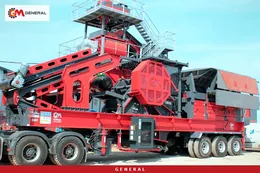
The point to watch when reading the table: the General 01 is the single-chassis answer that covers the band on its own and with four separate products (0-5 / 5-12 / 12-19 / 19-40 mm). The GM 100 sits in the lower and middle part of the same band and runs in closed circuit thanks to its triple-deck screen. The GM 125 leaves headroom on capacity but carries no screen; if the dolomite must be split into fractions for concrete and asphalt, a screening unit is added beside it. All wheeled models are listed on the mobile crushing and screening plants page.
A simple calculation helps translate the target into a machine: hourly requirement = daily sales target ÷ net operating hours. As a hypothetical example, 1,200 tonnes of sales per day with 8 net hours left after stoppages means 150 TPH. That figure lands in the middle of the General 01's 120-180 TPH band. If the same target is squeezed into 7 hours, the requirement climbs to roughly 171 TPH and approaches the top of the band; bearing in mind that dolomite is harder than limestone, the GM 125 in the 150-250 TPH range or a second unit should then be considered. In short, base the choice on your own quarry's net running hours, not on the table capacity.
Two stages in the GPS body: the upside and the limit on dolomite
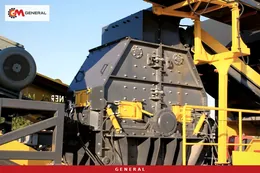
The GPS series impact crusher at the heart of the General 01 carries out primary and secondary crushing in the same body. Large blocks are shattered in the rotor's first impact zone and then reduced to cubical size in front of a second, more closely set apron. In the GPS 1210 the rotor measures 1200×1000 mm and the drive is rated at 160 kW. Our product page recommends this series for low-to-medium abrasive rock such as limestone and dolomite, and does not recommend it for high-silica granite or basalt.
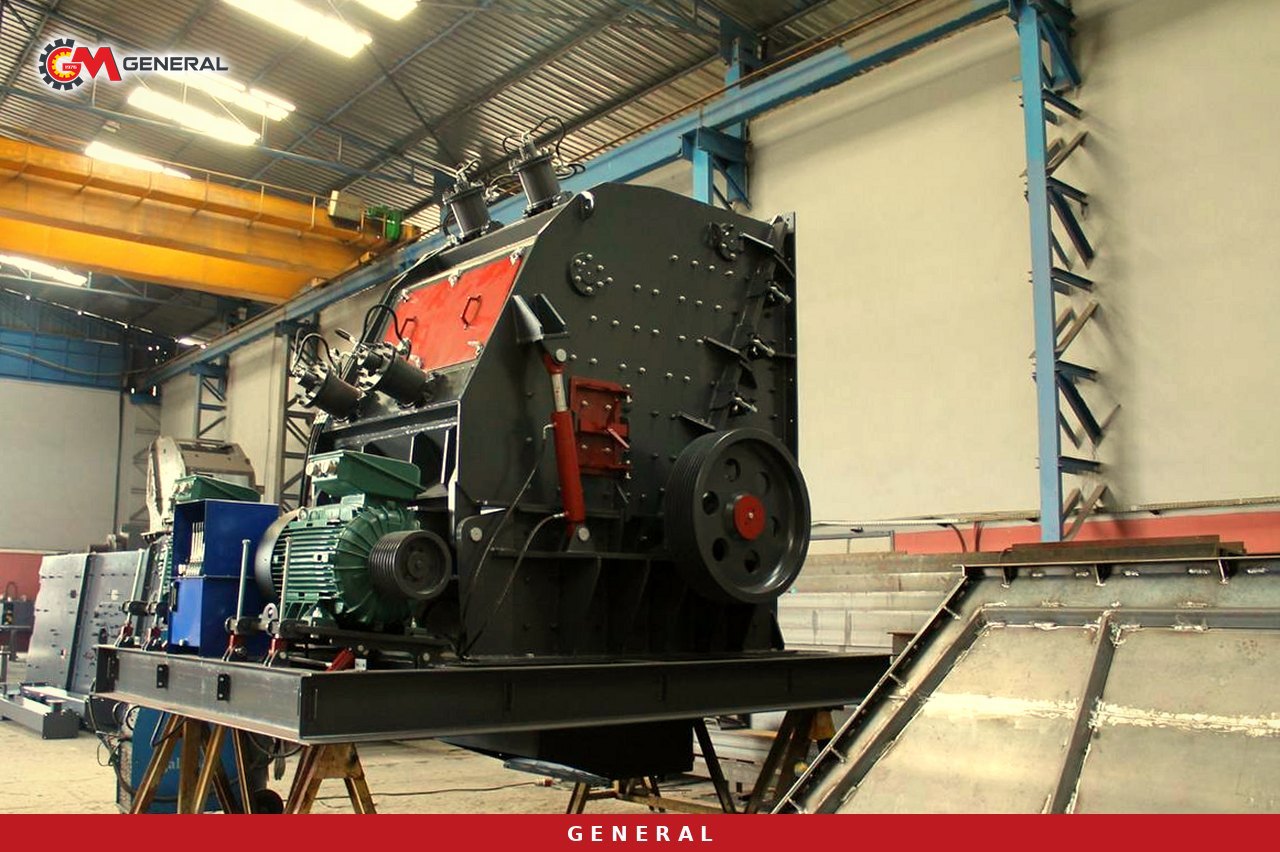
On dolomite this layout has two concrete benefits. First, with no second crusher and no transfer belts in between, the plant runs on one wear set and one drive group, which shortens the spare-parts list. Second, a cubical particle shape is exactly what concrete strength and asphalt laying call for. The limit is silica: if chert content rises in the samples, the blow-bar material has to be reconsidered and, where needed, the project should move to a line with a jaw primary. High-chrome blow bars suit clean carbonate rock, while manganese or martensitic bars are preferred for tougher feed.
Wheels or tracks? Deciding for an Egyptian quarry
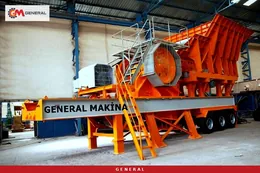
The deciding factor is how often the machine will move. If the quarry face will advance in the same place for years and the plant will be relocated only a few times, the General 01 makes sense: feeder, crusher, four-deck screen and stockpile belts share one chassis, the transport dimensions are 4300×18500×4500 mm, and it is towed by a tractor unit on the road.
If the blasting point changes often, or the contractor will take the same machine from site to site, the tracked options come forward. The GM 100 drives itself on Strickland tracks and needs no foundation; its grizzly pre-screen removes clay and soil before the crusher. With coarser, harder dolomite feed, the GM 125 works more comfortably with its 200 kW crusher and 6 m³ hopper. The whole tracked family is on the tracked mobile crushers page.
Our guide to mobile crushers for limestone is also useful in mixed quarries where dolomite grades into limestone.
Preparing an impact line for Egyptian site conditions
Most quarries in Egypt sit on dry, wind-exposed sites far from towns. All three conditions feed straight into the machine configuration.
- Power: At a quarry far from the grid, a generator is essential. The product pages list 550 kVA for the General 01 and 450 kVA for the GM 100. In hot weather, generator and motor cooling capacity should be checked for the specific project.
- Dust: The fines that dolomite produces become both an environmental and a machine problem once the wind picks them up. Water-spray dust suppression, belt covers and air-filter maintenance are measures that can be selected per project.
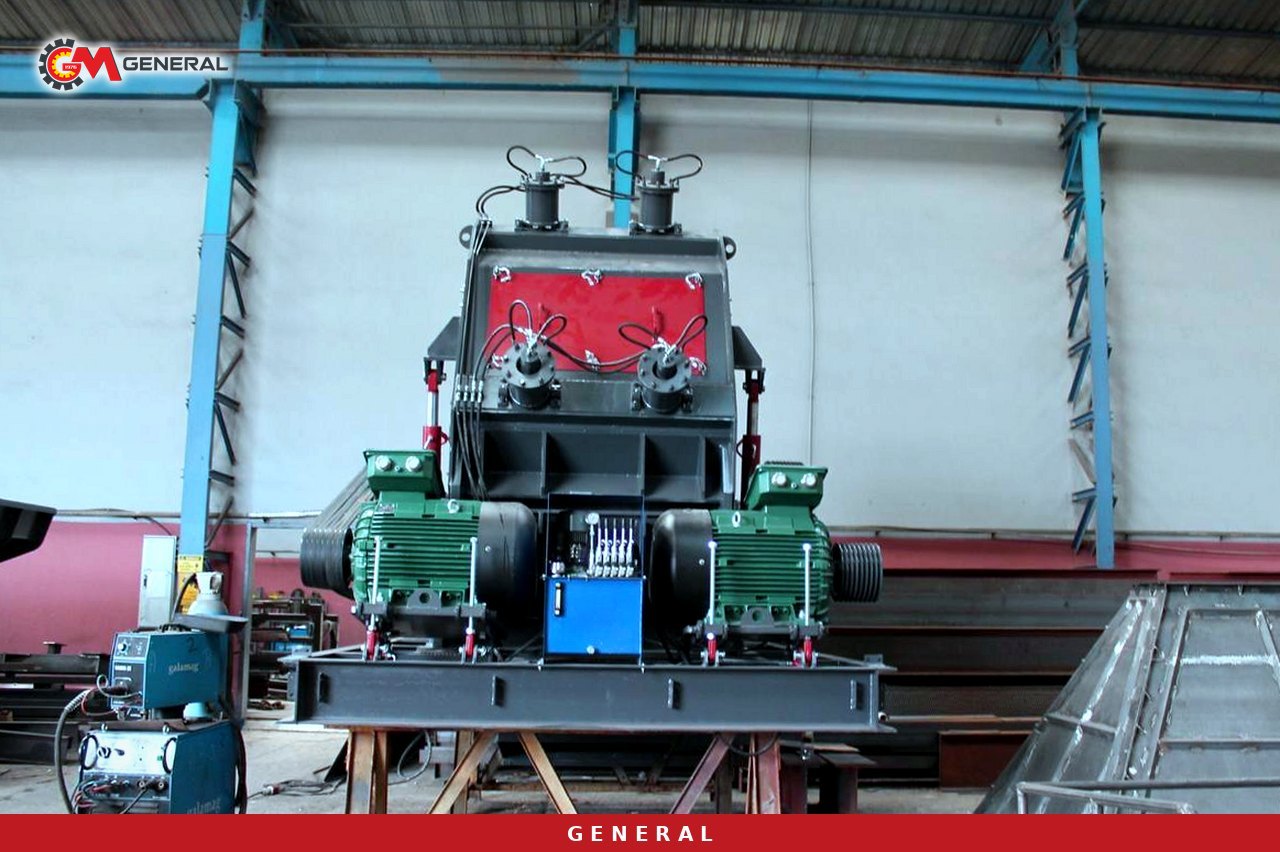
- Hydraulic setting: On the GPS crusher, apron and cover movements are made with hydraulic cylinders; in a dusty environment, hose connections and oil cleanliness belong on the daily checklist.
- Shipping: Machines leaving Izmir travel by sea to Egyptian ports and from there by road to the quarry. North Africa is one of the regions we export to.
If an investment is expected to supply aggregate to a specific public project, the grading and quality requirements should be confirmed in the specification of the relevant authority; the machine configuration is then finalised against that document.
What belongs in your sample and quotation file
For an accurate quotation, it is enough to send us the following:
- Rock type and, if available, the silica/abrasiveness test result (otherwise a sampling plan for testing).
- The largest block size after blasting; the 600 mm and 700 mm feed limits are decisive here.
- The products you need and the hourly share of each (for example 0-5 and 5-12 mm for concrete, 19-40 mm for sub-base).
- Daily operating hours and target capacity.
- Power source: grid or generator?
- How many times a year the machine will be relocated.
Frequently asked questions
Impact or jaw crusher for Egyptian dolomite?
On clean dolomite with low silica, an impact crusher gives cubical product and two stages in one machine. If chert and sandy bands are frequent in the samples, a line with a jaw primary and a cone crusher will last longer. The abrasiveness test makes the call.
Can the General 01 make concrete sand from dolomite?
Its four-deck screen stockpiles the 0-5 mm fraction separately. Whether this material can be used as concrete sand depends on its dust and clay content; if that is high, a washing unit may need to be added.
What about warranty and certification?
Our machines carry ISO 9001 and CE certification, with a 1-year warranty excluding wear parts.
How do I get price and delivery information?
The price depends on the model, the number of screens and belts, the generator, dust measures and the choice of wear parts. Once you send your site details, a quotation tailored to you is prepared.
Final assessment
For crushing 120-180 TPH of dolomite in Egypt, the General 01 offers a single-chassis, four-product solution on clean, low-silica rock; for operations that move often, the GM 100 or GM 125 come forward. Our team, building crushing and screening plant in Izmir since 1976, is ready to settle the configuration with you based on your sample results. Request a quotation with your quarry details through our contact page.
Definitions of technical terms: Glossary