EN — English
 TR — Türkçe
 DE — Deutsch
 RU — Русский
 FR — Français
 ES — Español
 AR — العربية
 SR — Српски
Jaw Plates (Fixed / Moving): Material and Selection
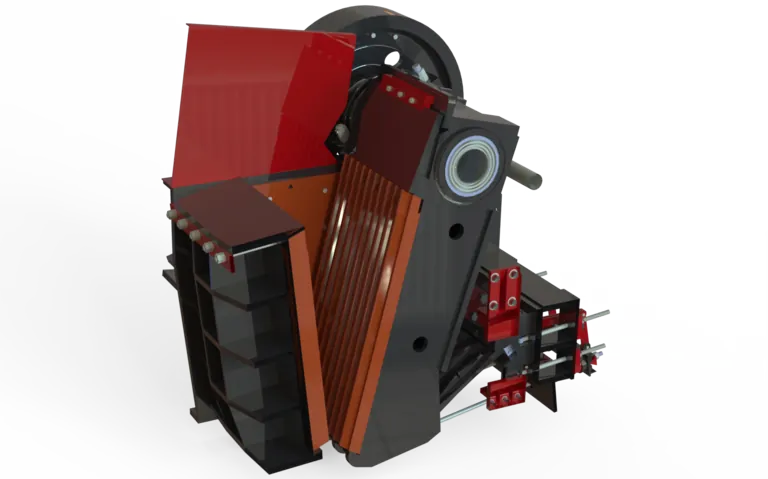
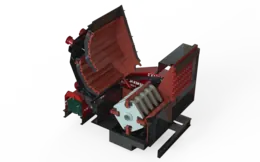
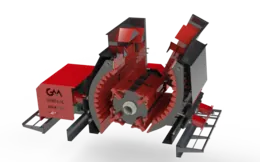
Jaw plates are the primary wear parts of a jaw crusher: the fixed plate is bolted to the frame, the moving plate to the swing jaw. All crushing force passes through these two surfaces, so plate condition directly sets product size, energy draw and bearing load.
Material: why manganese steel
Jaw plates are cast from austenitic manganese steel (Mn13, Mn18 and Mn22 grades). Manganese steel work-hardens: the surface becomes harder under impact while the core stays tough. Higher manganese and chromium content suits abrasive feed such as granite and basalt; standard Mn13 handles limestone and recycling duty.
Tooth profile and when to replace
Tooth profile is selected by feed size and the target reduction ratio — coarse teeth for primary duty, finer profiles for better cubicity. Replace or rotate the plates when the tooth crests flatten, when the closed-side setting can no longer be maintained, or when the plate has worn asymmetrically. Running plates to complete flatness raises power draw and can damage the jaw die seat.
Compatible General Makina crushers
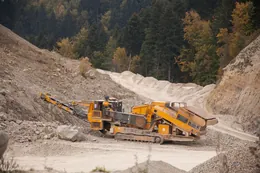
Fixed and moving jaw plates are supplied for the GNRK jaw crusher series and the GNR 60-90-110 mobile primary jaw crushers. Plate dimensions and tooth profiles follow the machine model — see the spare parts range or send the machine model with a quote request for the correct casting.
Field reference: the 150 t/h Mobile Jaw & Cone Crushing-Screening Plant - Russia project was delivered with a jaw+cone configuration.
Definitions of technical terms: Glossary