EN — English
 TR — Türkçe
 DE — Deutsch
 RU — Русский
 FR — Français
 ES — Español
 AR — العربية
 SR — Српски

Urban Demolition Rubble to Saleable Aggregate: Crusher and Screener Plant 100-200 TPH
When an apartment block comes down in an urban renewal project, the pile left on the plot looks nothing like blasted rock from a quarry face. It holds column and beam sections, floor slabs with rebar ends sticking out, broken brick and aerated concrete, plaster, ceramic tile, door frames, cable and soil from the basement excavation. Trucked to a landfill, that pile only costs money. Crushed and screened properly, it becomes aggregate that sells for sub-base, fill, trench bedding and the sand bed under paving blocks. This article builds a line for 100-200 TPH of rubble using the catalogue values of real models, starting from what the aggregate buyer expects to receive.
Which jobs may use recycled aggregate, whether on-site crushing is permitted and how waste must be transported all depend on the municipality, the relevant authority and the client's specification. Get those conditions in writing before you start designing the line.
What rubble from a renewal plot is made of
Rubble from a demolished building in Istanbul, Izmir or Ankara changes with the age of the structure and how it was built. Older load-bearing masonry houses are mostly stone walls and lime mortar. Reinforced concrete frame buildings carry a high share of concrete, and a lot of steel with it. A transfer yard that receives trucks from two different plots on the same day runs on a feed that changes hour by hour. That variability drives the crusher choice.
Sorting happens before the crusher
Half of the saleable aggregate is won during demolition. If timber, PVC window frames, plasterboard, insulation boards and cable are stripped while the building is still standing, the pile that reaches the crusher is far cleaner. At the transfer yard an excavator fitted with a pulverizer or hammer breaks down oversize pieces, and visible steel and foreign material go into separate skips. Crushing a pile heavy in gypsum and aerated concrete together with concrete lowers the value of everything that comes out. Opening separate stockpiles for concrete-rich, brick-rich and soil-laden rubble is the cheapest quality measure the whole line has.
Rebar, soil and fines
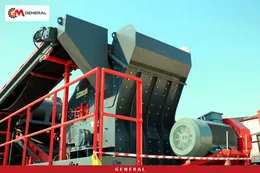
An impact crusher frees concrete from rebar better than a jaw crusher does; the impact knocks the concrete off around the steel. The released steel still has to come off the belt, which means an overband magnet and a hand-picking station added to suit the project. Soil from the basement dig should be separated before it reaches the crusher. It raises wear and it spoils the fines content of the final product.
What buyers expect from rubble aggregate
A road contractor, a paving crew or a utilities contractor rarely objects to material coming from recycling. What they object to is inconsistency. Nobody writes a material into a specification when it arrives clean one day and full of gypsum and soil the next. Saleable aggregate is defined by three things: separately stockpiled fractions, a low share of foreign material and a grading curve that stays the same from load to load.
On the fractions side, the screen of the crushing and screening plant decides the outcome. A single-deck screen yields only a mixed 0-40 mm product; good enough for fill, but cheap. A multi-deck screen produces separate products such as 0-5, 5-12, 12-19 and 19-40 mm. The fine product can be marketed for paving bedding or pipe bedding, the middle sizes for drainage and sub-base. The jobs each fraction qualifies for are set by laboratory tests and the client's specification, so have a sample tested before the line is installed.
Three line layouts for 100-200 TPH
The layouts below use the catalogue values on our product pages. Real output from any layout depends on the rubble mix, how much pre-sizing is done and which fractions you want. Where we do not know a value, we left it out of the table.
| Layout | Machines | Capacity | Max. feed | Output | Weight |
|---|---|---|---|---|---|
| A | General 01 (GPS 1210 impactor, 1600×5000 mm 4-deck screen) | 120-180 t/h | 700 mm | 0-5 / 5-12 / 12-19 / 19-40 mm | 55,000 kg |
| B | M-DMK 02 + GNR ME1650 | M-DMK 02: 150-250 t/h; ME1650: 120-180 t/h | 350 mm (M-DMK) | 0-50 mm, then fractions on the screen | 38,000 kg + 18,000 kg |
| C | General 800 + Mobile Pre-Screen DMK | 800: 80-150 t/h; DMK: 40-300 t/h | 600 mm (800) | 0-5 / 5-12 / 12-19 / 19-40 mm; DMK 0-30 mm | 35,000 kg (General 800) |
A: General 01, crushing and four-deck screening on one chassis
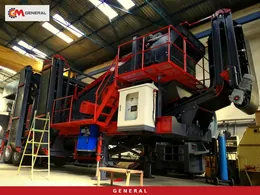
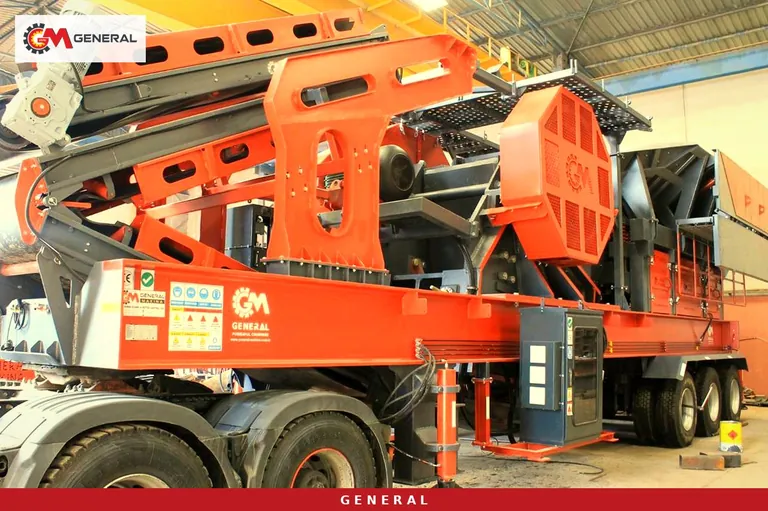
The General 01 carries the GPS 1210 impact crusher, a vibrating feeder with by-pass grizzly and a 1600×5000 mm 4-deck screen on a single chassis. Its 700 mm feed opening accepts reinforced concrete pieces that an excavator has roughly broken down. The grizzly feeder pulls soil-laden fines out before they enter the crusher. The generator rating is 550 kVA; if the plot has no grid connection, that figure sets your generator choice directly. With a catalogue band of 120-180 t/h, this layout covers the middle of the 100-200 TPH target with one machine. For demand approaching 200 tons, plan a second unit or layout B.
B: M-DMK 02 with a separate dry screen
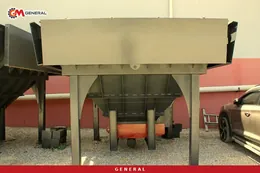
The M-DMK series mobile secondary impact crusher uses the screen on its feeder table and a by-pass conveyor to send soil-laden fines to stock before they reach the crusher. On the M-DMK 02 the feeder is 1200×3750 mm, the motor 200 kW and the capacity 150-250 t/h. Feed is limited to 0-350 mm, so rubble needs more pre-sizing at the yard; in return the crusher delivers a more cubical 0-50 mm product. That product goes by conveyor to the GNR ME1650 dry screening plant. The ME1650's 120-180 t/h band sets the ceiling of this line: even if the crusher produces more, the screen only separates that much. The 18,000 kg screen runs on grid power or a generator.
C: General 800 with a pre-screen DMK for a second pass
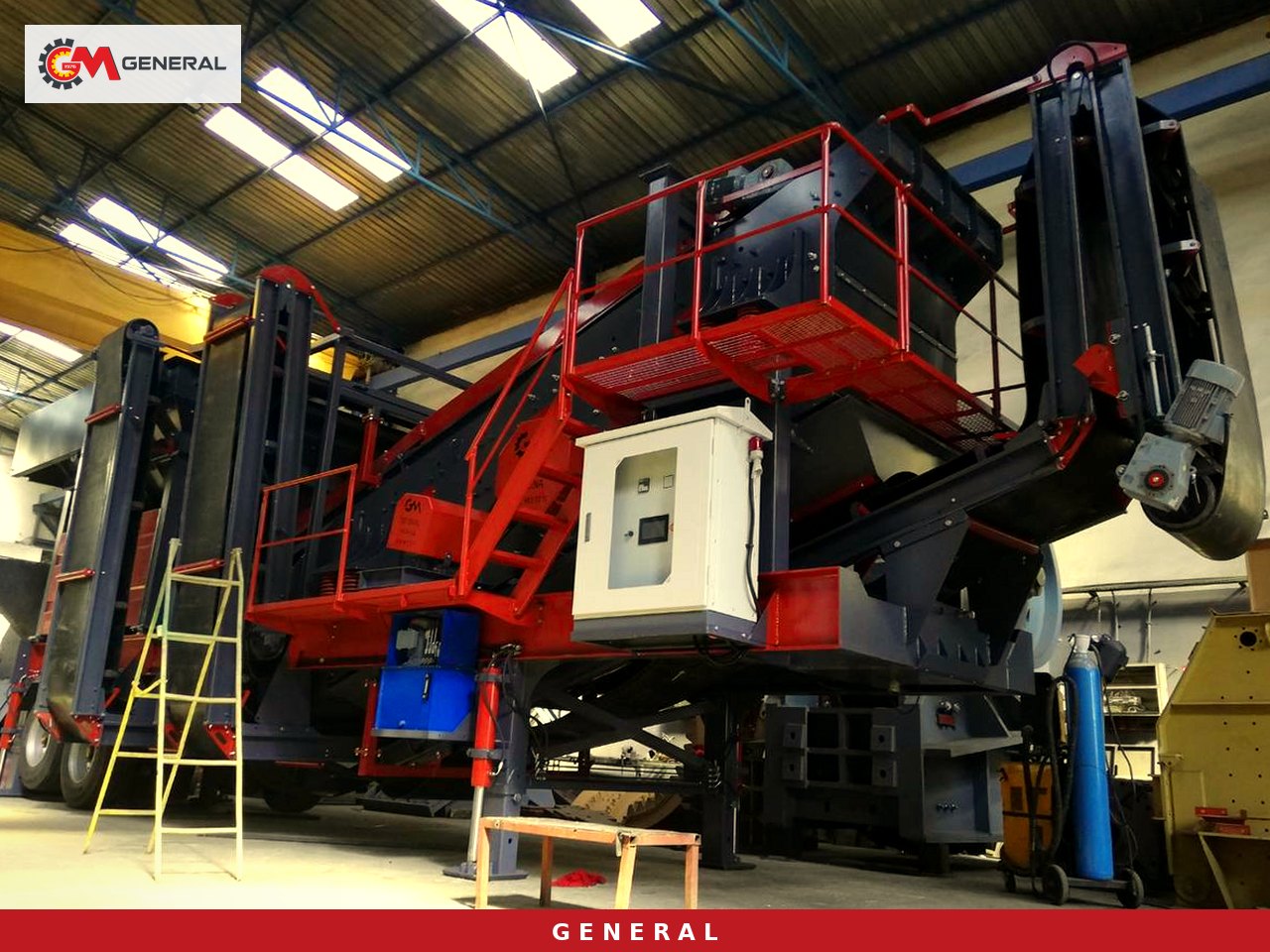
The General 800 produces 80-150 t/h with a PDK 1280 primary impact crusher and a 1300×4000 mm 3-deck screen; it weighs 35,000 kg and its generator rating is 450 kVA. This layout suits a transfer yard that starts around 100 tons and grows as demand for fine products rises. Oversize retained on the screen goes to the Mobile Pre-Screen DMK, which has two crushing chambers and manganese liners. This unit takes 0-100 mm feed, delivers a 0-30 mm product and, thanks to its pre-screen, lets already-small particles pass without crushing them. The catalogue does not list the weight of the pre-screen DMK, so the table shows only the General 800's weight.
An urban transfer yard: layout, dust and neighbours
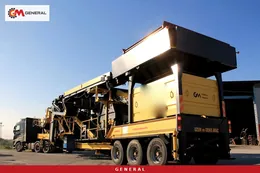
Renewal rubble is often crushed on narrow plots between houses or at a transfer yard on the edge of town. A wheeled chassis helps here in two ways: the line arrives behind one tractor unit, needs no fixed foundation and moves on to the next plot when the job is done. When choosing, draw truck entry and exit, the loader's turning area and the stockpile positions on paper. If a tight plot has no room for four separate stockpiles, the revenue expected from a four-deck screen will not materialise either.
In the city, dust and noise decide whether the job continues. Water sprays at conveyor discharge points and the crusher outlet, belt covers and positioning according to wind direction are measures that can be chosen per project. Working hours and noise limits are set by the municipality; build them into the capacity calculation from day one. With electric-motor units and a grid connection, generator noise disappears as well.
Blow bars, steel and wear per ton
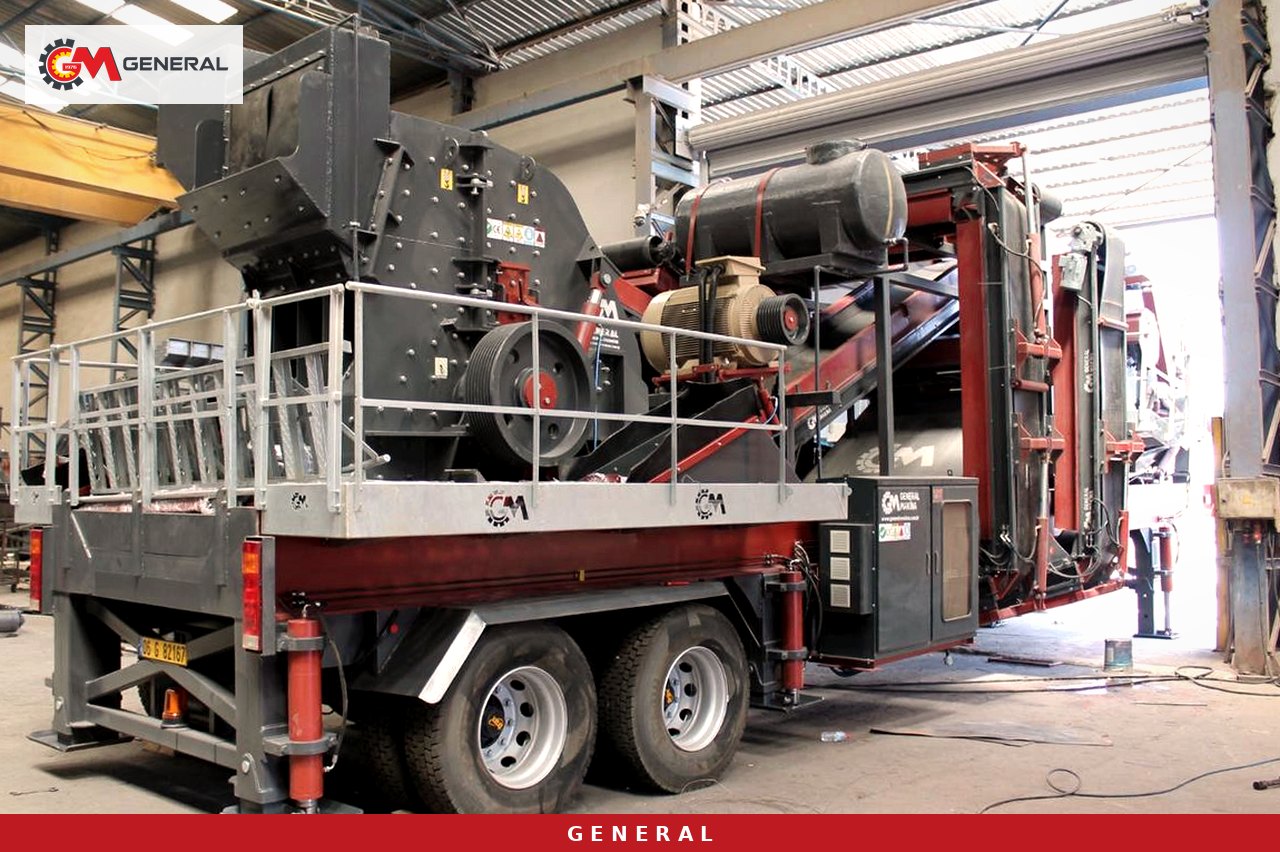
On a rubble line most of the wear happens on the blow bars. Because concrete recycling carries a risk of steel, tough manganese or martensitic alloys are preferred over hard but brittle high-chrome. High-chrome bars that last a long time in clean limestone can crack when they hit a protruding rebar in rubble. The double-sided bars on the Mobile Pre-Screen DMK can be turned over and used a second time. Actual wear life varies with the concrete, brick and soil share of the rubble; measure consumption per ton in the first weeks and size your spare parts stock from that.
A hypothetical example: a line running 8 effective hours a day at 150 t/h processes 150 × 8 = 1,200 tons of rubble per day. Wear cost per ton is calculated in units as (cost of one set of bars) ÷ (tons processed with one set). To run this calculation with your own rubble, use the machine sequence on the concrete recycling plant page.
Information to prepare before requesting a quote
The list below is enough for us to propose the right layout. The clearer it is, the fewer changes the line needs during installation.
- Approximate rubble composition: share of concrete, brick, stone masonry and soil, and how dense the rebar is.
- Largest piece size after pre-sizing at the yard (700 mm or 350 mm).
- The fractions you plan to sell and the specification requirements of the jobs that will buy them.
- Plot dimensions, the area set aside for stockpiles and truck traffic.
- Power source: grid connection or generator.
- Daily operating hours and the municipality's noise and dust conditions.
- How many plots the line will serve and how often it will relocate.
For wheeled layouts see the mobile crushing and screening plants category, and for single-chassis crushers the portable rock crushers category. We cover general crusher selection for construction waste separately in our article on demolition waste and concrete recycling.
Frequently asked questions
Why is a jaw crusher not the first choice for rubble?
A jaw crusher breaks by compression, and in reinforced concrete pieces the steel can jam in the jaws. An impact crusher knocks the concrete off the steel and gives a more cubical particle. If the rubble has a very high share of hard stone masonry, jaw pre-crushing can still be considered.
What happens if gypsum and aerated concrete end up in the aggregate?
These are weak, light particles; the higher their share, the fewer jobs the aggregate qualifies for. The cheapest fix is selective demolition and separate stockpiles at the yard. Separating them after the crusher always costs more.
How does the line move from one plot to the next?
The General 01 and General 800 sit on a single wheeled chassis; the M-DMK and the pre-screen DMK also come on mobile chassis. Conveyors fold, and a tractor unit pulls the plant to the new plot. Transport dimensions and permits should be checked against the route in advance.
What warranty and certificates apply?
Our machines carry CE marking and ISO 9001 certification. A 1-year warranty is given, excluding wear parts. We have been manufacturing in Izmir since 1976; spare parts and service support are provided as stated on the product pages.
Next step for your rubble line
Turning renewal rubble into saleable aggregate starts with what happens in front of the machine: selective demolition, separate stockpiles, removing soil-laden fines early and stockpiling each fraction on its own. For 100-200 TPH, the General 01 can work alone, the M-DMK 02 together with the ME1650, or the General 800 paired with the pre-screen DMK. Send us your rubble composition and the products you want to sell through our contact page, and we will prepare the layout and quote that fit.
Definitions of technical terms: Glossary