EN — English
 TR — Türkçe
 DE — Deutsch
 RU — Русский
 FR — Français
 ES — Español
 AR — العربية
 SR — Српски

C&D Waste Recycling with a Mobile Aggregate Crusher Plant 80-150 TPH
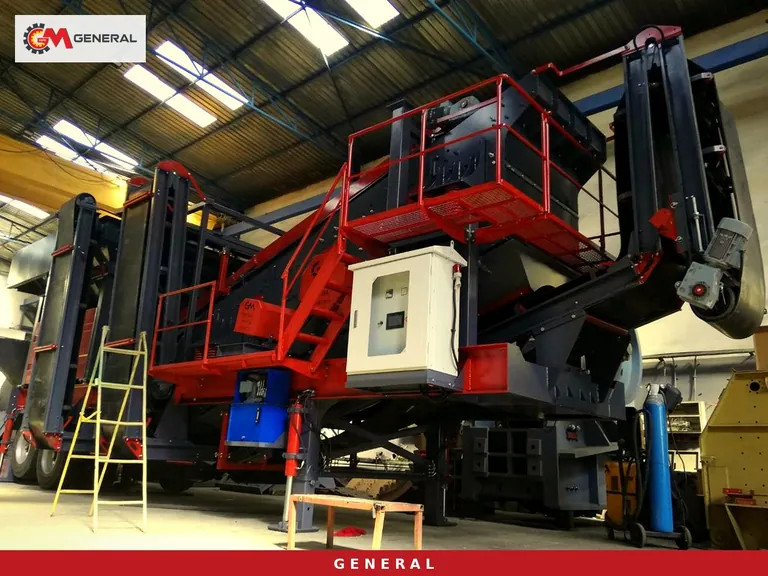
A demolition contractor can look at a rubble pile in two ways: as a load that costs trucks, fuel and tipping fees to haul away, or as a raw material that goes back onto the site as fill, sub-base and drainage stone once it has been crushed and screened. The difference comes from the mobile crushing and screening plant set up next to the pile. In this article we build an 80-150 TPH line for construction and demolition (C&D) waste step by step, from feed analysis to product sizes, using the real figures of the models in our range. The questions we hear most often from buyers doing urban renewal work in the Middle East, North Africa, the Balkans and the Turkic republics are answered along the way.
Where recycled aggregate may be used, which tests it must pass and how waste acceptance is permitted are decided in each country by the local authority or the relevant ministry. Confirm the project specification with the competent body before you start designing the line.
Reading the pile before the crusher: feed analysis
Two rubble piles of the same tonnage can behave very differently in a crusher. Debris from a reinforced concrete frame building is dense, uniform and responds well to impact. Rubble from an old brick masonry building is lighter, more brittle and carries a higher share of plaster, lime mortar and soil. That is why the first thing we ask for at quotation stage is not the tonnage but the composition of the pile.
Concrete, brick and soil ratio
A simple site method works well: take several bucket loads from different points of the pile, spread them separately and sort them by eye. If concrete pieces, brick and block, asphalt planings, and soil with fines are weighed separately, you get a rough percentage table. A high share of soil and fines means pre-screening ahead of the crusher is a must; otherwise muddy material cuts capacity and contaminates the product. A high concrete share improves the chance of selling the product as sub-base and fill. For a firm decision we recommend sampling and lab tests for grading and impurities.
Steel, timber and light waste
What separates rubble crushing from quarrying is foreign material. Ribbed rebar from columns and slabs passes through the crusher but can tear the conveyor belt. Timber frames, plastic pipe, cable and insulation boards lower the value of the final product. So on-site pre-breaking with an excavator bucket crusher or hydraulic shears, cutting long rebar in the pile, and adding an overband magnet on the crusher discharge belt (an option chosen per project) are measures to discuss. A picking platform beside the discharge belt for hand removal of light material is another common solution.
Matching models to the 80-150 TPH range
The tonnage in the title is a target; depending on the buyer's pile, three different set-ups cover it. Every figure in the table comes from our product pages. Cells that are unknown or not relevant for that model are left blank.
| Model | Role in the line | Capacity (t/h) | Max. feed (mm) | Crusher | Screen | Power | Weight (kg) |
|---|---|---|---|---|---|---|---|
| General 800 | Crushing and screening on one chassis | 80-150 | 600 | PDK 1280 primary impact | 1300×4000 mm, 3 decks | 450 kVA generator | 35,000 |
| General 01 | Crushing and screening on one chassis | 120-180 | 700 | GPS 1210 impact | 1600×5000 mm, 4 decks | 550 kVA generator | 55,000 |
| GNR 90 mobile primary jaw | Pre-crushing of large pieces | 70-180 | 1100 | GNRK 90 jaw | — | — | 25,000 |
| M-DMK 01 | Second-stage impact crushing | 120-180 | 350 | Secondary impact | By-pass screen on feeder | 160 kW motor | 32,000 |
General 800: an exact fit for the range
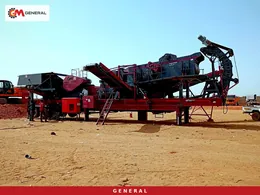
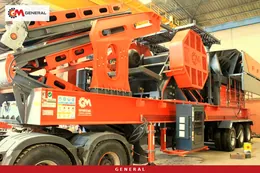
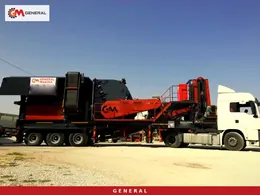
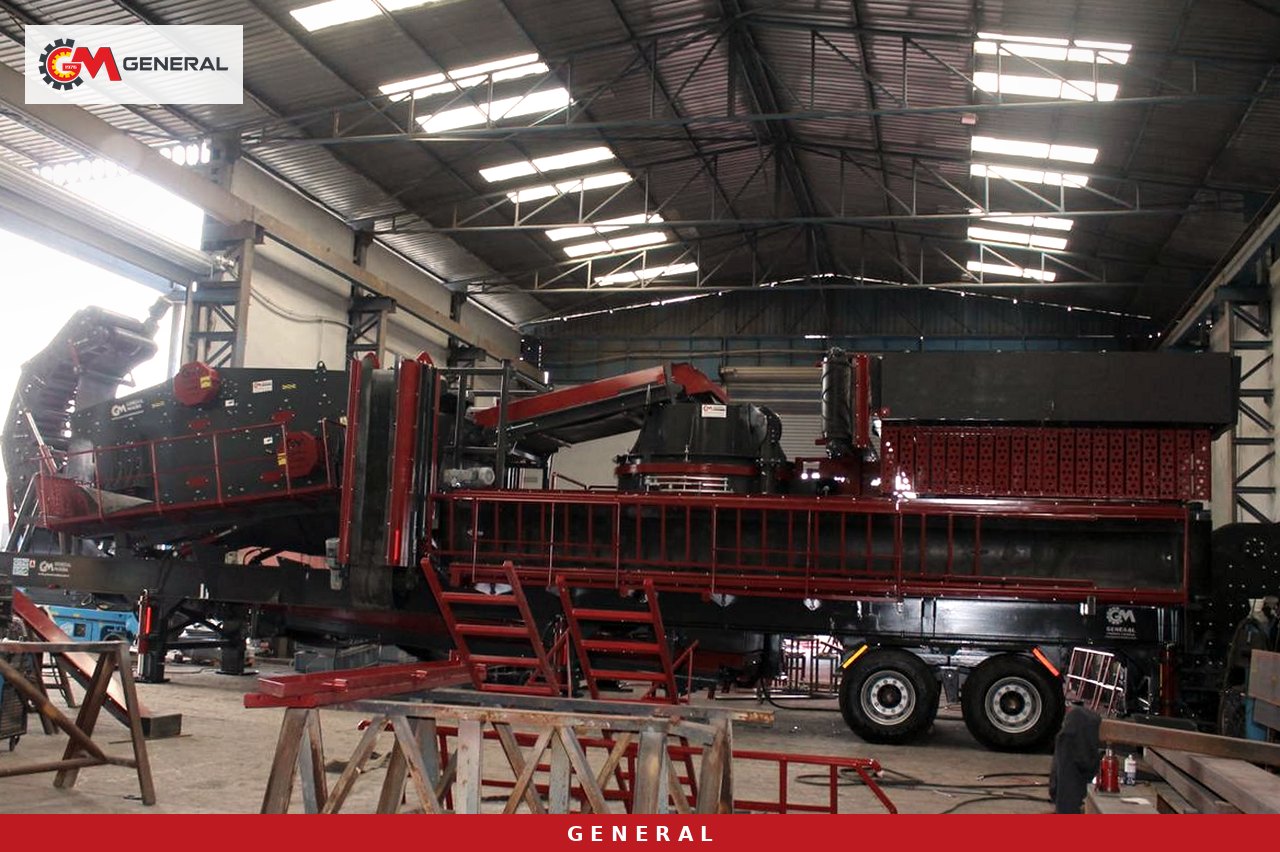
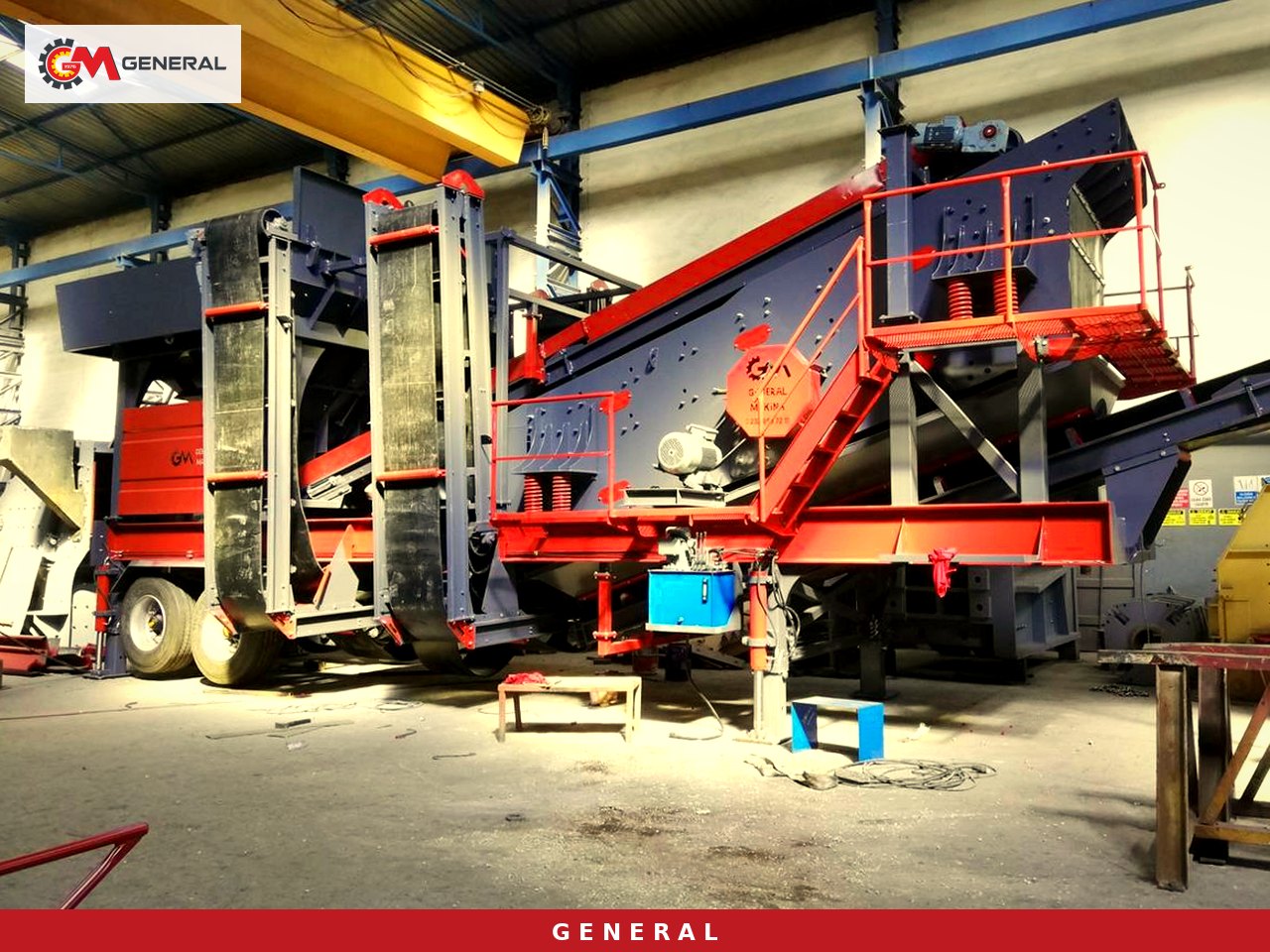
With a capacity of 80-150 t/h, the General 800 carries a PDK 1280 primary impact crusher and a 1300×4000 mm three-deck screen on a single chassis. It runs in closed circuit, so oversize returns to the rotor. The 600 mm feed limit demands disciplined pre-breaking on the demolition site: if slabs are reduced below that size with the excavator, the unit gives its most balanced result on concrete-rich rubble. Folding hydraulic conveyors and support legs mean it needs no concrete foundation, which makes moving between short demolition jobs easier.
GNR 90 jaw unit paired with an M-DMK 01
If the pile holds many thick slab and foundation pieces above 600 mm with rebar not fully cleaned, a two-stage set-up is safer. The GNR 90 mobile primary jaw unit (70-180 t/h) accepts 0-1100 mm feed and reduces it by compression to 0-250 mm. That output sits comfortably within the 0-350 mm feed range of the M-DMK 01 mobile secondary impact crusherwhich delivers a 0-50 mm product in the second stage. The by-pass screen on the M-DMK 01 feeder takes soil-laden fines out before they reach the crusher. For a full grading this set-up needs a separate mobile screen. You can review the options unit by unit on the single-chassis mobile crusher units page.
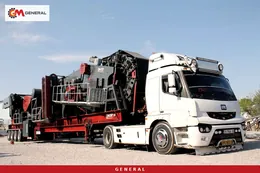
For a buyer who wants headroom at the top end and expects mixed feed, the General 01 (120-180 t/h) is the third route. Its by-pass grizzly feeder removes fines at the start, and its four-deck screen allows one more product size. All wheeled plants can be compared in the wheeled mobile crushing plants category.
How an impact crusher handles rubble, and where it stops
Concrete breaks readily under impact. When the blow bars on the rotor throw a piece against the breaker plates, the bond between cement paste and aggregate gives way, the rebar separates from the concrete and the product approaches a cubical shape. In low-abrasion material such as limestone and recycled concrete, a primary impact crusher gives high reduction in one pass; typical reduction on the M-DMK series is around 10:1. This is why most recycling lines in the 80-150 TPH band are built around an impact crusher.
The limit also lies inside the pile. A thick piece of steel or a bucket tooth that slips into the crusher can crack a brittle blow bar. Against that risk, rubble work calls for tough manganese or martensitic blow bars instead of the high-chrome alloy preferred for clean stone. If the pile has a high share of granite or basalt aggregate, wear accelerates; we cover wear part life and replacement intervals in detail in our wear part life guide. A two-stage set-up that leaves pre-breaking to the jaw unit protects the impact crusher's bars from that load.
Product sizes from recycled aggregate and where they go
The General 800 and General 01 split the product into 0-5, 5-12, 12-19 and 19-40 mm, with an output setting of 0-100 mm. Screen mesh sizes and the final grading are fixed at order stage according to the feed. Each fraction of C&D aggregate has its own market, and this split directly sets the line's revenue.
The 0-5 mm fines are the most contaminated part because of plaster and brick dust; on most projects they go into pipe bedding or trench backfill. The 5-12 and 12-19 mm sizes can find demand in drainage and under-paving layers if they come from clean concrete. The 19-40 mm and screen oversize are the easiest products to place, as sub-base and road fill. Using recycled aggregate in new concrete is a separate approval matter, decided by local specifications and lab results. The complete machine layout for concrete waste is on our concrete recycling plant page.
Flow on an urban demolition site and a preparation checklist
Demolition sites are tighter than quarries, with housing and traffic around them. Layout therefore starts at the truck entrance and exit: raw rubble intake, pre-breaking area, crushing and screening line and product stockpiles should follow a one-way flow. Generator-driven units run without waiting for a grid connection; 450 kVA is specified for the General 800 and 550 kVA for the General 01. Dust and noise can stop work in a city. Water sprays at the crusher inlet and belt transfer points, conveyor covers and stockpile placement according to wind direction are measures that can be chosen per project.
Before bringing the line to site, we suggest completing this list:
- Has the pile been sampled and a rough composition table prepared?
- Has the largest piece size been measured, and can pre-breaking hold the 600 mm limit?
- Are equipment and staff assigned for rebar cutting and steel removal?
- Are the target products defined, with a buyer or use for each fraction?
- Are water supply, generator fuel logistics and dust suppression planned?
- Have permits for waste acceptance and use of recycled aggregate been confirmed?
Frequently asked questions
Can asphalt planings and demolition concrete go through the same line?
They can, but it is better to process them in separate batches without mixing. Asphalt planings can turn sticky in hot weather and lower the value of concrete aggregate. Stockpiling the two streams apart lets you sell two different products.
Can one unit reliably process 150 tonnes of rubble per hour?
The specified range of the General 800 is 80-150 t/h, and the upper limit is reached with well pre-broken feed low in soil. If the pile carries a lot of soil and large pieces, the General 01 or a two-stage set-up with jaw pre-crushing works more comfortably.
Does rebar damage the crusher?
Thin rebar passes through an impact crusher and separates from the concrete. Thick, long pieces strain the belt and the blow bars. Cutting in the pile, tough-alloy blow bars and a magnet on the discharge belt keep that risk under control.
What certificates and warranty do the machines carry?
Our machines are CE and ISO 9001 certified, with a 1-year warranty excluding wear parts. We have been manufacturing in Izmir since 1976.
What we need for a quotation
The right model for a recycling line is set by the composition of the pile and the target product list. Send us the daily rubble volume, the largest piece size, the concrete, brick and soil ratio, the product sizes you want and the site's power situation, and we will configure the line around them. For a technical discussion and a quote, reach us through our contact page.
Definitions of technical terms: Glossary