EN — English
 TR — Türkçe
 DE — Deutsch
 RU — Русский
 FR — Français
 ES — Español
 AR — العربية
 SR — Српски

How Many Screen Decks for a 100-250 TPH Mobile Crushing & Screening Plant?
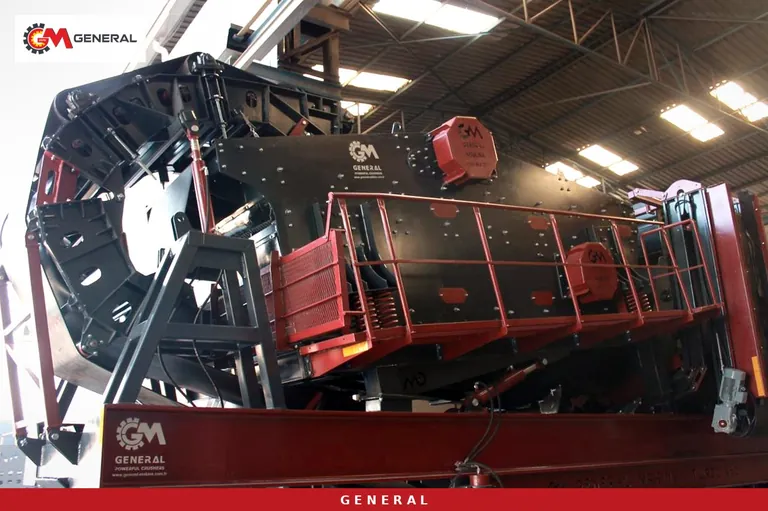
When buyers compare quotations for a mobile crushing and screening plant, they usually look at the crusher first: jaw opening, rotor size, generator rating. On site, though, the number of products you can sell is decided by the screen deck count. On a line running at 100 to 250 TPH, the difference between a 3-deck and a 4-deck screen is one stockpile more or one stockpile less. That changes which customers you can supply and which specifications you can meet. This article explains how we work out the deck count backwards from the product list, how much throughput each extra deck costs, and how the screen is arranged on our wheeled models in this range.
Working out the deck count from the product list
Every screen deck splits material at one cut point. A stack of n decks makes n cuts and produces up to n+1 piles. On an open-circuit screening unit all of those piles go to stockpile conveyors. On a closed-circuit crushing and screening plant, the oversize retained on the top deck is not a product: it returns to the crusher and is crushed again until it reaches the target size. In that case the number of saleable products equals the number of decks.
Take our own models. The General 950 produces three products with its 3-deck screen: 0-5, 5-12 and 12-19 mm, while everything above 19 mm recirculates. The General 01 and the GNR-MC110 use a 4-deck screen and send 0-5, 5-12, 12-19 and 19-40 mm to separate piles. The GNR ME2060 mobile screening plant runs in open circuit, so its 3-deck screen splits run-of-mine material into 4 fractions; there is no return conveyor on it.
That is why our first question in a quotation meeting is not "how many decks do you want". We ask which products you will sell and in which size ranges. Once the list is fixed, the deck count follows from it. If the list is still open, 4 decks give you room: you can fit one deck with a coarse mesh and run with 3 products for a while. Adding a fourth deck to a 3-deck body later means redesigning the body.
Screen size and deck layout in the 100-250 TPH range
The table below reads our wheeled mobile crushing and screening plants in this tonnage range from the screen side. Capacity, crusher and generator values come from the product pages. The product column shows the saleable fractions of the closed-circuit plants.
| Model | Capacity (t/h) | Crusher arrangement | Screen | Products (mm) | Power |
|---|---|---|---|---|---|
| General 950 | 120-180 | GPJ 90 jaw + DMK01 impact | 1600×5000 mm, 3 decks, horizontal | 0-5 / 5-12 / 12-19 | 600 kVA |
| General 944 | 120-180 | GPJ 90 jaw + GM430 cone | 1600×5000 mm, 3 decks, horizontal | 0-5 / 5-12 / 12-19 | 550 kVA |
| General 01 | 120-180 | GPS 1210 impact | 1600×5000 mm, 4 decks | 0-5 / 5-12 / 12-19 / 19-40 | 550 kVA |
| GNR-MC110 | 200-300 | GPJ 110 jaw + DMK03 impact | 2000×6000 mm, 4 decks | 0-5 / 5-12 / 12-19 / 19-40 | 750 kVA |
| General 02 | 250-300 | GPS 1413 impact | 2000×5000 mm, 4 decks | 0-5 / 5-12 / 12-19 / 19-40 | 660 kVA |
| GNR ME2060 (screening only) | 200-350 | no crusher | 2000×6000 mm, 3 decks | 4 fractions, open circuit | generator or grid |
Two points stand out. First, the three models in the 120-180 TPH bracket share the same 1600×5000 mm screen size and differ in deck count. The 944 and 950 are hard-rock lines that cover concrete and road work with three products. The General 01 adds a fourth deck and takes 19-40 mm coarse aggregate to its own pile. Second, above 200 TPH the screen gets both wider and longer: 2000×6000 mm on the GNR-MC110, 2000×5000 mm on the General 02. As tonnage rises, screen area grows before deck count does, because loading more material onto the same surface chokes the lower decks.
What each extra deck takes from throughput
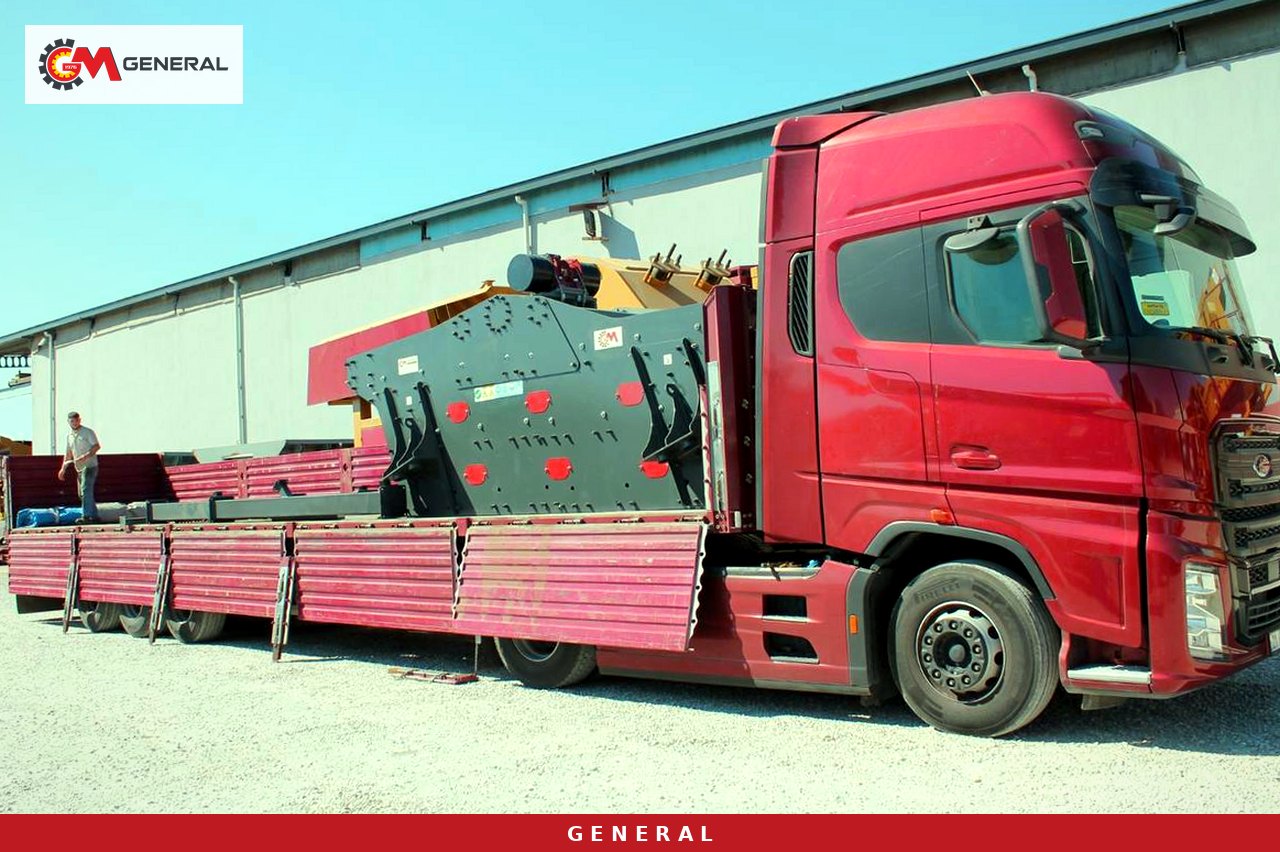
For conventional circular-motion screens we apply a practical rule: each deck added below reduces the capacity the screen can carry by about 10%. Lower decks work with smaller apertures and have to separate the fines coming through from above, on the same width but under harder conditions.
A hypothetical calculation makes this clear. Call the amount the screen passes on a single deck 100 units. Applied as a compound rule, that leaves about 90 units with two decks, 81 with three and 73 with four. These numbers are not measured values of any model; they only show the decision logic. The practical meaning is simple: a design that aims at 250 TPH with a 4-deck screen needs more screen area than a design that reaches the same tonnage with 3 decks.
Bed depth on the bottom deck
The second limit is bed depth. At the discharge end, the material bed should not exceed 3-4 times the aperture of that deck. On a 5 mm bottom deck that is a layer of roughly 15-20 mm at discharge. If the bed is thicker, fines slide over the top before they reach the mesh and part of the 0-5 mm sand ends up in the 5-12 mm pile. On site the first sign is a visible coat of sand and dust on the surface of the chip stockpile.
Close cut points and near-size particles
Particles between about 75% and 125% of the aperture are the hardest to separate. With close cuts such as 5, 12 and 19 mm, each deck also carries the near-size load of the next one, and more decks mean more of these border zones. A well-tuned circular vibrating screen reaches a commercial screening efficiency of 90-95%, so every pile holds a few particles from the neighbouring fraction. If your specification cannot accept that tolerance, adding a deck is not the answer. Widening the gaps between cuts, or adding a separate final screen for that fraction, gives a better result.
Three or four decks according to the sales plan
What really sets the deck count is who you sell to. Below are the three situations we meet most often in the field. Fraction limits are examples and change with your specification.
A quarry supplying chips and sand to a concrete plant
A ready-mix producer usually wants one sand and two chip sizes. Here the 3-deck General 950 or General 944 is enough: 0-5 mm sand, 5-12 and 12-19 mm chips go to separate piles and oversize returns to the crusher in closed circuit. If the rock is abrasive, like basalt or granite, the 944 with its cone secondary is the stronger choice; if high reduction and cubical shape come first, the 950 with its impact secondary fits better.
A producer serving road and concrete work together
If coarse material for sub-base and fill is also sold, a fourth deck is needed. The General 01 takes 19-40 mm to its own pile in the 120-180 TPH bracket, and the GNR-MC110 does the same at 200-300 TPH. Because the MC110 sits on two chassis, its primary group can also run alone. In periods when the job needs only coarse material, the second chassis can be taken out of service.
Screening separate from the crusher
In some quarries most of the run-of-mine is already a saleable size, or a crushed stockpile has to be re-classified. Then a separate mobile screening unit makes more sense than adding a deck to the crushing line. The GNR ME2060 performs dry screening at 200-350 TPH with a 100 mm grizzly over the hopper and a 2000×6000 mm 3-deck screen, and each fraction goes to its own pile on its own stockpile conveyor. We discuss the pros and cons of separating crushing and screening in our comparison of a mobile screening plant and a crushing-screening combination.
Details to check on the screen body
The screen on a mobile plant comes from the same engineering as our stationary aggregate and sand vibrating screens. Our conventional vibrating screen series runs from the GNR 1020 (1000×2000 mm) to the GNR 2470 (2400×7000 mm) and is built with 1-4 decks; the single-deck option exists only on small models. Drive power rises with screen size: the motor is 15 kW on the GNR 1650, 18.5 kW on the GNR 2060 and 30 kW on the GNR 2470.
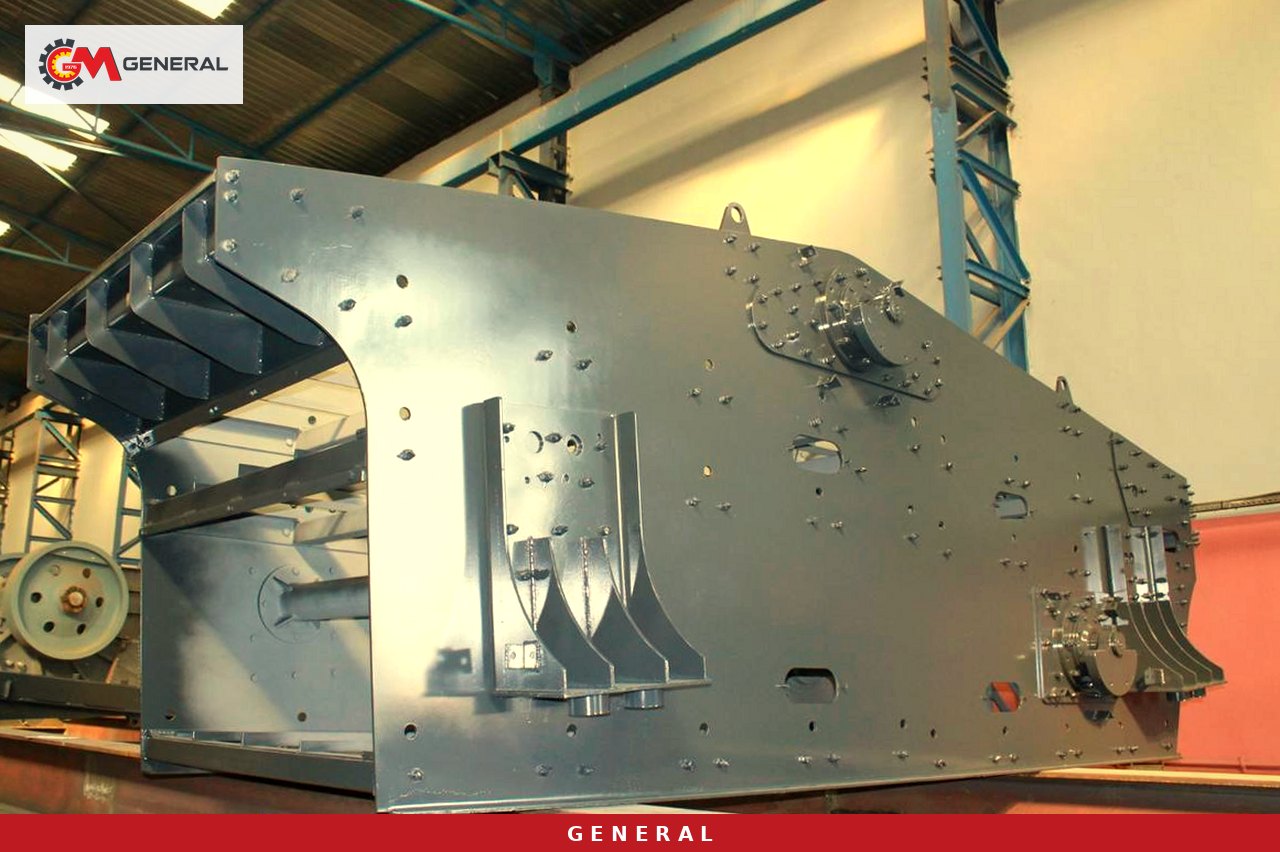
The body is fully bolted, with no welding, and the screen meshes are easy to change. Stone-box chutes at the feed zone slow down wear at the point where material first hits the top deck. On a screen with many decks these details directly affect maintenance downtime, because reaching the mesh on the bottom deck takes more work than reaching the one on top.
If the material is clayey or wet, deck count alone does not solve the problem; the fine mesh on the bottom deck blinds. The GNRTK-1550 and GNRTK-2060 screens produce an oval stroke with a three-shaft drive, adjust the stroke angle to the material and reduce blinding with near-size and slightly moist feed; both models have 3 decks. At high tonnages that move to a stationary plant, the twin screen runs two screen bodies together with 2-4 decks at 100-500 TPH and doubles the screening area. Where washing is required, the YM series among our mobile sand washing and dry screening plants should be considered.
Screen information to prepare for a quotation
To get a deck count and screen size proposal, send the following together:
- The list of products you plan to sell and the size range of each; a copy of the specification if there is one.
- The expected daily or monthly quantity of each product and which fraction sells most.
- The largest lump size in the run-of-mine and your observation of fines and clay content; a laboratory sieve analysis if possible.
- The rock type: basalt, granite, limestone or river gravel. We recommend a sample test before the final decision.
- Whether the material arrives wet during part of the year.
- The energy source on site: grid or generator.
- Any chance of adding a new fraction to the product list later.
Frequently asked questions
Can a 3-deck screen give 4 products?
On an open-circuit screening plant, yes: the GNR ME2060 produces 4 fractions with its 3-deck screen. On a closed-circuit crushing and screening plant the material retained on the top deck returns to the crusher, so 3 decks give 3 saleable products.
Does plant tonnage drop as the deck count rises?
On the screen side it does; each extra deck reduces capacity by about 10%. The real plant tonnage is set by the crusher, screen area, rock type and moisture together. That is why our 4-deck models carry a larger screen area.
Can I change the mesh apertures later?
Yes. Apertures are chosen at order stage for the required grading, but the meshes are easy to replace; if your product list changes, new meshes are fitted. The deck count, however, is fixed with the body.
Does the deck count affect the price?
It does. Body size, drive motor and a separate stockpile conveyor for each product are cost items. A quotation prepared for your product list shows these items one by one.
The short route to a decision
Write down the products you will sell first, take the deck count from that list, and check screen area against tonnage last. In the 100-250 TPH range, our suggested starting points are the General 950 and 944 for hard-rock quarries that work with three products, the General 01 for four products, and the GNR-MC110 for the upper bracket. Our plants carry CE and ISO 9001 certification and a 1-year warranty, wear parts excluded. Send your product list, run-of-mine details and target tonnage through our contact page, and we will prepare a quotation with the screen layout and plant selection for your project.
Definitions of technical terms: Glossary