EN — English
 TR — Türkçe
 DE — Deutsch
 RU — Русский
 FR — Français
 ES — Español
 AR — العربية
 SR — Српски

Niger Desert-Ready Mobile Crushing & Screening Plant 100-200 TPH, Dust Filtered
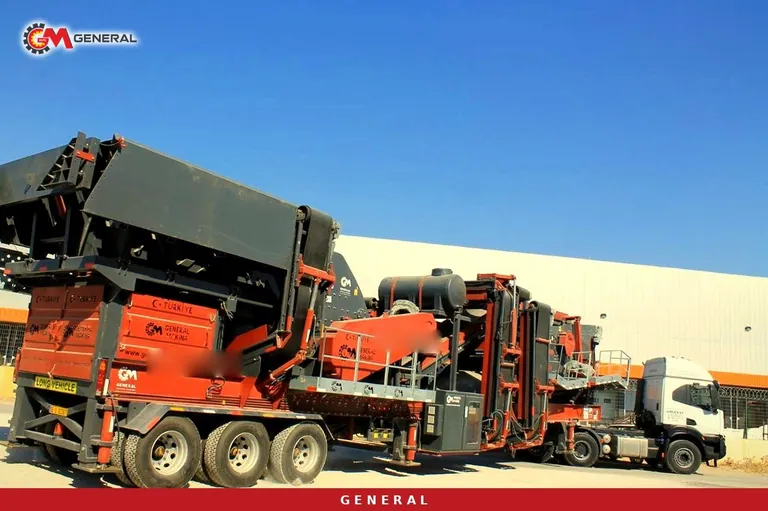
An investor choosing a mobile crusher for a quarry or road site in Niger should judge the machine not by the tonnage in the brochure but by how many hours it can run without a stop in dust-laden air. On the southern edge of the Sahara and across the Sahel belt, the harmattan wind carries fine dust over long distances throughout the dry season. When that dust meets the dust the crusher makes itself, the first casualties are the generator air filter, the electrical panel and the screen bearings. This article walks through the real models that fit a 100-200 TPH target, what "dust filtered" actually means in hardware on site, and how a plant reaches a country with no coastline, in the order the decisions are made.
Three variables that shape a site in Niger
The first is the air. The harmattan that hazes the sky in the dry season means the plant also takes in dust from outside. Covered belts and water spray at the crusher discharge only suppress the dust the machine creates; they do nothing against dust blown in by the wind. Filters, seals and panel protection are therefore planned against two separate sources: dust generated inside the plant and dust arriving from outside.
The second is the rock. In the west of the country, in the Liptako region around Niamey, granite and greenstone belts are common; the Aïr massif in the north holds crystalline rock, while the wide sedimentary basins carry sandstone and a laterite cover. Because the choice inside one country can swing between hard, abrasive granite and relatively soft sandstone, the crusher type is decided quarry by quarry. Compressive strength and abrasiveness tests on a representative sample turn model selection from a guess into a decision.
The third is distance. Many sites sit far from the grid; power comes from a generator and spare parts come a long way. That raises the cost of every failure: a small filter oversight can mean a plant standing idle for days until the part arrives. If the project is tied to a road tender or a mining licence, confirm the required aggregate classes and delivery schedule against the specification of the authority concerned.
Where each model fits in the 100-200 TPH band
Four real options from our wheeled mobile family fall into this band. The table below contains only catalogue values from the product pages; settings not listed are fixed per order to suit the material.
| Model | Crusher layout | Generator | Capacity | Weight | Max. feed | Screen |
|---|---|---|---|---|---|---|
| General 944 | GPJ 90 jaw + GM430 cone | 550 kVA | 120-180 t/h | 70,000 kg | 800 mm | 1600×5000 mm, 3-deck |
| General 950 | GPJ 90 jaw + DMK01 impact | 600 kVA | 120-180 t/h | 70,000 kg | 800 mm | 1600×5000 mm, 3-deck |
| General 01 | GPS 1210 impact (primary + secondary in one body) | 550 kVA | 120-180 t/h | 55,000 kg | 700 mm | 1600×5000 mm, 4-deck |
| GNR-MC110 | GPJ 110 jaw + DMK03 impact (two chassis) | 750 kVA | 200-300 t/h | 2 × 55,000 kg | 900 mm | 2000×6000 mm, 4-deck |
Granite and greenstone: General 944 or General 950?
Hard, siliceous rock such as that of the Liptako belt calls for a jaw in the first stage. The General 944 crushes by compression in the second stage with its GM430 cone; metal life stays long in siliceous feed, and in a country where parts arrive late, replacements come round less often. The General 950 pairs the same GPJ 90 jaw with a DMK01 impact secondary; it gives a higher reduction ratio and cubical grains, but in abrasive stone the blow bars need checking more often. When grain shape for concrete and asphalt aggregate comes first, the 950 wins; when part life comes first, the 944 does.
Sandstone, laterite blends and soft limestone: General 01
The General 01 does both primary and secondary work with a single GPS 1210 impactor and produces four fractions: 0-5 / 5-12 / 12-19 / 19-40 mm. On low-abrasion material a single-crusher layout means fewer moving parts and fewer transfer points, and so fewer dust sources. In granite, blow-bar wear speeds up, so it should not be the first choice there.
Securing 200 TPH
The catalogue ceiling of the three single-chassis models is 180 t/h. If the target is a steady 200 TPH, the GNR-MC110 covers the top of the band with its 200-300 t/h range; because the primary group can run on its own, the primary can open the site and the secondary can follow once volumes grow. The other route is two 120-180 t/h units running in parallel: while one is in maintenance, the other keeps producing. On a remote site that redundancy is often worth more than extra tonnage. All wheeled options sit side by side on the wheeled mobile crushing plants page.
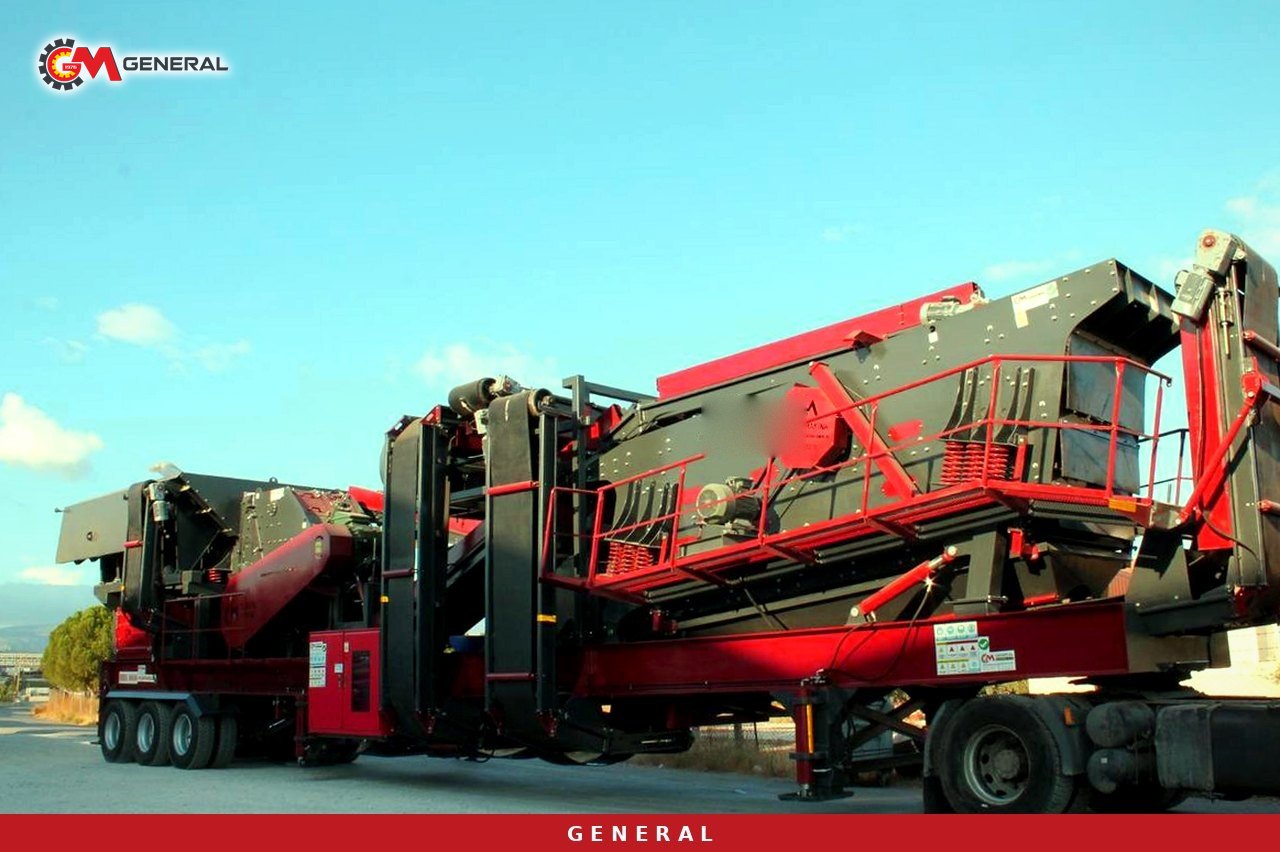
What "dust filtered" means on site: five points where dust gets in
Dust control is not a single part; it is the sum of measures taken at every point where dust enters the machine. Some of this equipment is part of the product definition, some is added to the quote per project. Having each item listed line by line in the order prevents arguments later.
- Feeding and pre-screening: the by-pass grizzly of the vibrating feeder separates soil and fines before they enter the crusher. Less fine material is then ground inside the crusher and lifted into the air; the separated material drops onto a controlled pile via its own belt. Feeder types are on the crusher feeders page.
- Crusher discharge: this is where dust is born most densely. Mist nozzles on the discharge chute and a rubber curtain over the belt are measures that can be chosen per project.
- Belt transfers and screen: covers at transfer points, a dust hood over the screen and scrapers that cut spillage reduce both airborne dust and end-of-shift cleaning labour.
- Generator air intake: the most frequent trouble spot during the harmattan. A heavy-duty air filter with a cyclone pre-cleaner and a differential pressure gauge should be specified together with the generator supplier.
- Electrical panel and sensors: a dust-tight enclosure, a filtered ventilation fan and regular seal checks protect the soft-starter and frequency drives in the panel.
On a site where water is scarce, spraying every point may not be possible. The order of priority is then: dry measures first (grizzly fines removal, covers, curtains), then the points where water does the most good, the crusher discharge and the drop onto the stockpile. Water tank volume and refilling logistics should be discussed separately at quotation stage.
Power and electrics in hot weather
According to catalogue values, the General 01 and General 944 are matched with a 550 kVA generator, the General 950 with 600 kVA and the GNR-MC110 with 750 kVA. These figures apply to standard conditions. High ambient temperature and dusty air reduce the power a generator can deliver continuously; by how much should be read from the generator maker's derating table. In practice two decisions follow: generator power is checked against the hottest hours of the day, and the radiator is kept in a position that is easy to reach for regular cleaning.
On the control side, a touchscreen panel, soft-starter and frequency control are part of the General 01 product definition. Remote monitoring helps on quarries where specialist staff cannot be on site every day, showing alarm history and stop causes. At installation, positioning the panel with respect to the sun and the prevailing wind reduces the dust that rushes in when the door is opened.
Shift planning matters too. Moving filter, greasing and adjustment work to the cooler hours when the dust settles protects both the crew's attention and the cleanliness of opened components.
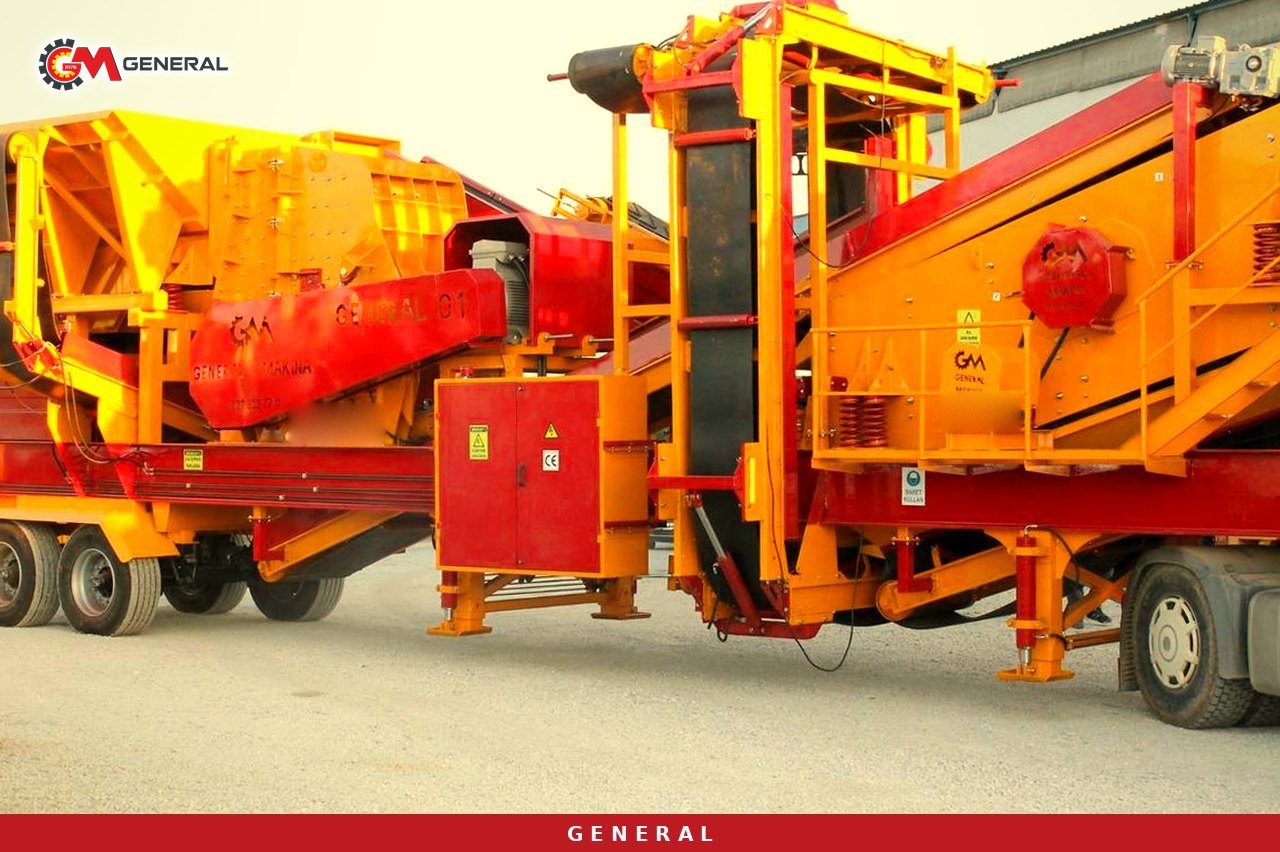
Shipping to a landlocked country
Niger has no coastline. A plant leaving Izmir first travels by sea to one of the neighbouring countries' ports on the Gulf of Guinea, then by road to site. Cotonou and Lomé are commonly used on this route; settle the choice, the transit documents and road permits with your freight forwarder and customs broker.
On the road leg, size and weight decide. The General 01 measures 4300×18500×4500 mm and weighs 55,000 kg; the General 950 measures 4130×20350×4500 mm and weighs 70,000 kg. The GNR-MC110 is split across two chassis of 55,000 kg each (primary chassis 3000×13500 mm, secondary chassis 4200×18300 mm), which helps on routes where axle loads are tightly controlled. To keep dust out of open bearings and the panel on a long haul, covers should be closed and sensitive points wrapped before shipment.
Preparing this information before asking for a quote speeds things up:
- Rock type at the quarry and, if possible, a sample test report
- Target product fractions and daily operating hours
- Largest block size coming from blasting
- Site access road; bridge, bend and gradient limits on the last kilometres
- Whether there is water on site or it will be brought by tanker
- Preferred port of discharge
Our site also has a project page for a General 950 shipped to Niger, useful as a reference when choosing a model for the country.
Maintenance on a dusty site: daily routine and parts stock
On a remote site the most expensive item is waiting. Wear-part stock is therefore planned together with the plant: manganese-cast jaw plates for jaw crushers, blow bars chosen to suit the material for impactors, and spare wire or polyurethane mesh for screens. What drives alloy choice is the free quartz content rather than the hardness of the rock; high-chrome castings are recommended for clean abrasive feed, manganese steel for coarse, high-impact feed. Details are on the crusher wear parts page.
During the harmattan months the daily routine should include:
- Reading the generator air filter's differential pressure at shift start and cleaning the pre-filter when needed
- Cleaning around the electrical panel before opening its door, checking the seal and fan filter
- Monitoring screen bearings and conveyor idlers by sound and temperature
- Clearing build-up at belt transfers and checking scraper adjustment
- Making sure water nozzles are not blocked and noting the tank level
The warranty is 1 year and does not cover wear parts. Keeping a record of filter and seal maintenance on a dusty site protects both machine life and the warranty process.
Frequently asked questions
Does the dust filter come as standard?
By-pass grizzly feeding and the control panel are part of the product definition. A heavy-duty generator air filter, a filtered panel fan, water spray and belt covers are equipment selected per project. Have each one listed in the quote.
Which model suits granite in Niger better?
For hard, siliceous granite, jaw-primary models are the right starting point. If part life is the priority, the General 944 leads; if cubical grains and high reduction matter most, the General 950 does. The decision should be finalised after a sample test.
Can one machine reach 200 TPH?
The catalogue ceiling of the single-chassis models is 180 t/h. For 200 TPH and above, the twin-chassis GNR-MC110 (200-300 t/h) or two units in parallel are recommended.
What sets the price and delivery?
The model and crusher combination, dust and climate equipment, generator, spare-parts package and the scope of freight to the port. Once you share this information a tailored quote is prepared; price and lead time are stated in the quote.
Conclusion
For a mobile plant producing 100-200 TPH in Niger, success depends as much on sealing every point where dust gets in as on the right crusher combination. The General 944 or 950 in granite, the General 01 in soft and mixed feed, and the GNR-MC110 or two units above 200 TPH are the realistic options. To share your sample data and site conditions with our ISO 9001 and CE certified team, working in Izmir since 1976, request a quote through our contact page.
Definitions of technical terms: Glossary