EN — English
 TR — Türkçe
 DE — Deutsch
 RU — Русский
 FR — Français
 ES — Español
 AR — العربية
 SR — Српски

Lagos & Abuja Construction Mobile Crushing & Screening Plant 150-250 TPH
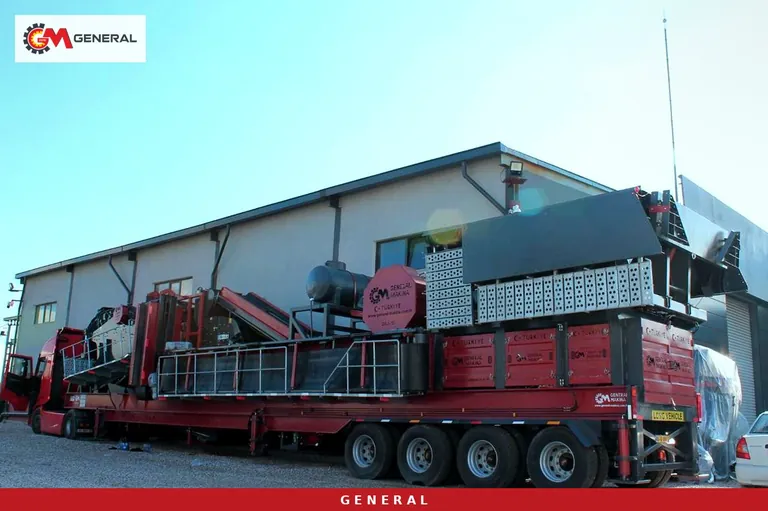
Lagos and Abuja are the two biggest construction hubs in the same country, yet as aggregate markets they have little in common. Lagos has grown on lagoon and coastal sediments, so the hard stone that concrete needs mostly arrives by truck from inland quarries. Abuja sits where crystalline basement rock reaches the surface, and granite hills are part of the city's skyline. This article explains which wheeled crushing and screening plant, in which layout, can serve housing, road and commercial building work in both cities within a 150-250 TPH range.
The short recommendation: the lower half of the band is covered by a single General 950, the upper half by the twin-chassis GNR-MC110, and serving both cities at once by two separate units. Below we go through every factor that could change that decision.
Two cities, two different aggregate supply chains
In Lagos the real bottleneck is not the stone itself but the distance it travels into the city. Every kilometre between quarry and batching plant adds to the unit cost of crushed stone, and congestion limits the number of trips per truck. A plant aimed at Lagos therefore raises two questions: crush at the quarry face, or haul oversize rock to a stockyard close to the city and process it there? A mobile plant lets you switch between these two options.
Around Abuja, quarry and job site can be closer together. Here the rock decides. Crystalline rocks such as granite and gneiss are hard, and their silica content accelerates wear. Two quarries in the same district can differ sharply, so abrasion and compressive strength tests should be run on a sample from your face before the machine choice is fixed. Confirm the aggregate specification of each project with the relevant authority or the main contractor's documents; here we give the general engineering framework.
Real models that cover the 150-250 TPH band
The range in the title is a target band. No single wheeled unit spans all of it, so it has to be split into slices. First convert your own requirement into an hourly figure: required capacity = daily saleable output target ÷ net crushing hours actually worked. Hypothetical example: an operation that wants 1800 tonnes of saleable product per day and can crush for a net 10 hours per shift needs a 180 TPH plant. If the same target is spread over two shifts, the hourly requirement halves.
Lower slice: one General 950
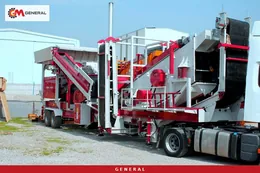
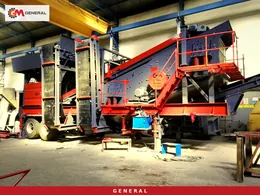
The General 950 places a GPJ 90 primary jaw ahead of a DMK01 secondary impact crusher and carries both, together with a vibrating-feeder hopper and screen, on one wheeled chassis. It is rated at 120-180 TPH with an 800 mm feed opening. A 1600×5000 mm triple-deck horizontal screen splits the output into 0-5 / 5-12 / 12-19 mm fractions, while oversize returns to the crusher in closed circuit. With a 600 kVA generator, 70,000 kg weight and transport dimensions of 4130 × 20350 × 4500 mm, it moves behind one truck and can be producing within 30 minutes of arriving on site. For a job that needs 150-180 TPH it is the direct answer.
Upper slice: the twin-chassis GNR-MC110
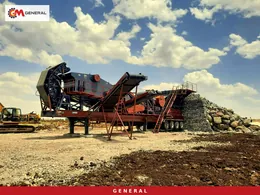
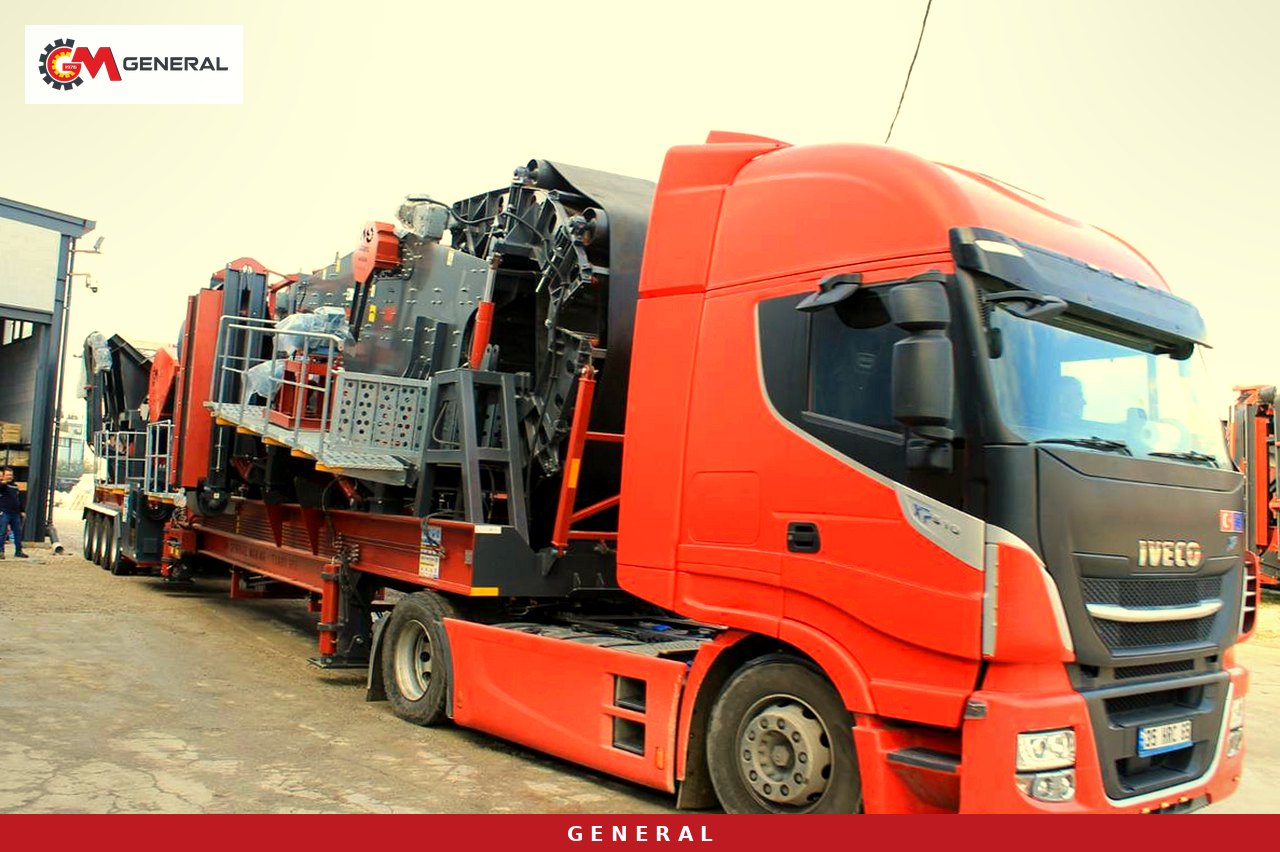
When the target is 200-250 TPH, the GNR-MC110 comes in. Chassis one carries the hopper and a GPJ 110 jaw; chassis two carries a GS1215/DMK03 secondary impactor and a 2000×6000 mm four-deck screen. It is rated at 200-300 TPH, takes 900 mm feed and delivers four fractions including 19-40 mm. Each chassis weighs 55,000 kg, and the primary group can run on its own. That matters to an Abuja investor who wants to set up the primary group first and add the secondary when demand grows.
Between 180 and 200 TPH is a grey zone. The decision there rests on the quarry sample, the product list and the growth plan: if growth is expected, the MC110 makes more sense; for steady demand, the 950. To see all wheeled options on one page, open the wheeled mobile crushing plants category.
| Criterion | General 950 (single unit) | GNR-MC110 (twin chassis) | One General 950 per city |
|---|---|---|---|
| Slice covered | 150-180 TPH | 200-250 TPH | 120-180 TPH per city |
| Rated capacity | 120-180 TPH | 200-300 TPH | 240-360 TPH combined |
| Primary / feed size | GPJ 90 jaw, 800 mm | GPJ 110 jaw, 900 mm | GPJ 90 jaw, 800 mm |
| Secondary crusher | DMK01 impact | GS1215 / DMK03 impact | DMK01 impact |
| Screen and fractions | 1600×5000 mm, 3 decks; 0-5 / 5-12 / 12-19 mm | 2000×6000 mm, 4 decks; 0-5 / 5-12 / 12-19 / 19-40 mm | Same as 950 on each unit |
| Generator | 600 kVA | 750 kVA | 600 kVA per unit |
| Weight | 70,000 kg | 2 × 55,000 kg | 70,000 kg per unit |
| Setup | Producing in 30 minutes | — | Each unit separately |
Cubical chippings for building concrete: jaw + impact or jaw + cone
Most demand in both cities comes from ready-mix, precast and paving block producers. These buyers want cubical chippings with few flaky and elongated particles, because cubical grains pack better in a concrete mix and improve workability. This is where an impact secondary is strongest: the rotor breaks stone at a high reduction ratio and produces cubical grains. That makes the General 950's DMK01 secondary a sound choice for an operation selling concrete aggregate.
On the other hand, granite is abrasive, and in an impact crusher the blow bars and aprons wear faster. If quarry tests show high silica, consider the General 944 which has the same body size and the same 120-180 TPH capacity. The 944 uses a GM430 cone secondary; crushing by compression, it extends wear-part life, and its generator is 550 kVA. A practical rule: if product shape and reduction ratio come first, the 950; if wear cost per tonne comes first, the 944.
Plant location and shipping: from port to site
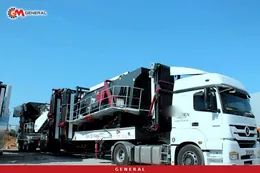
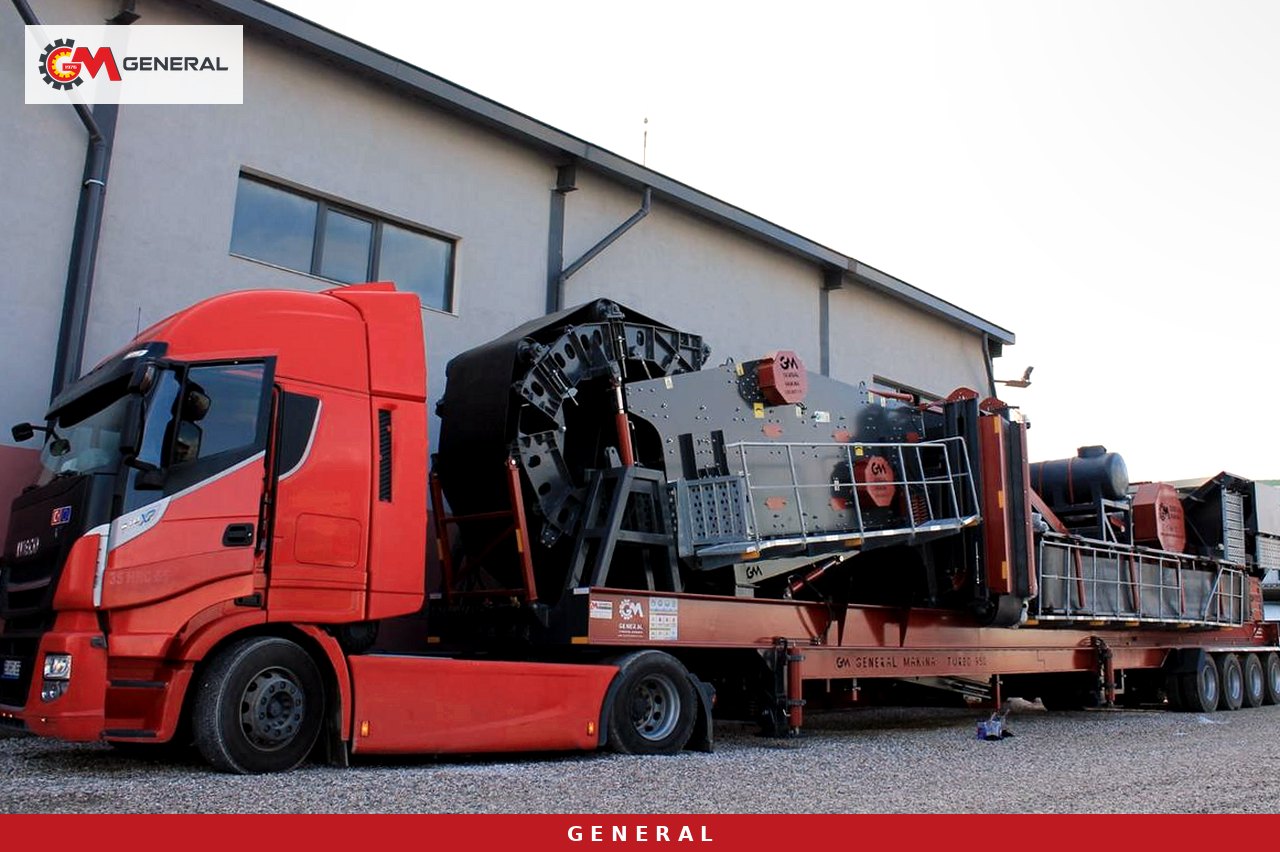
A wheeled plant shipped from Türkiye enters Nigeria by sea through the Lagos ports. The road route after the port has to be planned in advance with the plant's size and weight in mind. The General 950 travels as one piece at 4130 × 20350 × 4500 mm and 70,000 kg; on the GNR-MC110 the load is split over two chassis (3000 × 13500 mm and 4200 × 18300 mm, 55,000 kg each). Confirm heavy-load routes, bridges and crossing permits with your haulier and the relevant authorities. To compare transport and setup time across models, read our article on mobile crushers with the shortest transport and setup time.
In Lagos there are three siting options: crush at the quarry and haul finished product, process oversize rock in a stockyard near the city, or set the plant up inside a large job site. Crushing at the quarry means only saleable product travels into the city. Crushing on site shortens haul distance but may run into local limits on dust, noise and working hours; obtain those permit conditions from the relevant authority. In Abuja the plant usually stays at the quarry and supplies several sites.
Serving both cities at once
The distance between Lagos and Abuja makes it impractical to move one plant regularly between the two cities. If both have continuous work, placing one General 950 in each city gives 240-360 TPH combined, and production continues in one city while the other unit is in maintenance. Two identical models also share wear parts, so the spares stock is managed from a single list.
Rainy season, harmattan dust and off-grid sites
Nigeria's wet season and its dry, dusty harmattan season test two different sides of a crushing plant. In the rains, quarry material can arrive clayey and wet; this blinds screen meshes and sends a muddy load into the crusher. The remedy is to remove fines and soil before material reaches the crusher, which is what grizzly feeders are designed for. In the wet months, stockyard drainage and checks on screen apertures should become part of the daily routine.
In the dry season the issue is dust. Dust-suppression spray, enclosed belt transfer points and more frequent cleaning of generator air filters are measures that can be selected per project. Where there is no grid connection, or it is unreliable, a generator-equipped wheeled plant has a natural advantage: the 950 carries a 600 kVA power unit and the MC110 a 750 kVA unit. Fuel logistics and generator service intervals should be planned for the specific site from the start.
On wear, alloy choice for jaw plates and impact blow bars matters with granite and gneiss feed. Manganese steel work-hardens under impact; high-chrome white iron does well on clean abrasive feed but can crack on coarse feed with tramp metal. To choose the right alloy and order spares from day one, see the crusher spare parts page.
What to prepare before requesting a quote
A quote is only as accurate as the data behind it. Before contacting us or any other manufacturer, gather the following:
- City and location of the plant: quarry face, stockyard or inside the job site.
- Abrasion and compressive strength test results for the quarry sample.
- Largest block size after blasting (to compare with the 800 mm and 900 mm feed limits).
- List of fractions to sell and the daily tonnage target for each; is 19-40 mm needed?
- Shift pattern and net crushing hours actually worked.
- Grid power availability or the need to run on a generator.
- Clay and soil content of the feed during the rainy season.
- Road route from port to site and heavy-load restrictions.
Frequently asked questions
General 950 or General 944 for a concrete supplier in Lagos?
If the buyer wants cubical grains and a high reduction ratio, the 950's impact secondary leads. If quarry tests show high silica, the cone secondary of the 944, at the same capacity, lowers wear cost. The decision should follow the sample results.
Can one wheeled unit deliver 250 TPH?
Yes, the GNR-MC110 covers that target with its 200-300 TPH rating. Among single-chassis models, the 950 and 944 are rated at 120-180 TPH, so 250 TPH would need two of them.
What warranty and certificates apply?
Our plants carry ISO 9001 and CE certification. The warranty is 1 year, excluding wear parts. We have been building crushing and screening plants in İzmir since 1976.
Which items set the price?
The model and number of units, the secondary crusher type, the number of screen decks, extra conveyors and feeders, options such as dust suppression, and the shipping scope up to the Lagos port all set the price. With this information we prepare a project-specific quote.
Conclusion
For Lagos and Abuja, 150-250 TPH is not a single-model question but a two-step decision: the General 950 for 150-180 TPH, the GNR-MC110 for 200-250 TPH, and one unit per city for continuous service in both. If wear on granite proves decisive, the 944 enters the picture. Contact us with your quarry sample, product list and site details, and our engineers will prepare the layout and quote that fit your project.
Definitions of technical terms: Glossary