EN — English
 TR — Türkçe
 DE — Deutsch
 RU — Русский
 FR — Français
 ES — Español
 AR — العربية
 SR — Српски

Mobile Crusher Engineering Solutions for Türkiye's Geographic Conditions
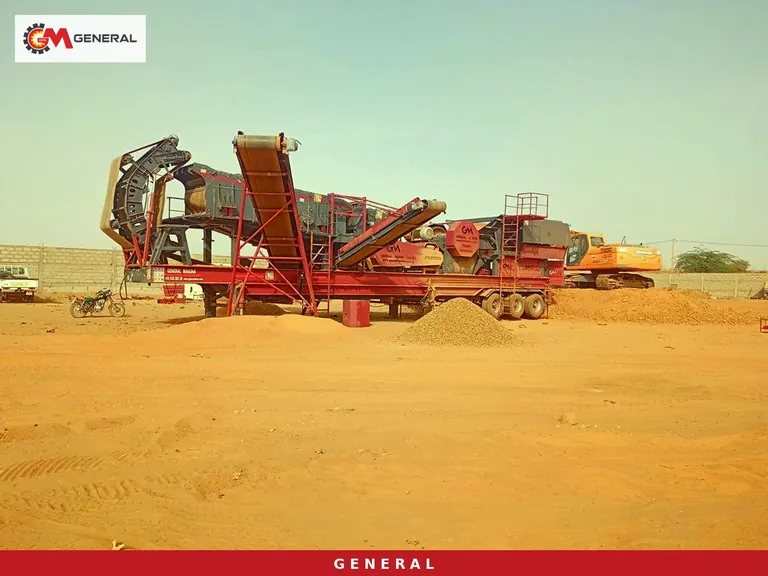
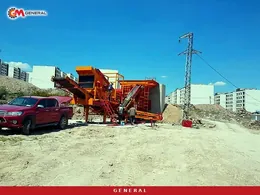
In Türkiye, the place where a mobile crusher will work can mean sites that have almost nothing in common within one country: a limestone quarry near the coast, a basalt cut on a high plateau, a riverbed on the plain, or a mountain quarry reached only by a narrow village road. This article is built around site types rather than region names. What decides the machine is not the location on the map but the rock type, the moisture and clay in the run-of-mine feed, the size the access road allows, access to power and the climate. For each site type we look at which engineering risk dominates, which mechanism solves it and which model in the General Makina product tables is the candidate.
Turning geography into four engineering questions
The question "Which region will the plant work in?" does not answer anything by itself. Within the borders of a single province there can be a limestone quarry, a volcanic rock cut and an alluvial plain. We therefore split geographical conditions into four questions, each tied to a separate equipment decision:
- How hard and abrasive is the rock? This decides the crushing principle: impact or compression.
- How clayey, wet or rounded is the feed? This decides the feeder type and the need for pre-screening and washing.
- What dimensions and weight does the access road allow? This decides the number of chassis and the model size.
- What are the power and climate conditions? This decides generator rating, grid connection and the season plan.
Talking about capacity before these four answers is premature. The t/h range in a catalogue is the band a machine delivers on suitable material at the right setting. A crusher working on the wrong principle will not hold that band on site, and if it does, it consumes wear parts faster than expected.
Limestone sites: where the impact principle fits
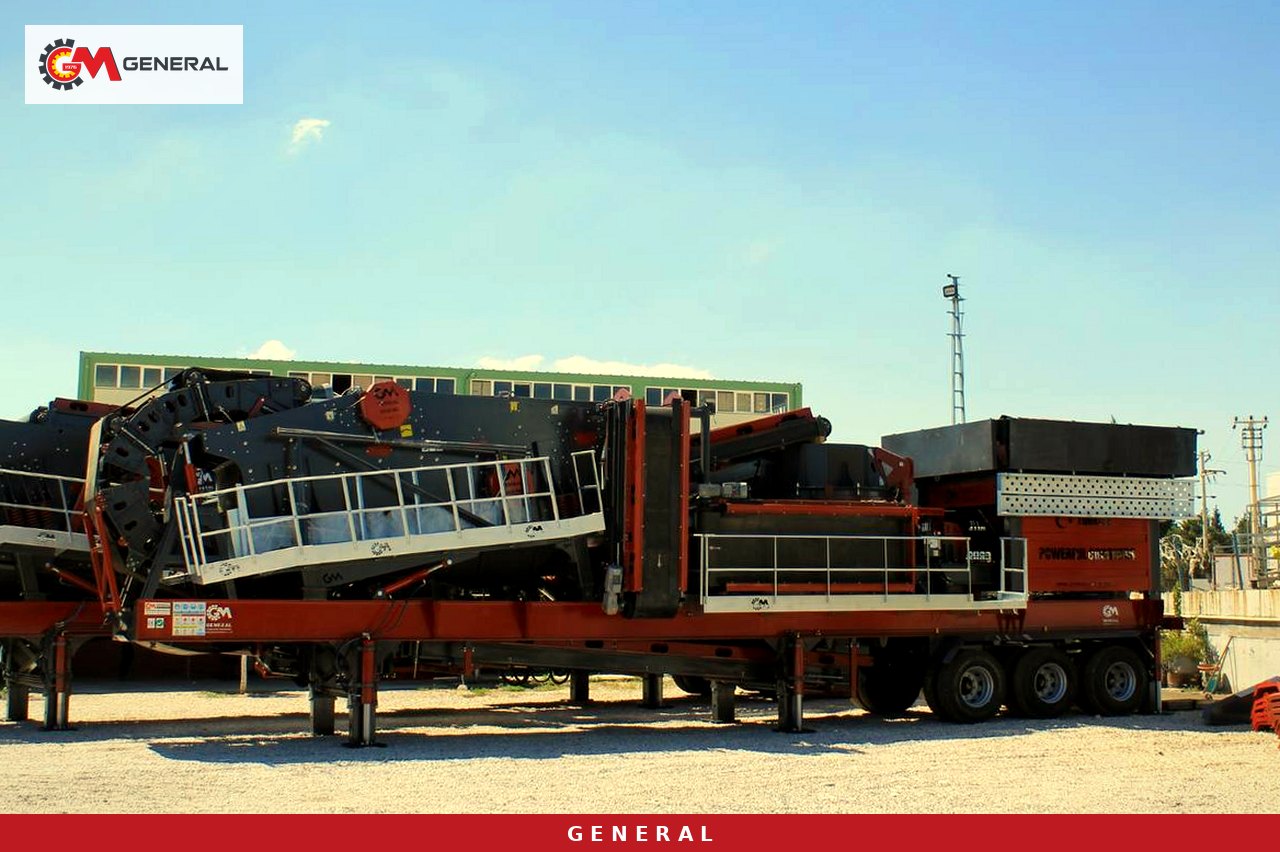
In many parts of Türkiye, most aggregate quarries work limestone and similar low-abrasion rock. On this rock an impact crusher brings two gains: a high reduction ratio in a single stage and a cubical grain. Wear-part consumption also stays reasonable compared with abrasive rock.
The General 800 works in the 80-150 t/h band with its PDK 1280 primary impact crusher, accepts feed up to 600 mm and separates fractions on a 1300×4000 mm 3-deck screen; on the power side it is specified with a 450 kVA generator. For a quarry that needs more tonnage, the General 01 combines primary and secondary work in one body with its two-chamber GPS 1210 impact crusher: 120-180 t/h, 700 mm feed, a 1600×5000 mm 4-deck screen and a 550 kVA generator.
On a limestone site the real engineering question is often not the crusher itself but the soil and fines coming from the overburden. Karstic and fractured formations frequently contain clay pockets filling the voids. A vibrating feeder with a by-pass grizzly removes these fines before they reach the crusher; the rotor is spared unnecessary load and the soil stays out of the product. Describing the overburden thickness and clay pockets at the quotation stage directly changes the feeder and grizzly selection.
There is one limit to state: if the limestone contains siliceous bands or chert nodules, blow bar life shortens noticeably. Do not apply the "limestone means impact" rule automatically without testing samples; a few samples from different benches give a far more reliable picture than one hand specimen.
Basalt and hard volcanic rock: compression and grain shape
In eastern Anatolia and parts of central Anatolia, quarries in volcanic basalt and andesite are common. These rocks are hard and can have a high silica content; a primary impactor wears its metal quickly here. The right configuration is a jaw and cone stage working on the compression principle.
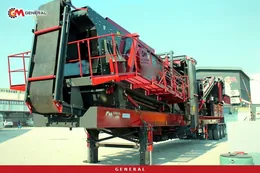
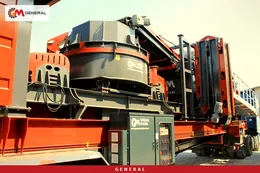
The General 944 mobile jaw and cone plant is the wheeled version of this configuration: GPJ 90 jaw primary and GM430 cone secondary, 800 mm feed, 120-180 t/h, a 1600×5000 mm 3-deck horizontal screen and a 550 kVA generator. The cone stage extends metal life in abrasive rock compared with an impact rotor. If the tonnage requirement rises above 200 t/h, the GNR-MC110 is the option: GPJ 110 jaw primary, 900 mm feed, 200-300 t/h and 750 kVA, with the line split over two separate chassis.
The second issue in basalt is grain shape. Hard rock crushed by compression can produce flaky grains; if a concrete or asphalt specification calls for cubical product, a shaping stage is added after the primary. From the portable cubicizer range, the GNR MK100 works in the 90-130 t/h band with a 1550×1200 mm rotor, a 250 mm feed limit and a 132 kW motor; its inner liners are Hardox 500 steel. In rock with high free quartz, liner life must be monitored closely and the cone alternative re-evaluated if needed.
Our jaw vs impact crusher comparison for hard rock built on model tables, is the detailed continuation of this section.
River material, clay and moisture: washing and pre-separation
Feed from riverbeds and alluvial plains is rounded, mixed in size and often clayey or silty. Here the washing question comes before the crusher type: crushing and dry screening alone will not produce clean aggregate from clayey material, because the clay stays on the grain surface and spoils the concrete mix.
The Mobil 90 crushing, washing and screening plant combines three functions on one chassis for this job: a GPJ 90 jaw crusher (800 mm feed), a 1600×5000 mm 3/4-deck washing screen and a 600×6000 mm twin sand screw. It works in the 90-150 t/h band, is specified with a 350 kVA generator and weighs 45,000 kg. The twin screw recovers 0-5 mm sand without losing it with the water; in river material this sand is often the most valuable fraction.
Where the clay is very sticky and a standard grizzly blinds, the problem starts at the feeder. The mobile jaw unit with a wobbler feeder rolls the material over rotating shafts and separates clay and fines before they reach the jaw; it works in the 250-450 t/h band. This unit, along with models that offer the primary, secondary or cubicizer stage on separate chassis, is grouped in the portable rock crushers category.
A washing line needs a water source, settling ponds and sludge management. Extracting material from a riverbed and using water are subject to permits; confirm local regulations with the relevant authority and plan the location of the washing line accordingly.
Mountain roads, power and climate: chassis and power selection
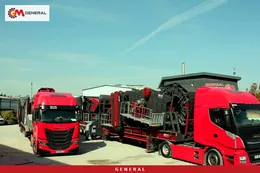
Türkiye's rugged topography makes site access part of model selection. Narrow village roads, tight bends, steep quarry ramps and bridges with load limits make transport dimensions and weight as important as tonnage. The values in the product tables compare as follows: 3600×15500×4500 mm and 35,000 kg for the General 800, 3500×17000×4500 mm and 38,000 kg for the General 640, 4130×20350×4500 mm and 70,000 kg for the General 944. In the GNR-MC110 the weight is split over two chassis: the primary chassis is 3000×13500 mm and 55,000 kg, the secondary chassis 4200×18300 mm and 55,000 kg. On a difficult route this split is the solution; and since the primary chassis can run on its own, the secondary stage can be added later.
Before choosing the plant, survey the last kilometres to the site in person: bend radii, bridge load limits, overpass heights and power lines across the road. When this information reaches the quotation table, the model and chassis configuration are chosen correctly from the start.
Remote quarries often have no grid or an insufficient one. Generator rating is defined per model: 300 kVA (optional) for the General 640, 450 kVA for the General 800, 550 kVA for the General 01 and General 944, 750 kVA for the GNR-MC110. Combustion engines deliver less power as altitude rises; on high-plateau sites, have the generator sized using the engine manufacturer's altitude derating.
Climate also calls for different measures by site type. In the long, harsh winter of eastern Anatolia, freezing of hydraulic oil, water circuits and hoppers is the main risk. The rainy Black Sea coast amplifies sticky feed and drainage problems. In the hot, dry summers of the south, engine cooling and dust suppression come first. These measures should be discussed together with the machine, not added on site afterwards.
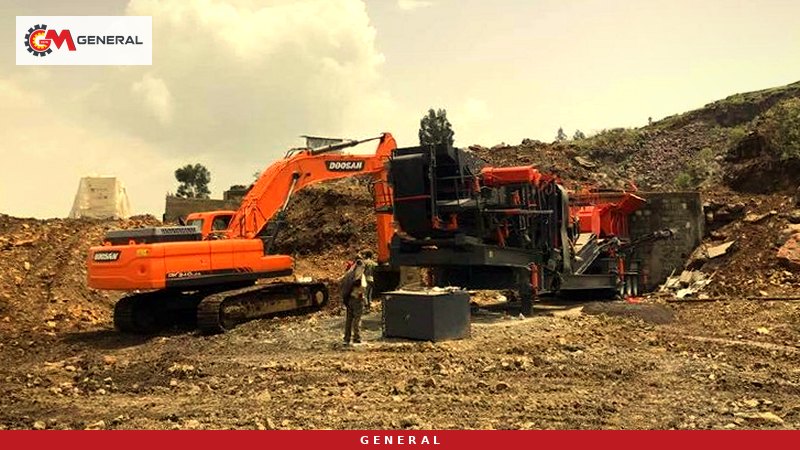
Decision matrix by site type
The table below matches the site types above with the dominant risk and the mechanism that solves it. Values come from the relevant product tables; cells with no table value are shown as "—".
| Site type | Dominant risk | Solution mechanism | Candidate model | Capacity | Feed | Power |
|---|---|---|---|---|---|---|
| Limestone quarry with overburden | Fines overloading the crusher | By-pass grizzly feeder + primary impactor | General 800 | 80-150 t/h | 600 mm | 450 kVA |
| Limestone, higher tonnage | Space and setup load of two crushers | Primary and secondary in one body | General 01 | 120-180 t/h | 700 mm | 550 kVA |
| Basalt / andesite | Fast metal wear | Jaw + cone, compression | General 944 | 120-180 t/h | 800 mm | 550 kVA |
| Hard rock, high tonnage, difficult route | Weight limit of a single chassis | Modular two-chassis line | GNR-MC110 | 200-300 t/h | 900 mm | 750 kVA |
| Basalt, cubical product required | Flaky grains | Shaping with a portable cubicizer | GNR MK100 | 90-130 t/h | 250 mm | 132 kW |
| Riverbed, clayey feed | Clay and sand loss | Washing screen + twin sand screw | Mobil 90 | 90-150 t/h | 800 mm | 350 kVA |
| Very sticky clay | Grizzly blinding | Pre-separation with a wobbler | Mobile jaw unit with wobbler feeder | 250-450 t/h | — | — |
To use the matrix, collect the following from the site before requesting a quotation:
- Representative samples from different points of the quarry; hardness and abrasiveness analysis if possible.
- The largest block size in the feed, plus observations on overburden and clay pockets.
- Target products and their specifications: concrete aggregate, asphalt aggregate, sub-base.
- Daily operating hours and target tonnage.
- Tight or risky points on the access route: bridges, bends, gradients, overpasses.
- Grid availability, site altitude and winter conditions.
- If a washing line is planned, water source and permit status.
When you compare the models in the mobile stone crushers category with this list, the shortlist usually narrows to one or two candidates.
Frequently asked questions
Is there one "best" model for every region of Türkiye?
No. The same region can contain both a limestone quarry and a basalt cut. The model is chosen not by region name but by rock hardness, clay content of the feed, the route and the power supply.
Can an impact plant be used in a basalt quarry in eastern Anatolia?
It can, but blow bars wear quickly in hard, abrasive rock. For continuous production a jaw + cone configuration such as the General 944 is a better starting point; if cubical product is required, a cubicizer stage follows.
Isn't dry screening enough for river material?
It can be if the material contains no clay or silt. If it does, aggregate from a dry screen will not meet the specification; a washing screen and sand screw are needed. Decide based on a wash test of the sample.
Does the plant price change by region?
Price is driven not by the region but by the equipment the region requires: crusher combination, number of chassis, generator rating, washing equipment and climate measures. A figure requires a quotation prepared with site information.
Conclusion
Sites in Türkiye differ too much for one standard plant to cover them. Impact and grizzly pre-screening in limestone, compression and shaping in basalt, washing in riverbeds, chassis configuration on difficult routes, the right generator rating on remote sites decide the setup. General Makina has been manufacturing in İzmir since 1976; its products carry ISO 9001 and CE certification and come with a 1-year warranty excluding wear parts. Share your samples, route information and target products, and we will define the right crushing and screening plant configuration for your site together: contact us for a quotation and technical discussion.
Definitions of technical terms: Glossary