EN — English
 TR — Türkçe
 DE — Deutsch
 RU — Русский
 FR — Français
 ES — Español
 AR — العربية
 SR — Српски
Mobile Crusher Daily Checklist
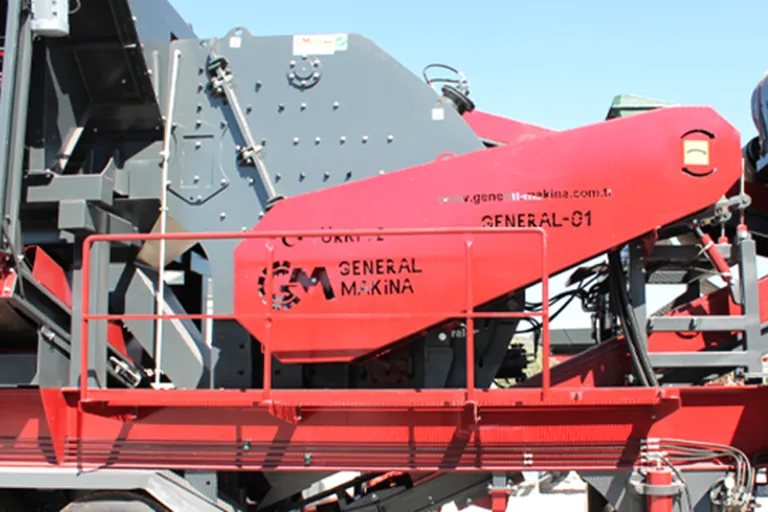
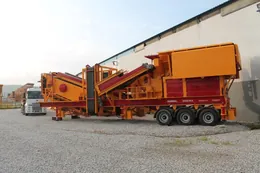
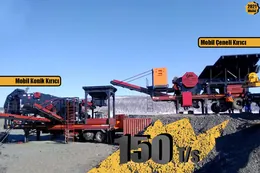
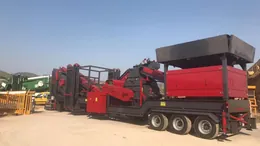
Most unplanned downtime on a mobile crusher starts as something a five-minute walkaround would have caught. The list below follows the common component layout of General Makina mobile plants (jaw, impact, cone and VSI configurations). We give no numeric intervals: the correct schedule depends on the model and the material, and comes from the manufacturer.
1. Tracks and undercarriage
Check track tension, visible cracks on chain surfaces and travel-motor connections. Clear the ground before moving if parked on a slope.
2. Feeder and hopper
Look for oversize stuck in the hopper, check feeder springs and vibromotor bolts, and confirm the feed-rate setting left from the previous shift suits the material.
3. Crusher unit
Confirm the chamber is empty (trapped material causes blockage on start), inspect wear parts (jaw plate, blow bars, mantle) for thinning or cracks, and verify the setting (CSS/opening) is at its last measured value.
4. Screen and conveyor line
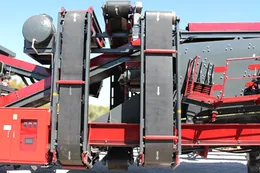
Check screen media for tears, belt tracking, and material wrap on drums and rollers. Never start before cleaning under the belt.
5. Controls and emergency stops
Verify remote-control battery, free emergency-stop buttons and undamaged sensor cabling.
Extra checks before transport
If the plant moves site, fold conveyors to transport position, lock hopper flaps and compare loading dimensions with the haul plan. Real transport values of two models:
| Model | Transport dims W×L×H (mm) | Weight (kg) | Capacity (t/h) |
|---|---|---|---|
| General 944 | 4130×20350×4500 | 70000 | 120~180 |
| General 02 | 4340×20600×4500 | 76000 | 180~250 |
Why the walkaround takes five minutes
The five zones are ordered as one continuous loop: start at the tracks, climb the hopper ladder to the crusher platform, walk the screen-conveyor line and finish at the control panel. Findings go into a one-line shift note; an unrecorded finding is lost by the next shift.
Winter vs summer
In cold weather hydraulic oil viscosity rises: never open the feed before an unloaded warm-up. In heat, radiator cleanliness dominates; do not go to full load without watching engine temperature.
Classifying findings: stop / watch / note
Not every finding weighs the same. Stop class — hydraulic leak, failed emergency stop, cracked track chain — is fixed before the shift starts; the machine does not run with these. Watch class — slight belt drift, borderline tension — is rechecked during the shift and stopped if it worsens. Note class — wear parts approaching planned replacement — goes into the weekly plan. This split turns the walkaround into action; an unclassified list stays on paper. A weekly digest of shift notes is the soundest way to merge the plant's real duty cycle with manufacturer recommendations.
Maintenance recommendations depend on the model and operating conditions — contact us for a plan specific to your machine.
Definitions of technical terms: Glossary